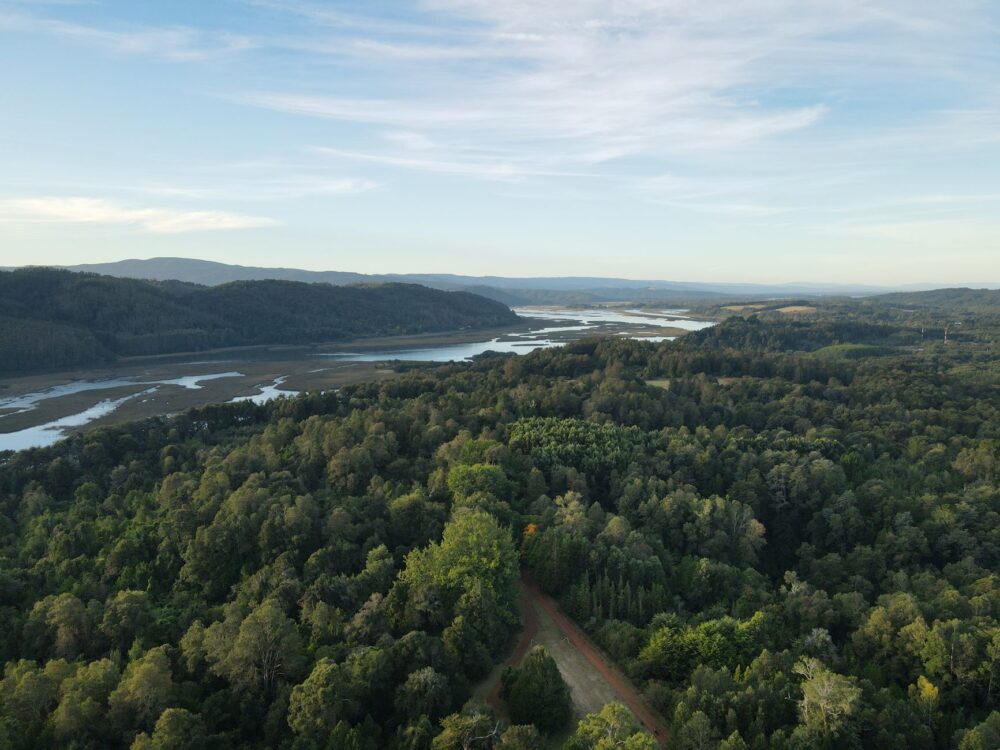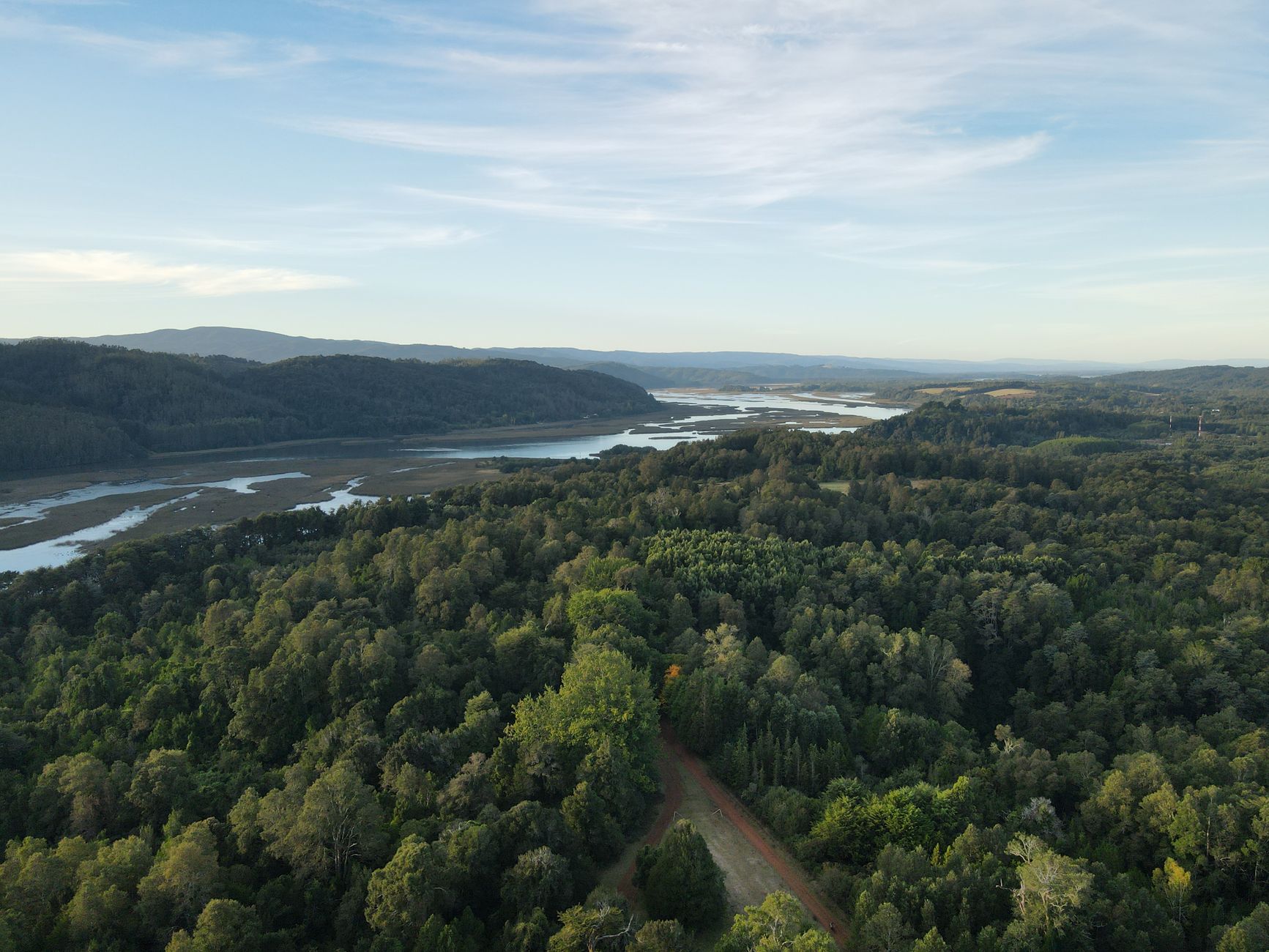

The Carretera Austral is not merely a communication route; it is a human act of rebellion against a geography that, for centuries, refused to be mapped. Stretching 1,240 kilometers from Puerto Montt to Villa O’Higgins, this road—technically known as Route 7—represents one of the most formidable engineering challenges in the Southern Hemisphere. In this corner of the world, where the Andes Mountains literally sink into the Pacific Ocean, the layout must navigate impassable fjords, ancient ice fields, and rainfall that transforms the terrain into a constantly shifting organic mass.
Traveling it today means understanding that connectivity in Chilean Patagonia depends not only on asphalt but on a logistical choreography integrating ferries, suspension bridges, and a unique cultural resilience. What began as a strategic national sovereignty project in the 1970s has transformed into a biocultural corridor where nature dictates the rules and the traveler must learn to read time in the passing of clouds and the rhythm of tides. It is, essentially, South America’s last frontier, a place where the concept of distance is measured in hours of navigation rather than kilometers traveled.
The Challenge of an Unyielding Geography
To understand the technical magnitude of the Carretera Austral, one must visualize the territory before its existence. Until the late 20th century, the Aysén region was a terrestrial island, connected to the rest of Chile only by air or sea, or through Argentine territory. The orography here is a labyrinth of granite and water. Building the route required dynamiting vertical rock walls and filling swamps that seemed bottomless. Engineering had to adapt to an environment where humidity is absolute and soil stability is the exception.
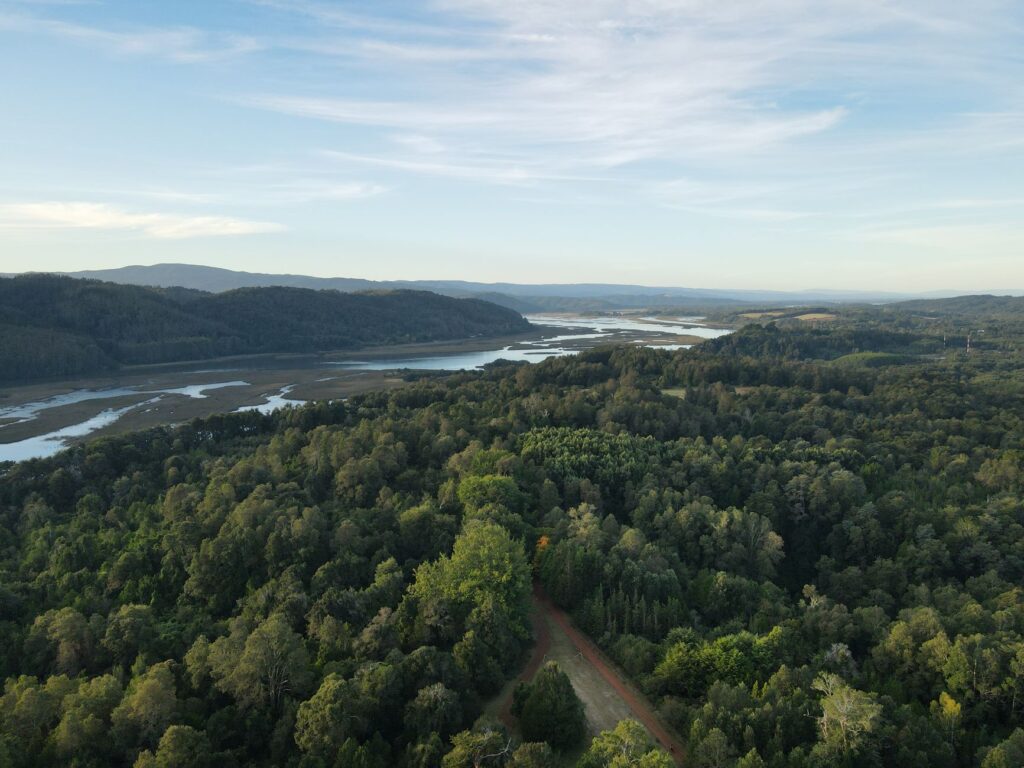
The original layout was executed by the Military Labor Corps, a division of the Chilean army that faced extreme weather conditions. Thousands of men worked exhausting shifts to cut through the temperate rainforest, an ecosystem so dense that visibility was often reduced to a few meters. The use of heavy machinery was limited by lack of access, forcing much of the work to be done manually or with explosives transported by mules. This human effort is what gives the route its epic character—a necessary scar on a landscape of overwhelming beauty.
«The Carretera Austral is not a road; it is a necessary scar across a geography that never intended to be conquered.»
Bimodal Logistics: Where the Asphalt Yields to the Sea
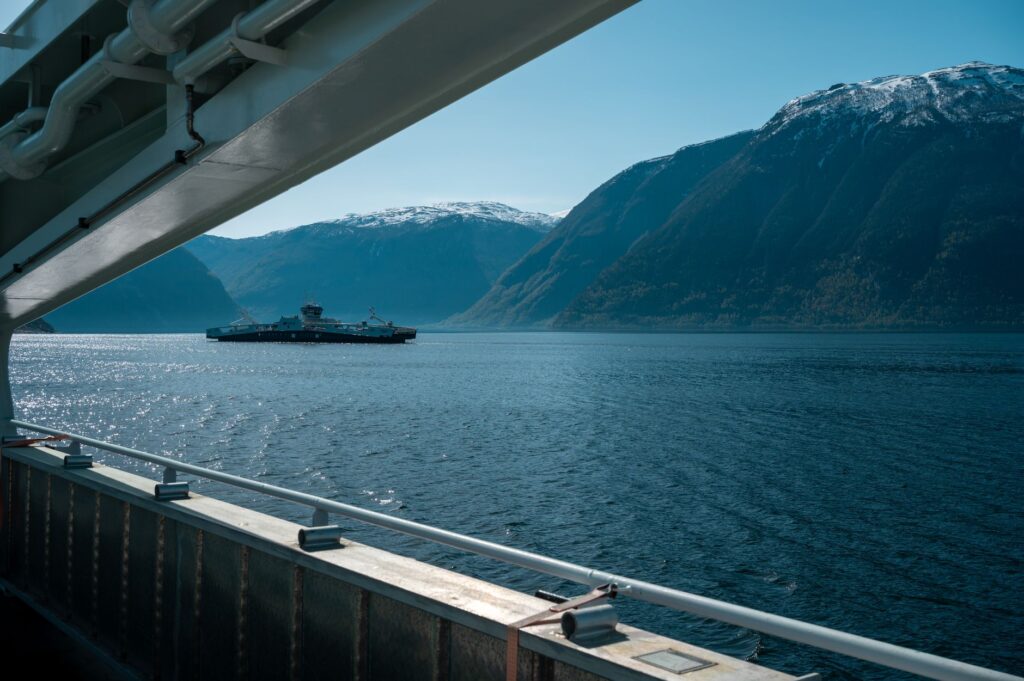
One of the most fascinating aspects of Route 7 is its discontinuous nature. At several points along the way, the terrain is so steep that terrestrial road construction is technically or ecologically unfeasible. This is where bimodal logistics come into play. The journey pauses to give way to navigation. Ferries are not a tourist addition but a vital extension of the highway, allowing the flow of supplies, fuel, and people between the northern and southern sectors.
The section connecting Hornopirén to Caleta Gonzalo is the clearest example of this interdependence. For nearly four hours, vehicles are transported through fjords flanked by mountains that drop vertically into the sea. This forced disconnection from the asphalt imposes a different travel pace. You cannot be in a hurry on the Carretera Austral; punctuality is subject to wind conditions in the Cholgo Channel or visibility in the Largo Fjord. This floating infrastructure is the umbilical cord that keeps alive towns that would otherwise be lost to absolute oblivion.

The Heart of the Evergreen Forest: Queulat National Park
As the route progresses south, the landscape becomes more dramatic. Queulat National Park represents the climax of the Patagonian cold jungle. Here, the road snakes through the Cuesta Queulat, a series of hairpin turns ascending among giant ferns and centuries-old coigüe trees. The humidity here is so palpable that moss covers not only the trees but also the road signs and bridge railings. The Hanging Glacier (Ventisquero Colgante) is the jewel of this sector: a mass of ice hanging from a mountain, pouring meltwater waterfalls into a milky-colored lagoon.
From a technical perspective, this stretch is one of the most difficult to maintain. Constant landslides and river floods require permanent monitoring. However, for the visitor, it is an opportunity to observe the struggle between human infrastructure and the regenerative force of nature. Wooden bridges, many of which have been replaced by steel structures, remain a reminder of the route’s original precariousness. Engineering in Queulat is a lesson in humility before geological magnitude.
Architecture of Isolation: Wood as a Visual Language
The connectivity brought by the road not only altered transport but also highlighted the region’s vernacular architecture. In towns like Puyuhuapi, one observes a unique fusion between the building traditions of German settlers and Chiloé carpentry. Houses are clad in alerce wood shingles (tejuelas), designed to withstand decades of incessant rain. This aesthetic is not merely decorative; it is a technical response to Patagonia’s extreme climate.

Puyuhuapi, founded by German immigrants in the 1930s, was long an enclave accessible only by sea. The arrival of the road in the 1980s transformed its economy, but the town has maintained a human scale and an intimate relationship with the environment. Nearby hot springs, located on the shores of the fjord, are an example of how wellness tourism has integrated into the route’s logistics, taking advantage of the area’s geothermal activity without breaking the visual balance of the landscape.
General Carrera: An Inland Sea of Turquoise
Further south, the road borders Lake General Carrera, Chile’s largest and South America’s second largest. Here, the geography changes radically: dense forest gives way to a drier steppe and a microclimate that allows for cherry cultivation. The water color, an iridescent turquoise due to glacial sediments, is almost surreal. The Marble Caves, mineral formations sculpted by water erosion over millennia, are a testament to nature’s patience.
Constructing the road along the cliffs bordering the lake was a technical feat. The path narrows, carved directly into the rock, offering dizzying views. This sector is fundamental for connectivity with the Chile Chico area and the Argentine border. Logistics here become more complex due to strong winds whipping across the lake, capable of kicking up waves that challenge smaller vessels. It is a reminder that, even with a road, water remains the dominant element in Patagonia.
The Human Factor: Life at the Edges of the Map
Behind the investment figures and cubic meters of rock removed, the Carretera Austral is a story of people. The «settlers» (colonos) who arrived in these lands before the road existed lived through an isolation that is hard to imagine today. They relied on radio for communication and bartering for survival. The road changed their reality, providing access to healthcare and education, but it also brought the challenge of preserving their identity against the arrival of mass tourism.
In towns like Cochrane or Villa O’Higgins, the traveler finds a hospitality born from the historical necessity of mutual aid. Mate is the center of every conversation, a ritual that stops time while the Patagonian wind roars outside. The culture of the Patagonian gaucho, with their horses and sheepdogs, now coexists with cyclists from around the world and scientists studying glacial retreat. The road has democratized access to beauty but has also imposed the responsibility to protect it.

«In the deep south, distance is not measured in kilometers, but in the patience required to wait for the tide to turn and the wind to die down.»
The Future of the Route: Between Progress and Conservation
Today, the Carretera Austral faces a fundamental debate: should it be fully paved? While for local inhabitants asphalt means progress, safety, and reduced travel times, many conservationists argue that the gravel (ripio) acts as a natural filter that limits speed and preserves the place’s mystique. Paving progress is constant, but geological challenges ensure that wide stretches will remain dirt tracks for a long time.
The development of national parks along the route, largely driven by land donations from the Tompkins Conservation Foundation, has positioned the Carretera Austral as the «Route of the Parks.» This model seeks to make conservation the region’s economic engine. The logistical challenge of the 21st century is no longer just opening the road, but managing it so that human impact does not destroy the ecosystem everyone comes to admire. Route 7 is, ultimately, a living laboratory of coexistence between infrastructure and biodiversity.
Practical guide
- Best time to travel: Between November and March (Austral spring and summer). The weather is milder, and daylight hours extend until almost 10 PM.
- Transport and Logistics: It is essential to book ferries in advance, especially the Hornopirén-Caleta Gonzalo stretch, through official companies like Somarco.
- Recommended Vehicle: Although paving is underway, a 4×4 or high-clearance vehicle is highly recommended for gravel sections and accessing secondary trails.
- Fuel and Supplies: Gas stations can be hundreds of kilometers apart. Never miss an opportunity to fill the tank in main towns like Chaitén, Coyhaique, or Cochrane.
- Connectivity: Phone signal is intermittent. It is recommended to download offline maps and carry cash, as many small businesses do not accept cards.
- Necessary Gear: Layered clothing (the «onion» system), high-quality waterproof jacket, and trekking shoes with good grip.
Upon reaching the end of the route in Villa O’Higgins, where the road stops before the Southern Ice Field, one experiences a sense of absolute conclusion. There is nothing beyond, only ice and silence. The Carretera Austral teaches us that the journey is not the destination, but the process of adapting to an environment that surpasses us. It is a reminder of our fragility and, at the same time, our incredible capacity to build bridges—real and figurative—in the midst of the impossible. Turning off the engine and contemplating the deep blue of a glacier, we understand that true luxury is not speed, but the possibility of being present in a place that time seems to have forgotten.