
The Call of the Arctic Circle and the Immensity of Lapland
The territory through which the Kungsleden—historically known as the King’s Trail—winds represents one of Europe’s last truly wild strongholds. Conceived in the early twentieth century by the Swedish Tourist Association (STF) with the purpose of opening up the uncharted beauties of the Lapland high mountains to walkers, this route snakes for over four hundred kilometers from Abisko in the north to Hemavan in the south. It is not merely a conventional hiking trail, but a biogeographic traverse crossing desolate plateaus, U-shaped glacial valleys, roaring rapids, and crystal-clear lakes reflecting the ever-changing sub-arctic sky.
Immersing oneself in this geography requires understanding that conventional mountaineering rules do not always apply under the influence of polar weather. Here, the sheer scale of the landscape creates a false sense of accessibility that can vanish within minutes when a cold front rolling down from the North Atlantic descends upon the summits. Rigorous planning ceases to be a mere bureaucratic exercise and becomes the traveler’s first line of defense, spanning everything from cartographic study to forecasting extreme meteorological shifts that entirely alter the rhythm of the march.
The Glacial Geography of the North: From Abisko to Nikkaluokta
The northern stretch of the Kungsleden is undeniably the most celebrated and heavily traveled, concentrating the dramatic essence of Lapland’s landscapes. Starting at the Abisko Alpine Station, the trail immediately plunges into the canyon carved by the Abiskojåkka River, a deep cut in the schist rock where water rouses with ancestral force. As altitude is gained, the dwarf birch forest yields to open tundra, dominated by lichens, mosses, and heather patches carpeting the slopes of Mount Nietsak and Mount Nuolja.
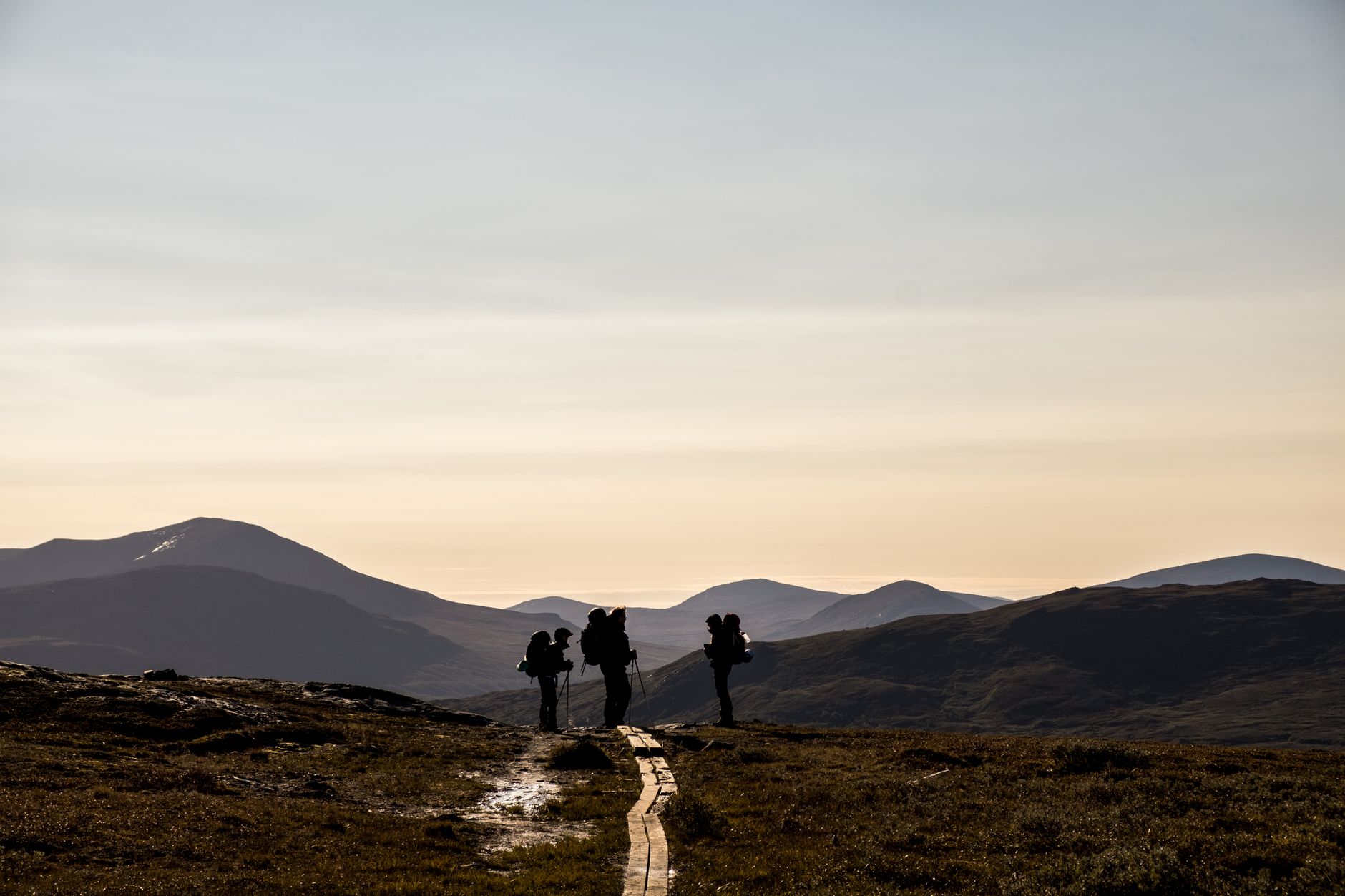
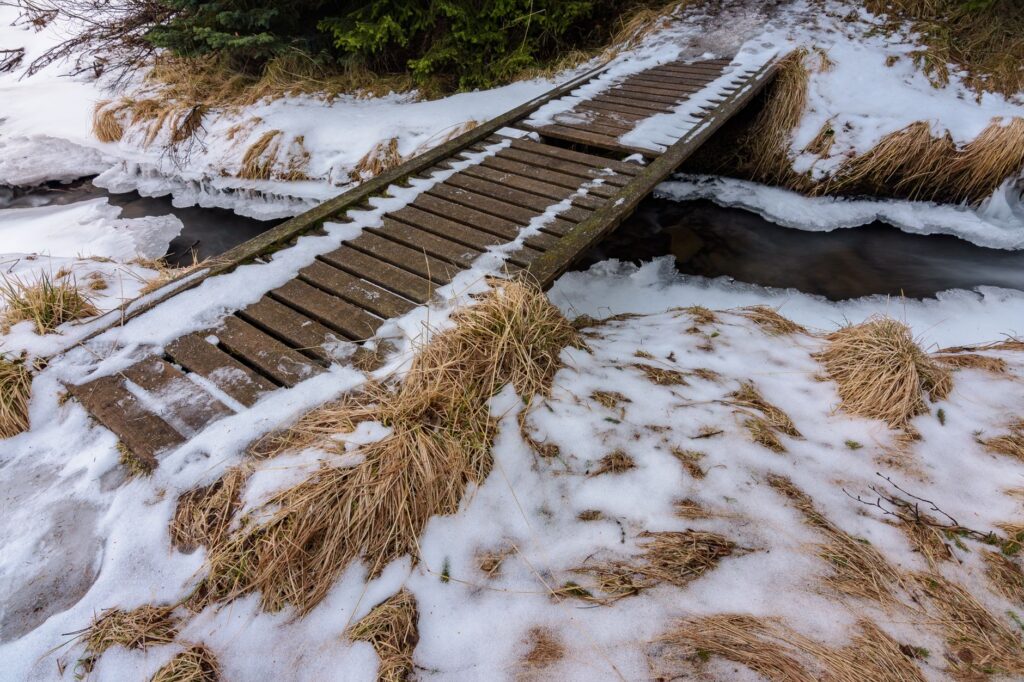
Advancing through this natural corridor means entering the realm of Abisko National Park, an ecological sanctuary where alpine flora struggles to complete its life cycle during an uncommonly brief summer. The wooden boardwalks and planks installed over boggy patches protect a fragile ecosystem and prevent the trekker from sinking into the clay mud. Each mountain pass cleared reveals a new hanging valley, where snowpatches persist even through the core months of July and August, recalling the constant presence of the cryosphere at these latitudes.
The Logistics of STF Refuges and the Cabin System
One of the great operational attractions of the Kungsleden lies in its network of shelters managed by the STF, spaced out by daily marches ranging from ten to twenty kilometers. These cabins, built from solid pine timber and equipped with wood-burning stoves, bunk beds with mattresses, and gas kitchens, offer an indispensable safeguard against arctic weather. However, understanding their internal mechanics is crucial to avoid surprises during the traverse, as they are not mountain hotels, but self-managed facilities where users must actively cooperate in cleaning and upkeep.

Throughout the summer season, most of these refuges feature a resident warden who oversees reservations, sells basic dehydrated supplies, and offers up-to-date weather reports. Outside this window, the cabins retain an emergency section open permanently. Fuel management, drawing safe drinking water directly from mountain streams, and proper solid waste handling are mandatory rules ensuring the sustainability of this fragile natural corridor against the rising tide of international hikers.
Technical Autonomy Facing the Caprices of Arctic Weather
Despite the available refuge infrastructure, relying exclusively on finding an open bunk is a tactical misstep that can seriously jeopardize route safety. Weather conditions in Lapland are proverbially volatile; a calm day of midnight sun can mutate within hours into a gale-force storm accompanied by horizontal rain and precipitous drops in temperature. For this reason, carrying a three-season expedition tent capable of withstanding high-intensity winds and rocky ground anchorages is an absolute prerequisite for any serious expedition.
The true measure of a mountaineer on the Kungsleden is not calculated by the kilometers covered during clear days, but by their ability to maintain composure and efficiency when thick fog devours the horizon and the thermometer plummets without warning.
The layering system in apparel must prioritize merino wool and high-breathability waterproof membranes, entirely ruling out cotton due to its inability to retain body heat once damp. Similarly, footwear must be robust, preferably high-cut boots with verified water-repellent treatments, capable of enduring the abrasive wear of granite boulder fields and continuous unbridled stream crossings.
Traversing the Great Lakes: Boats, Oars, and Footbridges
The relief of the Kungsleden is not a continuous inclined plane, but a succession of watersheds interrupted by vast water mirrors combining pedestrian hiking with lacustrine navigation. The most paradigmatic example is found along the section skirting the Kebnekaise massif, Sweden’s highest peak at two thousand ten meters. To clear Lake Alatajjarvi and Lake Ladjajavrre, hikers must rely on motorboat services operated by local Sami residents or, in more remote segments, utilize chain-rowboat systems where the user must row across and leave a boat on each side for the subsequent traveler.

This aquatic dynamic adds a fascinating and demanding logistical dimension to the traverse. Coordinating marching times with scheduled line boats requires precision and mental flexibility. A delay compounded by a poorly tended blister or a tricky ford can mean missing the final connection of the day, forcing the improvisation of an autonomous camp on the lake shore under the persistent hum of Lapland midges.
Sami Cultural Heritage and Respect for Ancestral Territory
Walking the Kungsleden is also traversing Sápmi, the historical and cultural homeland of the Sami people, whose ancestral domains stretch across northern Norway, Sweden, Finland, and the Kola Peninsula. Along the trail, it is common to spot livestock enclosures, traditional grazing huts known as *kåta*, and route markers that converse directly with a millennium-old human presence tied to extensive reindeer husbandry.
The reindeer (*Rangifer tarandus*) is not merely a decorative element of the arctic landscape, but the backbone of Sami economy and worldview. During the summer months, herds migrate toward the high tundra in search of cooler air and tender forage. It is the strict responsibility of the hiker to maintain a prudent distance, avoid disturbing the animals during calving or fattening periods, and meticulously close all gates and fences encountered along the path to prevent livestock scattering.

Practical guide
- Best time for expedition: From July 1 to August 31, coinciding with the full opening of STF shelters and the absence of deep snow across the mountain passes.
- Primary access: Night train from Stockholm (SJ) directly to the Abisko Turiststation alpine station, an eighteen-hour journey allowing progressive acclimatization.
- Permits and fees: No special permits are required to hike the Kungsleden or camp throughout the territory, thanks to the Swedish constitutional principle of *Allemansrätten* (right of public access).
- Critical gear: High-wind-resistant tent, sleeping bag with comfort rating down to at least -5 °C, filtration water purification system, and anti-mosquito kit featuring high DEET concentration.
- Connectivity and navigation: Extremely limited or absent mobile coverage in deep valleys. Carrying printed 1:50,000 topographic maps and a calibrated magnetic compass is mandatory.
The Eternal Silence of the Southern Valleys and Arrival in Hemavan
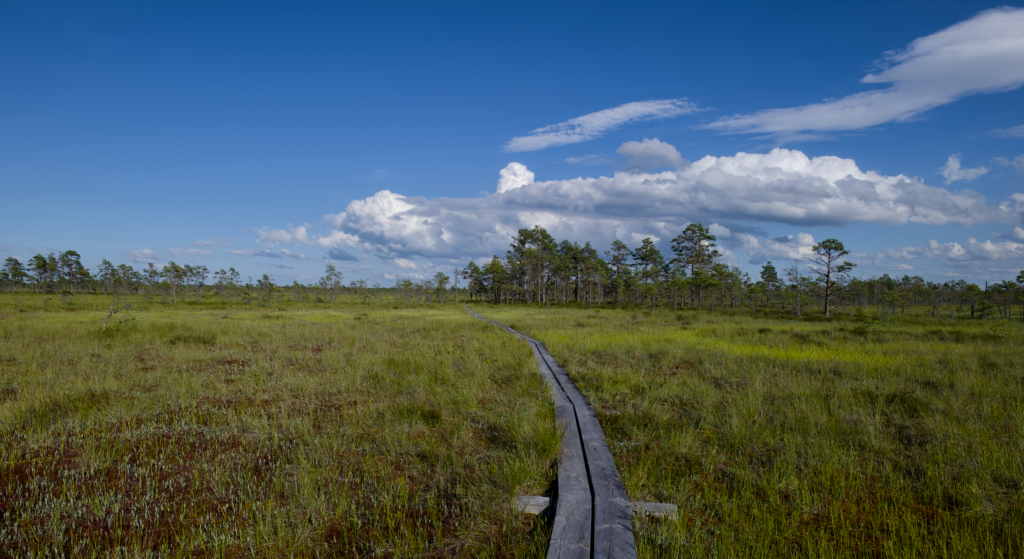
As the itinerary presses southward, leaving behind the Kebnekaise-dominated sector and pushing into the Kvikkjokk and Ammarnäs regions, the character of the Kungsleden undergoes a subtle yet profound transformation. The summer crowds of the northern section completely vanish, replaced by absolute isolation where the silence of coniferous forests and infinite wetlands emerges as the true protagonist of the journey. Here, stages are physically longer and more demanding, unfolding across less manicured terrain where fine landscape reading and instinctive orientation assume critical value.
The final days of marching toward Hemavan wind among rounded limestone summits and river valleys where water adopts intense turquoise hues. Reaching the metallic arch marking the trail’s end in the village of Hemavan does not produce a sense of noisy euphoria, but a deep internal quietude, the certainty of having completed an honest and demanding dialogue with one of the purest, most unforgiving, and most beautiful geographies on the planet.