
Introduction to the Renaissance pulse of paper and leather by the Arno
Florence is not merely a city of imperial marbles and canvases hanging in boundless galleries. Beneath the surface of its tourist bustle, in dark alleys where the sun barely reaches at noon, a millenary rhythm survives—marked by the crunch of parchment, the unmistakable aroma of tannin-tanned leather, and the flicker of brass plates heated over an open flame. Fine bookbinding in the Tuscan capital is undergoing a profound transformation, halfway between numantian resistance against the obsolescence of the physical book and an aesthetic vanguard that reinterprets medieval guilds through contemporary design criteria.
While major global publishers standardize their processes and the mass market leans toward the backlit screen, a select group of artisan workshops located in the districts of Oltrarno and San Frediano defends slowness as a supreme value. Here, sewing a spine by hand with waxed linen thread or applying twenty-four-karat gold leaf through the millimeter balancing of a finishing pallet is not a simple nostalgic activity, but an exercise in material sovereignty. This report takes the traveler into the sanctuaries where the book ceases to be a container of words and becomes a sculptural object endowed with its own identity.
The secret geography of the guilds in the Oltrarno
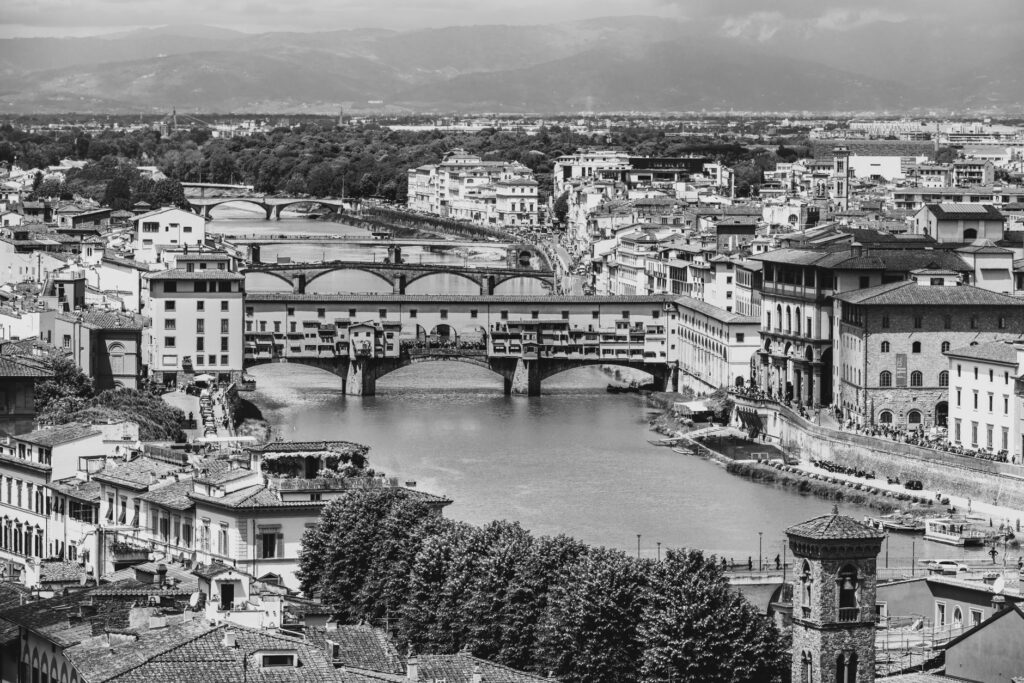
Crossing the Ponte Vecchio toward the south, the rhythm of the city changes radically. Mass-market souvenir shops give way to silent entryways where the last heirs of the artisan corporations that once supplied the Medici lordship still operate. In these compact spaces, where natural light falls overhead through large north-facing glass windows, time seems to have stopped in the sixteenth century, although the tools maintain a constant dialogue with the demands of twenty-first-century collecting.

Today’s masters not only inherited the manuals of Florentine binding, characterized by the use of marbled paper endpapers—the celebrated technique of the water tank and floating pigments—but also the responsibility of keeping doors open to a new generation of apprentices from all over the world. Walking through Via de’ Bardi or descending toward Piazza Santo Spirito means discovering workshops where walnut wood for vertical presses coexists with shelves crammed with unbound volumes awaiting a second historical chance.
The alchemy of leather: vegetable tanning and living textures
The soul of any high-end binding lies in the selection of the raw material. In Florence, the implicit prohibition against using industrial chemical products in traditional workshops has fostered a strong alliance with the tanneries of the neighboring Santa Croce sull’Arno region. There, calfskin and lambskin are processed using vegetable tannins extracted from oak, chestnut, and birch bark, a method that guarantees not only the durability of the support for centuries, but also an organic patina that ages with nobility.
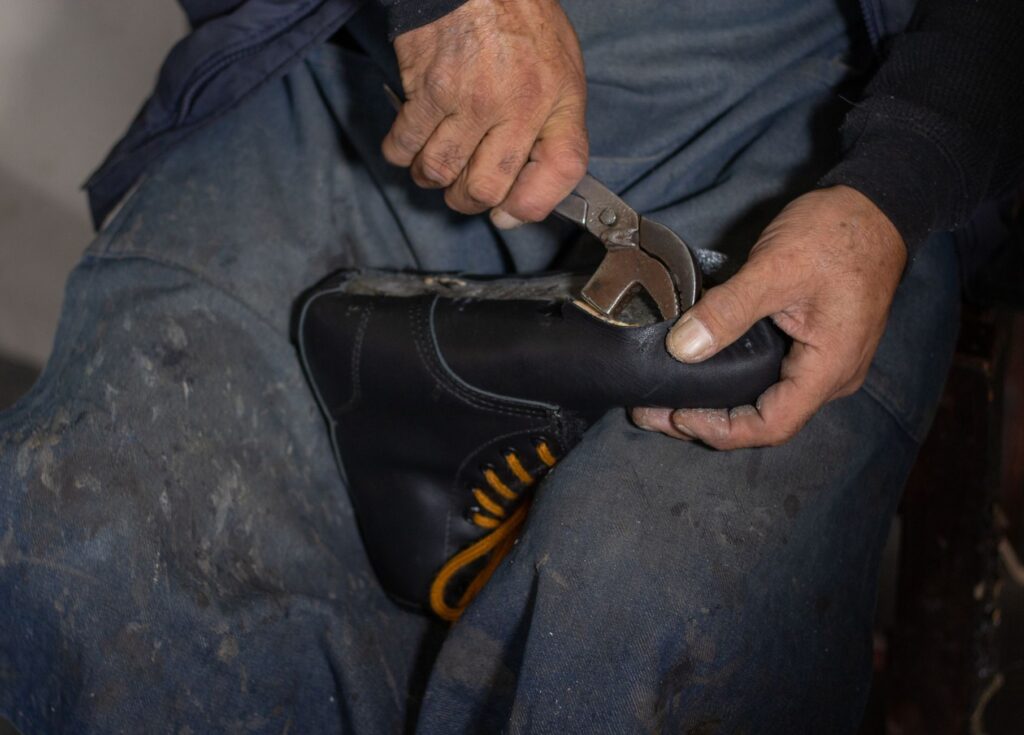
During the preparation process, the binder examines every millimeter of the leather for natural scars or irregularities which, far from being discarded, are integrated into the final design as testimony to the animal’s life. Skiving the leather, performed with surgical-edge vacuum knives, requires a tactile sensitivity acquired only after decades of practice. A tenth of a millimeter of error can pierce the surface and ruin hours of work in preparing the corners and the spine.
The art of gold: hot stamping and eternal brilliance
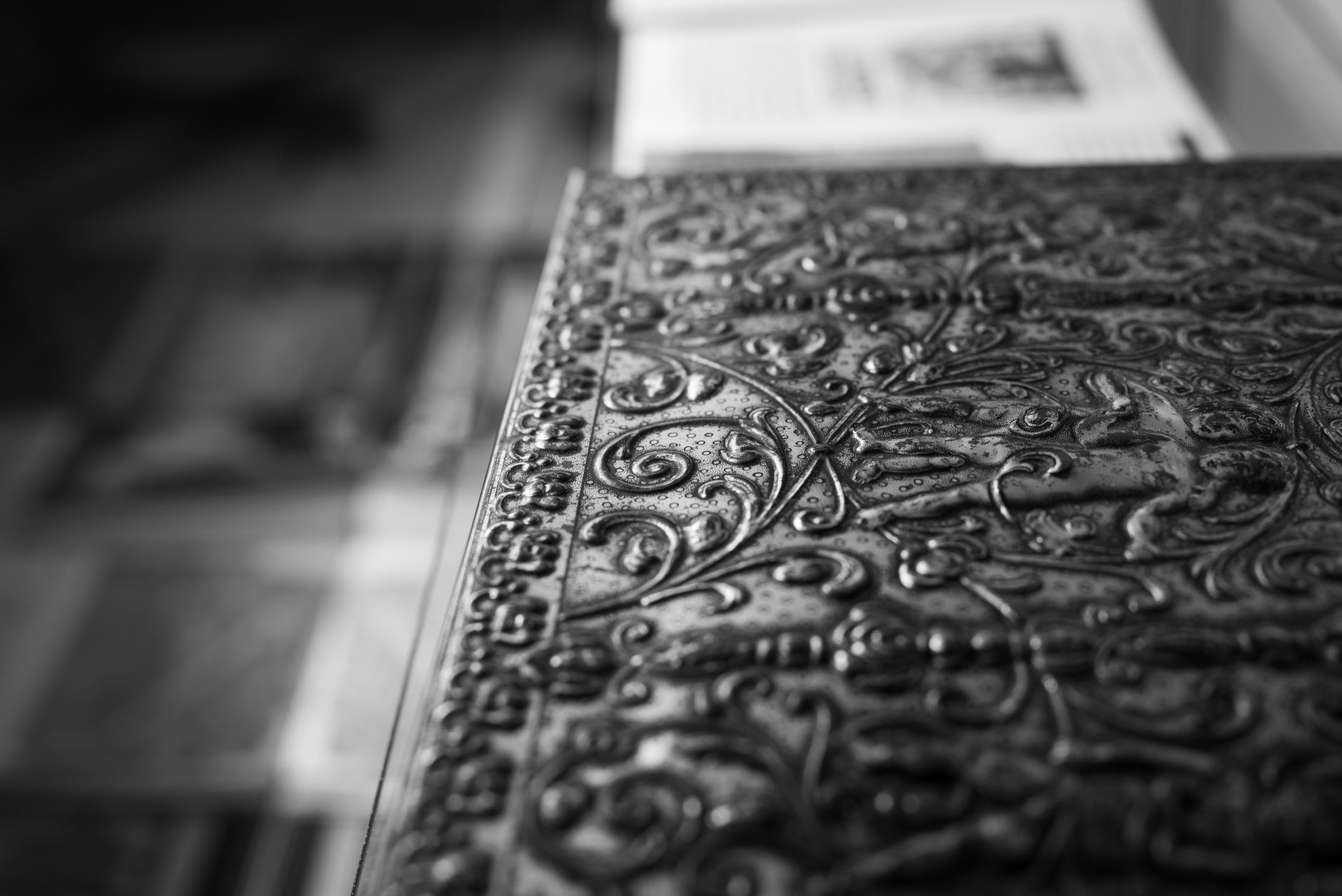
Few visual spectacles match the precision required to apply genuine gold leaf to the spine of a volume bound in Moroccan goatskin. The master heats the bronze or brass typographic composition in an electric stove, checks the exact temperature by spitting lightly on the metal—the water should evaporate with a subtle sizzle, without boiling violently—and presses with millimeter firmness onto the gold film previously arranged over the leather.
This procedure, known as tool gilding or hot stamping, admits no hesitation. Too much heat melts the adhesive layer and burns the grain of the leather; a lack of pressure leaves an incomplete engraving that detracts from the piece. In current Florentine workshops, Renaissance geometric designs coexist with minimalist proposals where blind lines—engraved without gold or pigment, solely through pressure and heat—generate chiaroscuro plays of sober, contemporary elegance.
The hand-bound book is not a refuge against the future, but a declaration that memory deserves a body worthy of being touched.
Paper marbling: controlled chance in the dipping tray
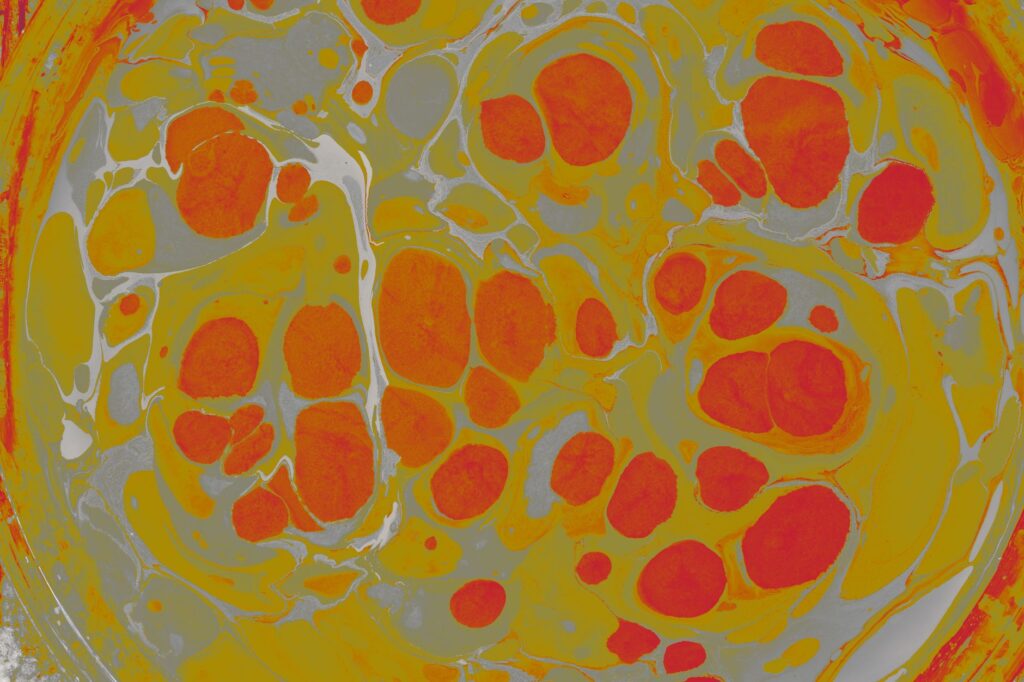
No classic Florentine cover is complete without its marbled paper endpapers, an abstract pattern simulating the veins of agate or the concentric waves of a miniature galaxy. In the Alinari family workshop, one of the bastions of this tradition, preparing the tray is an almost morning ritual. Tragacanth or carrageenan gum is dissolved in distilled water to create a dense liquid upon which colors float without chaotic mixing.
Using fine-bristle brushes and calibrated metal tooth combs, the artisan splashes and stretches drops of mineral pigment. Cotton paper, previously treated with alum to fix the colors, is deposited with a tilting, fluid movement on the water’s surface. In less than two seconds, the design transfers entirely to the sheet. No two marbled papers in the world are identical, making each binding an unrepeatable work from its very first interior sheet.
Bibliographic rescue: anatomy of a restoration
Beyond creating new work, the bulk of the labor in these workshops consists of restoring incunabula, 18th-century atlases, and literary first editions that arrive with brittle leaves, undone stitches, and covers eaten away by humidity or wood-boring insects. This process begins with a forensic diagnosis: the pH of the paper, the type of original adhesive used, and the degree of acidity threatening to pulverize the cellulosic fibers are analyzed.
The washing and deacidification phase in purified water vats precedes the most delicate task: grafting Japanese paper onto torn margins, a labor executed thread by thread under high-magnification magnifying glasses. Each intervention must be reversible and respectful of the book’s material history, avoiding aesthetic falsifications. The supreme objective is not to return the volume to a fresh-off-the-press look, but to stabilize its structural health, allowing the scars of time to continue narrating their own chronicle.
Contemporary design: when the modern book dons the avant-garde
Far from anchoring themselves in industrial archaeology, artistic bookbinding in Florence engages in a direct dialogue with current graphic design and contemporary art. In recent years, experimental poetry publishers and visual artists have commissioned these workshops to create supports where binding merges with sculptural elements: exposed spines with square-section visible stitching, transparent methacrylate covers revealing the soul of the sewn signatures, or insertions of pigmented concrete and oxidized metals.
This open-mindedness has attracted an international clientele composed of private collectors, modern art museums, and university libraries eager to possess unique copies. Florentine masters thus demonstrate that tradition is not the worship of ashes, but the transmission of fire, adapting a secular technique to the expressive concerns of the present without losing an ounce of its technical rigor.

Practical guide
Planning a route through the bookbinding workshops in Florence demands sensitivity, respect for local schedules, and advance appointments in most cases, as these are active working spaces rather than commercial museums.
- How to get there: Florence-Peretola Airport (FLR) connects with major European hubs. From Santa Maria Novella central station, the Oltrarno district is reached in a twenty-minute walk across the Arno River.
- When to go: Spring (April to June) and autumn (September to November) offer ideal natural light to visit workshops and avoid the summer crowds of Piazza del Duomo.
- Workshop etiquette: Many artisans work with tight delivery deadlines. It is essential to request an appointment by email before visiting and avoid touching tools or materials without explicit authorization.
- Where to buy marbled paper and supplies: Historic establishments such as Giulio Giannini e Figlio (Piazza de’ Pitti, 37/r) maintain showcases open to the public where handmade notebooks and high-quality paper samples can be purchased.
- Recommended visits: The cultural center and workshop of the Fondazione Per Arte della Carta e Stamperia near San Frediano offers periodic demonstrations with prior registration.
Epilogue: Touch as resistance in the digital age
In a time dominated by the intangibility of the cloud and the speed of fragmented reading on liquid crystal screens, stepping into a bookbinding workshop in Florence represents an experience of profound emotional depth. When the traveler leaves the workshop after contemplating the calloused, precise hands of a master applying the final gold leaf to a leather binding, they understand that the value of these objects lies not in their utilitarian usefulness, but in their capacity to anchor humanity’s collective memory.
The creak of the hinge when opening a hand-sewn book acts as a reminder of our own material fragility. The bronze tools, the colored water trays, and the cotton paper sheets will continue to wait in the alleys of Oltrarno for those who wish to touch the past with their fingertips, proving that as long as there are books worthy of being housed, Florence will remain the unextinguishable heartbeat of Western culture.