The Invisible Geography of Still Water
In northwestern Europe, there exists a landscape where the verticality of Gothic cathedrals competes solely with the absolute horizontality of water mirrors. Between Bruges and Ghent, the geography does not rise in jagged peaks nor plunge into mineral canyons; rather, it unfolds as a low-altitude liquid canvas. This territory, sculpted over centuries by human hands and the persistence of the Lys and Mandere rivers, constitutes one of the oldest and best-preserved fluvial transport systems on the continent. Stepping away from contemporary urban bustle implies descending to this zero baseline, where asphalt yields its prominence to clayey mud, red-brick walls blanketed in moss, and a network of canals that once transported English wool and tapestries destined for courts across Europe.
The water journey between these two Flemish cities does not pander to the rush for speed that dominates modern transit. Aboard low-draft vessels or cycling along the old towpaths, travelers soon realize that the true luxury of this route lies in its immutability. The wooden lock gates, operated manually or mechanically under strict hydraulic management protocols, set a waiting tempo that invites contemplation. Here, water is not a mere logistical resource, but a living historical archive storing the traces of merchants, weavers, and nuns who populated these lands since the twelfth century.
Understanding the sheer scale of this network requires examining its economic genesis. The Flemish canals did not arise as whimsical landscape features, but as the most advanced technical response of the Middle Ages to connect textile production centers with the North Sea via the Scheldt estuary. Medieval hydraulic engineering successfully tamed a waterlogged terrain through the systematic construction of dikes, drainage ditches, and retention gates that balanced tides and seasonal overflows. Today, navigating this corridor is akin to reading an applied geography treatise where every bend in the canal reveals the ingenuity of ancient master builders.
The Architecture of Brick and Monastic Silence
As the boat pulls away from the spires of Bruges, the urban landscape gradually dissolves into a silent countryside where trembling poplars draw perfect vertical lines against the overcast sky. Gabled farmhouses and damp pastures grazed by indigenous cattle compose a scene reminiscent of early Flemish painting. Yet, the most profound human element along this journey is not found in grand commercial palaces, but in the network of beguinages dotting the route—small, self-managed urban enclaves established by women who, since the Middle Ages, chose a life of spiritual independence outside traditional ecclesiastical hierarchies.

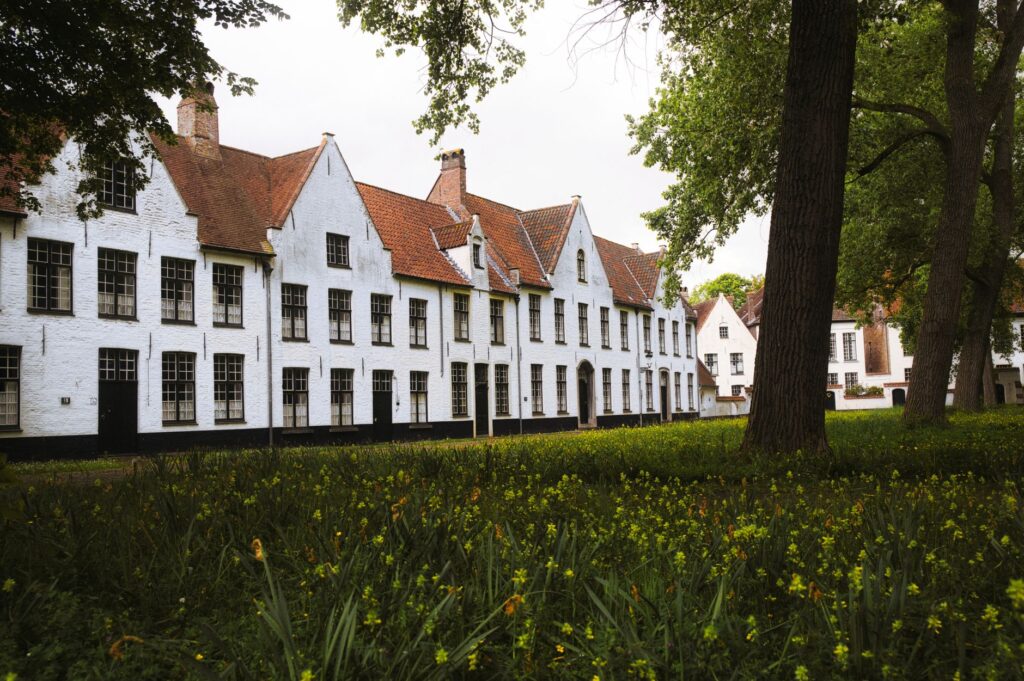
In Ghent, the Great Beguinage of Saint Elizabeth or smaller compounds hidden alongside canals preserve an atmosphere of serene enclosure that contrasts with the bustle of commercial docks. Their whitewashed houses, arranged around garden squares governed by near-absolute silence, testify to an early form of female association. Walking through these spaces upon disembarking reveals an uninterrupted historical continuity; the cobblestones worn down by centuries of silent footsteps preserve the memory of communities that understood isolation not as a punishment, but as an indispensable condition for intellectual labor and inner peace.
Locally kiln-fired brick, known as baksteen, serves as the common denominator of this vernacular architecture. Its hue ranges from deep red to toasted ochre depending on iron concentration in the clay and firing temperatures. Exposed permanently to the ambient humidity of the polders, this material acquires over decades a velvety patina of lichens and mosses that organically integrates buildings into the natural landscape. There are no aesthetic stridencies in Flanders; beauty resides in the golden ratio of facades, the sobriety of openings, and the way gray North Sea light reflects off stagnant canal waters.
Lock Engineering and Hydraulic Control
Maintaining this millenary river system demands constant technical labor that blends artisanal tradition with contemporary sensor technology. The locks, true mechanical lungs of the route, regulate water level differences across canal segments, allowing vessels to overcome topographic disparities without disrupting the delicate ecological balance of surrounding wetlands. Specialized operators oversee the opening of oak gates—a task requiring patience and deep knowledge of local hydrodynamics.
Water in Flanders never flows in haste; it constantly negotiates with gravity and human craftsmanship in a pact lasting a thousand years.
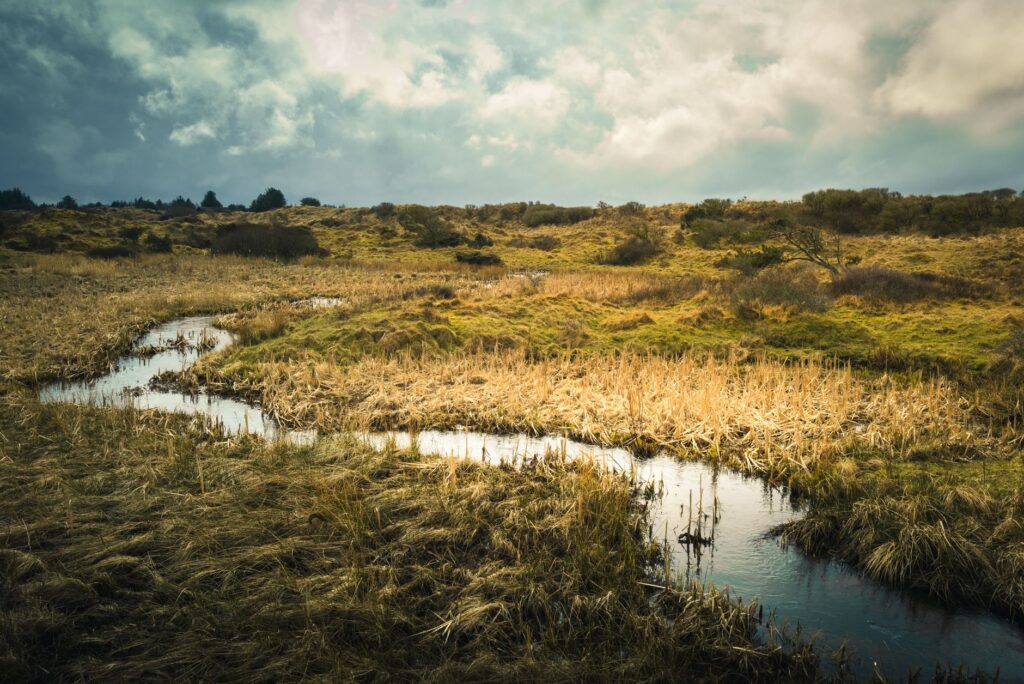
This balance rests upon a network of containment dikes and pumping stations preventing cultivated lands—situated in many cases below sea level—from suffering catastrophic floods. Water management in Flanders is an exercise in territorial sovereignty where civil engineering rises to the category of fine arts. During winter months, when persistent rains saturate clay soils, the gate system becomes a millimeter-precision machinery diverting surpluses into secondary storage basins, protecting both historical heritage and surrounding agricultural holdings.
For contemporary travelers, witnessing the operation of a historic lock is a lesson in applied physics. The dull sound of water filling the chamber, the tension of hemp mooring lines, and the creak of centuries-old timbers compose an industrial symphony virtually unchanged since the Renaissance. It is at these points of transition that the travel narrative pauses, compelling passengers to abandon passivity and observe the meticulous coordination demanded by transit through an artificially domesticated landscape.
The Larder of the Polders and River Cuisine
The aquatic geography of Flanders inexorably determines its gastronomic culture. Far from globalized culinary trends, the cuisine of canals and polders relies on hyper-local ingredients closely tied to water and damp earth. In centuries-old taverns lining the towpaths, menus reflect the historical utilization of local resources: river eels prepared in green herb sauce, slow-cooked game stews simmered with artisanal abbey Trappist beers, and root vegetables cultivated in sediment-rich fluvial soils.
The region’s brewing tradition, deeply tied to medieval monasteries, finds its fundamental ingredient in pure underground aquifer water filtered through clay layers. Spontaneous fermentation beers, such as Lambic and complex Geuzes brewed in the Zenne valley and marketed across Flanders, age in oak barrels for months, acquiring a characteristic acidity that pairs perfectly with local washed-rind cheeses and freshwater fish. Every dish served in these historic coaching inns tells a story of climatic adaptation and economic survival.

Sitting down to dine before a window overlooking the misty canal allows travelers to grasp the sensory dimension of slow travel. Food is not a hurried transaction between transit points, but an act of communion with the surroundings. The produce of the polders—from spring white asparagus to endives grown in dark winter cellars—possesses an earthy, direct flavor profile rejecting unnecessary artifice, cementing a gastronomic identity as sober as it is enduring.
The Rhythm of the Bicycle and Towpaths
For those preferring to forgo motorized navigation, ancient towpaths—the paths running parallel to canals where mules and men once hauled heavy cargo barges—now constitute one of Europe’s most efficient cycling networks. Covering the distance between Ghent and Bruges on two wheels reveals the true scale of the Flemish landscape, a territory where distances are short yet the density of historical details demands unhurried progression.
The asphalt or fine gravel surfaces of these routes run beneath the protective shade of gnarled willow rows and centennial poplars. Along the trail, small wrought-iron swing bridges open intermittently to let recreational vessels pass, forcing cyclists to halt and observe the soundscape: buzzing bumblebees in riverside thickets, the rhythmic splashing of wild ducks, and the distant chiming of urban carillon bells. This soft mobility infrastructure demonstrates how nineteenth- and twentieth-century industrial heritage can be successfully repurposed into a sustainable leisure corridor.

The true traveler in Flanders seeks not to conquer distant horizons, but to sharpen their sensitivity to subtle variations of light upon stagnant water.
Trail signage, integrated into the numbered node cycling network (knooppunten), eliminates any risk of getting lost and allows custom routes tailored to personal interests, whether stopping at an organic farm to taste artisanal butter or visiting a medieval manuscript restoration workshop. The bicycle thus becomes a lightweight prosthesis fusing travelers with their surroundings, transforming simple displacement into moving meditation.
Practical Guide
Planning a fluvial and cultural journey between Bruges and Ghent requires understanding the seasonality and logistics of a territory with low tourism intensity outside summer months. The optimal window spans from early May through late September, when daylight hours extend and weather conditions permit river navigation without risks associated with unexpected winter floods.
How to Get There: Brussels International Airport (BRU) features direct, frequent train connections to both Bruges and Ghent, with journey times under an hour and a half. From either station, access to canals and historic centers is achieved on foot or via efficient urban tram networks.
Fluvial Transport and Cycling: Several local operators run low-speed river cruises between Bruges and Ghent during warm months, though maintaining autonomy is best achieved by renting license-free electric boats or combining train and bicycle travel. Bicycle rental networks (such as Blue-bike) are seamlessly integrated into Flemish railway stations.
Accommodation: Staying in small boutique hotels housed in restored historic buildings along Ghent’s canals or traditional rural guesthouses in intervening polders is strongly advised, prioritizing establishments certified with local eco-sustainability labels.
Documentation and Regulations: Belgium belongs to the Schengen Area; European Union citizens require only a valid ID card or passport. Respecting commercial canal navigation regulations and cycling access restrictions in protected nature reserves during waterbird nesting seasons is essential.
Reconnecting with the Liquid Mirror
The journey through the Flanders canals inevitably concludes where it began: facing a mirror of still water reflecting the distorted silhouette of a medieval spire. At dusk, when the golden twilight light fragments across the rippled canal surface and the first wrought-iron streetlamps flicker over dormant docks, the true emotional closure of the trip occurs. The rush accumulated in daily life dissolves in this atmosphere of aquatic stillness, where every stone, lock, and weeping willow seems to whisper a single ancestral truth: that the most memorable places are not those conquered rapidly, but those allowing us to inhabit time with total, absolute depth.