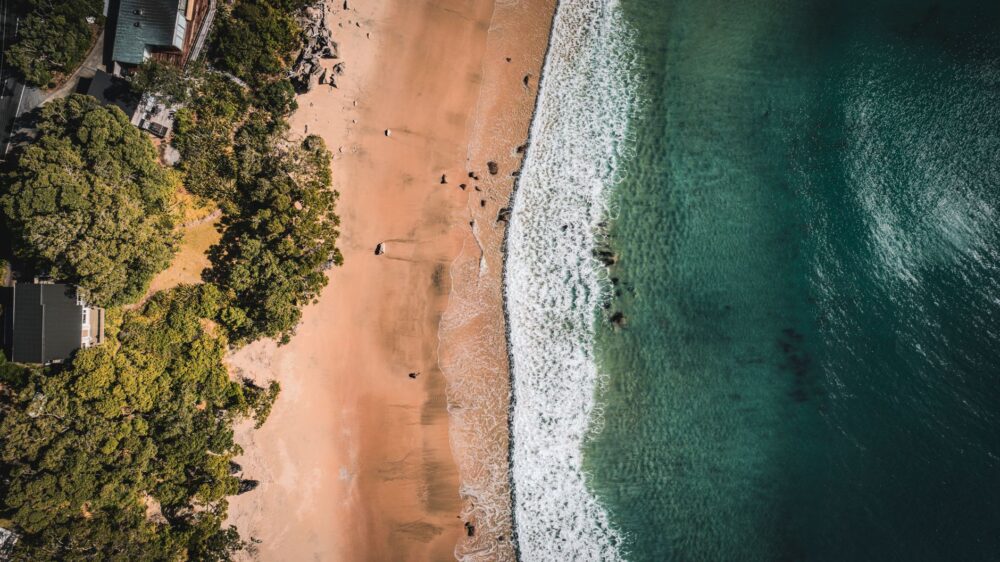
At the southern edge of the earth, where the Southern Alps tear across the horizon and fjords hold millennial silences, the high-end travel industry is undergoing a profound mutation. It is no longer merely a question of offering privileged views over vast emptiness, but of assuming a radical co-responsibility for the surroundings. New refuges of sustainable design in New Zealand are redefining luxury not through material ostentation, but through architectural invisibility, energy self-sufficiency, and the active restoration of degraded ecosystems. This evolution responds to a global ecological urgency and a growing demand from travelers seeking ethical coherence in every kilometer traveled.
The phenomenon does not arise in a vacuum. It is driven by a unique convergence between the country’s strict environmental regulations, the Māori worldview of kaitiakitanga—the reciprocal care of the land—and a vanguard of architects and conservationists determined to prove that nature tourism can be a regenerative engine. From isolated valleys in the South Island to tide-swept peninsulas in the north, these establishments operate under a revolutionary premise: leaving the landscape better than they found it, operating in perfect harmony with natural cycles, and offering immersive experiences that transcend mere accommodation.
The Architecture of Invisibility and Bioclimatic Comfort
The first major shift is visible in the materiality of the buildings. The aesthetics of concrete and tinted glass have been banished in favor of structures that engage in a direct dialogue with local geology. Certified timber, stone from nearby quarries, and rammed-earth walls form shelters that appear to emerge organically from the slopes where they rest. These designs seek not only visual blending, but absolute thermal efficiency through passive solar orientation, sheep’s wool insulation, and natural cross-ventilation systems that eliminate the need for artificial climate control.

In these spaces, every detail responds to a rigorous study of the local microclimate. Green roofs act as habitats for native insects and regulate interior temperatures, while rainwater harvesting and advanced greywater treatment through artificial wetlands ensure self-sufficiency in areas where water resources are sacred. Luxury is thus redefined as the privilege of inhabiting a space that breathes in unison with the native forest, without altering the migration routes of local birdlife or fragmenting the forest floor.
Clean Energy and the Conquest of the Night Sky
Energy autonomy is another pillar supporting this transformation. Far from conventional electrical grids, these lodges depend on microgrids powered by state-of-the-art solar panels and low-impact micro-hydraulic turbines installed in local streams, always under the supervision of marine and freshwater biologists. This transition to 100% renewable energy is combined with a strict zero single-use plastics policy and a localized supply chain that prioritizes small organic producers in the region.
However, one of the most unique attractions of this new generation of accommodations lies in their relationship with darkness. Located within or on the edges of international dark sky reserves, such as the Aoraki Mackenzie Dark Sky Reserve, these refuges have integrated astronomy into their value proposition. Exterior lighting is rigorously designed with total cutoff angles and amber spectrums to prevent light pollution. Observing the Milky Way from an outdoor geothermal tub, guided by local astronomers who interpret both Western science and Māori navigational constellations, turns a night’s rest into an experience of profound cosmic reconnection.

Active Conservation: From Passivity to Regenerative Activism
For decades, ecotourism was limited to reducing carbon footprints and practicing respectful contemplation. Today, the most advanced projects in New Zealand have made the leap toward ecological activism. Part of the revenue generated by each stay goes directly to programs aimed at eradicating introduced species—such as stoats, possums, and rodents—that threaten flightless native birds like the kiwi or the takahē.
Guests are not mere spectators of these efforts; they are invited to actively participate in citizen science. It is possible to collaborate in monitoring conservation traps, measuring water quality in nearby streams, or reforesting with thousands of native tree specimens such as the kauri and the rimu. This participation transforms the psychology of travel: the tourist stops consuming a landscape to become its temporary custodian, taking home a much more complex understanding of the biological balances that sustain life on the planet.
Cultural Integration and Respect for Māori Heritage
Sustainability in New Zealand is inseparable from cultural justice and the recognition of the rights of local iwi (tribes). The new high-end lodges work in close collaboration with tribal councils to ensure that tourism development economically benefits indigenous communities and respects sacred or tapu sites.
This alliance goes beyond mere cultural ornamentation. Local guides of Māori descent convey a narrative that intertwines scientific ecology with ancestral knowledge regarding the medicinal use of plants, the reading of tides, and absolute respect for the elements. Māori hospitality, known as manaakitanga, permeates every interaction, establishing a symmetrical relationship of mutual respect between the traveler and the traditional host, something essential to decolonizing the nature travel experience.

Operational Challenges and the Rigor of Certification
Despite progress, the path toward true sustainability is fraught with complex challenges. Maintaining low-impact operations in extremely remote geographic areas requires sophisticated logistics that, paradoxically, sometimes involve high fuel consumption in goods transport. To mitigate this, managers implement rigorous life cycle audits and submit to independent international standards, such as EarthCheck certifications and the Tiaki Promise sustainable tourism seal.
True ecological luxury does not consist in hiding environmental impact behind a green facade, but in measuring it with absolute transparency and relentlessly reducing it until achieving a real regenerative balance.
Likewise, there is a constant challenge to prevent high-end ecotourism from becoming an exclusive preserve for economic elites disconnected from environmental reality. The best projects address this through free educational programs for local schools, the creation of dignified employment with fair wages for rural communities, and the opening of public trails that allow any citizen to enjoy restored natural spaces.

Practical guide
When to go: The optimal season to visit New Zealand’s sustainable accommodations spans from the southern summer (December to February) to autumn (March to May), when the weather is most stable and night skies offer the highest clarity for astronomical observation.
How to get there: Most international travelers fly into Auckland International Airport (AKL) or Christchurch (CHV). To access remote lodges on the South Island or isolated regions, renting electric vehicles or taking low-emission domestic flights operated by lower-consumption fleets is recommended.
Travel requirements: It is mandatory to apply for the New Zealand Electronic Travel Authority (NZeTA) prior to departure, along with the payment of the International Visitor Conservation and Tourism Levy (IVL), the funds of which are dedicated entirely to environmental protection projects.

What to pack: Layered technical clothing due to climate volatility, hiking footwear with clean soles to prevent the spread of diseases in native forests (such as kauri dieback), and good quality binoculars for observing wildlife and night skies.
Ultimate Refuge: Silence, Stars, and Oceanic Memory
At the end of the day, when the wind from the Tasman Sea subsides and the tree canopy stills, the experience of these refuges culminates in an almost ceremonial quietness. Sitting in the twilight of a terrace built from reclaimed wood, with no light other than the ancient glow of the Southern Cross, travelers grasp the true magnitude of this new model of hospitality. It is not about escaping the world, but about learning to inhabit it with the delicacy of someone walking on fragile and sacred ground. In these New Zealand confines, sustainability has ceased to be a marketing strategy and has become a form of applied poetry, a tangible reminder that the future of tourism lies in our ability to listen to the land, protect its darkness, and return to it, with every decision, the dignity of its original state.
Source: Elliott Report (Journalistic translation and adaptation regarding ecotourism and sustainability in New Zealand).