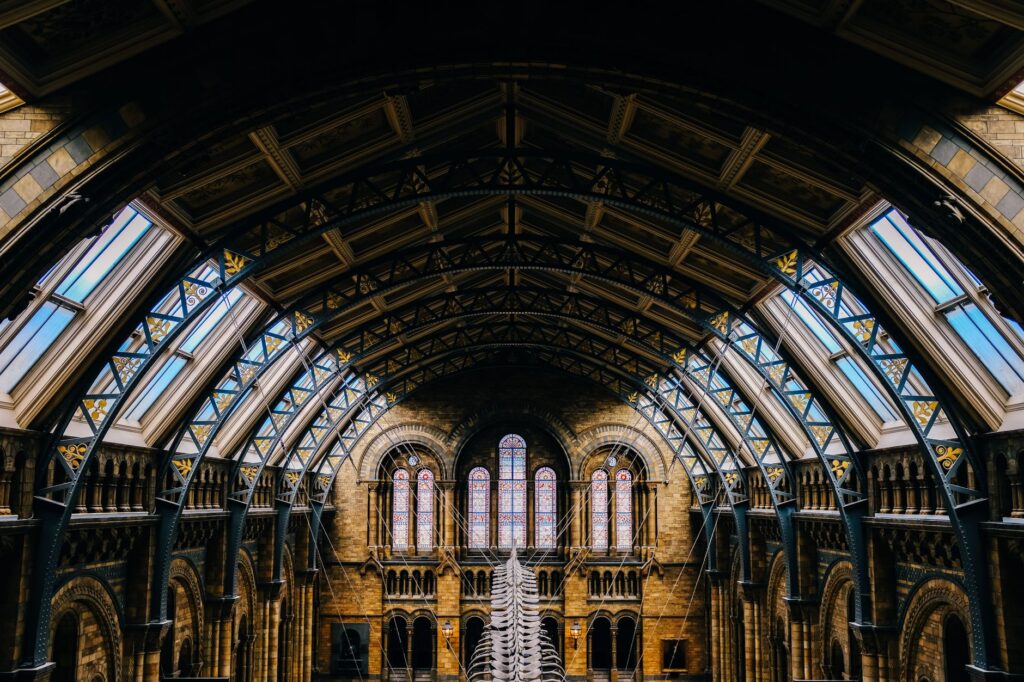
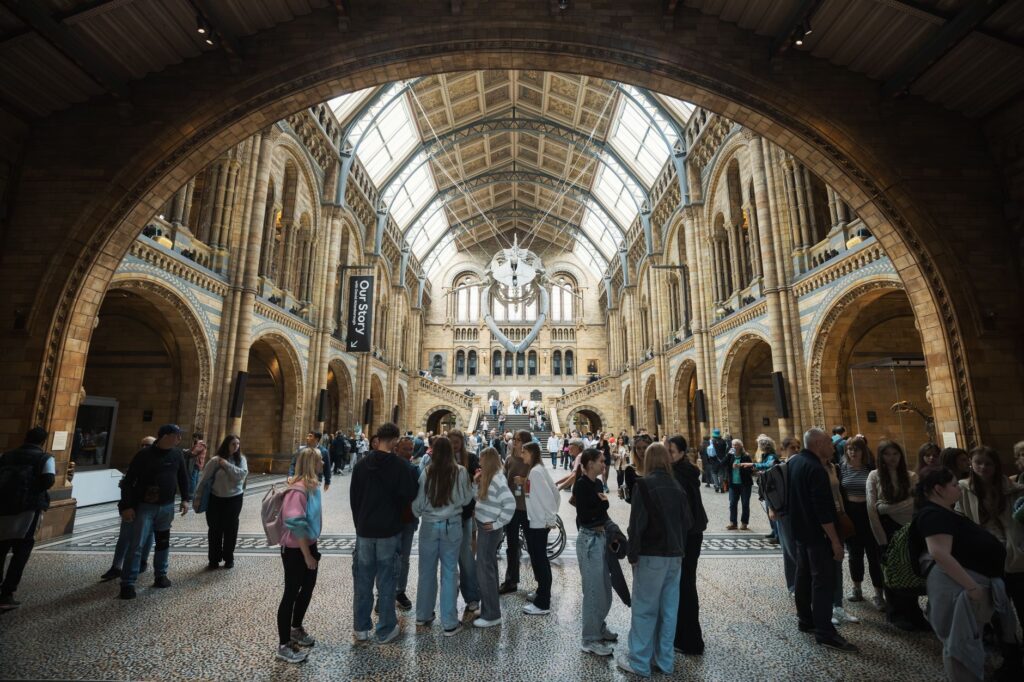
In the thoughtfully dimmed galleries of London’s Natural History Museum, the silence preceding the opening of the sixty-second edition of the Wildlife Photographer of the Year competition carries an almost sacred weight. Starting October 16, this temple of Victorian science will once again transform into the global epicenter of visual narrative on nature, hosting images selected from tens of thousands of entries spanning every corner of the globe. The 2026 exhibition does not merely celebrate technical wizardry and aesthetic perfection; it consolidates a historic conceptual shift: the evolution from contemplating natural beauty to delivering an urgent, complex, and deeply human testimony on the state of global biodiversity.
The works selected this year by the international jury transcend the traditional golden-hour stampede on the savannah or the static portrait of an apex predator. This edition’s curation delves into the fissures where the anthropogenic realm and the wild overlap, revealing stories of improbable adaptation, silent loss, and fragile coexistence. In an era marked by swift climate and industrial metamorphosis, the nature photography on display in South Kensington permanently moves beyond decorative entertainment, assuming the role of scientific documentation, environmental advocacy, and a vessel for interspecies empathy.
The ethical lens: beyond the perfect capture
For decades, nature photography was defined by the concept of the decisive moment captured through unyielding patience and formidable telephoto glass. While technical excellence remains essential, the 62nd edition places strict ethical integrity at the absolute core of its judging process. The competition’s code of conduct strictly forbids live baiting, animal harassment, deceptive digital manipulation, and any field practices that compromise the well-being of the subject or the pristine nature of its habitat.
The winning images of 2026 prove that true visual mastery stems from a profound respect for nature’s intrinsic rhythms. The featured photographers spent months, sometimes years, embedding themselves into delicate ecosystems without leaving a trace. They relied on non-invasive technologies such as custom remote nest boxes, high-fidelity camera traps equipped with passive infrared sensors, and remotely operated wide-angle lenses. This meticulous methodology brings to light behaviors never before documented by science, from courtship rituals in the abyssal zone to intricate social dynamics among neotropical birds.
Nature photography in the twenty-first century no longer seeks the idyllic postcard of an untouched paradise, but rather the revelation of a shared truth between species on a rapidly transforming planet.
Tales of resilience: wildlife on the urban frontier
One of the most potent narrative arcs in this year’s showcase belongs to the category dedicated to urban wildlife and human-dominated environments. Far from being biological deserts, the world’s great metropolises have become accelerated evolutionary laboratories where diverse species learn to navigate human infrastructure to ensure their survival.
Among the most striking works displayed at the Natural History Museum are visual sequences documenting the secret lives of vertebrates on the industrial fringes of Asian and Latin American megacities. These compositions capture the astonishing behavioral plasticity of wild fauna confronting the relentless expansion of concrete:
- Adapting to the artificial night: Birds of prey utilizing urban LED lighting to hunt insects and small mammals well outside their traditional biological hours.
- Invisible corridors: Carnivorous mammals employing subterranean drainage networks and nocturnal railway tracks as genetic dispersal highways in hyper-dense urban centers.
- Unintended sanctuaries: Bat and reptile colonies establishing nests in the crevices of concrete bridges and modern skyscrapers, mimicking the microclimates of their ancestral cliff faces.
Wounded oceans and the aesthetic of the abyss
The marine realm occupies a central place in the 2026 collection, reflecting both the unexplored vastness of the hydrosphere and the severe pressures inflicted by ocean acidification, overfishing, and plastic pollution. The underwater imagery presented combines formidable technical precision with a painterly sensitivity reminiscent of Baroque chiaroscuro, where the diffused light of the deep sculpts forms of breathtaking grace.
From the glacial fjords of Norway to the abyssal trenches of the South Pacific, this year’s underwater photography rejects cheap sensationalism to focus on the structural vulnerability of benthic and pelagic ecosystems. Water becomes a canvas where marine life—from microscopic bioluminescent planktonic organisms to majestic cetaceans—is portrayed in its true scale, reminding viewers of the fragility of a realm covering over seventy percent of the Earth’s surface yet remaining largely out of human sight.
Indigenous communities: invisible guardians of biodiversity
In alignment with contemporary conservation paradigms, the competition pays tribute in this edition to the pivotal role played by Indigenous communities and local stewards in safeguarding the planet’s remaining wild strongholds. The environmental photojournalism category discards dated neocolonial narratives in favor of genuine partnerships between traditional knowledge systems and modern scientific research.
The selected photo essays document grassroots initiatives where territorial sovereignty and wildlife protection go hand in hand. Through intimate portraits and cultural landscapes, the photographers illustrate how community-led stewardship of tropical rainforests, Arctic tundras, and coral reefs proves far more effective and durable than the fortress conservation models of the past.
Science behind the frame: judging wild life
Understanding the weight of Wildlife Photographer of the Year requires a look inside the rigorous judging process that unfolds over nearly a year at the Natural History Museum. The jury for the 62nd edition, comprising an interdisciplinary panel of marine biologists, picture editors, renowned photographers, and conservation scientists, evaluated nearly 50,000 anonymous entries submitted from over ninety countries.
The shortlisting process adheres to uncompromising standards built around three fundamental pillars:
- Narrative originality: The ability of a single image or sequence to tell an untold story or offer a fresh visual angle on a familiar subject.
- Technical excellence and composition: Flawless control of light, framing, depth of field, and exposure under extreme field conditions.
- Authenticity and integrity: Exhaustive scrutiny of RAW files to verify the absolute absence of digital manipulation, cloned elements, or invasive post-processing.
Documenting six decades of the Great Acceleration
Founded in 1965 by BBC Wildlife Magazine and later fully acquired and developed by the Natural History Museum, the competition has assembled the world’s most vital visual archive of biosphere transformation during the Anthropocene era. By comparing winning entries from early decades with contemporary selections, environmental historians trace a dramatic evolution in human perception of the natural world.
Where the 1960s and 1970s often celebrated a triumphant, exploratory view of untamed wilderness, the twenty-first-century collection bears the undeniable signature of the Great Acceleration. Habitat loss, species decline, and global climate shifts are not abstract concepts in this exhibition; they are tangible realities rendered by the lens with surgical clarity and tragic poetry.
Technical innovation and raw documentary truth
The 2026 edition illustrates a mature harmony between technological advancement and the pure essence of direct documentary photography. The development of full-frame sensors with unprecedented dynamic range, alongside artificial-intelligence-assisted autofocus systems tailored for tracking rapid animal motion, has unlocked creative dimensions unimaginable a decade ago.
Yet, paradoxically, this technological leap has elevated the value of simple, unvarnished storytelling. Many of the most celebrated works in the exhibition rely on the restrained use of natural light and ground-level perspectives that place the viewer eye-to-eye with the subject, dissolving the hierarchical distance between human observer and wild animal.
The ultimate value of a wildlife photograph lies in its power to suspend indifference, compelling us to view the natural world not as a resource to exploit, but as a shared home.
Practical guide
For visitors planning to experience the 62nd edition of Wildlife Photographer of the Year at the Natural History Museum in London, the following essential details will assist in structuring an optimal visit:

- Location and transit: The exhibition is held in the Waterhouse Temporary Exhibition Gallery at the Natural History Museum (Cromwell Road, South Kensington, London SW7 5BD). The nearest Underground station is South Kensington (District, Circle, and Piccadilly lines), connected via a pedestrian subway tunnel.
- Dates and opening hours: The exhibition opens to the public on October 16, 2026, and runs through the summer of the following year. Daily opening hours are Monday to Sunday from 10:00 to 17:50 (last admission at 16:30).
- Ticket reservations: While general admission to the museum’s permanent collections is free, entry to the Wildlife Photographer of the Year exhibition requires a timed ticket. Advance booking through the museum’s official digital platform is mandatory to guarantee entry and avoid long queues during peak hours.
- Visitor amenities: The exhibition offers downloadable multilingual audio guides for personal mobile devices, fully step-free accessible routes, and tailored educational resources for families and school groups.
A frame for the soul: the epilogue of wonder
Strategically placed near the exit of the exhibition gallery, one of the most poignant photographs of this 62nd collection captures the true spirit of the competition. It presents a close-up portrait of an endangered mammal sheltered in its nocturnal refuge, where the glow of a full moon outlines its silhouette and reflects the vast night sky within its dark pupils. In the stillness of that gaze, there is neither fear nor challenge, but a sovereign presence completely indifferent to human vanity.
Stepping out from the darkened halls of the Natural History Museum into the vibrant streets of South Kensington, visitors carry away far more than the memory of a visual spectacle. They leave with the quiet certainty of having witnessed an irreplaceable visual manifesto. The photographs chosen for 2026 serve as a vital reminder that protecting wildlife is not a condescending act of benevolence, but the only path forward to ensure the continuity of our own story on Earth.
Source: Condé Nast Traveler Spain