
Introduction to Southern Geography and Invisible Corridors
The vastness of Argentine Patagonia has historically represented a major challenge for transport engineering and the consolidation of stable commercial routes. At the edge of the American continent, where the mountain ranges of the Patagonian Andes drop abruptly toward steppes swept by gale-force winds, connectivity is not merely a matter of tourist convenience, but a matter of territorial sovereignty and logistical survival. Far from the glamour of European high-speed trains, the south of the continent has relied on a hybrid and fragmentary network of southern railways, fluvial and lacustrine navigation, and gravel roads that demand rigorous planning from any traveler seeking to understand its complex mobility architecture.
This report examines with analytical rigor the evolution of transport systems deep within Patagonia, paying special attention to the historic rail-lacustrine system connecting Andean valleys with the Atlantic and the Pacific. Through a documented journey across technical archives, engineers’ logs, and testimonies from local operators, we unravel how the combination of narrow gauges, ferries on glacial lakes, and mountain passes has shaped one of the most fascinating and demanding mobility geographies on the planet. Austral mobility does not respond to the logic of mass efficiency, but to resilience in the face of an unforgiving nature that dictates its own operational rules.
The Genesis of the Austral Rail: Between Wool Fever and Geopolitical Strategy
The origins of railway infrastructure in Argentine Patagonia date back to the late nineteenth and early twentieth centuries, a period when the national state and British capital recognized the urgent need to connect Atlantic ports with interior livestock deposits and border enclaves. Unlike the central Pampas network, designed exclusively for grain export, southern branch lines were born with a dual vocation: consolidating sovereign presence in disputed territories and guaranteeing the commercial outlet for wool and sheep farming.
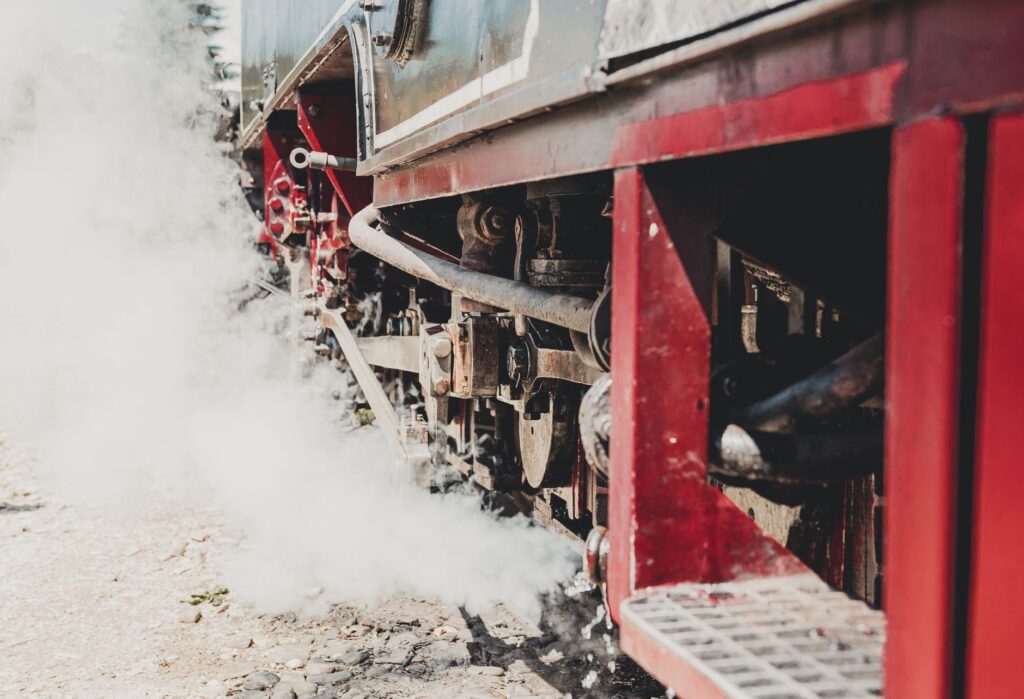
The layout of the Patagonian Railway, promoted by law in 1908 under the direction of state experts, projected linking San Antonio Oeste in the Río Negro province with San Carlos de Bariloche at the foot of Lake Nahuel Huapi. This monumental undertaking faced unprecedented geological obstacles. Engineers had to contend with stone deserts, absolute shortages of drinking water, and extreme thermal fluctuations that expanded or contracted steel rails. The steam locomotives that initially traversed these tracks not only carried heavy cargo but operated as the sole umbilical cord with the rest of the country during long winter months, when snow blocked the few land trails.
Engineering Against the Wind: The Alignment from Steppe to Cordillera
Overcoming the topographic transition between the Patagonian plateau and the Andes mountain range required ingenious technical solutions. The terrain devoid of tall vegetation exposed convoys to crosswinds capable of derailing lightweight carriages, forcing a redesign of rolling stock centers of gravity and the erection of protective palisades along the most exposed sections. The seventy-five-and-a-half-centimeter narrow gauge predominant in many of these secondary branches allowed tighter curves to negotiate steep gradients without resorting to costly tunnels.
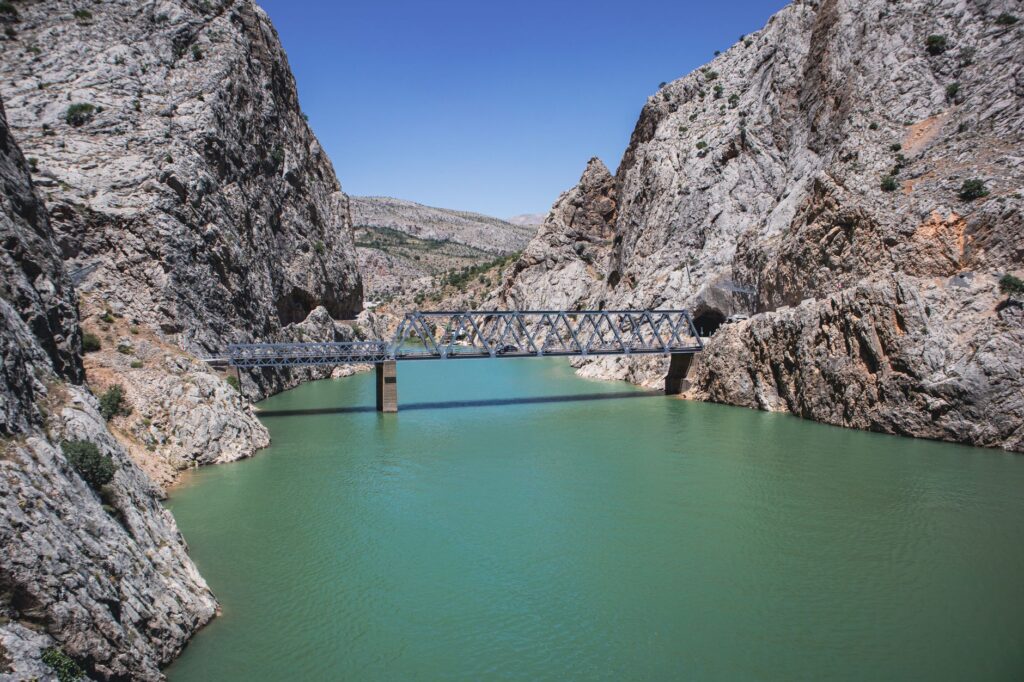
Along the route, the integration of metal bridges over deep canyons carved by ancient thaws constituted another feat of British metallurgy assembled in situ. Every rivet and lattice girder transported in barges and carts from coastal ports testifies to the audacity of an era when logistics depended on animal strength and artisanal skill. Today, many of these century-old bridges still stand, supporting both the passage of historic trains and the curiosity of civil engineers visiting the region to study their astonishing durability.
The Rail-Lacustrine Network: When the Train Meets the Glacier
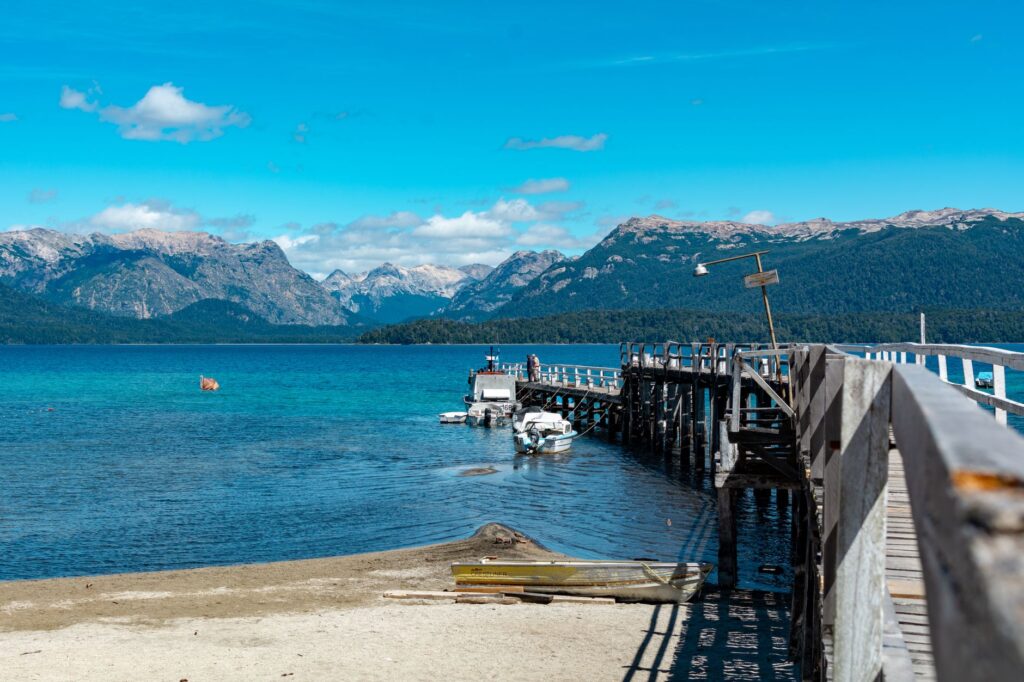
One of the most fascinating chapters of Patagonian connectivity is the intermodal articulation between the railway and lacustrine navigation. In the Andean lakes region, where freshwater glacial mirrors occupy transversal valleys impassable for land tracks, passenger and freight transport had to adopt an amphibious character. Convoys arriving at lake terminals transferred their cargo directly to steamships and coastal vessels equipped to withstand sudden storms.
This rail-lacustrine system made it possible to structure trans-Andean routes connecting Argentine Patagonia with Chilean Pacific ports through the Pérez Rosales or Puyehue passes. Early twentieth-century travelers experienced a seamless transition between the metallic rattle of the train and the gliding silence of navigation among fjords and sub-Antarctic forests. The combination of both media was not a simple tourist alternative, but the backbone of a rudimentary yet extraordinarily effective bi-oceanic corridor.

The Strategic Role of Fuel and the Coal of Río Turbio
Further south, in the Santa Cruz province, railway logic acquired a strictly industrial character with the construction of the mining branch linking the coal deposits of Río Turbio with the port of Punta Loyola near Río Gallegos. This industrial railway, operational for decades, was conceived to guarantee the energy supply of a country critically dependent on solid fuels during twentieth-century international crises.
Featuring an unusual broad gauge for the southern region, this railway corridor demonstrated that Patagonia could host heavy infrastructure capable of withstanding the sub-continent’s harshest weather conditions. Operating these formations required permanent maintenance crews combating the freezing of switch points and the blocking of trenches by snowdrifts. Although massive coal transport later yielded to competition from petroleum and automotive transport, the alignment remains an indelible monument to the technical capacity deployed in the inhabited confines of the planet.
The Transformation of Southern Transport: From Rail to Asphalt and Air
With the advent of developmentalism in the mid-twentieth century and the prioritization of road infrastructure over railways in the Southern Cone, Patagonia underwent a profound mutation in its transport matrix. The gradual paving of National Route 40 and National Route 3, coupled with the consolidation of domestic aviation networks operated by state and private airlines, radically altered connectivity times and costs.
Many secondary railway lines were progressively abandoned or dismantled, deemed economically unviable compared to the flexibility of trucks and long-distance buses. However, this transition was not without systemic costs. Isolated communities relying exclusively on the weekly train pass suffered deep isolation when services were permanently interrupted, forcing a reconfiguration of the demographics and subsistence economies of Andean valleys.
Heritage Revival and Railway Tourism at the End of the World
In recent decades, Patagonia’s railway history has found a second life through tourism and heritage valorization. The most emblematic example is the celebrated End of the World Train in Tierra del Fuego, utilizing part of the original Ushuaia prison track to transport travelers along the National Park. Likewise, the iconic Trochita (Old Patagonian Express), linking Esquel with El Maitén in Chubut province, keeps early-century Baldwin and Henschel steam locomotives alive.
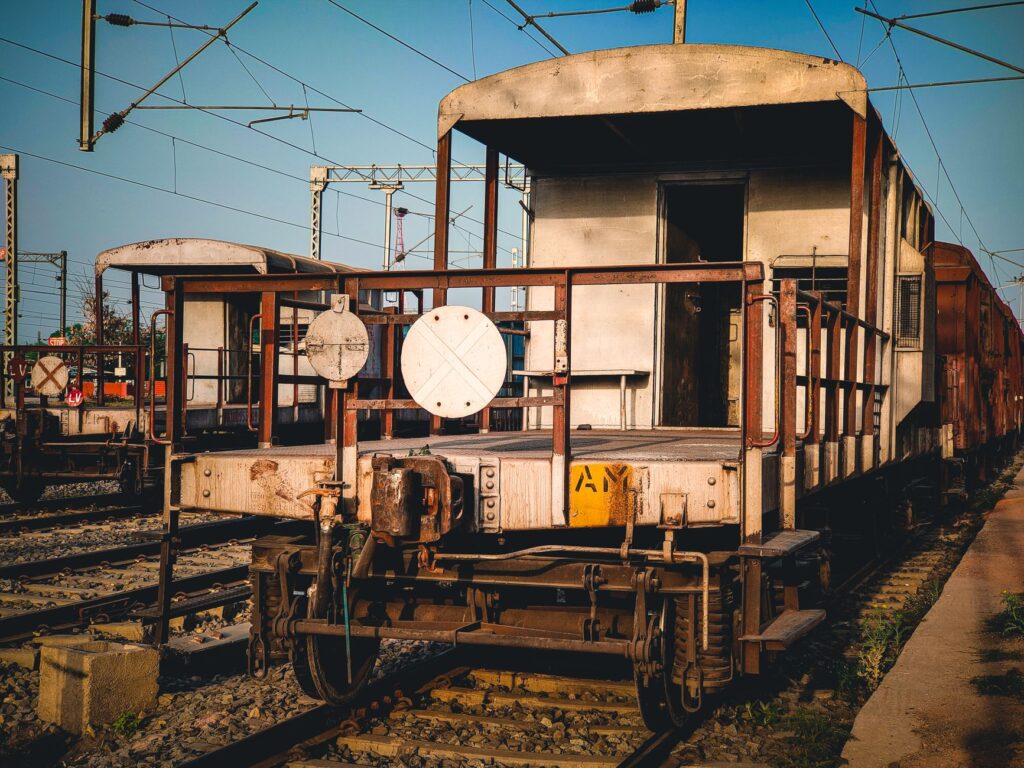
These heritage rescues are not mere nostalgic attractions; they operate as historical preservation tools and economic engines for local communities. The railway workshops of El Maitén continue to function with artisanal criteria, where turners and carpenters reproduce original parts using machinery installed nearly a century ago. This effort to keep historical machinery operational constitutes an act of cultural resistance against the planned obsolescence of modernity.
“The rail in Patagonia is not merely iron over ties; it is the civilizational scar that allowed sketching a human map where previously only wind and immensity existed.”
Practical guide
- How to get there: Primary access to the northern Patagonian railway region is via San Carlos de Bariloche International Airport (BRC) or domestic flights to Esquel (EQS) and Trelew (REL). For the southern region, key hubs are Río Gallegos (RGL) and Ushuaia (USH).
- When to visit: The optimal season for touring historical corridors and undertaking intermodal crossings spans from November through austral spring and summer (November to March), when weather conditions are milder and mountain passes remain free of accumulated snow.
- Railway reservations: Heritage tourist services, such as La Trochita and the End of the World Train, operate with reduced frequencies and high international demand. It is imperative to purchase tickets months in advance through official cultural and tourism management platforms.
- Intermodal logistics: To replicate ancient rail-lacustrine circuits, it is recommended to combine catamaran services operating on lakes Nahuel Huapi and Todos los Santos, coordinating land transfers in four-wheel-drive vehicles beforehand due to the variable condition of gravel roads.
- Recommended equipment: Patagonian weather is notoriously changeable; traveling with a technical clothing layering system (waterproof, windbreaker, and fleece), sturdy trekking footwear, and high-SPF sun protection due to altitude and southern atmospheric clarity is essential.
Emotional Epilogue: The Steam Whistle in the White Immensity
When the Patagonian afternoon begins to dissolve into ochre and violet tones over snow-capped cordillera peaks, the distant, guttural sound of a steam locomotive maneuvering in the El Maitén workshops evokes a time when the territory demanded patience and courage. In those moments, the traveler gazing at rails polished by the constant friction of time understands that Patagonia is not simply a geographical destination checked off a map, but a human-scale experience before the immeasurable. The quebracho wooden ties anchored in the steppe and the dark waters of glacial lakes hold the silent memory of engineers, machinists, and pioneers who wove, with iron and willpower, the invisible threads of southern integration.