
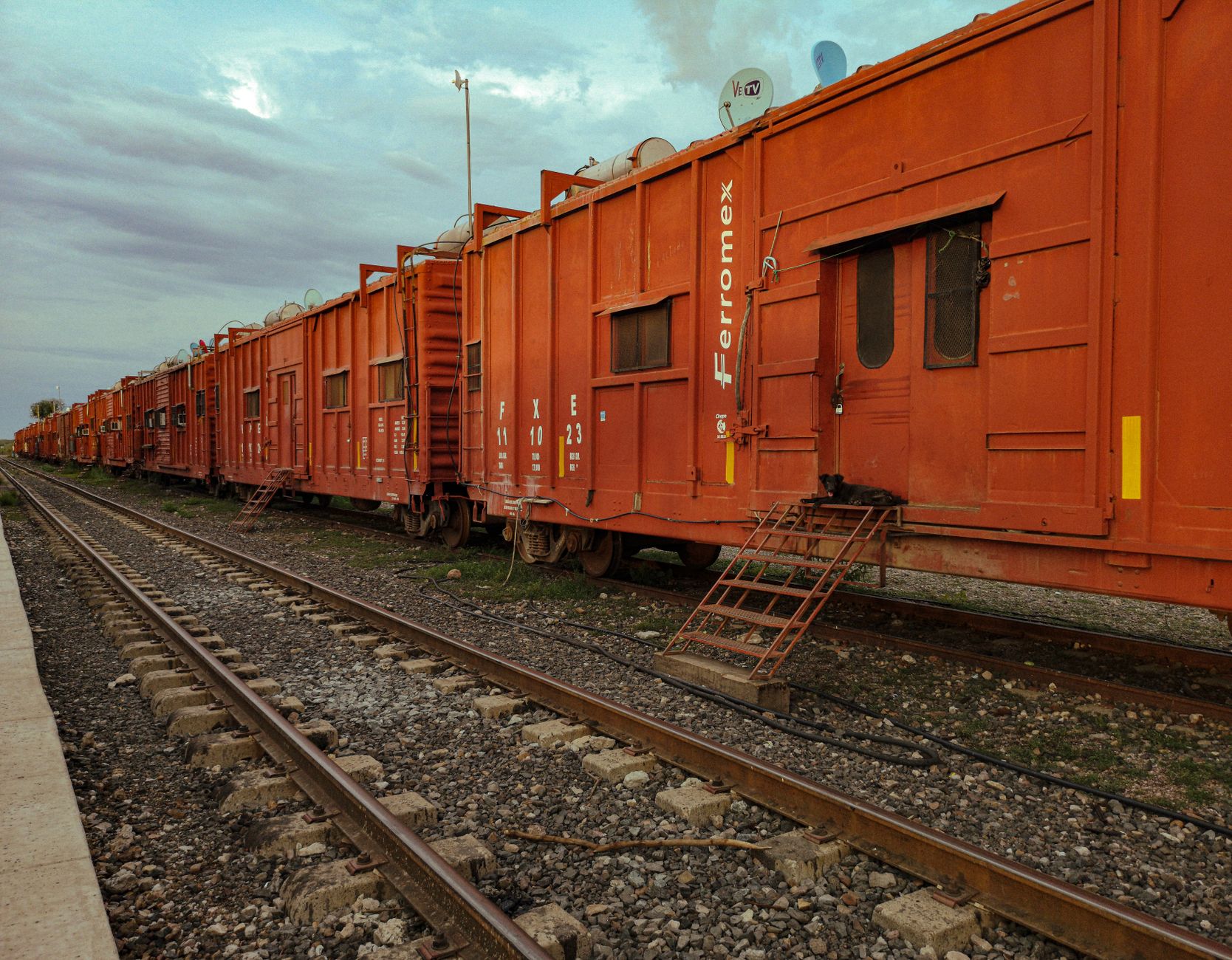

Introduction to the Railway Renaissance in Mesoamerica
Mexican territory is once again looking toward its railway lines through a lens that combines nineteenth-century geopolitical strategy with the logistical demands of contemporary commerce. The Tehuantepec Isthmus Railway, the historic artery crossing the narrowest region of the country between the states of Veracruz and Oaxaca, is undergoing a profound transformation designed to redefine freight transport between the Atlantic and Pacific Oceans. This initiative represents not merely a technical upgrade of rails and ties, but the reactivation of an interoceanic corridor conceived to alleviate the saturation of global routes and offer a competitive alternative to the Central American canal.
Over recent decades, the infrastructure accumulated decades of obsolescence, reduced operating speeds, and progressive isolation from major global supply chains. Today, the modernization of this route seeks to efficiently connect the ports of Coatzacoalcos, on the Gulf of Mexico, with Salina Cruz, on the Pacific coast, via an alignment that overcomes the complex topography of the Isthmus. This report examines the engineering challenges, the territorial dimension, and the complex intermodal transport network that shapes one of Latin America’s most ambitious infrastructure projects.
Historical Background and the Geography of the Isthmus
The strip of land separating the Gulf of Mexico from the Pacific Ocean across the Isthmus of Tehuantepec has been an object of commercial desire since the colonial era. As early as the nineteenth century, explorers and diplomats such as José de Garay glimpsed the potential of this natural passage, where the Sierra Madre del Sur descends providentially to form a relatively accessible depression. However, topographical difficulties, internal political conflicts, and the technological limitations of the era delayed for decades the consolidation of a mass transport system capable of competing with traditional maritime routes.
The formal inauguration of the railway at the beginning of the twentieth century marked a brief yet brilliant milestone. During the early years of operation, prior to the opening of the Panama Canal, millions of tons of international cargo crossed the Oaxacan and Veracruzan territory in a matter of hours. Over the decades, the lack of sustained investment and the predominance of automotive transport relegated the train to a secondary role, limited to local passenger traffic and minimal commercial exchange. The geography, characterized by strong crosswinds in the La Ventosa zone and a season of torrential rains, imposed severe wear and tear on an infrastructure operating at the limit of its technical capacity.
The Isthmus of Tehuantepec is not merely a line on a map; it is the geographical suture where the oceans and the logistical ambitions of a continent converge.
Track Engineering and Infrastructure Modernization
The comprehensive rehabilitation of the corridor has required the complete replacement of the track superstructure. The old lightweight rails have been replaced by heavy steel profiles set on prestressed concrete ties, capable of supporting axle loads far exceeding historical figures. This structural change increases the average speed of freight convoys and raises operational safety standards, drastically reducing the risk of derailments in high-grade sections or in areas prone to landslides during the tropical cyclone season.
Furthermore, the intervention has included the reconstruction of dozens of metal and masonry bridges dating back to the Porfirian era, as well as the geometric redesign of several sharp curves to facilitate the passage of double-stack container trains. The incorporation of modern signaling and centralized traffic control systems aims to optimize train circulation on a track combining single-track sections with strategic sidings. These civil engineering works have required the mobilization of heavy machinery and the coordination of technical teams specialized in the consolidation of clayey and marshy soils characteristic of southern Veracruz.
The Port Nodes: Coatzacoalcos and Salina Cruz
No interoceanic rail corridor can operate efficiently without modern port infrastructure at its terminals. On the Gulf of Mexico, the port of Coatzacoalcos acts as the entry and exit point for trade routes originating from the United States East Coast, the Caribbean, and Europe. Its draft has been deepened, and its docks expanded to receive larger container vessels, integrating high-capacity gantry cranes and technologically advanced storage yards that streamline modal transfer between ship and train.
At the opposite end, facing the Pacific Ocean, the port of Salina Cruz faces the challenge of consolidating its position as a gateway to Asian markets and the western coast of the American continent. Dredging works and the construction of large breakwaters protect the new basins from heavy Pacific swells, allowing continuous cargo loading and unloading operations. The synergy between these two ports and the railway system forms the hard core of the logistics strategy, reducing interoceanic transit times compared to maritime routes rounding the southern tip of the continent or congesting the Central American passage.
Impact on Supply Chains and Intermodal Transport
The emergence of the Tehuantepec Isthmus Railway in the freight transport market presents a new paradigm for regional distribution. Global companies and logistics operators are analyzing the viability of using this land route to shorten delivery times between Asian markets and North American consumer centers. By avoiding port congestion and administrative delays associated with crossing traditional interoceanic canals, the land corridor offers a competitive transit time ranging within a few hours for the physical crossing from coast to coast.
However, system efficiency depends critically on seamless operations in intermodal transport. Synchronization between vessel arrivals, unloading at port terminals, the formation of freight trains, and their subsequent dispatch requires a seamless digital customs and port management platform. Federal authorities have implemented single windows and electronic audit schemes to minimize merchandise residence times in intermediate yards, a determining factor in convincing international shipping lines to integrate this route into their regular itineraries.
Socio-Environmental Challenges and Territorial Planning
The reactivation of a large-scale corridor through one of Mexico’s regions with the greatest biodiversity and cultural wealth has generated complex debates regarding its environmental and social sustainability. The Isthmus of Tehuantepec hosts fragile ecosystems, from tropical rainforests to wetlands of international importance, and is the ancestral home of various indigenous communities—primarily Zapotec, Mixe, Zoque, and Huave—who maintain traditional forms of land tenure and community governance.
Environmental impact studies have required the implementation of biological corridors and wildlife crossings along the railway line to mitigate the fragmentation of natural habitats. Concurrently, processes of prior, free, and informed consultation with local communities have become an essential requirement for the project’s legitimacy. Tensions surrounding land tenure, fair compensation for the right-of-way, and the equitable distribution of economic benefits derived from the strip’s industrialization remain central themes on the public agenda and in the rigorous monitoring conducted by social and academic organizations.
Passenger Transport and the Local Social Fabric
Beyond the mass transport of cargo and containers, the restoration of the passenger rail service has represented an element of high social and cultural resonance for the inhabitants of riverside and mountain municipalities. For decades, the train was the only accessible means of transport to connect communities isolated by a lack of paved roads or the high cost of local buses. The resumption of the mixed service—featuring convoys designed for regional mobility as well as cultural tourism—seeks to return to the railway its historic condition as an articulator of daily life in southern Mexico.
Historic stations, restored with architectural conservation criteria, are once again gathering local commerce, craft markets, and the flow of travelers seeking to understand the multi-ethnic wealth of the isthmus. This component of passenger mobility not only revitalizes the economy of small towns that had been sidelined from major development routes, but also reinforces the sense of regional belonging and identity surrounding railway heritage.
Practical guide
How to get there: The corridor extends between the ports of Coatzacoalcos (Veracruz) and Salina Cruz (Oaxaca). The nearest airport to the northern terminal is Minatitlán (MTT), while the southern zone can be accessed via the Ixtepec Airport (IZT) or by flying into Huatulco (HUX) and traveling by road.
Best time to visit: The months from November to April offer more stable meteorological conditions with lower rainfall. It is advisable to avoid the tropical cyclone and heavy rain season between June and October, periods when logistical operations may face temporary safety suspensions.
Planning and local transport: To tour the region independently, renting a vehicle at the main airports or utilizing the first-class bus network connecting the major isthmus cities (Acayucan, Matías Romero, Juchitán, and Tehuantepec) is recommended.
Accommodation: Headquarter cities such as Coatzacoalcos, Salina Cruz, and Tehuantepec feature a consolidated hotel infrastructure of executive and mid-range categories. In intermediate towns, options are limited to hostels and small traditional hotels.
Cultural recommendations: It is essential to respect the uses, customs, and autonomies of the region’s native indigenous peoples (Zapotec and Mixe). Travelers are advised to inform themselves about local festivities, such as the traditional Isthmus Velas, to understand the complex social structure of the territory.
Emotional Epilogue on the Southern Tracks
When the sun sets over the Oaxacan plain and the last glimmers of golden light reflect on the newly aligned rails, the Tehuantepec Isthmus Railway reveals its true dimension, transcending the cold accounting of mobilized tonnage and container speed. In every concrete tie and every rehabilitated brick station beats the memory of generations who watched progress and abandonment pass with the same stoic patience. Today, the metallic sound of locomotives once again traversing the narrow throat of Mexico is not merely confirmation of a completed engineering work, but the persistent heartbeat of a country that insists on uniting its two seas and its history into a single destiny.


