Introduction to Borneo’s Railway Outpost
At the northern tip of the island of Borneo, where dense tropical rainforest meets the South China Sea, survives a technological anachronism that defies modern transportation conventions: the Sabah Coast Railway. This meter-gauge line, the only one of its kind across the entire island, represents a tangible testament to late nineteenth-century British engineering adapted to the most relentless geographical and climatic conditions in Southeast Asia. Far from constituting a tourist attraction conceived for nostalgia, the railway corridor operates as a vital artery of social and economic connectivity for rural communities that would otherwise remain isolated between raging rivers and swampy terrain.
The genesis of this infrastructure dates back to the era of the British North Borneo Company, when colonial administrator William Hood Cowie foresaw the need to transport raw materials—primarily rubber and tobacco—from the mountainous interior to the ports of the west coast. What began as a modest resource evacuation project transformed, through decades of historical vicissitudes, wartime conflicts, and titanic reconstructions, into a singular transportation system. Today, examining its operation sheds light not only on the technical challenges of maintaining railway tracks under extreme monsoonal rainfall regimes, but also on the delicate balance between regional transport modernization and the preservation of a unique industrial heritage in Malaysia.
Colonial Genesis and the Pioneer Alignment Through Tropical Forests
The construction of the railway, officially initiated in 1896 under the direction of engineer Arthur J. West, was plagued by unusual obstacles. Unlike European or North American lines where topography presented rocky challenges, in Sabah the primary enemy was the combination of hyper-vigetant vegetation, extreme humidity, and the acidity of swampy soils. Working crews, initially composed of Chinese immigrants and local laborers, had to carve their way through mangroves and virgin jungles using machetes and dynamite, where metal tools rusted away within weeks.
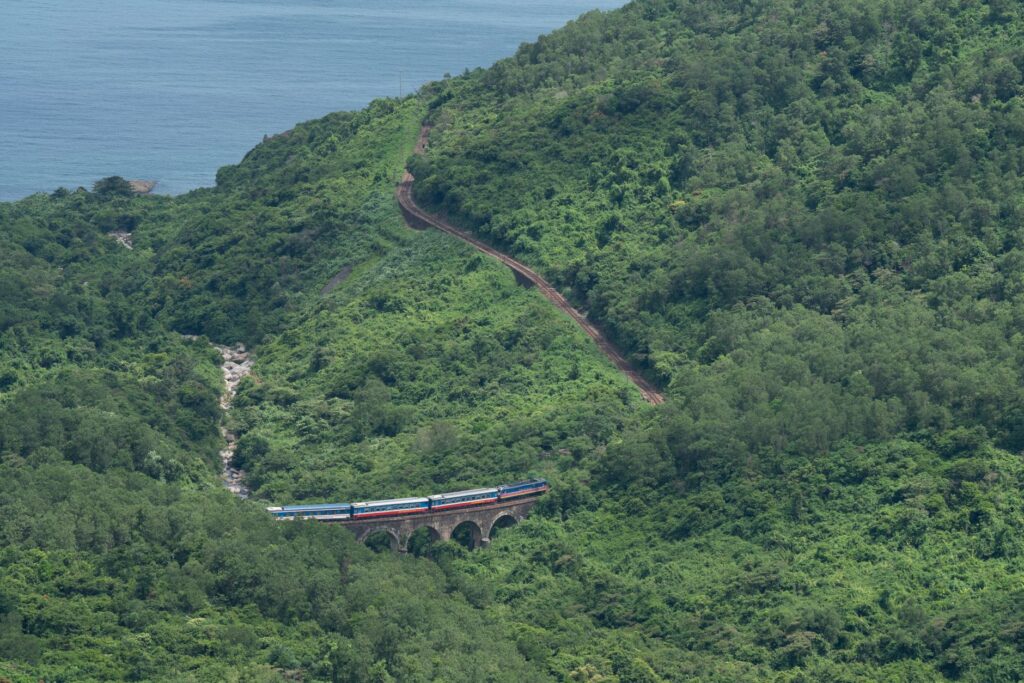
The original alignment connected the coastal town of Weston with Beaufort, subsequently expanding northward to Jesselton—present-day Kota Kinabalu—and inland toward Melalap. However, the region’s relentless nature soon demonstrated that maintaining iron infrastructure in the humid tropics amounted to a Sisyphanean labor. Embankments frequently gave way under the sudden swells of the Padas and Pegalan rivers, forcing British engineers to constantly redesign bridges and culverts. This titanic effort laid the foundations of a system that, although reduced from its original kilometric extent, maintains the indelible footprint of an era when imperial expansion was measured in tropical timber sleepers.
Engineering Against the Abyss: The Padas River Gorge
The most dramatic and technically complex section of the entire railway network is located within the Padas River gorge, between the stations of Tenom and Beaufort. Here, the railway runs wedged between sheer rock faces and the turbulent waters of the river, in a corridor where the construction of conventional roads has historically proven unfeasible due to slope instability. Slopes shed debris regularly during the rainy season, requiring constant inspection patrols that traverse the rails on foot prior to the departure of convoys.

To conquer these precipices, engineers resorted to a series of short tunnels and lattice metal bridges resting precariously on foundations excavated directly into the bedrock. The millimetric precision required to lay tracks in such a confined space continues to astonish contemporary mountain infrastructure specialists. Conquering the Padas gorge constitutes a milestone in civil engineering applied to extreme fluvial environments, proving that the railway solution was the sole capable alternative to bypass a topography that rejected any attempt at road domestication via asphalt.
The railway is not merely a means of transportation in Sabah; it is the only mechanical suture capable of keeping united the communities that breathe to the rhythm of the Padas River.
Along this stretch, the passage of the train disrupts the routine of riverside settlements, whose inhabitants rely exclusively on railway services to receive medical supplies, fuel, and fresh food. Intermediate stations, mostly slightly elevated wooden structures designed to avoid seasonal floods, act as local agoras where the valley’s social life converges.
Modernization and the Rolling Stock Challenge
In the late twentieth century, following decades of technical obsolescence and a drastic decline in commercial profitability against the emergence of paved coastal highways, the Malaysian government recognized the necessity of a comprehensive intervention. Between 2007 and 2011, the network underwent a multimillion-dollar rehabilitation process that included the complete replacement of vintage rails with heavier profiles, the consolidation of embankments, and the acquisition of modern diesel multiple units manufactured in South Korea and Japan, which gradually replaced the venerable yet inefficient steam locomotives.

This technological renewal posed a complex dilemma: how to balance operational efficiency with the preservation of the line’s historical character. The new trains, equipped with air conditioning and advanced braking systems, shortened travel times and improved passenger safety. However, local technicians currently face a constant logistical challenge due to the scarcity of specialized replacement parts for electronic components in such a remote region. Integrating contemporary railway technology into a nineteenth-century alignment demands rigorous preventative maintenance that tests the technical capacity of the central workshops in Tanjung Aru.
Social Connectivity and the Pulse of Rural Communities
While Sabah’s major highways connect urban centers and intensive palm oil cultivation zones, the Coast Railway fulfills a strictly social function. For residents of remote villages such as Rayoh or Pangi—enclaves entirely lacking road access—the train serves as the umbilical cord connecting them to hospitals, secondary schools, and the markets of Beaufort. Mixed carriages, designed to transport both passengers and general cargo, reflect this functional duality: the same convoy carries students in pristine uniforms, local farmers with sacks of agricultural produce, and travelers seeking to venture into the interior jungle.
This community public service role generates constant financial tensions for state operators, as fares are subsidized to ensure accessibility for low-income populations. The economic viability of the railway is not measured in corporate profit margins, but in its capacity to prevent rural depopulation in the interior valleys. At a time when economic efficiency often dictates the closure of secondary lines worldwide, maintaining this service in Borneo stands as a decision of profound geopolitical and social resonance.
Climate Threats and Infrastructure Resilience
Global climate change has intensified extreme weather events in northern Borneo, subjecting the Coast Railway to unprecedented stress tests. Torrential downpours associated with the northeast monsoons cause flash floods that submerge tracks and sweep away entire sections of ballast. Landslides in the Padas River gorge have become more frequent and unpredictable, forcing temporary service suspensions that can last for weeks while emergency crews clear debris with heavy machinery.
Maintaining an operational railway in the heart of Borneo demands relentless vigilance against the advance of an unforgiving nature and the onslaught of monsoons.
To mitigate these vulnerabilities, Sabah transport authorities have implemented early warning systems based on water level sensors in major tributaries and slope reforestation programs designed to stabilize clayey hillsides. Nonetheless, the magnitude of the natural forces at play serves as a reminder that any human infrastructure in the region exists in a state of permanent negotiation with the surrounding ecosystem. The resilience of the railway system lies not in its invulnerability, but in the speed and skill of its maintenance teams to restore connectivity after every climatic assault.

Practical guide
Planning a journey along the Sabah Coast Railway requires understanding the operational limitations and timetables of a line that prioritizes local needs over mass tourism. The main starting point is Tanjung Aru station in Kota Kinabalu, though the truly scenic stretch concentrates southward, departing from Beaufort to Tenom. It is advisable to purchase tickets directly at local ticket counters on the day of travel, as online booking systems frequently experience interruptions. Checking the operational status of the line prior to undertaking the journey is essential, as interruptions due to landslides are common during the monsoon season, which extends from November to March. Travelers should carry drinking water, light snacks, and insect repellent, as intermediate stations lack advanced commercial amenities. The total duration of the journey between Beaufort and Tenom is approximately two and a half hours, offering an incomparable perspective of Borneo’s fluvial and forest geography that no other transportation medium can replicate.
Epilogue: The Metallic Pulse in Borneo’s Green Heart
At dusk, when the oppressive heat of the jungle begins to yield to nocturnal humidity, the dull echo of the diesel engine reverberating against the walls of the Padas gorge evokes a silent persistence. The Sabah Coast Railway survives not out of bureaucratic whim, but as proof that technology, when deeply rooted in the human needs of a territory, acquires an unalterable dignity. Far from the grand high-speed networks transforming developed continents, this humble meter-gauge alignment continues to fulfill its nineteenth-century promise: uniting what the jungle and rivers strive to separate, keeping the mechanical pulse alive in the northernmost reach of the great Asian island.