
Origins and Geography of a Fluvial Art
Along the banks of the Creuse River in France’s Nouvelle-Aquitaine region, the landscape of green valleys conceals one of Europe’s most refined craft traditions: the high-warp tapestries of Aubusson. Far from being a mere decorative activity, this ancient craft has shaped the social, economic, and cultural identity of an entire region where water, dye plants, and local sheep wool determined the destiny of generations of artisans since the Middle Ages.
The history of Aubusson is intimately linked to the availability of raw materials and technical mastery passed down from generation to generation. Traditional workshops, located along the riverbanks, harnessed the purity of the water for washing and dyeing natural fibers. Today, walking through the streets of this town means stepping into a territory where time seems measured by the rhythm of vertical looms and the millimeter crossing of wool and linen.
For centuries, Aubusson weavers supplied royal courts and great European cathedrals with monumental cloths depicting mythologies, battles, and pastoral scenes. This heritage, recognized by UNESCO as Intangible Cultural Heritage of Humanity, is not confined to museum display; it remains vibrantly alive in active workshops that combine historical techniques with contemporary design concerns.
The Alchemy of Matter: Wool, Linen, and Natural Dyes
The creation process of an Aubusson tapestry begins long before thread touches the loom. The selection of raw materials is a critical act requiring deep knowledge of the density, twist, and provenance of fibers. Traditionally, sheep wool is chosen for its elasticity and color absorption capacity, combined with high-resistance linen or cotton warps capable of withstanding the mechanical tension of the high-warp loom.
In contemporary workshops, the color palette is achieved through rigorous research into light-stable natural and synthetic dyes. Madder roots, woad leaves, cochineal, and walnut husks are blended in copper vats following formulas inherited from 18th-century master dyers, adapted to current ecological standards. This preliminary phase ensures that each hue possesses the depth and vibration necessary for the woven surface to come alive under natural light.
Fidelity to the cartoon—the full-scale original design painted by an artist—demands a complex plastic translation from the weaver. Unlike painting, where the stroke is direct, the tapestry is constructed facing away from the design, guided by master lines drawn on the warp threads and consulting the model through a mirror reflecting the work’s progress.
The Contemporary Workshop: Geometry and Human Pulse
Entering an active Aubusson workshop is stepping into a laborious silence broken only by the dry strike of the wooden comb and the rustle of shuttles. Weavers, seated before large vertical frames, work with millimeter precision requiring years of apprenticeship and absolute concentration. Every square centimeter of tapestry represents hours of uninterrupted labor.
In these workspaces, knowledge is transmitted through the master-and-apprentice system, ensuring that knotting techniques, color blending, and edge finishes are never lost. Manual dexterity is complemented by advanced geometric understanding, as the artisan must anticipate how the wool will contract once the piece is removed from the loom and released from tension.
The relationship between the artist-creator and the weaver is a symbiotic dialogue. While the former provides conceptual vision and formal composition, the latter translates that idea into the textile language, interpreting textures, volumes, and chromatic transitions with absolute interpretive autonomy within the boundaries of the original design.
Dialogue with Modernity: From Classical Cartoons to Abstraction
The turning point in Aubusson’s modern history occurred in the mid-20th century, when key figures like Jean Lurçat drove a profound renewal of the medium. Lurçat proposed simplifying the color palette, reducing the number of tones, and establishing direct collaboration between major avant-garde painters—such as Alexander Calder, Pablo Picasso, and Henri Matisse—and local workshops.
This aesthetic openness radically transformed mural tapestry, freeing it from its purely decorative and historicist function to become an autonomous, monumental work of art with immense expressive power. Artists found in weaving a unique three-dimensional materiality that endowed their pictorial strokes with a tactile consistency impossible to achieve on canvas.
Tapestry is not a copy of painting; it is a sovereign transmutation where thread assumes the task of light, volume, and shadow with unquestionable dignity.
Today, this avant-garde spirit remains active thanks to the Cité Internationale de la Tapisserie, an institution that not only preserves the region’s historical archive but also promotes international commissions for contemporary artists and graphic designers worldwide, ensuring the medium’s continuous evolution.
Architecture and Territory: The Landscape That Sustains the Craft
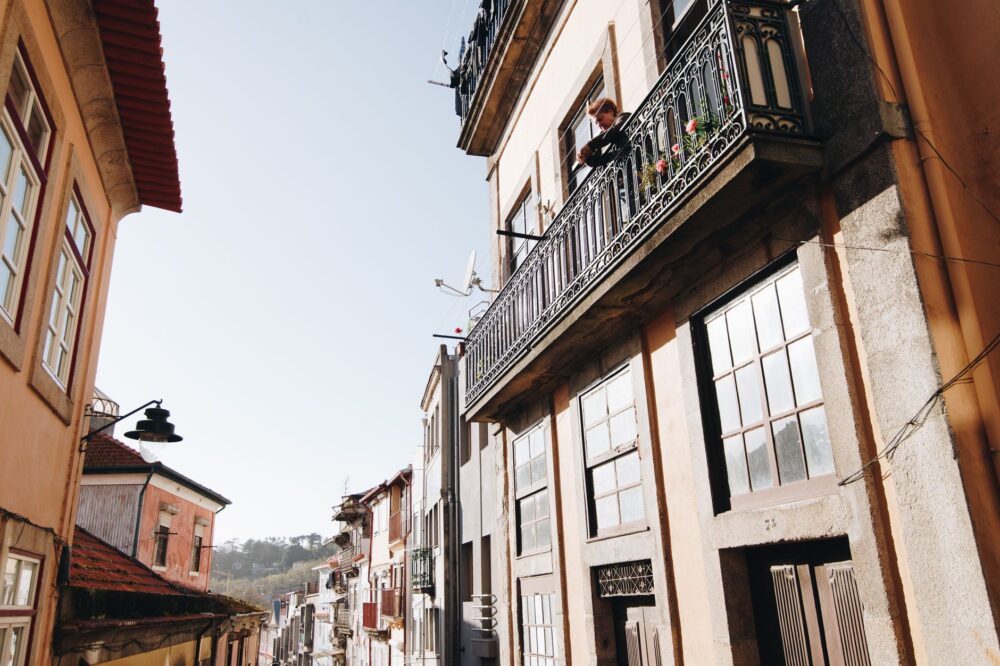
The geographical environment of the Creuse region plays a fundamental role in the atmosphere permeating tapestry production. Granite stone buildings, medieval bridges, and dense forests surrounding Aubusson form a landscape of sobriety and balance reflected in the formal structure of the workshops and the discipline of their artisans.
The industrial architecture of 19th-century mills and workshops integrates harmoniously into the urban fabric. Many of these buildings have been restored to house research centers, creator residencies, and exhibition spaces that attract art curators, historians, and travelers interested in specialized cultural tourism.
Traveling the roads connecting Aubusson with Felletin—the other historic tapicería hub in the region—reveals the magnitude of an industry that in its golden age employed thousands of people, connecting the heart of France with major continental markets.
Intangible Heritage and Sustainability in the 21st Century
Faced with the vertigo of mass industrial production and unbridled digital consumption, high-warp tapestry stands as a bulwark of slow production and radical sustainability. Each finished piece represents a long-term commitment to matter, durability, and respect for the natural cycles of resource acquisition.
Local institutions and independent workshops actively work on certifying the origin of the wools used, promoting native sheep farming and reducing the carbon footprint across all production phases. This ecological approach is not a commercial trend, but an intrinsic coherence with a craft that transforms primary elements of the earth into enduring cultural goods.
Furthermore, training programs in the region ensure generational turnover, attracting young talents from Fine Arts and textile design schools who choose to settle in the Creuse Valley to learn the complex language of high-warp weaving.
Practical guide
How to get there: The most efficient way to reach Aubusson is by private vehicle from Limoges (approximately a one-and-a-half-hour drive) or Clermont-Ferrand. Regional rail connections to La Souterraine station, combined with local bus services, are also available.
When to visit: Spring and autumn offer ideal lighting for exploring the region’s architectural heritage and enjoying the workshops without summer congestion. The Cité Internationale de la Tapisserie is open year-round with rotating temporary exhibitions.
What to see and do: Visiting the Cité Internationale de la Tapisserie is essential to understanding the craft’s historical and technical evolution. Booking guided tours of active private workshops in Aubusson and Felletin in advance is strongly recommended.
Accommodation and dining: The region features small boutique hotels in restored historic mansions and traditional country houses. Local gastronomy highlights Limousin beef, wild mushrooms from the Creuse forests, and artisanal pastry specialties.
The Pulse of Thread in the Silence of the Workshop
As evening falls, when the light of the Creuse Valley grows soft and river reflections brush Aubusson’s granite facades, time seems to pause once more inside the workshops. The large wooden frames still hold the warmth of hands that, for hours, crossed wool and linen with unwavering patience, weaving Europe’s living memory.
In every invisible knot lies the breath of a craft that refuses to vanish, reminding us that true beauty demands time, silence, and fidelity to matter.
Observing one of these completed masterpieces close up reveals that textile art is not merely a testimony of the past, but an open door toward the future of human creation, where the intelligence of the hands continues to weave the essential narratives of our culture.