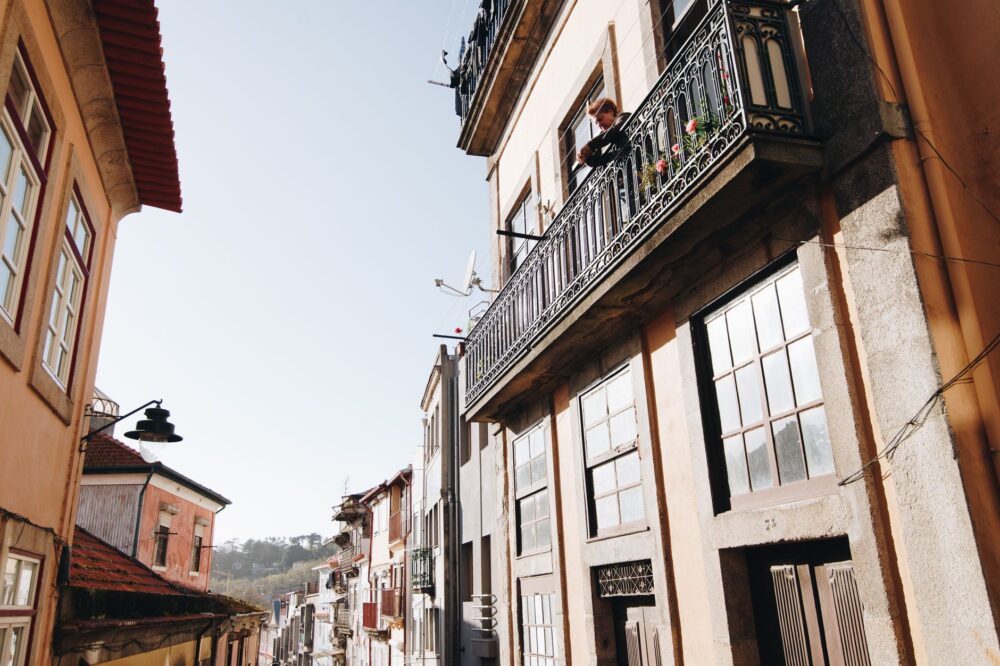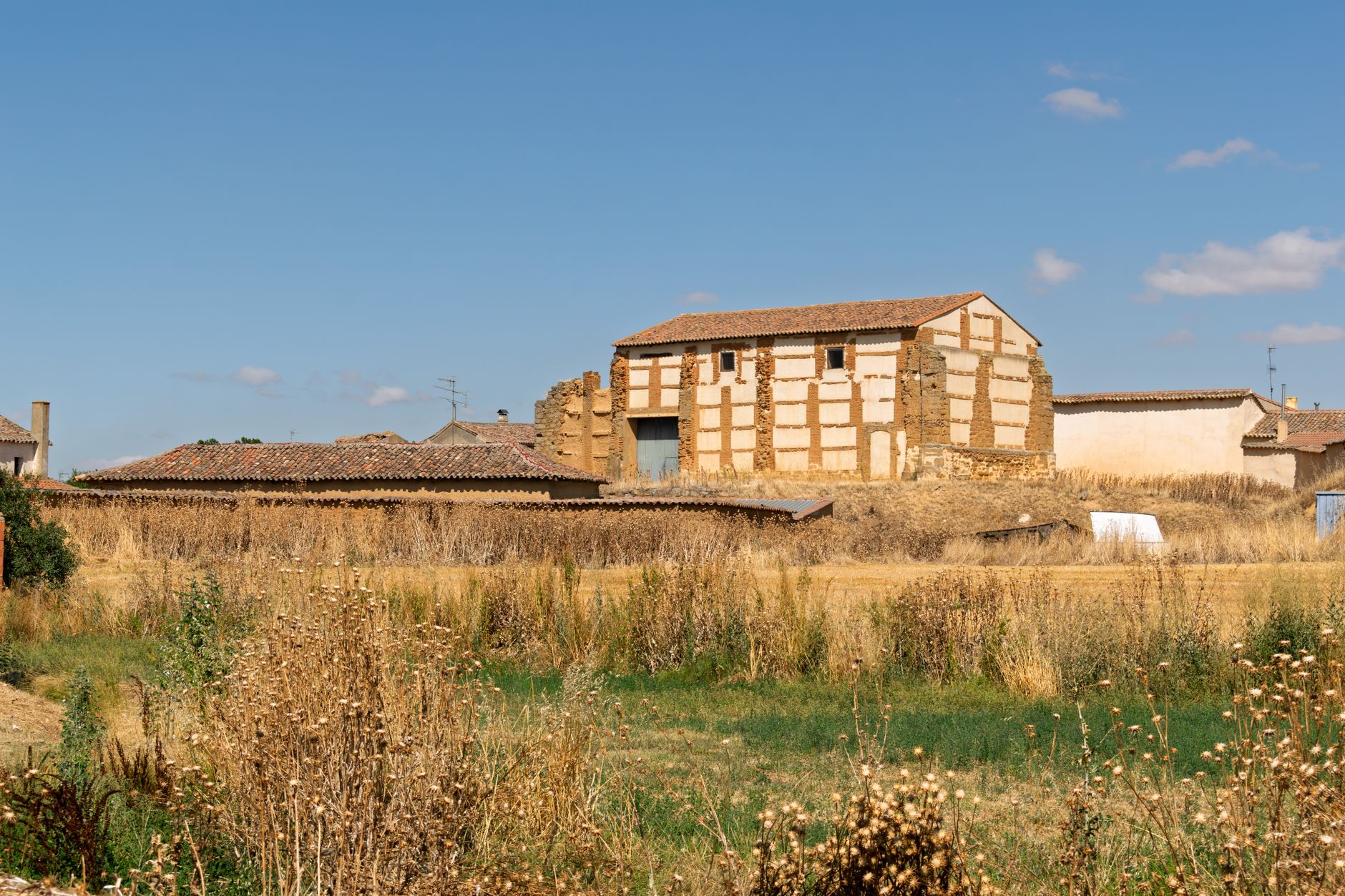

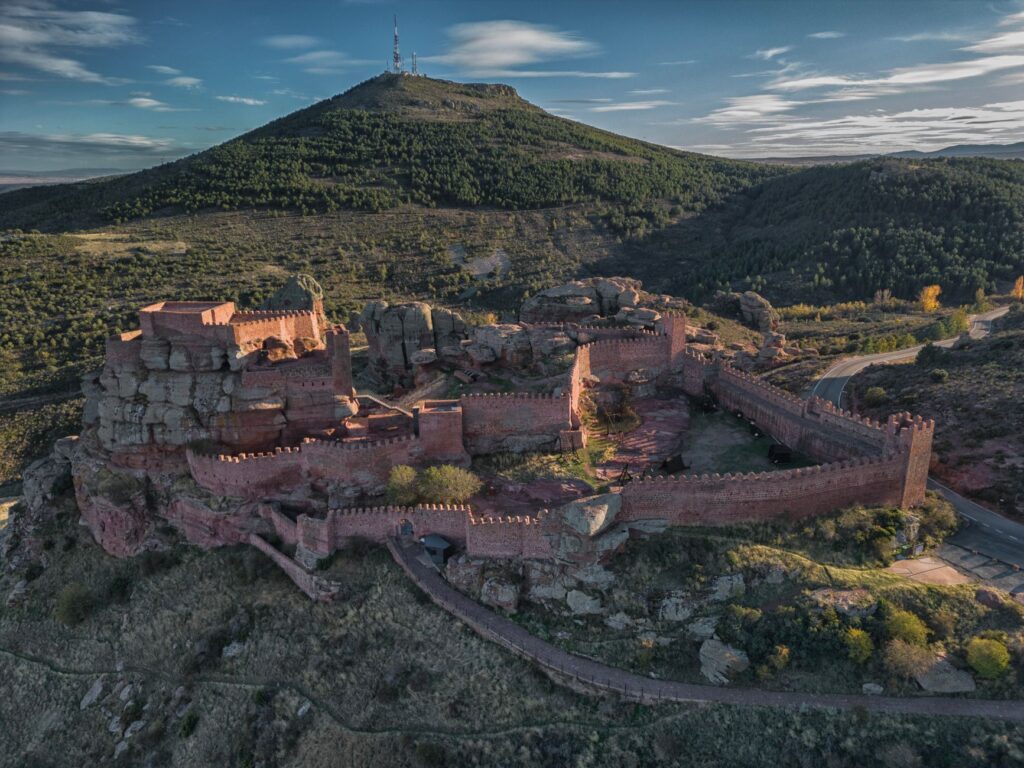
In the high plateaus where Aragón and the Valencian Community engage in a geological dialogue of limestone and wind-sculpted ravines, time seems measured by the unhurried rhythm of hammer on anvil. The Maestrazgo, a historic region marked by medieval scars and landscapes of austere, heartbreaking beauty, harbors one of European craft design’s best-kept secrets: the forges where iron ceases to be a cold, rigid metal and transforms into filigree, protective lattices, and architectural structures of eternal vocation. Here, in villages with steep streets like Cantavieja and Mirambel, artistic forging is not a mere ethnographic museum relic, but a living language that continues to dictate the aesthetic norms of balconies, gates, and hardware.
The question running through this territory is how a discipline so physically demanding has managed to survive the industrial standardization of rolled steel and the prefabricated alloys flooding contemporary construction. The answer lies in the persistence of a lineage of blacksmiths who understand fire as both a chemical and aesthetic catalyst, a medium where the exact temperature of oak charcoal determines the ductility of the matter. This report explores the workshops where past and present melt into sparks, analyzing material transformation processes and the role these structures play in conserving rural architectural heritage.
The Geography of Fire: Coal, Stone, and the Workshop Atmosphere
Dark stone lintels, thick masonry walls, and high ceilings designed to evacuate the dense smoke of vegetable charcoal define the vernacular architecture of Maestrazgo’s traditional forges. Upon entering these spaces, the air changes density; it smells of clean rust, dry ash, and the burnt oil with which master craftsmen temper incandescent pieces. Unlike modern industrial facilities, where lasers and plasma cutters impose a cold, silent precision, the traditional blacksmith’s workshop is a sensory ecosystem where every tool—from duckbill tongs to ball-peen hammers of various weights—has been adapted or forged by the artisan over decades of practice.

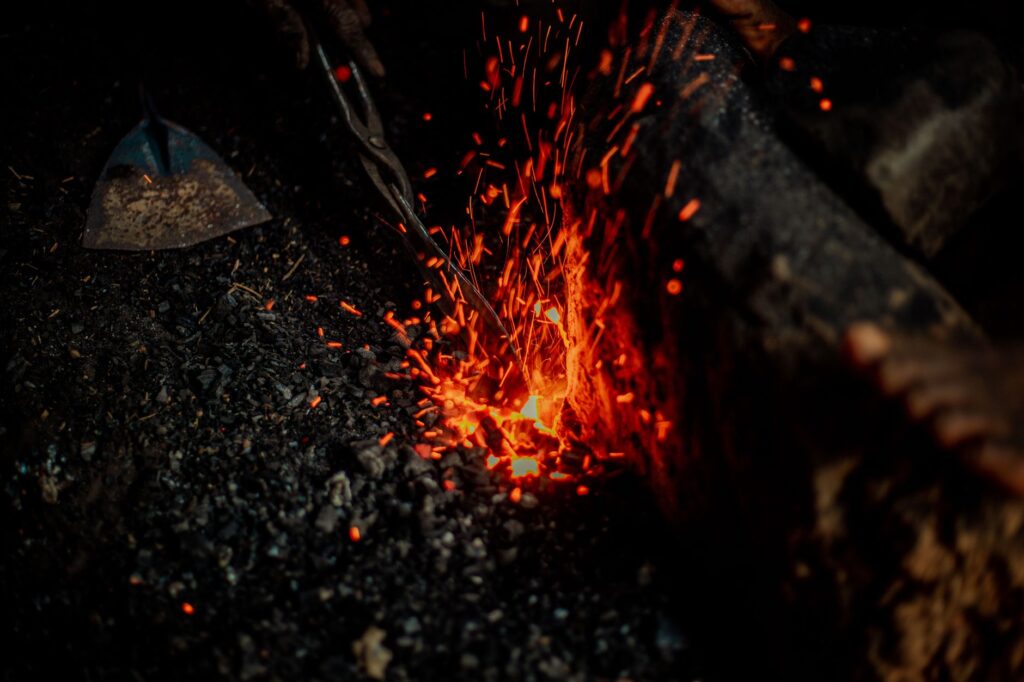
The work process begins long before the iron touches the fire. It requires a meticulous reading of the raw bar, understanding the invisible veins of the metal and calculating the shrinkage it will undergo during drawing. The master blacksmith manipulates the forge hearth with a restored hand crank or electric bellows, stoking a mineral or vegetable coal fire that must reach temperatures close to twelve hundred degrees Celsius. At that chromatic threshold, the iron shifts from dark cherry red to brilliant yellow, the exact moment when the metal’s crystalline structure softens sufficiently to permit plastic deformation without fracturing.
The Aesthetics of the Anvil: Rhythm, Geometry, and Metal Elasticity
Observing work at the anvil is witnessing a millimetric choreography where brute force is worthless unless subordinated to geometric precision. The anvil, cast in a single piece of tempered steel atop an oak tree stump sunk into the floor, acts as the second element in a constant dialogue. Each hammer blow not only deforms the material, but consolidates it, expelling internal air bubbles and compacting the molecular structure of the iron.
In the region’s workshops, designs recover historical typologies such as plant volutes, acanthus leaves sculpted cold with a chisel, and twisted bars that provide rigidity and dynamism to window grilles. The blacksmith’s mastery is measured by their ability to repeat complex symmetries by eye, relying on muscle memory and a visual sensitivity educated through thousands of hours facing the fire. There are no prior molds or digital CAD blueprints; the project evolves across the metallic surface as the material yields to the persistence of the blow.
Wrought iron does not imitate nature; it absorbs its internal tension and fixes it in an eternity of black scales and controlled rust.
This organic materiality contrasts with the throwaway aesthetic dominating contemporary urban design. The forged pieces in Maestrazgo possess an unmistakable patina, achieved through hot oil baths and natural waxes that protect the surface from destructive oxidation without hiding the hammer marks. It is precisely this deliberate imperfection that endows each piece of hardware with a unique, unrepeatable personality undetectable by mass-production processes.
The Transmission of Craft: Between Mastery School and Generational Handover
The great challenge facing Maestrazgo’s forges is not a lack of aesthetic demand—architects and restorers increasingly value manual labor for intervening in historic buildings—but the critical scarcity of generational handover. Over recent decades, rural exodus and the devaluation of manual trades led to the closure of half the active workshops in the province of Teruel. Today, the few surviving workshops operate under the tutelage of veterans nearing retirement who have begun welcoming young urban designers and engineers drawn by the authenticity of the medium.
These new apprentices do not necessarily come from blacksmithing families; they arrive from fine arts faculties and industrial design schools seeking a physical anchor that returns control over the entire production process. Training is relentless and requires years of practice before handling complex structural pieces without compromising structural safety. Learning tempering—the process of abruptly cooling steel to impart hardness or elasticity as needed—continues to be transmitted orally and empirically, based on the metal’s color and the sound it produces when submerged in water or oil.
Architectural Restoration: Returning Soul to Historic Centers
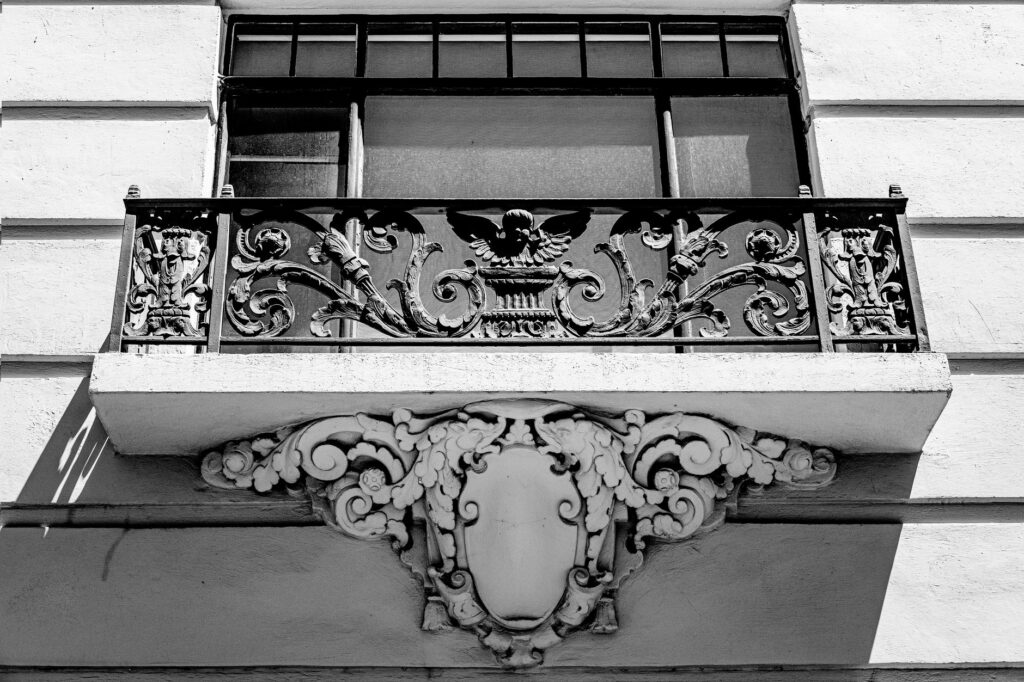
A fundamental part of these workshops’ economic and artistic activity is concentrated on monumental heritage restoration. Maestrazgo’s municipalities possess historic-artistic complexes where ironwork fulfills an irreplaceable structural and ornamental role. Bulging wrought-iron continuous balconies, animal-form door knockers, security bolts with complex interior latch mechanisms, and forged lanterns illuminating Gothic porticos rely on constant maintenance and the faithful recreation of original pieces damaged by centuries.
Intervening in these elements demands absolute documentary rigor. Current blacksmiths collaborate closely with archaeologists and art historians to analyze rust samples, study original assembly techniques—such as hot rivets and hot-collar joints without electric welding—and reproduce the thicknesses and profiles of ancient iron with millimetric exactness. Responsible restoration does not seek to disguise the passage of time, but to integrate it through the use of compatible materials that guarantee the structure’s durability without altering the visual reading of the monument.
Practical guide
Planning an observation and study trip to Maestrazgo’s forges requires understanding the geographical and logistical particularities of a low-density region of incalculable cultural and landscape value.
How to get there: Main access is by road from Teruel capital or Castellón via the N-232 and A-226 highways. Renting a vehicle is strongly recommended, as public transport between small municipalities is extremely limited and tied to school or basic service schedules.
When to go: Spring (April to June) and autumn (September to November) offer the best climatic and lighting conditions for touring villages and accessing workshops without the high summer temperatures that make work inside forges difficult.

Recommended route: An optimal itinerary covers the municipalities of Cantavieja, Mirambel, Iglesuela del Cid, and La Iglesuela del Cid, where the highest density of active artisan workshops and historic civil architecture is concentrated.
Workshop visits: Most forges are active family businesses rather than commercial interpretation centers. Booking visits in advance through local tourist offices or by direct contact with artisans is essential, always respecting production rhythms and safety regulations.
Architecture of Silence and Material Memory
As evening falls, when the golden light of the Aragonese plateau bathes the stone-slab roofs and the cold begins descending through the ravines, the forge chimneys bank their fires. Inside the workshops, iron bars rest in orderly piles against masonry walls, cooling slowly until they adopt the gray, sober tone characteristic of metal at rest. Hammer blows and incandescent spark flashes have ceased, but the workshop atmosphere remains charged with a dense, tangible, and deeply human energy. Contemporary design often seeks the lightness of the virtual and the ephemerality of the digital, but in these isolated corners of Maestrazgo, material culture persists as an unshakeable reminder that true object beauty lies in the resistance of matter, the effort of the body, and the incorruptible memory of fire.