
The Audacity of Laying Rails Across Andean Abysses
The history of civil engineering in Latin America holds few episodes as daring as the conception and execution of the Antioquia Railway. In a territory defined by the extreme verticality of the Andean cordillera, the idea of connecting Medellín to the Magdalena River via a railway line seemed like an insurmountable technical chimera. Yet, at the end of the nineteenth century and the dawn of the twentieth, local and foreign engineers set out to challenge the laws of gravity and geology, carving tunnels into living rock and erecting metal bridges over gorges where water roars with relentless fury. This titanic effort not only reshaped the physical landscape of Colombia but also laid the foundations for the economic development of one of the country’s most dynamic regions, transforming the coffee and mining trade into an enterprise of international scale.
The original alignment demanded unprecedented technical solutions in the American tropics. Every kilometer won from the mountain represented a triumph against relentless humidity, landslides, and tropical fevers that decimated working crews. Today, traversing the vestiges of this route or witnessing contemporary efforts to rehabilitate key sections of its infrastructure provides a profound understanding of the magnitude of that enterprise. It is not merely a transport line, but a linear monument to human perseverance, whose rusted rails and heritage stations tell the story of a society dwarfed by nature yet determined to conquer it through technique and ingenuity.
The Hostile Geography of the Cauca River Canyon
Few geographical features exert as much influence over a railway route as the Cauca River canyon. This deep geological scar, carved over millennia between the Central and Western Cordilleras, imposed severe constraints on the alignments devised by nineteenth-century engineers. The walls of metamorphic rock, unstable soils, and extreme thermal variations turned every meter of progress into a daily engineering challenge. To bypass these barriers, builders had to resort to intricate designs of compensated grades, masonry retaining walls, and suspension viaducts that defied vertigo. The river, swift and untamed, acted simultaneously as a fluvial communication route and as a constant threat to the rail embankments during winter floods.
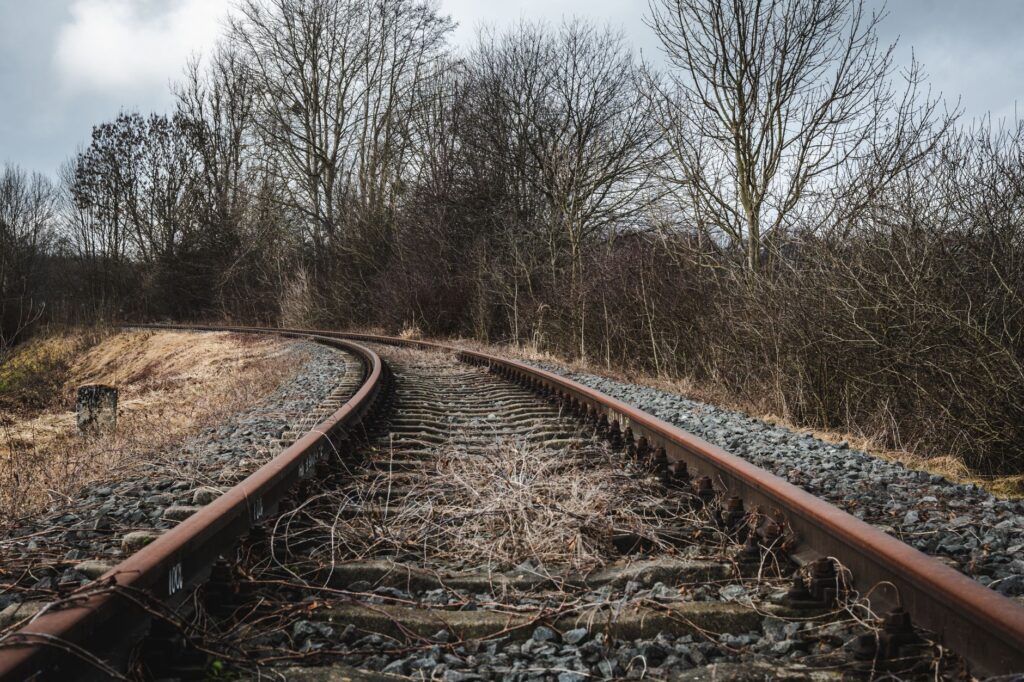
The region’s topography also dictated the need to implement very tight turning radii and a system of consecutive tunnels piercing the mountain spurs. Poor ventilation and the accumulation of steam and smoke from the locomotives posed real dangers to drivers and firemen alike. Along this corridor, sedimentary rock and local geological faults demanded constant maintenance and rigorous monitoring. Despite the ravages of time and the subsequent abandonment of a large portion of the network during the rise of motor transport, the railway traces cling to the slopes like indelible scars, reminding the contemporary traveler of the colossal scale of human intervention in the Andean relief.
Century-Old Architecture and Stations with Memory
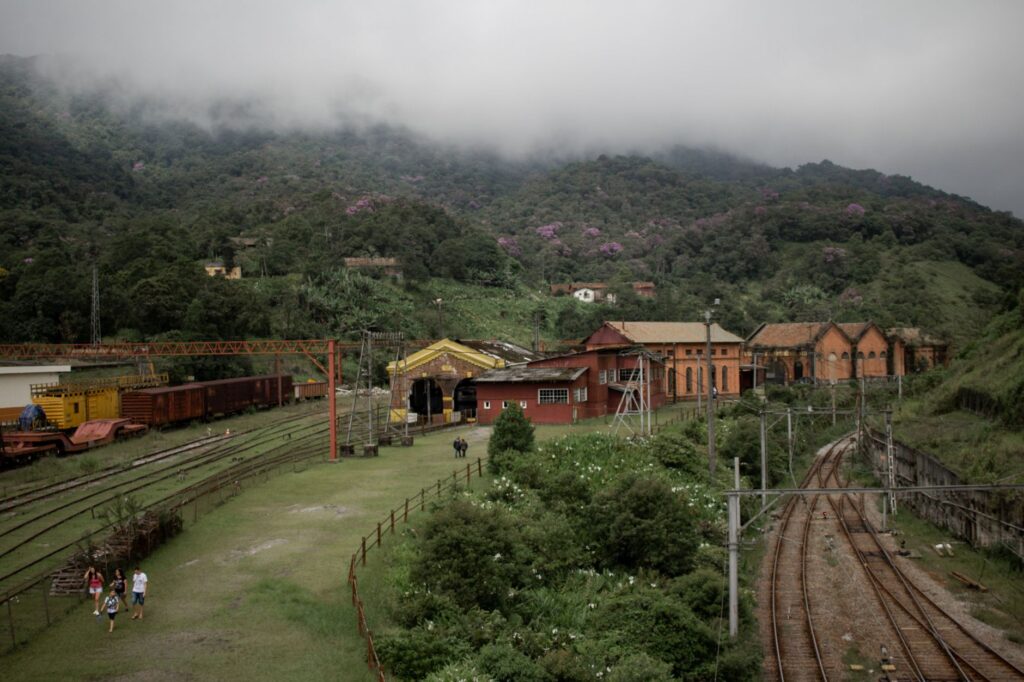
The stations of the Antioquia Railway served far more than a logistical purpose; they operated as true urban centers and civic monuments nestled amidst jungle and mountains. Constructed using a blend of fine hardwoods, fired brick, and metal structures imported from Europe and the United States, these buildings reflected the architectural aesthetics of the republican era adapted to the climatic conditions of the Andean tropics. Wide eaves to protect against torrential rains, wooden louvers to ensure cross-ventilation, and elevated platforms to facilitate heavy cargo handling characterized a construction language that survives today as a threatened cultural heritage.
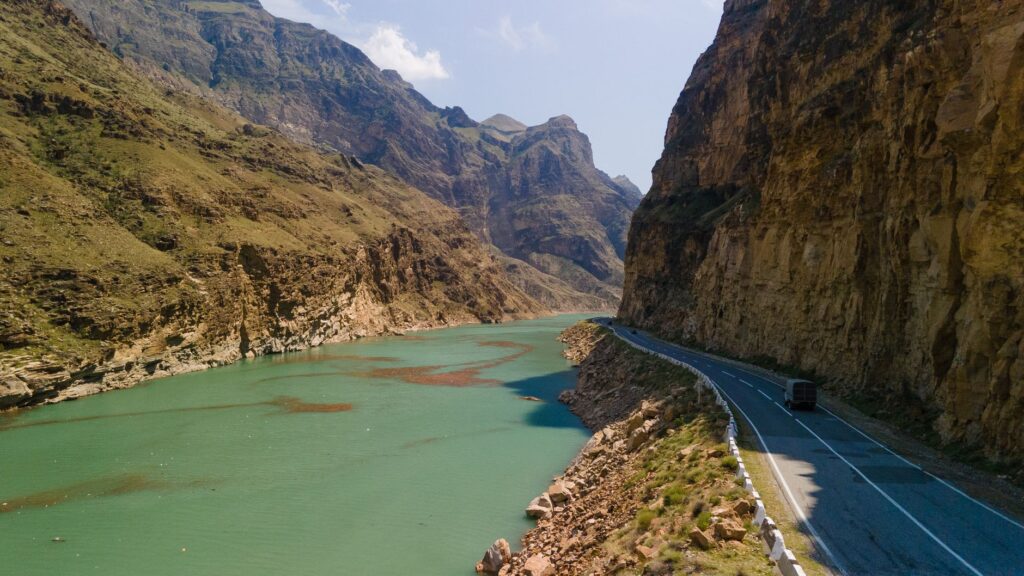
Around these railway enclaves grew hamlets, maintenance workshops, coffee storage warehouses, and housing for operators. Names like Cisneros or Amagá still evoke a golden age when the locomotive’s whistle announced the arrival of news, goods, and passengers coming from the fluvial ports of the Magdalena. The preservation of these properties represents a major challenge today for Colombian heritage authorities. While some stations have been restored and converted into local museums or community libraries, many others succumb to encroaching vegetation and vandalism, blurring an architectural legacy that deserves more rigorous and consistent state protection.
British Engineering and the Narrow-Gauge Challenge
The technological development of the Antioquia Railway was deeply tied to the transfer of British and American technical expertise. Foreign engineers brought the experience accumulated in building colonial railway networks across the globe, adapting it nevertheless to the extreme roughness of Colombia’s tropical topography. The adoption of narrow gauge—generally one yard or one meter—became an imperative norm to allow trains to snake along slopes with impossible grades and tight curves, where a standard-gauge track would have proved technically and financially unviable.
Assembly and repair workshops, located at strategic points such as Bello and Cisneros, housed imported lathes, forges, and cranes operating with surgical precision. Steam locomotives, manufactured by legendary houses like Baldwin in the United States or Kerr Stuart in the United Kingdom, were authentic iron behemoths capable of hauling tons of export coffee and passengers across three percent gradients. This mechanical deployment demanded a highly specialized crew: drivers capable of reading track vibrations in the dark, firemen expert in coal and damp wood combustion, and track walkers tasked with detecting rockfalls before a catastrophe occurred.
Decline, Scrapping, and the Impact of Motor Transport
The twilight of the Antioquia Railway was not the product of a sudden technological collapse, but the result of a profound shift in public transport policies and the aggressive expansion of road infrastructure for motor vehicles in the mid-twentieth century. As the state prioritized the construction of paved highways and the use of heavy freight trucks, the operating costs of the rail system became unsustainable. The lack of investments for rail modernization, the obsolescence of the motive fleet, and the unfair competition of road transport dealt a fatal blow to a network that had sustained the regional economy for decades.
The gradual dismantling of the rails, the sale of locomotives as scrap metal, and the abandonment of workshops marked a dark period for the country’s industrial heritage. Entire communities economically dependent on railway activity suffered deep socioeconomic stagnation as they were disconnected from main commercial routes. This process of disintegration not only meant the loss of a foundational logistical asset, but also the institutional neglect of technical know-how accumulated over generations. The silence that succeeded the roar of the trains in the Cauca canyon became the most eloquent symbol of a historical opportunity squandered in sustainable transport.
Revitalization Projects and the New Logistical Era
In recent decades, the saturation of national highways and the rising logistical costs of exclusive motor transport have rekindled political and technical interest in the resurrection of the railway system in Antioquia and throughout Colombia. Various departmental and national governments have promoted pre-feasibility studies and public-private partnerships aimed at the partial recovery of historical corridors, integrating them with new road megaprojects such as the Prosperity Highways and connection tunnels leading to Caribbean and Pacific ports.

The rehabilitation of Andean rail corridors does not represent an exercise in heritage nostalgia, but an imperative necessity to guarantee the logistical competitiveness and environmental sustainability of freight transport in the twenty-first century.
Nevertheless, the financial and environmental challenges of any reactivation project in the rugged Andean terrain are colossal. Land acquisition, the reconstruction of collapsed bridges, the stabilization of landslide-prone slopes, and the definition of a profitable business model demand rigorous planning far removed from populist promises. Despite these difficulties, recent initiatives for commuter trains in the Aburrá Valley and heavy freight proposals demonstrate that the rail remains latent in the imagination and economic necessity of the Antioquia territory.
Industrial Heritage and Rail Tourism
While major freight infrastructure projects take shape, the vestiges of the Antioquia Railway have found a second life in cultural tourism and the valorization of industrial heritage. Hikers, historians, and avid travelers explore emblematic sections on foot or via artisanal motorized railcars—locally known as brujitas—exploring dark tunnels and iron bridges that defy the abyss. This phenomenon has energized the economy of small rural municipalities, turning the railway past into an engine of sustainable tourism development.

Community preservation initiatives seek to rescue abandoned locomotives, set up small local museums, and signpost interpretive trails explaining past technical feats. This low-impact tourism fosters collective awareness regarding the importance of preserving the region’s material memory. Walking across the old wooden ties gnawed by humidity, the visitor not only contemplates a landscape of imposing natural beauty but also establishes an intimate dialogue with the titanic effort of those men who, hammer in hand, carved a breach of civilization into the hostile heart of the Andes.
Practical guide
- How to get there: The nerve center for exploring the railway vestiges is Medellín, accessible via international and domestic flights to José María Córdova International Airport in Rionegro. From Medellín’s northern transport terminal, regular buses connect to northern subregion municipalities such as Cisneros and Amalfi in approximately three hours.
- Best time to visit: The months from December to March and from July to August offer more stable weather conditions with lower precipitation, facilitating hiking and open-air railway exploration. The heavy rainy season (April-May and September-November) should be avoided due to the high risk of landslides in the canyon.
- Recommended exploration routes: The stretch between Cisneros station and the historic La Quiebra Tunnel is accessible to experienced walkers accompanied by local guides. It is recommended to check trail conditions before initiating any walking tour along the old tracks.
- Accommodation and infrastructure: The municipalities of Cisneros and Barbosa feature family-run hostels, small rural hotels, and agritourism farms providing detailed information on heritage routes and typical Antioquian gastronomy.
- Safety and recommendations: Hiring authorized local guides is essential for exploring abandoned tunnels and hard-to-reach areas. Wearing mountain footwear with non-slip soles, high-power flashlights, insect repellent, and sufficient drinking water is indispensable due to the humid and rugged terrain.
Final Echoes on the Andean Horizon
As evening begins to lift over the peaks of the western cordillera and mist rapidly descends to blanket the abysses of the Cauca canyon, the vestiges of the Antioquia Railway acquire an almost ghostly dimension. In that silence interrupted only by birdsong and the distant murmur of the river, iron and stone structures seem to take on a life of their own, recalling a time when human will dared to challenge the absolute verticality of the Andes. Far from being mere useless archaeological remains, these rusted ties and dark tunnels embody the indelible memory of a region that built its future upon daring and sacrifice.
The rails of the past are not a tomb for nostalgia, but the iron compass pointing toward where the future of Latin American engineering and connectivity must look.
Observing sunset from one of the old metal bridges suspended over the abyss invites deep reflection on the relationship between technological progress and environmental fragility. The Antioquia Railway continues to cast its long shadow over the Colombian landscape, reminding us that major territorial transformations demand both technical audacity and profound respect for geography. As the echo of that historical whistle persists in the memory of its people, the great epic of the Andean rails will remain alive, awaiting the day when modernity and history meet once more upon the very same track.