

The Oceanic Edge and the Pulse of Insularity
In the southwestern reaches of the Pacific Ocean, where the immense expanse of blue water swallows any trace of the horizon line, a coral archipelago continuously defies the logic of modern distances. The Loyalty Islands—Lifou, Maré, and Ouvéa—form a geographical bastion administratively dependent on New Caledonia but endowed with a distinct geological, cultural, and logistical personality of their own. Here, resident mobility, the influx of essential supplies, and emergency medical care rely neither on sprawling highways nor on complex rail networks, but rather on a fragile yet remarkably efficient regional aviation system operating on coral strips carved into the heart of tropical thickets.
Understanding the daily operations of this aerial network requires stepping away from the standards of mass commercial aviation. The local airlines connecting the islands to La Tontouta International Airport and the domestic airfield of Magenta in Nouméa operate under rules where oceanic meteorology, trade winds, and the consistency of unpaved or light-asphalt runways dictate the exact rhythm of each day. This report examines the infrastructure, flight techniques in confined environments, the economic challenges of maintaining public connectivity in remote communities, and the symbiotic relationship between flight crews and local communities.
The Coral Geography and the Short-Runway Challenge
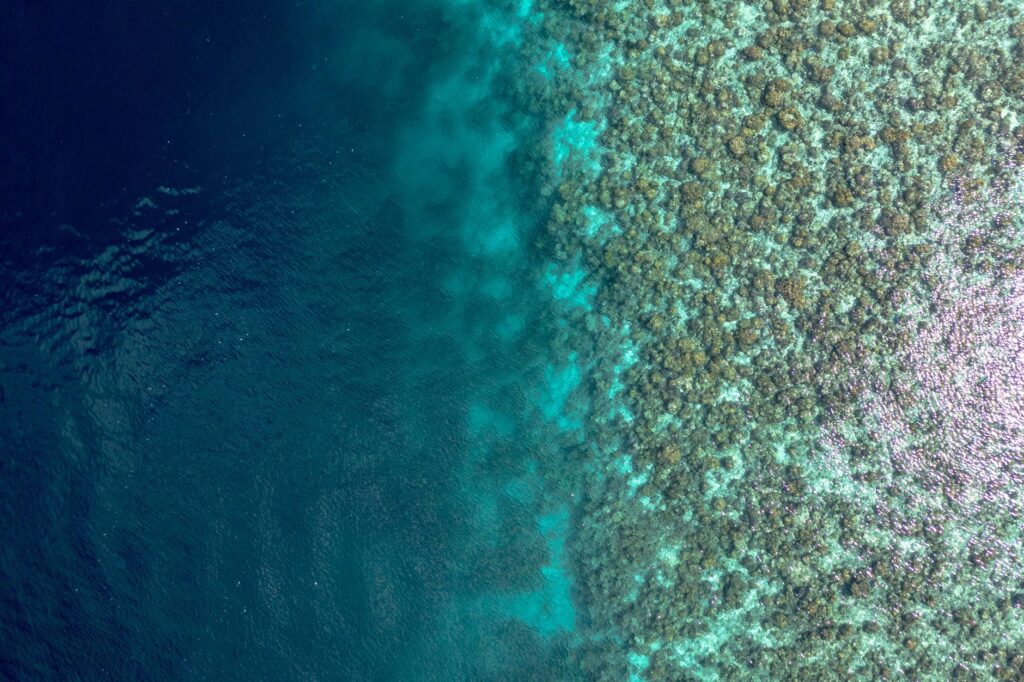
The morphology of the Loyalty Islands imposes severe constraints on aeronautical infrastructure. Unlike large continental enclaves where flat terrain allows for kilometer-long runways, Lifou, Maré, and Ouvéa consist of uplifted atolls and limestone plateaus where usable land is scarce and strictly protected by environmental regulations.
Landing strips, such as Ouanaham in Lifou or La Roche in Maré, extend across ancient fossilized coral platforms. This creates a surface with unique drainage characteristics, but also with extreme hardness that accelerates tire wear on aircraft. Aeronautical engineers and local operators must manage a remarkably costly maintenance logistics chain, as every ton of asphalt, mechanical spare part, or fuel must be transported by sea from Nouméa, facing the unpredictability of the Pacific Ocean.
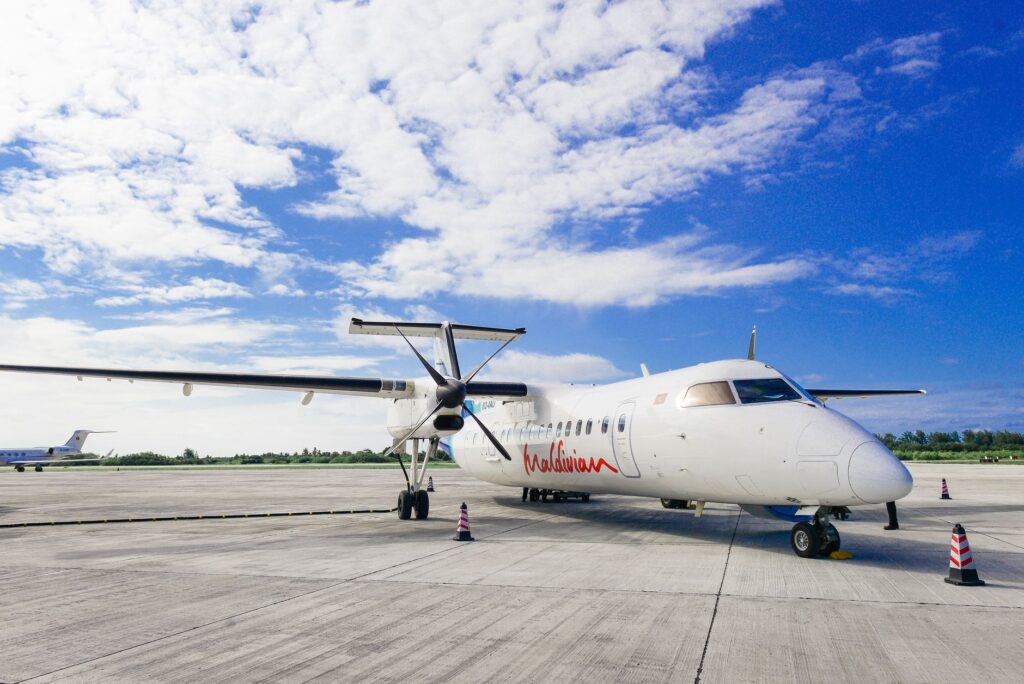
The airstrip on a coral island is not merely a transport infrastructure; it is the umbilical cord that prevents the economic and sanitary suffocation of entire communities separated by hundreds of miles of open sea.
Beyond the surface, runway lengths typically hover between twelve hundred and fifteen hundred meters, a tight margin that rules out the operation of medium-sized commercial jets. Navigation demands pinpoint precision from commanders, who must meticulously calculate takeoff and landing weights while accounting for high ambient humidity and tropical temperatures that diminish aircraft lift.
The Fleet and the Turboprop Backbone
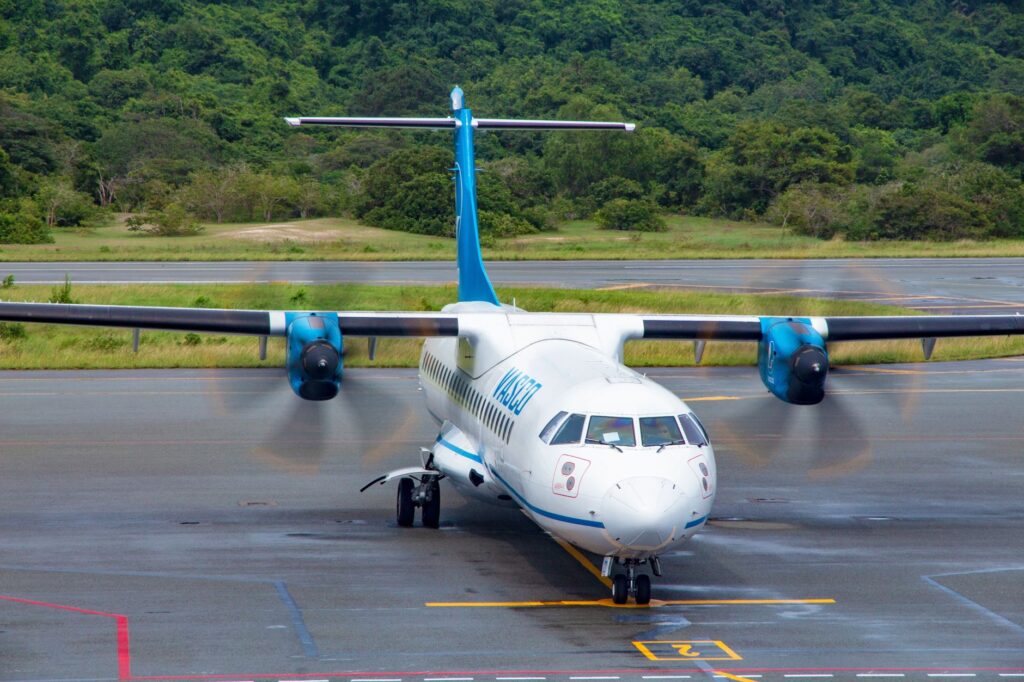
The operational burden of connectivity in the Loyalty Islands traditionally rests on regional turboprop fleets, with aircraft from the de Havilland Canada family (such as the DHC-6 Twin Otter for shorter, complex hops, and ATR 42 or ATR 72 models for primary routes from Nouméa) serving as the ideal tools for this ecosystem.
Turboprops offer an irreplaceable combination of short takeoff and landing (STOL) versatility, structural robustness in landing gear, and optimized fuel consumption for journeys under an hour. The cabins of these aircraft reflect the utilitarian nature of the route: removable seats that allow interior reconfiguration within hours to alternate between passenger transport and the cargo of perishable goods, medicines, or mail.
Daily operations begin before dawn at Magenta airfield. Maintenance teams conduct thorough inspections of engines and hydraulic systems, paying special attention to marine corrosion caused by the constant salinity of the environment. Each flight operates under Visual Flight Rules (VFR) or Instrumental Flight Rules (IFR) adapted to the erratic local meteorology, where sudden tropical storms can reduce visibility to zero within minutes.
Human Logistics and the Management of Isolation
For island residents, the airplane is not a luxury vacation option, but rather an essential public service comparable to an urban bus line or a commuter train in Europe. Ticket fares are heavily subsidized by local and governmental institutions to ensure that insularity does not translate into social or economic exclusion.
The flow of passengers combines teachers, healthcare personnel, civil servants, and local families traveling to the main island for medical or administrative reasons. Likewise, patients requiring complex surgeries or specialized treatments are urgently evacuated on dedicated medical flights, demonstrating that the efficiency of the local airport network has a direct impact on the archipelago’s life expectancy and quality of life.
The relationship between airlines and the traditional chiefs of local clans is another fundamental pillar of operations. Airfields are located on land under customary ownership, making mutual understanding, respect for local customs, and the integration of communities into the management of auxiliary airport services indispensable for avoiding blockades and ensuring social peace around facilities.
The Meteorological Factor: Trade Winds and Cyclones
The climate of the South Pacific imposes a permanent stress test on air transport planning. Between November and April, the region enters the cyclone season, a period marked by severe tropical depressions that can completely paralyze aeronautical activity for days.
Airlines operate with hyper-vigilant meteorological control centers monitoring the formation of tropical waves hundreds of kilometers north of the archipelago. When red alerts are triggered, aircraft are swiftly and preventively evacuated to secure hangars at La Tontouta, while island airfields secure their lighting systems and mobile equipment.
Outside the cyclone season, southeast trade winds blow with steady force, generating low-level turbulence during final approaches to runways that often terminate abruptly against rocky cliffs or coastal strips whipped by surf. This reality requires airlines to maintain pilot rosters with specific archipelago flight certifications and rigorous simulator training that replicates exact coral terrain conditions.
Sustainability and the Energy Transition Dilemma
As global aviation faces the urgency of reducing its carbon footprint, insular regional routes sit at the center of a complex technological debate. The Loyalty Islands depend absolutely on fossil fuels imported by ship, a costly logistical process vulnerable to fluctuations in the international energy market.
Decarbonization projects for regional fleets in the Pacific explore alternatives such as sustainable aviation fuels (SAF) and, longer term, hybrid or electric propulsion for short-distance, low-capacity aircraft. However, implementing these technologies in remote territories encounters enormous financial barriers and specialized storage infrastructure challenges.
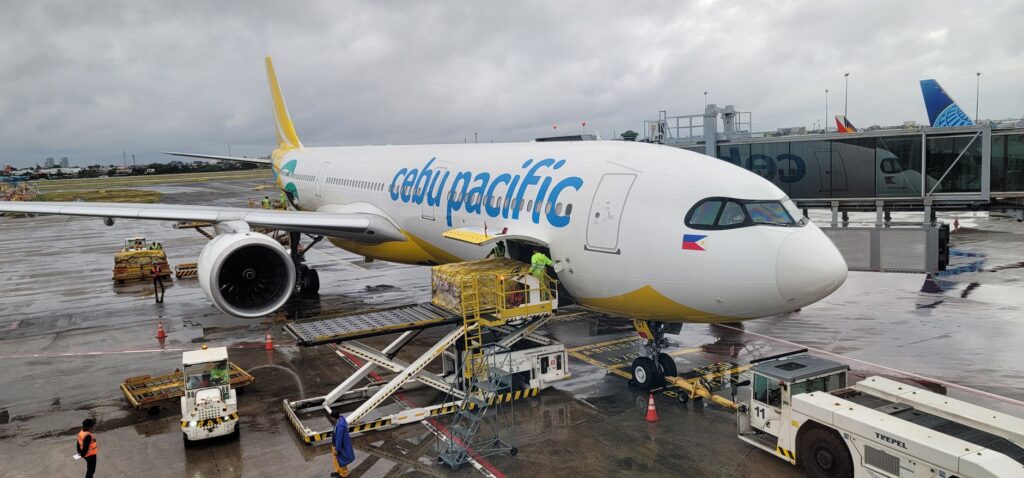
The future viability of island aviation depends not only on the economic profitability of routes, but on the global capacity to supply clean energy in isolated geographical environments without collapsing local ecosystems.
While early commercial prototypes of lightweight electric aircraft suitable for island-hopping routes are being developed, local airlines optimize flight profiles, adjust routes to burn less kerosene, and gradually renew fleets with next-generation engine models that reduce both noise and carbon dioxide emissions.
Practical guide
How to get to the islands: Regular flights operate exclusively from Magenta Airport, located in Nouméa. Regional airline Air Calédonie manages daily connections to Lifou, Maré, and Ouvéa.
Flight duration: Flights last approximately 30 to 45 minutes, depending on the destination island and en-route wind conditions.
Baggage restrictions: Due to the limited hold space in turboprop aircraft, strict checked baggage weight limits apply (generally between 15 and 20 kg per passenger), with additional fees for excess cargo.

Documentation and authorizations: Although part of French territory, it is essential to respect local customs and regulations regarding access to protected tribal areas. Travelers should consult local authorities regarding stay requirements before planning their trip.
Timing and planning: Booking tickets months in advance is strongly advised, especially during New Caledonia’s school holiday periods, and travelers should always allow at least a buffer day in Nouméa before connecting to international return flights.
The Horizon of Coral Silence
At dusk, as the final turboprop of the day takes off from the coral strip toward the distant lights of the capital, the archipelago recovers its millenary rhythm. The sound of engines quickly merges with the constant roar of waves breaking against the barrier reef, restoring to Lifou, Maré, and Ouvéa their status as inscrutable oceanic fortresses.
This fragile metallic Ariadne’s thread crossing the skies of the South Pacific proves that modernity is not always measured in skyscrapers or high-speed networks, but in the human capacity to weave safe, constant bonds over the hostile vastness of the ocean. The insular aviation of the Loyalty Islands remains, by its own right, one of the purest examples of operational engineering, community resilience, and respect for the planet’s natural boundaries.