
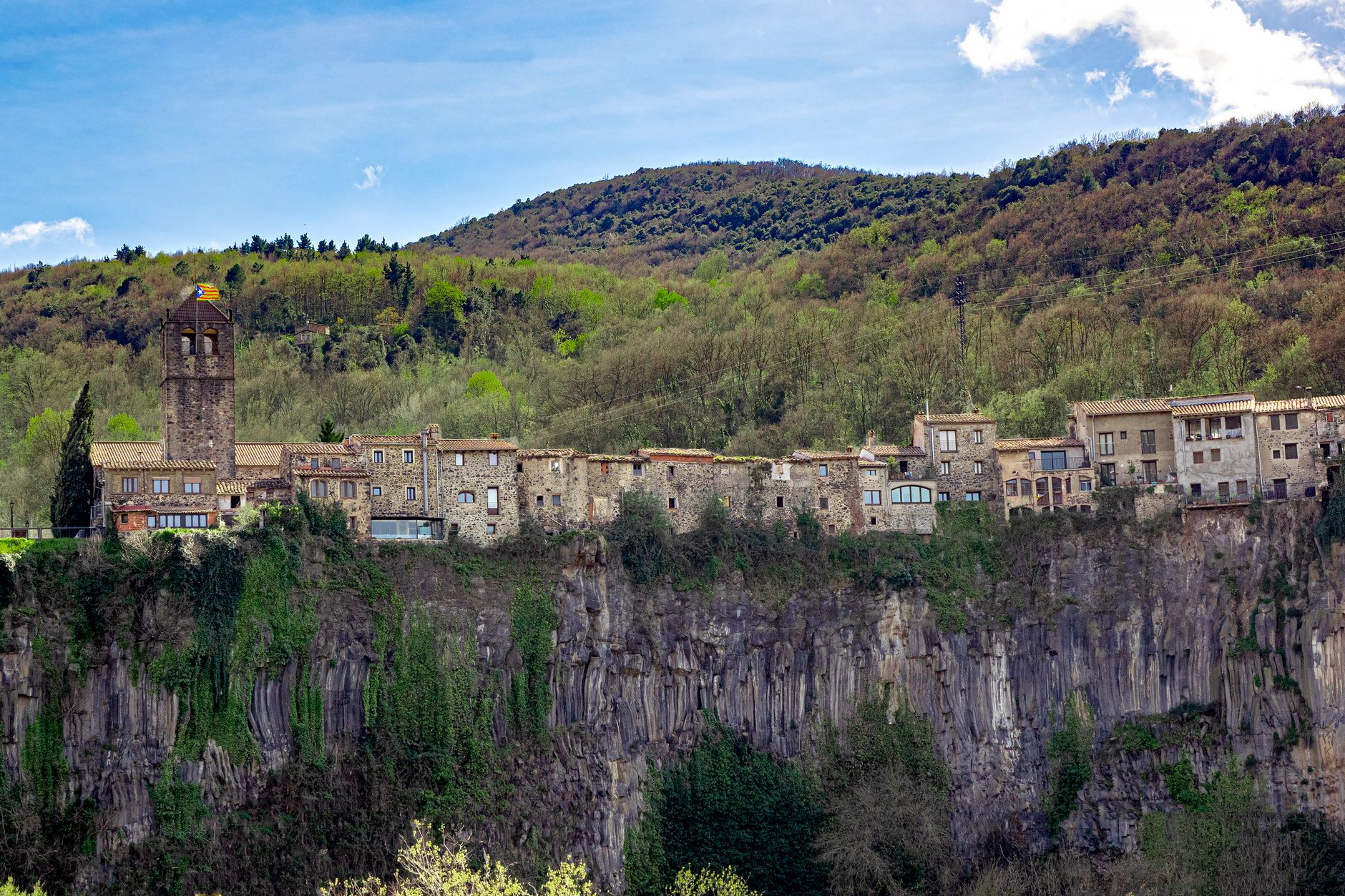

Catalonia unfolds a geography where stone and water engage in a millennial dialogue, shaping landscapes that range from the high peaks of the Pyrenees to the serenity of its interior valleys. Within this vast mosaic, the Osona region and the natural area of Collsacabra harbor an enclave where geological time and human intervention seem to have paused: Rupit i Pruit. Far from the mass tourism of the coast, this municipality perched on a basalt cliff offers a deep immersion in Catalan medieval architecture, a territory where every doorway, every centuries-old oak beam, and every corner of worked stone tells a story of resilience and adaptation to the natural environment.
The purpose of this report is to untangle the true identity of Rupit i Pruit beyond the photographic cliché. We will examine its defensive origin, the uniqueness of its urban morphology conditioned by prehistoric basalt flows, the management of its architectural heritage, and the delicate balance between preserving its legacy and the influx of visitors seeking to understand life on these Catalan uplands during the Middle Ages and the Early Modern period.
The Geology of Collsacabra: The Natural Stage of Stone
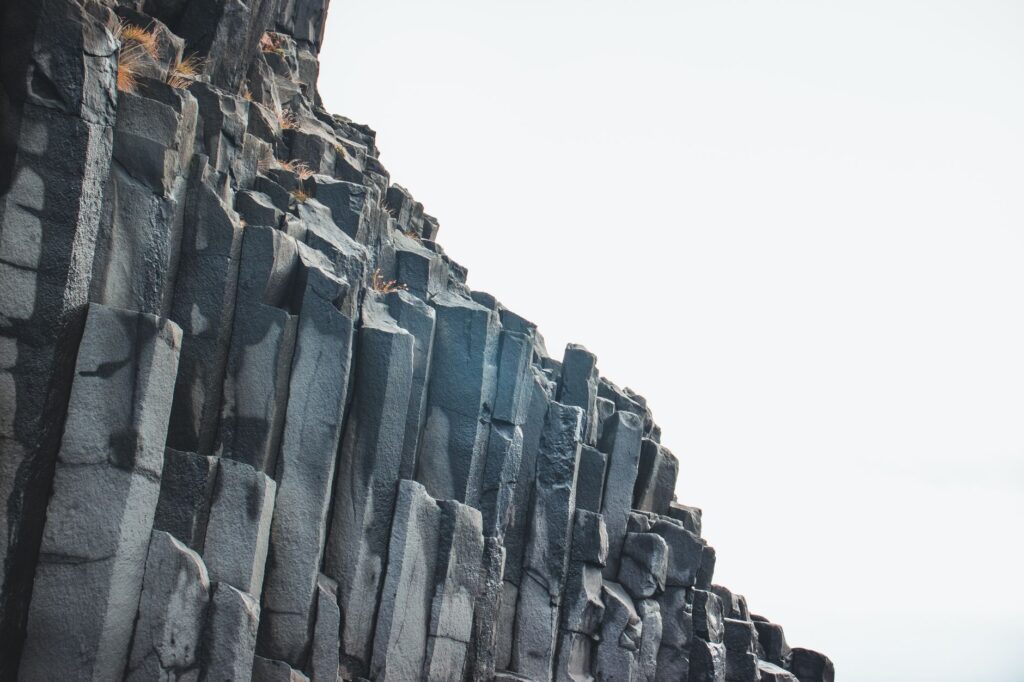
To understand the very existence of Rupit, it is essential to look downward, toward the rock upon which it rests. Collsacabra is a natural region characterized by imposing precipices and vertical cliffs formed by differential erosion on sedimentary materials and ancient basalt flows. Millions of years ago, the region’s volcanic activity and subsequent tectonic processes shaped elevated plateaus that early inhabitants utilized for their strategic and defensive value.
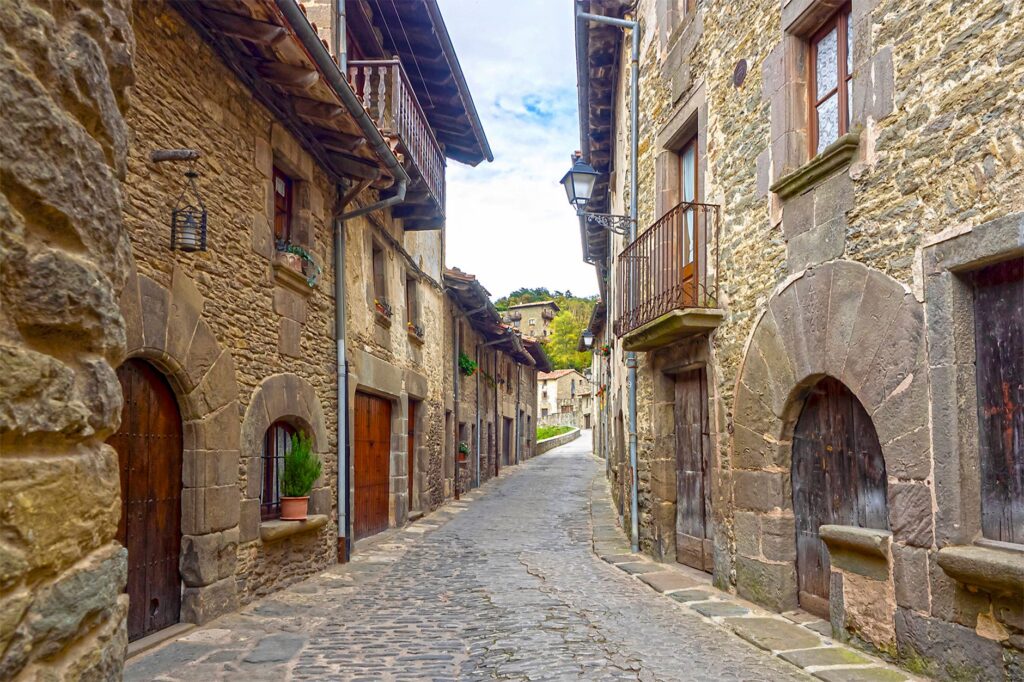
The basaltic substrate not only defines the visual profile of the landscape but directly determined the building materials available to medieval inhabitants. Local sandstone and basalt became the foundations of an urbanism conditioned by topography. Homes adapt millimetrically to the irregularities of the terrain, taking advantage of natural ledges in the rock to gain stability and protection against winter mountain weather, characterized by cold winds and frequent precipitation.
The Rupit Suspension Bridge: Traditional Engineering and Modern Symbol
One of the most iconic elements welcoming the visitor is its characteristic suspension bridge made of wood and steel cables, which crosses the stream bed of Rupit. Although today it is perceived as a picturesque and almost cinematic postcard, its construction responded to a strictly functional necessity arising in the second half of the 20th century to connect the old core with newer neighborhoods and facilitate the daily transit of residents and livestock.
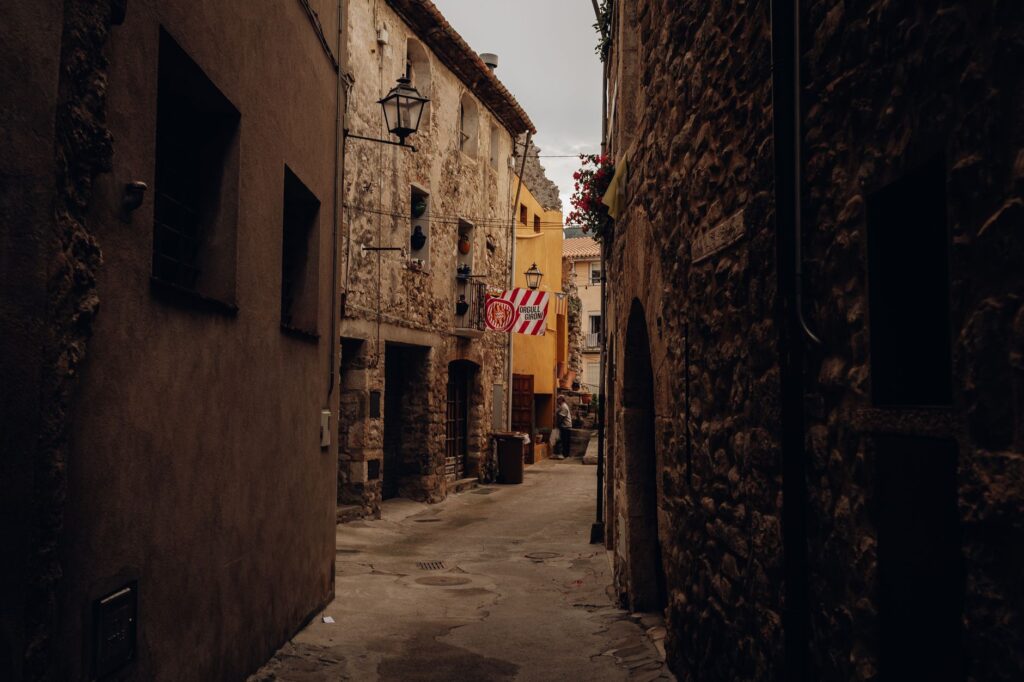
The current structure, restored on various occasions to guarantee structural safety due to high pedestrian traffic, retains the essence of traditional high mountain crossings. Walking across its wooden planks, which sway slightly with the firm steps of passersby, visitors experience a physical and psychological transition: leaving the contemporary world behind to enter a network of cobbled streets that has barely altered its street layout since the 16th and 17th centuries.
Civil and Manor Architecture: Homes from the 16th and 17th Centuries
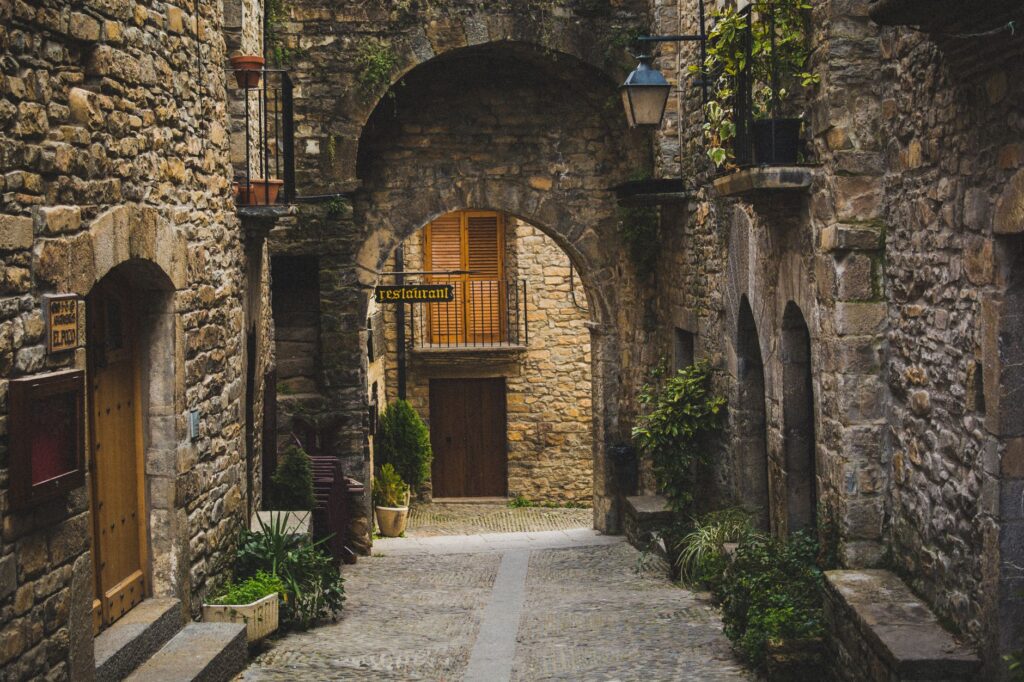
The architectural splendor that travelers contemplate today in Rupit does not correspond to the early medieval period of its defensive foundation, but rather to the era of economic prosperity experienced during the 16th and 17th centuries. In this period, many of the old stone houses were expanded, reformed, and endowed with manor elements that still surprise visitors today with their magnificent state of conservation.
The facades stand out for their thick masonry walls, carved stone lintels on doors and windows—often engraved with construction dates or protective and guild symbols—and the characteristic solid wooden balconies overflowing with flowers. Emblematic houses such as Can Sallés or the Soler Notary exemplify the administrative and commercial importance the town held in the past, functioning as local power centers within the viscountcy of Osona.
The Sallent Waterfall: The Power of Water on the Upland
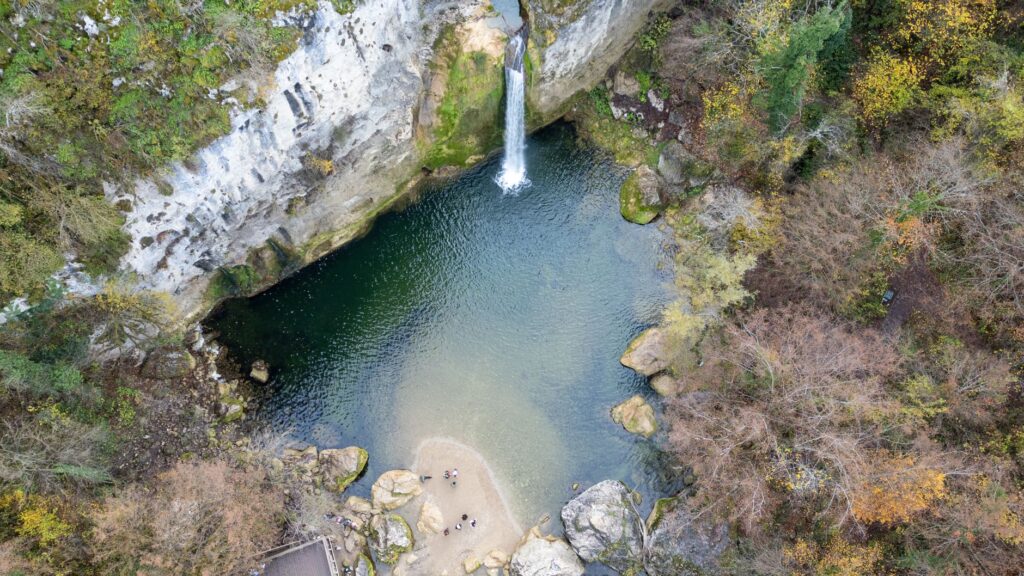
A few kilometers from the urban core, following marked trails that wind through beech, oak, and holm oak forests, lies one of the most breathtaking natural attractions of the area: the Sallent waterfall. It is an impressive water drop of over one hundred meters where the Rupit river plunges into the void from the cliff, carving out a rocky amphitheater of immense scenic and ecological value.
The fluvial dynamics of this sector of Collsacabra are marked by seasonality. During the months of spring thaw or after episodes of intense autumn rains, the waterfall displays its most forceful and resonant face; conversely, during drier summer periods, the flow drops drastically, revealing the geological formations and sedimentary rock strata that the force of water has taken millennia to polish and cut.
Pruit and the Dispersion of the Catalan Rural Habitat
While Rupit represents the concentrated core of urban and manor character, the neighboring entity of Pruit offers a complementary and fundamental perspective for understanding the rural history of Catalonia: the dispersed habitat of farmhouses (masies). United administratively into a single municipality, both localities display two sides of the same socioeconomic coin.
The centuries-old farmhouses of Pruit, standing as isolated dwellings surrounded by dryland farming fields and pastures, reflect a model of agrarian and livestock self-sufficiency that has endured for centuries. These large stone buildings, with their gabled roofs and multiple-bay structures, functioned as small independent productive units where the extended family, tenant farmers, and livestock lived together and managed the resources of the surrounding territory under a historical manorial regime.
Religious Heritage: Churches and Hermitages in the Landscape
Spirituality and religious organization deeply shaped the daily evolution of Rupit i Pruit. The parish church of Saint Michael the Archangel (Sant Miquel de Rupit), located in the heart of the town, combines elements of Romanesque origin with significant Baroque and neoclassical expansions undertaken after earthquakes affected the Catalan region in the mid-15th century.
Isolated in the surroundings, various hermitages such as Santa Magdalena or Sant Llorenç Dosmunts act as landmarks in the territory. These small rural temples not only fulfilled a liturgical function, but served as geographical reference points for shepherds and hikers, in addition to hosting rogations and community celebrations that reinforced the social cohesion of the upland inhabitants against winter isolation.
The stone of Rupit is not a mere decorative element; it is the physical archive of a community that successfully transformed the limitations of its volcanic environment into an impregnable refuge.
Practical guide
How to get there: Rupit i Pruit is located about 100 kilometers from Barcelona and about 60 from Girona. The main access by private vehicle is via the C-153 road from Vic or Olot, subsequently taking well-signposted local detours descending toward Collsacabra.
Best time to visit: Spring and autumn are the most recommended seasons due to pleasant temperatures for walking and the optimal flow of streams and waterfalls. Summer may register higher weekend tourist influx, while winter offers sober and cold landscapes.
Visit recommendations: Comfortable footwear with good grip is essential for walking the cobbled streets, often slippery, and the forest trails toward the Sallent waterfall. Visitors are advised to respect the tranquility of local residents and use parking lots provided on the outskirts of the historic center to preserve the pedestrian nature of the town.
The Silent Echo of Centuries in Collsacabra
Remaining silent at dusk, when the last solar rays strike the basaltic stone of Rupit and the bustle of daytime visitors dissipates, allows one to tune into the authentic dimension of this landscape. We are not facing a theme park built for rapid consumption, but rather a living organism, an inhabited territory that has managed to preserve the dignity of its forms against the homogenizing inertias of the modern world. The chimneys smoking again as evening falls and the distant murmur of water will always remind the traveler that the true beauty of these places lies in their capacity to keep alive the memory of those who built them stone by stone.
Source in EN: Diario del Viajero (https://www.diariodelviajero.com/arquitectura-y-viajes/pueblo-medieval-cataluna-que-pasa-sacado-cuento-puente-colgante-cascadas-calles-piedra)


