
The Art of Scaling Mountains Without Extreme Fatigue
Crossing the Alps by bicycle is traditionally associated with the epic scale of the Tour de France, featuring endless mountain passes, heavy sweat, and impossible gradients. However, another way exists to conquer Europe’s great mountain range without iron lungs or elite athletic preparation. The secret lies in a seamless alliance between railway engineering and contemporary cycle tourism: the Alpe Adria route. This cross-border corridor proves that the continent’s most demanding geography can remain accessible to any traveller willing to pedal at a steady pace, relying on train lines whenever the elevation gain proves too steep.
The itinerary makes use of historic railway infrastructure and former mining lines transformed into greenways. The result is a route descending from imperial Salzburg, Mozart’s birthplace in Austria, down to the warm waters of the Adriatic Sea in the Italian town of Grado. This journey is not about suffering in the saddle, but about modulating effort, knowing that the next alpine tunnel or upcoming train carriage is ready to cut through the toughest climbs. The trip thus transforms into an exercise in active contemplation where the landscape shifts slowly, from alpine meadows filled with dairy cows to the vineyards of Friuli and the canals of the Venetian lagoon.
Salzburg and the Gentle Start Through the Salzach Valley
The journey begins in Salzburg, a city where classical music seems to permeate even the baroque facades. Before mounting the bicycle, it is worth losing oneself in the narrow streets of the old town, declared a UNESCO World Heritage Site. Departure towards the south takes place along the cycle path running parallel to the Salzach River, an emerald-green waterway setting the initial rhythm of the ride. The first kilometres are flat and gentle, ideal for adjusting luggage, checking tyre pressure, and accustoming the legs to the cyclic motion of pedalling.
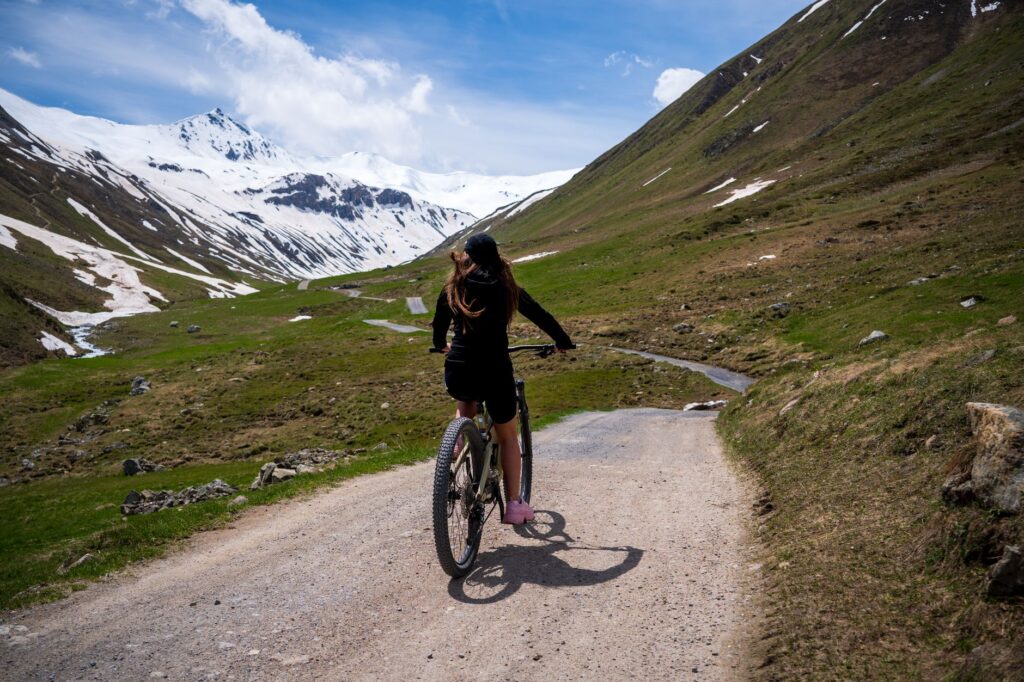
As urban suburbs are left behind, the valley narrows and the Alps begin to close the horizon with their limestone rock walls. Road traffic almost entirely disappears, replaced by a network of paved rural lanes shared by local cyclists, weekend families, and long-distance travellers loaded with panniers. During this initial phase, physical effort remains minimal, allowing one to focus on the architectural details of alpine villages, with their wooden balconies overflowing with geraniums and the distinctive towers of parish churches pointing toward the sky.
The Strategic Leap: The Tauern Tunnel and Shuttle Trains
The first major topographical test arrives in the Salzburg region, when the Salzach valley appears to close definitively against the mass of the Hohe Tauern National Park. Overcoming this barrier at more than two thousand meters of altitude would require disproportionate effort were it not for the Tauern railway tunnel. The solution is as simple as it is efficient: at Bad Gastein station, bicycles are loaded onto a shuttle train that, in barely eleven minutes, pierces the bowels of the mountain to emerge in the Carinthian valley.
The train is not a shortcut that robs authenticity from the journey, but rather the bridge that democratises the alpine crossing, turning an impassable wall into a comfortable and fascinating procedure.
This intermodal system defines the philosophy of the route. The traveller does not compete against the mountain; they negotiate with it. Upon stepping off the train in Mallnitz, the landscape has changed radically. We are on the southern slopes of the Alps, where Mediterranean influence begins to show in the vegetation and the brightness of the days. From this point onward, the route profile tilts predominantly downward, facilitating smooth pedalling that invites riders to lift their eyes from the asphalt to enjoy larch forests and crystal-clear streams flowing toward the Drava River.

From Villach to the Italian Border: The Alpe Adria Cycle Path
Villach, the most important city in western Carinthia, functions as a fundamental logistical and cultural hub along the route. Several river valleys converge here, and Italian influence begins to make itself felt on plaza terraces, where espresso replaces Viennese coffee with milk. Leaving Villach marks the beginning of the official Alpe Adria cycle path (Alpe Adria Radweg), an exemplary infrastructure built largely along the route of the former Koralpe railway, closed in the late 20th century.
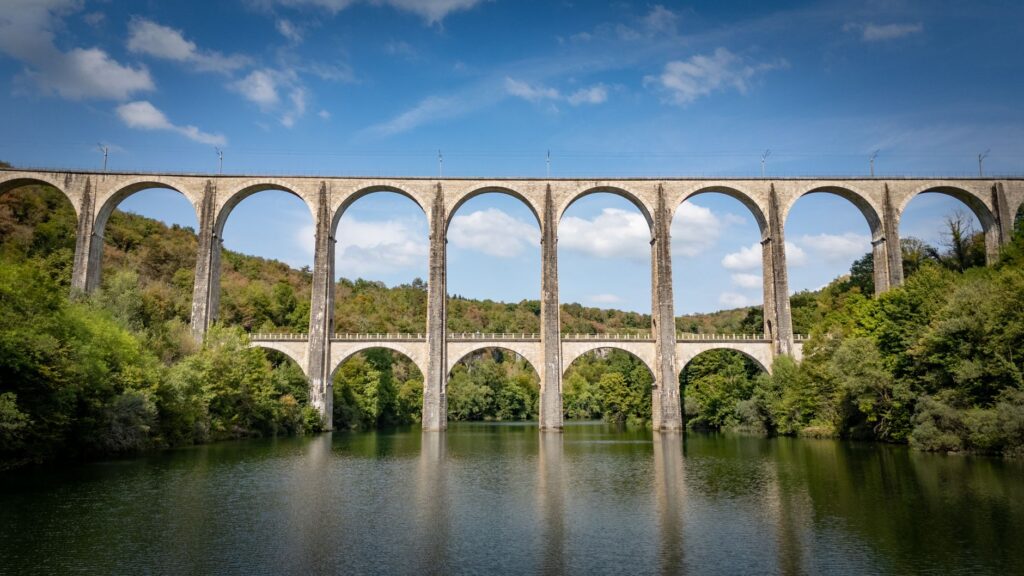
This section stands as a masterwork of green engineering. Engineers utilised historic stone viaducts and rock-hewn tunnels to chart a gentle, consistent, and absolutely safe slope free of cars. Crossing these illuminated tunnels while gazing at the valley below through stone arches ranks among the most rewarding experiences of the tour. The border with Italy is crossed almost imperceptibly at the former Tarvisio station, now converted into a lively service centre for cyclists where route passports are stamped and the first San Daniele ham sandwiches are tasted.
Historic Friuli: Stone Villages and the Legacy of the Great War
Once on Italian soil, the Friuli-Venezia Giulia region welcomes the traveller with a sober character, featuring rugged yet welcoming mountains. The descent follows the course of the Fella River, flanked by the imposing peaks of the Julian Alps. In towns like Venzone, rebuilt stone by stone following the devastating 1976 earthquake, medieval history blends with recent memory. Defensive walls and cobbled streets invite a technical stop to visit the cathedral and understand the resilience of its inhabitants.
Throughout this sector, the cycle path crosses numerous metal bridges spanning dizzying gorges, recalling the strategic complexity of these borderlands. Remnants of military fortifications and First World War bunkers abound, converted today into points of historical interest thanks to trilingual information panels. Physical effort remains low, as the descending slope favors a highly agreeable cruising speed driven by fresh breezes blowing down from higher summits toward the Po plain.

Udine and the Transition to the Friulian Plain
The alpine landscape slowly opens up, giving way to gentle hills carpeted with vineyards and cornfields. Udine emerges as an elegant, quiet urban pause, dominated by its Renaissance castle and porticoed squares that inevitably recall the influence of the Venetian Republic. It serves as the perfect spot for an extended break, allowing the cyclist to stroll through Piazza della Libertà and enjoy a glass of local white wine, such as Friulano, accompanied by traditional cicchetti in historic centre taverns.
Beyond Udine, the route definitively leaves the mountains behind and enters the alluvial plain. The terrain turns completely flat, accelerating progress southward. The heat of the afternoon sun becomes more pronounced, yet the network of secondary roads continues to avoid major highways, winding among irrigation canals, old manor houses, and agricultural villages where time seems to pass at a different speed. The proximity of the sea begins to make itself known in the smell of humidity and the presence of waterfowl in surrounding wetlands.
Practical guide
How to get there: Salzburg has an international airport connected to major European cities, alongside an excellent high-speed train network from Munich and Vienna. For the return, Grado is connected via buses and bicycle transport services to the Cervignano del Friuli railway station, offering links to Venice, Trieste, or Vienna.
When to go: The best time to undertake this route includes the spring months (May and June) and early autumn (September and October). During July and August, heat in the Friulian plain can be intense, and tourist influx in alpine passes is higher.
Type of bicycle: Although possible with a trekking or gravel bike, an electric bicycle (e-bike) represents the ideal choice for those wishing to ensure no incline demands excessive effort. Most local agencies permit renting e-bikes in Salzburg and returning them in Grado.
Luggage transport: Specialized companies offer hotel-to-hotel luggage transfer services, allowing riders to pedal with only a light backpack or small pannier. This option significantly increases journey comfort.
The Final Embrace with the Adriatic Sea in Grado
The final kilometres of the journey run across an asphalted tongue of land crossing the lagoon of Grado, a labyrinth of reed beds, shallow waters, and small islets where traditional fisherman huts known as casoni float. The salty water of the Adriatic Sea definitively replaces alpine rivers, and the sea breeze announces the adventure’s end. No medals or podiums await upon reaching Grado’s beach, yet the satisfaction of crossing one of Europe’s most formidable mountain ranges using solely leg power and the complicity of local trains remains an intimate, indelible reward.
The journey does not end when the wheel stops at the water’s edge, but rather when memory assimilates that the highest mountains are no longer walls that divide, but landscapes that can be inhabited and traversed at leisure.
Sitting on a Grado pier contemplating sunset over the marine horizon while savoring a dish of fresh Adriatic fish rounds out the circle of a journey proving that alpine cycle tourism is not the exclusive territory of extreme athletes, but an experience within reach of any curious, patient traveller who loves unhurried rhythms.
Source in EN: El País – El Viajero