The water of Lake Wolfgangsee possesses a chromatic intensity that defies conventional description, shifting seamlessly between vibrant emerald green and the deepest turquoise depending on how the bright summer sun strikes its calm surface. Nestled securely within the dramatic Alpine heartland of Austria’s Salzkammergut region, this expansive aquatic mirror of more than thirteen square kilometers is much more than a geographical feature of extraordinary visual drama; it is a cultural landscape where Central European history beats vibrantly through its stately architecture, centuries-old traditions, and deep historical ties to the artistic movements of the nineteenth and twentieth centuries.
Throughout the radiant summer months, when the towering limestone peaks framing the basin shed their winter blankets of snow and high-altitude mountain meadows burst forth with an incredible riot of wild alpine flowers, the valley assumes an unmistakable energy. This unique atmosphere successfully marries contemplative relaxation with low-impact active tourism. Far removed from the overwhelming congestion of major European urban hubs, the Wolfgangsee invites visitors to adopt a measured, unhurried pace where each day naturally revolves around the shoreline, historic wooden jetties, and scenic footpaths climbing toward panoramic viewpoints carved directly into ancient rock faces.
The Historical Pulse of Sankt Wolfgang and its Patrons
The charming lakeside village that lends its name to the entire body of water, Sankt Wolfgang, traces its foundational origins directly back to Bishop Wolfgang of Regensburg. According to enduring Christian tradition, he retreated to these remote wilderness solitude zones late in the tenth century in search of profound contemplative prayer. His lasting spiritual legacy swiftly transformed the quiet settlement into a premier European pilgrimage destination throughout the Middle Ages, drawing devout believers from across Bavaria and the Holy Roman Empire.
Late medieval sacred art finds one of its purest and most pristine sanctuaries within the historic parish church of Sankt Wolfgang.
The single most dazzling testament to this golden era of devotion is the local parish church, which proudly shelters inside its venerable walls the world-renowned winged altarpiece carved masterfully by Michael Pacher between 1471 and 1481. This undisputed masterpiece of Late Gothic craftsmanship successfully merges complex polychrome woodcarving with an advanced Renaissance spatial perspective previously unseen within the eastern Alpine valleys.
The Century-Old Tradition of Paddle-Steamer Navigation
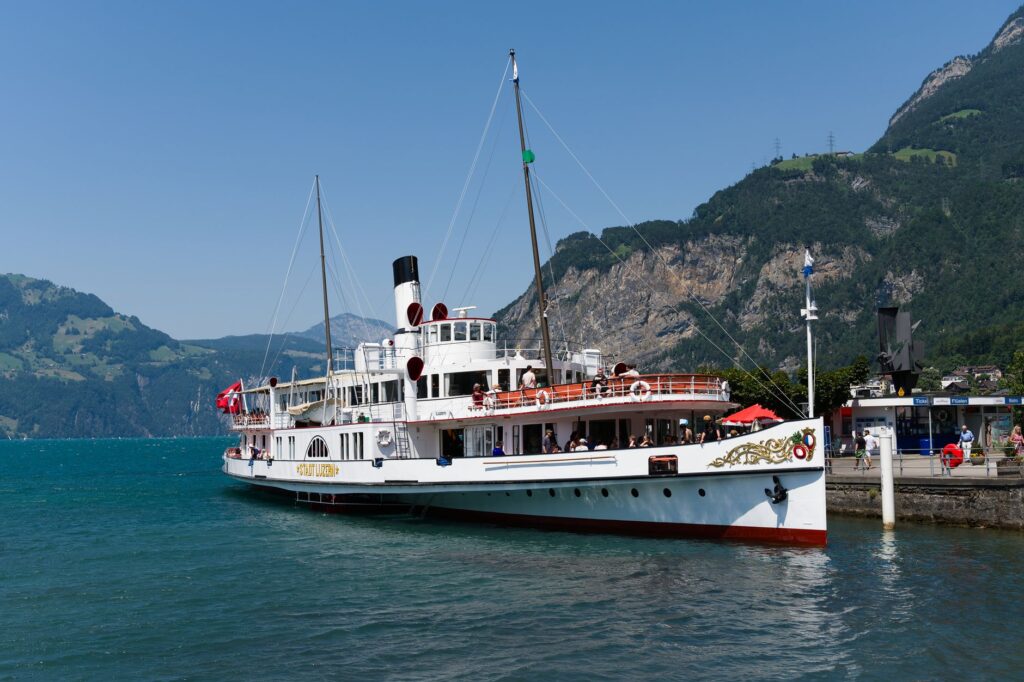
Ever since the year 1873, the timeless visual identity of the Wolfgangsee has remained inextricably linked to the steady presence of historic vessels plying its pristine waters to connect the scattered lakeside communities. The undisputed flagship of this venerable fleet is the historic paddle steamer Kaiser Franz Josef I, an authentic masterpiece of nineteenth-century naval engineering that continues to operate its original iron pistons and massive boilers to this day.
Stepping aboard this floating historical monument offers a privileged maritime vantage point for taking in the vast scale of the surrounding landscape. Visitors can listen closely to the rhythmic, comforting heartbeat of the vintage paddle wheels while charming, brightly painted facades of villages like Sankt Gilgen and Strobl slowly drift past. Historically, this vital aquatic highway functioned as the primary commercial and passenger artery long before modern paved roads were blasted along the rugged shoreline.
Art and Literature as a Summer Sanctuary
During the twilight decades of the nineteenth century and the opening phases of the twentieth, the Wolfgangsee established itself firmly as the favored summer playground for the Viennese bourgeoisie and Central Europe’s intellectual avant-garde. Painters, celebrated playwrights, and visionary composers found the tranquil seclusion of these shores to be an inexhaustible wellspring of creative stimulus for producing foundational masterworks.

The celebrated composer Gustav Mahler spent prolonged summer retreats living and working in the immediate vicinity, seeking within the profound silence of the alpine wilderness the fierce concentration required for his monumental symphonies. Similarly, renowned dramatist Carl Zuckmayer immortalized the distinctive local atmosphere in his enduring literary works, cementing the lake’s long-standing reputation as a safe haven for spiritual renewal and artistic creation far away from the chaotic pressures of the imperial capital.
Railway Ascents and Sweeping Alpine Panoramas
The dramatic, plunging topography that tightly confines the lake finds its brilliant engineering counterweight in the SchafbergBahn. Operating continuously since 1893, this historic cog railway climbs with dizzying steepness up the rugged flanks of the Schafberg mountain until it triumphantly reaches an altitude of 1,783 meters above sea level.
The spectacular journey, which conquers severe elevation gradients touching a maximum twenty-six percent incline, delivers a constantly shifting visual spectacle. Dense deciduous and conifer forests gradually give way to open alpine pastures and, finally, to the stark, windswept limestone ridge at the summit. From the very top on exceptionally clear days, the expansive gaze sweeps comfortably across up to fourteen distinct lakes scattered throughout the wider Salzkammergut region, creating one of the most celebrated panoramic vistas in all of Central Europe.

Lakeside Gastronomy and Salzkammergut Delicacies
The rich culinary pantry of the Wolfgangsee draws direct inspiration from the pristine purity of its waters and the resilient agricultural traditions nurtured in the surrounding alpine valleys. Fresh lake fish, with a particular local emphasis on the prized Reinanke (an indigenous whitefish boasting delicate flesh) and local trout, serves as the central anchor of traditional dining menus found within cozy regional taverns.
Local culinary preparations consistently eschew unnecessary culinary artifices, relying instead on straightforward grilling enhanced by freshly picked wild mountain herbs or traditional artisanal smoke-curing techniques. These savory dishes are routinely paired with exceptional goat and cow milk cheeses crafted skillfully in high-altitude pastures, alongside hearty dark rye breads baked communally in traditional stone ovens.
Trails of Water, Forests, and Heritage
The comprehensive network of well-maintained walking trails looping around the basin permits a deeply contemplative approach to local ecosystems, seamlessly blending tranquil shoreline stretches with immersive hikes through mixed woodlands of beech and fir. The popular trail connecting Sankt Gilgen and Strobl runs immediately adjacent to the water for much of its length, affording hikers exceptional opportunities to observe summer birdlife, including great crested grebes, mallards, and majestic grey herons that find secure nesting habitats within protected natural coves.

Walking quietly along the quiet shores of the Wolfgangsee is a profound exercise in geological and botanical reading, revealing the quiet resilience of alpine nature.
Dotting these historic footpaths, small votive chapels erected by generations of local fishermen stand as touching reminders of a deeply rooted popular piety, forged through centuries of living in close, respectful proximity to the formidable and sometimes unpredictable forces of the high alpine environment.
Practical guide
How to get there: Salzburg International Airport lies approximately fifty kilometers from the lake basin. From there, reliable regional bus connections operated by the Postbus network provide direct services to Sankt Gilgen, Strobl, and Sankt Wolfgang in roughly one hour. Due to strict parking limitations within historic village centers, utilizing dependable public transportation is strongly advised.
When to go: The summer months stretching from June through September offer optimal thermal conditions for enjoying both lake-based water sports and high-altitude hiking, with comfortable daytime temperatures hovering between 20°C and 26°C.
Where to stay: Local accommodation options heavily emphasize traditional charm, highlighted by historic landmarks such as the famous Hotel Weißes Rössl in Sankt Wolfgang or family-run guesthouses in Sankt Gilgen that carefully preserve classic architectural features like wooden eaves and flower-draped balconies.

Recommended activities: Combine a leisurely cruise aboard the historic paddle steamer with a scenic mountain ascent via the Schafberg cog railway, followed by an afternoon electric bicycle ride along the dedicated shoreline cycling paths.
The Timeless Echo of Still Waters
When the fierce summer sun finally dips behind the jagged ridges of the Schafberg mountain and the glassy surface of the lake settles into a dark, mirror-like texture, the Wolfgangsee reclaims the primal quietude that originally seduced early hermits and romantic travelers alike. In that fleeting moment of fading twilight, the historic lakeside villages soften their everyday sounds, and warm window lights cast long, shimmering reflections across the water with astonishing clarity. Far from functioning as a superficial tourist theme park, this treasured corner of the Salzkammergut remains vibrantly alive thanks to a delicate, millennial balance between the careful preservation of its cultural heritage and a rigorous, enduring respect for a natural landscape that continues to flow with pristine purity across the centuries.
Source in EN: El País (https://elpais.com/elviajero/escapadas/europa/2026-09-07/un-verano-en-wolfgangsee-aguas-cristalinas-y-pueblos-de-cuento-en-el-lago-bonito-de-austria.html)