Beyond the coastal lighting frenzy
Every December, the Spanish tourism map seems to narrow down to a single flashing focal point. The media tug-of-war between major capitals and municipalities leading the mass-influx headlines eclipses a much more nuanced reality. While millions crowd beneath colossal LED bulb structures chasing attendance records, another winter geography prefers respectful gloom to strident dazzle. These are medium-sized cities, generally located in the peninsular interior, which have understood that Christmas does not need to compete in decibels or disproportionate energy consumption to be memorable. Here, artificial light dialogues with centuries-old stone, frost-dampened cobblestones, and an urban rhythm that invites walking with hands in pockets and visible breath in the air.
This feature explores three such destinations that, without seeking direct confrontation with the sector’s colossi, build a lighting proposal tied to their historical identity. It is not about imitating large metropolises, but about underlining what they already possess: medieval walls, guild alleys, and porticoed squares that recover their human scale when evening falls. The journey proposes pausing the gaze in corners where the Christmas celebration is experienced on the street level, combining architectural heritage, spoon-based gastronomy, and hospitality that knows no turnstiles or bookings six months in advance.
The puzzle of light and historic heritage
Illuminating a historic quarter protected by heritage regulations is no simple task. Unlike major commercial avenues, where luminous arches are deployed with no limitation other than municipal budgets, historic centers require technical and aesthetic surgery. Municipal technicians and lighting design studios must trace cabling routes without drilling into Renaissance granite ashlar or distorting the volumes of Gothic churches and Baroque palaces. The result, when executed rigorously, is low color temperature lighting that accents stone textures rather than flattening them under a sea of multicolored neon.

In these inland cities, the lighting acts as a guiding thread marking a natural pedestrian route. Traditional streetlights are complemented by static projections on singular facades, shunning synchronized musical shows that provoke massive crowds. The primary objective is the nocturnal legibility of public space: allowing visitors to easily navigate labyrinthine alleys while discovering illuminated niches, guild arcades, and stone fountains dripping with freezing water. Light thus becomes a narrative resource accompanying the stroller, revealing architectural details that go unnoticed under the zenithal light of the winter sun.
Burgos: gothic, sober, and glowing by the Arlanzón river
The silhouette of Santa María la Real de Burgos cuts against the leaden December sky with solemnity unaltered for centuries. When night falls over the Burgos capital, the Christmas lighting does not compete with the cathedral; it frames it. The City Council has opted in recent years for a lighting design running through the Paseo del Espolón and the old town streets with warm garlands, avoiding the visual saturation characterizing other cities. The Santa María Bridge, guarded by imposing historical statues, transforms into a luminous threshold connecting the modern city with the medieval fabric.
Strolling through Burgos in these dates requires rigorous outerwear —the plateau wind shows no mercy—, but amply rewards the traveler seeking authenticity. The terraces of the Plaza Mayor empty as the mercury drops, but traditional taverns and underground cellars brim with life. There, the aroma of suckling lamb roasted in a wood-fired oven and the warmth of Ribera del Duero wines act as the best antidote against the cold. The city’s lighting accompanies this daily ritual, casting golden reflections on the frosted glass panes of century-old taverns.
Light in Burgos does not seek the ephemeral astonishment of commercial pyrotechnics, but rather a measured reunion with noble stone and the silence of major squares.
Ávila: millennial walls under calculated gloom
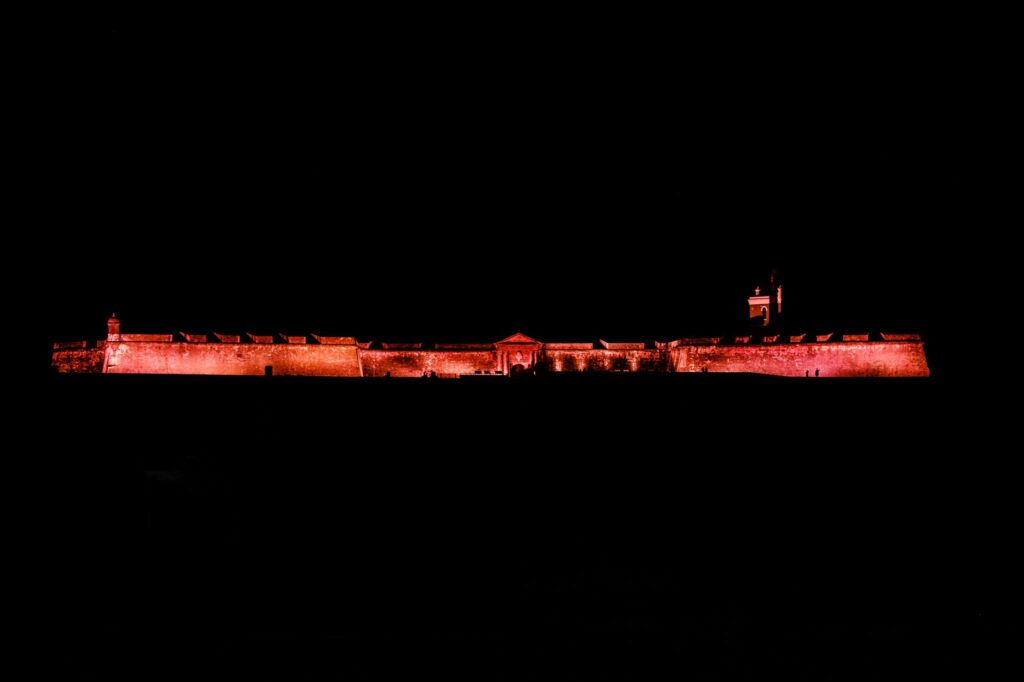
Few winter experiences surpass contemplating Ávila’s walled enclosure when nocturnal lighting outlines its two and a half kilometers of perimeter. Far from ephemeral setups, the permanent and reinforced lighting intervention on the Ávila wall during Christmas is a masterpiece of shadow engineering. Projectors strategically placed in the moat and fortified cubes enhance the granite texture without generating unnecessary light pollution. From peripheral viewpoints, such as the Cuatro Postes, the city appears floating in the darkness of the plateau like a stronghold halted in time.
Stepping through the San Vicente gate, the traveler discovers an urban interior living December with its own cadence. Paved streets, flanked by Renaissance-styled palaces, receive careful overhead lighting respecting wooden eaves and noble coats of arms. There are no large LED screens or pounding ambient music; the predominant sound is the crunch of shoe soles on cold ground and the distant echo of the basilica’s bells. It is a destination designed for travelers valuing heritage in its purest state, capable of enjoying a Yema de Santa Teresa pastry alongside a steaming coffee in a traditional bakery while watching snowfall through the window.
Teruel: blazing Mudejar and discreet stars in southern Aragon
In the coldest and most uninhabited corner of the Iberian System, Teruel offers one of the most singular Christmas proposals on the peninsula. Its Mudejar architecture, recognized as a UNESCO World Heritage site, lends itself exceptionally to accent lighting respecting the geometric patterns of brick and glazed ceramics. The towers of San Martín, El Salvador, and the Cathedral of Santa María de Mediavilla acquire three-dimensional relief thanks to warm light projectors highlighting the tracery and interwoven arches unique to this style in Europe.
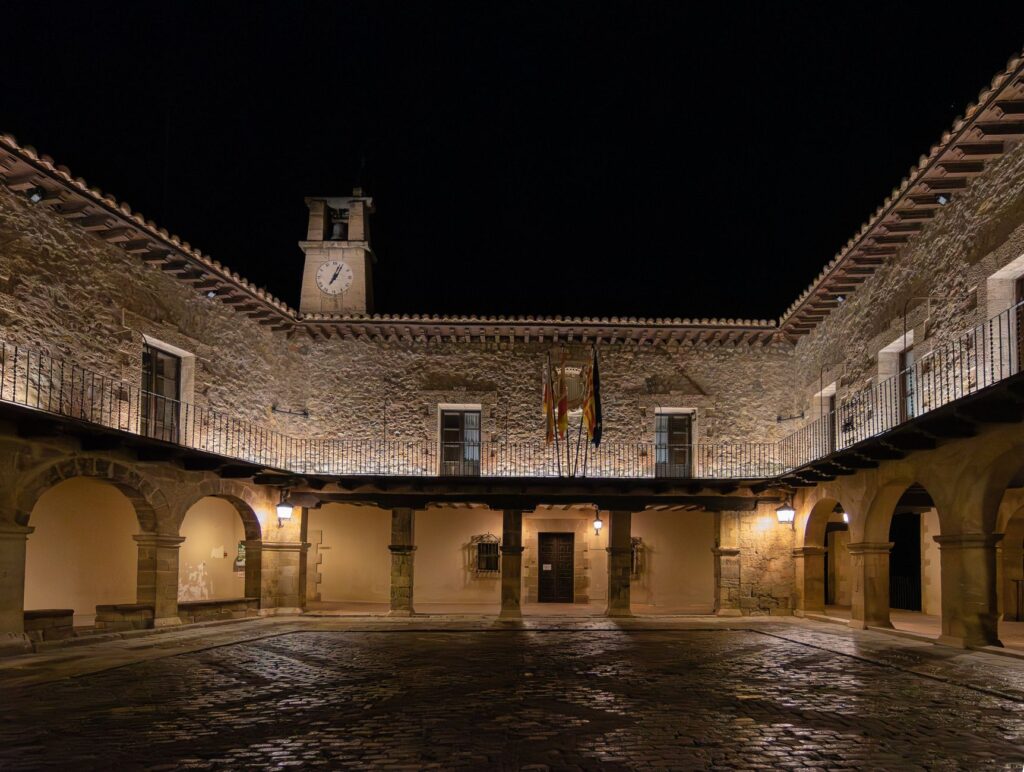
The Plaza del Torico, the beating heart of the city, is illuminated with a central structure avoiding visual excesses, prioritizing integration with surrounding modernist buildings. Teruel in December is a city explored calmly, discovering corners where medieval history and Turolense roots merge. Local gastronomy, presided over by designation-of-origin ham and winter black truffles, completes a sensory experience where outdoor illumination is merely the prologue to an evening by the fireplace in historic center taverns.
Travel logistics: planning the inland route
Visiting these three enclaves during the Christmas period requires planning different from major tourist capitals. First, the inland weather imposes its own rules: nighttime temperatures frequently drop below zero, especially in Burgos and Ávila, making technical outerwear and slip-resistant footwear non-optional. Likewise, it is worth remembering that the off-season in these areas does not imply total closure, but rather more concentrated business hours and lower availability of nighttime public transport between municipalities, making having your own vehicle highly advisable.

Regarding accommodation, the offer in the historic quarters of these three cities is rich in charming hotels, restored former palaces, and traditional inns. However, being protected historic centers, vehicular access and parking are usually heavily restricted to prevent crowding narrow streets. It is essential to check in advance with hotel establishments about the location of partnered public parking lots or temporary luggage drop-off zones, avoiding unnecessary fines and ensuring a smooth logistical start to the stay.
Winter gastronomy: warmth and tradition at the table
No winter journey through inland Spain is complete without an immersion in its traditional recipe book. The Christmas illumination of these cities finds its perfect counterpart inside taverns and restaurants, where spoon dishes and grilled meats are the true protagonists. In Burgos, red beans from Ibeas and churro lamb roasted in earthenware casseroles provide necessary caloric intake after hours of sub-zero walking. In Ávila, Barco beans and Ávila beef steaks dominate menus that have not surrendered to culinary standardization.
Meanwhile, Teruel contributes the nuances of the Turolense pantry, where designation-of-origin ham, shepherd’s breadcrumbs, and artisan pastries based on lard and anise configure a hearty recipe book full of personality. These establishments usually maintain a family and close atmosphere, where bantering with locals at the bar is an inseparable part of the travel experience. Booking a table in advance for December weekends is advisable, as local clientele and travelers loyal to these routes routinely fill traditional dining rooms.
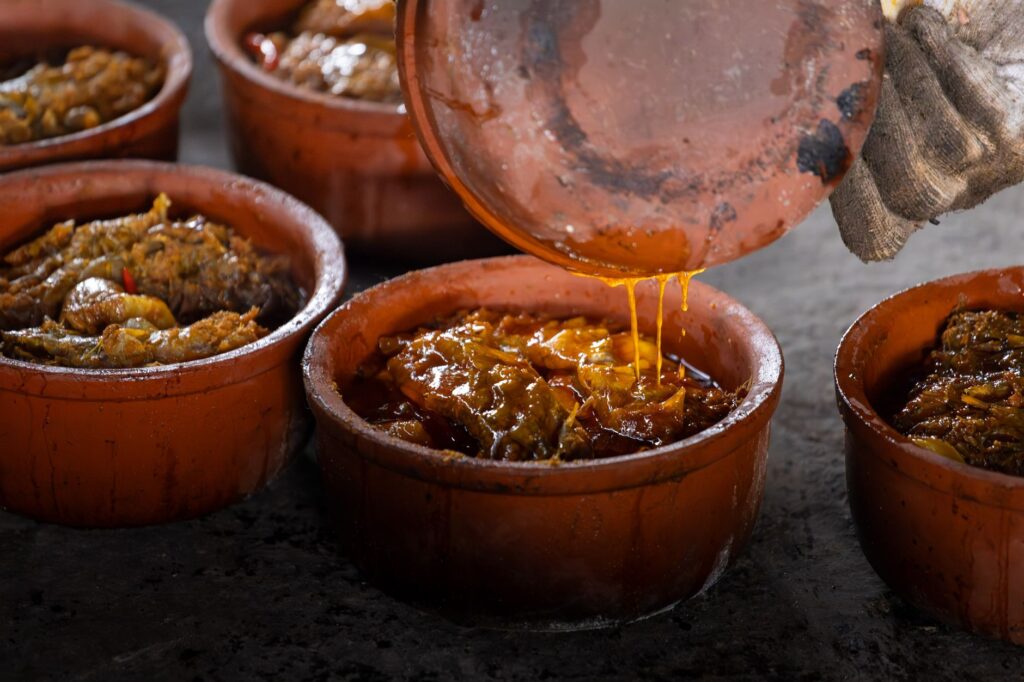
The true luxury of inland winter lies in sitting before a steaming dish while frost draws geometric shapes on street windows.
Sustainability criteria and slow travel
The rise of Christmas lighting in recent years has opened a much-needed debate on energy sustainability, nocturnal wildlife impact, and light pollution. In this sense, medium-sized inland cities are demonstrating remarkable adaptability. By prioritizing the systematic use of high-efficiency LED technology and concentrating illumination in peak pedestrian hours —turning off most circuits after midnight—, these municipalities drastically reduce their carbon footprint compared to large metropolitan installations.
This approach fits perfectly with the concept of slow travel, prioritizing the quality of the experience over the quantity of visited attractions. Travelers choosing Burgos, Ávila, or Teruel in December do not seek the constant stimulus of urban amusement parks, but rather the respectful silence of a porticoed plaza, the contemplation of a Mudejar tower, or quiet conversation with a second-hand bookseller. Christmas lighting ceases to be an end in itself, becoming instead the aesthetic framework for a more human, reflective way of understanding travel that respects the natural rhythm of the seasons.
Source in EN: Diario del Viajero