

The Untamed Pulse of Contemporary Travel
The seventh month of the year traditionally appears on calendars as a promise of pause, a threshold where working life decelerates and suitcases unfold before the sea. However, for those who turn movement into a profession and a way of dissecting the planet, July 2026 translated into an unrelenting choreography of airports, regional trains, centuries-old cobblestones, and melodies echoing through open-air stadiums. The experience accumulated over weeks of constant transit demonstrates that European summer tourism is not a homogeneous block, but rather an archipelago of disparate realities where massification coexists with pockets of profound authenticity.
The journey began in the Czech Republic, crossed southern France, leaped toward the green insularity of Ireland, experienced a euphoric detour into mass pop culture at a unique concert, and concluded in the author’s preferred Mediterranean sanctuary. This sequence did not stem from logistical caprice, but from the need to document how the continent manages visitor flows at the peak of high season. Through this itinerary, fundamental questions arise regarding the physical and emotional cost of hypermobility and the capacity of historical destinations to preserve their soul under the weight of global itineraries.
Prague Under the Summer Sun: Gothic, Cobblestones, and Urban Resistance
The first station of this route placed the chronicler in Prague, the Czech capital that defies the passage of centuries with its dark stone towers and statue-lined Baroque bridges. In July, the city transforms into a boiling pot where thousands of travelers from every corner of the globe converge. Walking through the Old Town at dawn offers a luminous and spatial truce: low-slanting sunlight illuminates the ochre facades and the central astronomical clock before human rivers occupy every square meter of pavement.
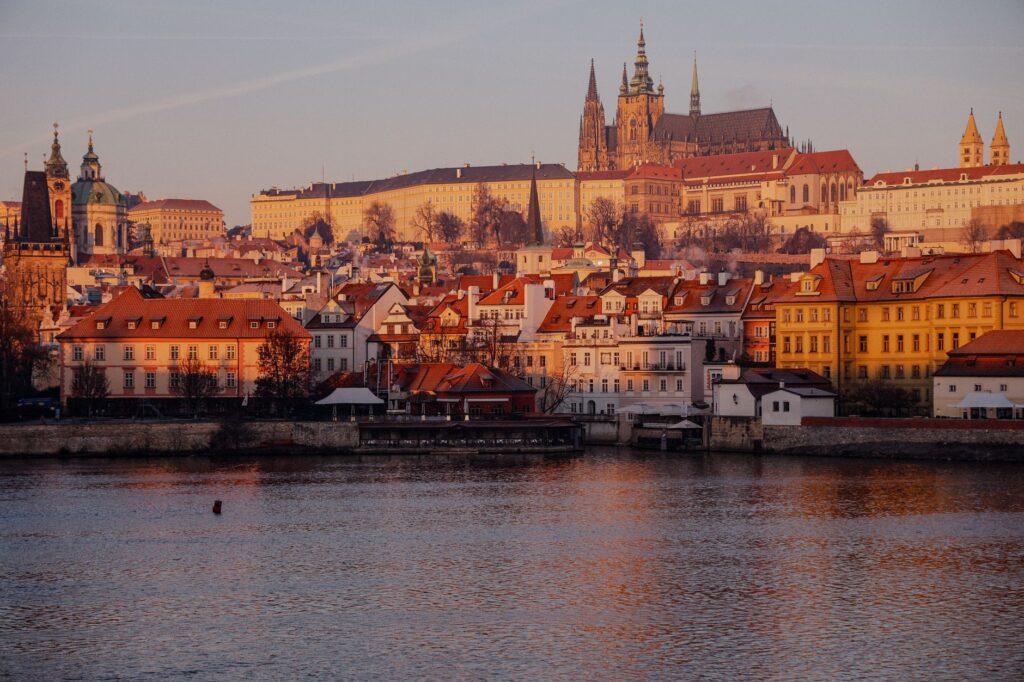
The main challenge in documenting Prague in the dead of summer lies in looking beyond standardized commercial circuits. While glass shops and industrial pastry stands attempt to capture the novice walker’s attention, residential neighborhoods like Karlín or Vinohrady reveal another dimension of the city. There, specialty cafes, farmers’ markets, and functionalist architecture map out contemporary daily life that contrasts with the medieval scenography of the historic core. The experience in the Czech capital highlights a recurring paradox: the world’s most beautiful urban centers risk becoming uninhabitable museums if a genuine balance between local residents and seasonal visitors is not fostered.
The Scent of Provence: Lavender, Rural Geometry, and Stilled Time
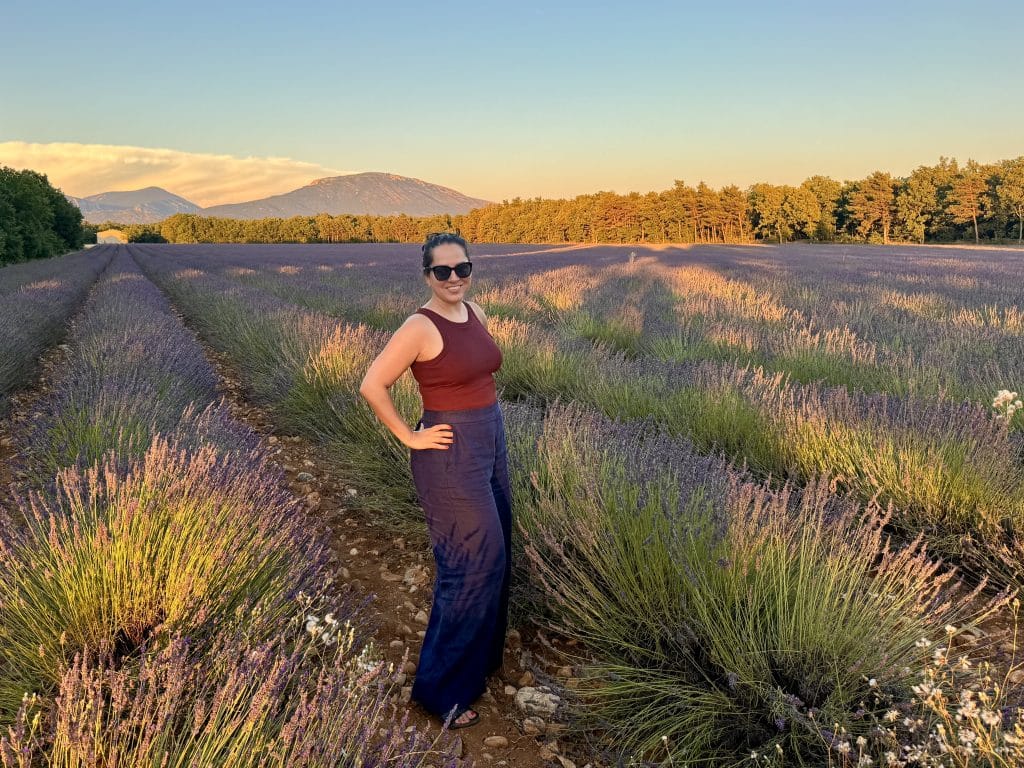
From Central Europe’s urban density, the journey shifted toward the French south, specifically the plateaus of Provence during the height of the lavender bloom. In this geographic strip, the landscape organizes into perfect violet stripes that cut through the dry green of Mediterranean scrublands and the gray of dry-stone walls. July is the pivotal month for harvest, a process mobilizing traditional farmers alongside legions of photographers and travelers eager to capture the ultimate postcard.
The beauty of Provençal fields lies not only in their summer chromatics, but in the profound silence preceding midday heat, a reminder that the earth continues operating under its own ancient rhythms.
Visiting Provence at this time requires early rising to avoid crowds in iconic enclaves such as the Sénanque Abbey or the Valensole plateaus. Yet, the region’s true value is discovered by abandoning main routes and venturing into perched villages like Sault or Gordes, where local markets offer essential oils, goat cheeses, and aromatic herbs cultivated without industrial artifice. The transition from Prague’s asphalt to the perfumed dust of French fields marked a radical shift in the journey’s heart rate, prompting reflection on the urgency of preserving rural landscapes against massive tourist pressure.

Beneath Ireland’s Changing Skies: Cliffs and Atlantic Breezes
The third geographic movement brought an absolute chromatic shift: leaving ochres and violets behind to immerse oneself in the infinite palette of greens and grays defining Ireland’s western coast. In contrast with continental Europe’s sweltering heat, the Atlantic breeze provided immediate climatic relief, accompanied by the instability characteristic of the island, where four seasons can unfold within a single hour.
Navigating Irish cliffs and coastal trails in July implies accepting unpredictability as a traveling companion. Local communities, anchored to maritime traditions and a rich musical heritage permeating every pub at dusk, receive a steady flow of walkers seeking a detour from major metropolises. Here, journalistic experience focused on observing the coastal rural economy and the impact of nature tourism on fragile habitats. Conservation regulations in zones like the Cliffs of Moher or the Dingle Peninsula demonstrate a growing effort to balance public access with the protection of avian habitats and ancient geological formations.
The Pop Phenomenon: A Stadium, Thousands of Bald Caps, and Collective Catharsis
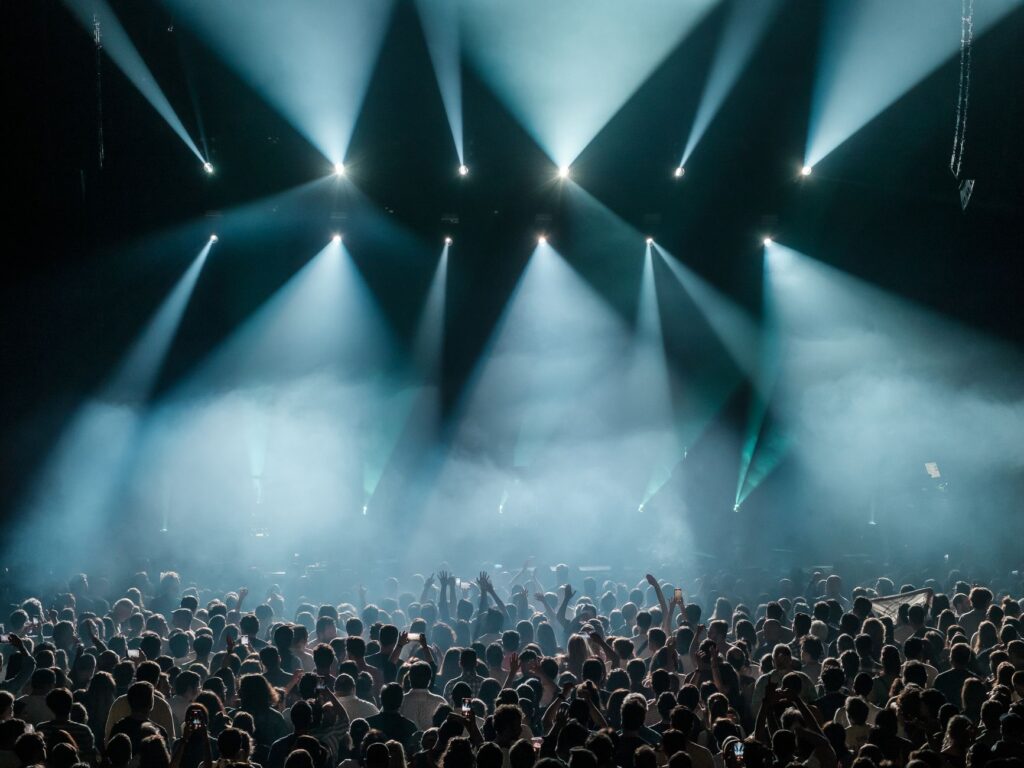
Amid nature treks and historical cities, the July 2026 agenda reserved a parenthesis of contemporary cultural effervescence: a massive concert where tens of thousands of attendees shared an unusual aesthetic and playful trait, wearing latex caps mimicking bald heads. Such mass events represent a fascinating anthropological phenomenon within today’s entertainment industry, where concerts have transformed into rituals of global community belonging.
Immersing oneself in the epicenter of a packed stadium overflowing with boundless energy offered a fascinating contrast with the contemplative solitude of Provençal fields or Ireland’s Atlantic melancholy. The music, amplified by colossal sound systems and backed by a devoted public chanting every lyric in unison, evinced the unifying power of mass culture in a fragmented world. This pit stop proved that contemporary travel feeds not only on historical heritage and natural landscapes, but also on ephemeral yet intense experiences defining a generation’s zeitgeist.

The Insular Refuge in Italy: The Favorite Island as a Destination
Every great journey requires a safe harbor, and July 2026 culminated in the Italian island the author considers her spiritual adoptive home. After weeks of jumping from border to border, from one time zone to another, and speaking a different language every few days, stepping once again onto the familiar cobblestones of this Mediterranean isle was an exercise in absolute decompression.
Here, life’s rhythm is governed by morning market openings, the sound of waves against the dock, and unhurried chats with local fishermen who have navigated these same waters for decades. Against the vertigo of express tourism, staying on the island allowed for consolidating collected notes, reviewing photographic material, and reflecting on the wear and tear of prolonged nomadism, even when pursued out of vocation. This closing chapter was not an escape from the world, but a reconnection with what is essential.
Transport Infrastructure and Summer Mobility in Europe
Getting around Europe during July demands rigorous planning and high tolerance for logistical incidents. The European railway network, although extensive and efficient compared to other world regions, suffers notable summer saturation due to overlapping school and labor vacations across the continent. Throughout this route, combined use of short-haul flights, high-speed trains, and regional ferries underscored the importance of booking months in advance.
Likewise, transport costs experience a drastic surge in high season. Low-cost airlines operate at capacity limits, increasing the probability of delays and cancellations. On land, cross-border connections continue presenting bureaucratic and tariff frictions hindering traveler spontaneity. For those planning similar journeys, prioritizing flexible rail passes and secondary routes operated by regional companies—which usually suffer less operational pressure—is strongly advised.
Budget, Accommodation, and the Economy of Summer Tourism
The economic impact of traveling in July is undoubtedly the greatest challenge facing any chronicler or globetrotter. Accommodation prices in cities like Prague, valued regions like Provence, or Italian island enclaves multiply rates up to doubling or tripling low-season costs. Vacation rental platforms and traditional hotels operate under overflowing demand that drives up any stay.
To manage tight budgets in this context, the most effective strategy proved to be lodging in the outskirts of major urban centers, leveraging metropolitan public transport networks, and booking directly with small family guesthouses in rural areas. Furthermore, shopping at local markets to prepare meals in kitchen-equipped lodgings significantly relieves daily dining expenses, allowing resources to be allocated toward key cultural experiences and long-distance transport.

Conclusions on Hypermobility and the Art of Meaningful Travel
Looking back on July 2026 leaves a sense of healthy vertigo alongside a clear warning regarding the limits of physical and mental endurance in contemporary travel. Ranging across the European continent in a few weeks—from Prague’s Gothic stone to Provençal violet, Irish cliffs, a stadium’s pop catharsis, and an Italian island’s peace—confirms that the world remains a vast and fascinating stage.
Travel is not about accumulating passport stamps or checking destinations off a sterile list, but about allowing places to transform us and question our prior certainties.
The fundamental lesson of this hyperactive month is that pause is as crucial as movement. Without moments of stillness, impressions accumulate like useless background noise. Travel journalism, in its most honest expression, must aspire to untangle these tensions, showing both the breathtaking beauty of landscapes and the invisible seams supporting the global tourism industry. At the end of the road, what endures is not the miles traveled, but the depth of the gaze with which they were observed.
Source in EN: Adventurous Kate – AK Monthly Recap: July 2026


