
Unforeseen fury in the Sunda Strait
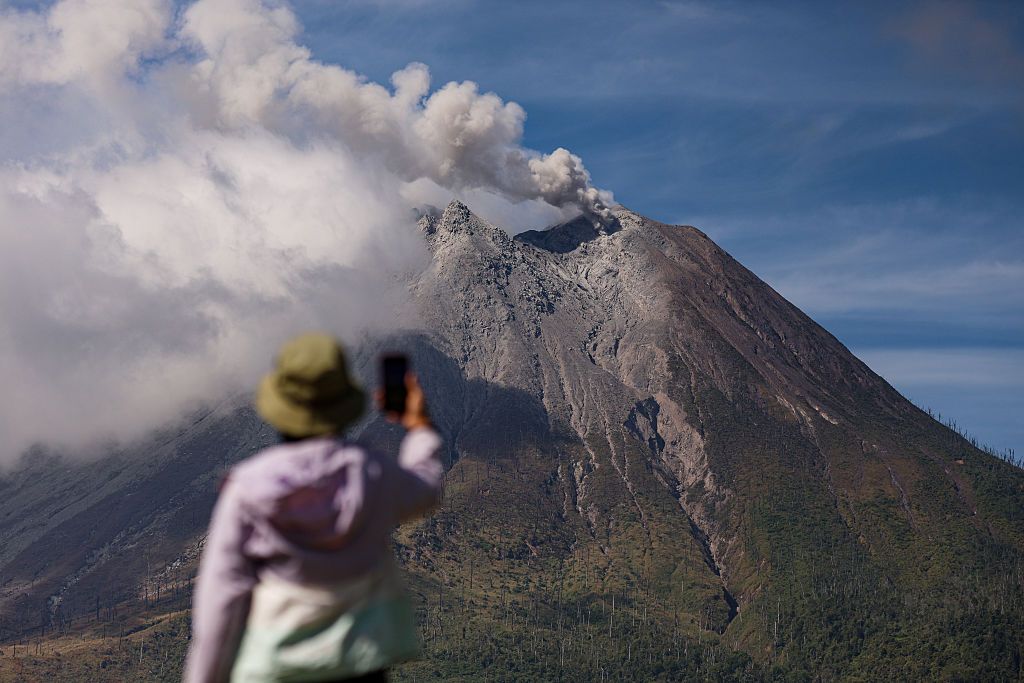
The Sunda Strait, the vital maritime and aerial corridor separating the major islands of Java and Sumatra, has trembled once again. The seismic and eruptive activity of Anak Krakatau—the young volcanic cone that emerged from the seabed following the legendary and cataclysmic explosion of its predecessor in 1883—has experienced an unprecedented surge in violence. This sudden awakening has forced Indonesian aviation authorities to decree the temporary closure of eight strategic airports across the region, drastically altering the travel plans of thousands of international visitors and local residents.
For an insular nation composed of more than seventeen thousand islands, air connectivity is not a luxury; it is the circulatory system binding economies, communities, and tourism flows together. The sudden emission of ash columns reaching several kilometers into the atmosphere placed navigation systems on high alert. Volcanic particles, composed of pulverized glass and microscopic rock, pose a mortal hazard to aircraft engines, prompting an immediate and preventative response from Indonesia’s Ministry of Transportation.
The pulse of the Ring of Fire and the geography of risk
Indonesia rests upon the infamous Pacific Ring of Fire, a tectonic horseshoe containing over seventy-five percent of the world’s active volcanoes and the vast majority of terrestrial earthquakes. Anak Krakatau stands as a constant reminder of the planet’s living and unstable nature. Following the partial collapse of its cone in December 2018, which triggered a lethal tsunami along the coasts of Jakarta and Lampung, Indonesian volcanologists have maintained continuous satellite and seismographic surveillance over the crater.
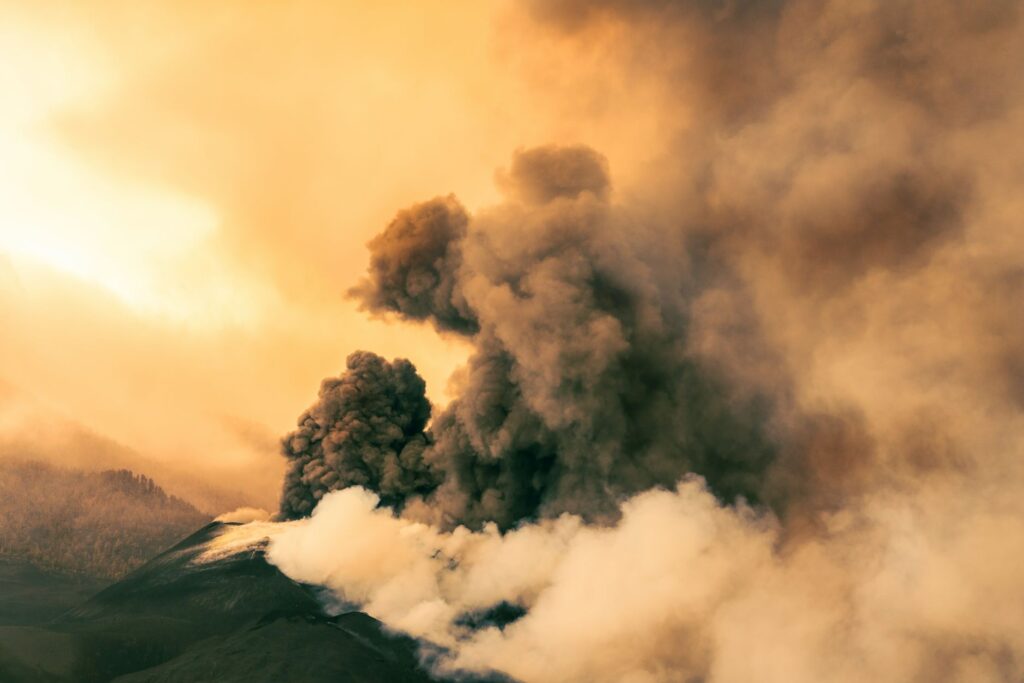
Yet, the science of volcanic prediction continues to clash with the inscrutable dynamics of the Earth. The recent eruptive episode demonstrated that despite the advanced monitoring protocols of Indonesia’s Center for Volcanology and Geological Hazard Mitigation (PVMBG), nature retains the capacity to surprise. Alert levels were raised within minutes, transforming a normal operational day into a logistical emergency of considerable proportions.
The closure of eight airports and logistical collapse
The immediate impact of suspended ash translated into the paralysis of operations at eight key airports, affecting both domestic terminals and regional hubs. Affected facilities included terminals in Lampung province and surrounding areas of western Java’s coastline and southern Sumatra. National carriers, ranging from the flag carrier Garuda Indonesia to low-cost operators such as Lion Air and Citilink, suspended dozens of flights indefinitely.
Volcanic ash grants no clemency; it suspends time in the air and compels communities to reinvent their resilience between the earth and the sky.
At the affected air terminals, the scene mirrored past crises: thousands of stranded passengers, congested counters, and intense informational efforts by ground staff. Unlike cancellations driven by conventional weather events such as tropical storms or fog, volcanic uncertainty depends entirely on wind direction and the persistence of the eruption, making precise reopening estimates impossible to offer travelers.

Direct impact on local communities and sustainable tourism
Beyond statistics of canceled flights, the eruption directly impacts the socioeconomic fabric of coastal communities and rural areas dedicated to ecotourism. Regions close to the Sunda Strait rely heavily on visitors eager to explore marine national parks, endemic wildlife, and historical vestiges of the region. Ashfall damaged local agricultural crops, blanketing tea fields, rice paddies, and orchards with a grayish layer that suffocates temporary production.
Local communities, seasoned by countless battles against the geological whims of their environment, once again demonstrated remarkable adaptability. Community leaders coordinated the distribution of protective face masks to prevent severe respiratory ailments caused by sulfur dioxide and fine particulates. Sustainable tourism, in this context, adopts a dimension of solidarity: understanding that a pause in travel is not merely a logistical inconvenience, but a moment of respect toward a population living alongside latent danger.
Safety protocols and the response of aviation authorities
Crisis management by Indonesia’s National Board for Disaster Management (BNPB) and the Directorate General of Civil Aviation was governed by strict international safety protocols. Alternative flight paths were activated to divert long-distance flights connecting Jakarta with international destinations, keeping them clear of the volcanic ash dispersion cone.

Additionally, maritime and aerial exclusion zones were established within a radius of several kilometers around the active cone of Anak Krakatau. Coast guards and the navy reinforced patrols to prevent tourist or fishing boats from imprudently approaching the pyrotechnic spectacle, thereby minimizing the risk of complex open-sea rescues amid an active volcanic emergency.
Practical recommendations for travelers transiting the archipelago
If you are currently in Indonesia or planning a trip to the country in the near future, rigid planning must yield to absolute flexibility. The fundamental rule is to consistently consult official information channels, such as real-time updates from the PVMBG, the official BNPB app, and direct advisories from contracted airlines.
- Avoid unnecessary overland and air travel toward the Sunda Strait region and zones directly affected by ash dispersion.
- Always carry an adequate supply of N95 or equivalent face masks to protect your respiratory tract against potential ashfall in urban or coastal areas.
- Maintain fluid communication with your embassy or consulate and register your travel itinerary in the official systems of your home country.
- Prioritize booking travel insurance that includes specific coverage for trip interruption caused by natural disasters and volcanic phenomena.
Alternative routes and the beauty of Indonesian resilience
For travelers whose itineraries to Sumatra or Lampung experienced cancellations, the vast Indonesian archipelago offers countless alternative destinations that remain fully operational and untouched by Anak Krakatau. Destinations situated further east, such as Yogyakarta in Central Java, Bali, Lombok, or the remote islands of Flores and Raja Ampat, continued receiving flights completely as normal, serving as ideal temporary refuges to redirect vacations.
Traveling through Indonesia means accepting that the territory is not a static backdrop, but a living organism demanding humility and constant attention from the traveler.
The resilience of Indonesia’s tourism industry is built upon diversification and the innate hospitality of its people. Far from crumbling in the face of adversity, local operators redoubled their efforts to offer alternative cultural experiences on solid ground, proving that contemporary travel, when approached with empathy and maturity, transcends the mere accumulation of destinations to become a profound lesson in human coexistence with the uncontrollable forces of nature.
Practical information and points of interest for travelers
Knowing the available institutional resources is vital for any journey through Indonesia during volcanic alerts. The Indonesian Volcanology Center publishes daily reports on the alert status of the country’s more than one hundred and twenty active volcanoes, divided into four categories where level four represents absolute prohibition of access and imminent risk of major eruption.

- Official monitoring: Consult the PVMBG website and meteorological alerts from BMKG (Indonesia’s Agency for Meteorology, Climatology, and Geophysics).
- Main airports: Soekarno-Hatta International Airport in Jakarta (CGK) remains the primary hub, though subject to diversions depending on prevailing winds.
- Consular assistance: Keep emergency numbers for your country’s consular services in Jakarta and local contacts for roadside and airport assistance on hand.
Epilogue: Tourism facing the awakening of the earth
The eruption of Anak Krakatau and the subsequent airport closures serve as a sober, necessary reminder in the era of mass tourism: the Earth does not bend to the whims of our holiday calendars. Traveling to a country of intense geological activity like Indonesia implies accepting a tacit pact of respect and caution. The exemplary management of this crisis by local authorities and the composure of affected communities reaffirm that the archipelago’s true wealth lies not only in its idyllic landscapes, but in the dignity and unyielding courage of its people against the vastness of terrestrial fire.
Source in English: Condé Nast Traveler Spain – A volcanic eruption in Indonesia forces the closure of eight airports.