The Temperate Refuge at the Edge of the World
In the southwestern corner of South America, wedged between the colossal peaks of the Andes Mountains and the frigid waters of the Pacific Ocean, lies one of the most extraordinary and unique forest formations on Earth: the Valdivian Rainforest. This ecosystem, stretching primarily between the 35th and 48th parallels of south latitude, is South America’s only temperate rainforest and one of the very few in the Southern Hemisphere. While tropical rainforests dazzle with chaotic exuberance, the cold Valdivian forest captivates with its prehistoric atmosphere, a dense silence broken only by the constant dripping of water, and a biodiversity defined by an astonishing level of endemism. Here, time seems to have stood still since the era when the continents formed a single landmass.
To enter this territory is to understand the concept of biogeographical isolation. Separated from the rest of the continent by the Atacama Desert to the north, the Patagonian steppe to the east, and the ocean to the west and south, the Valdivian Rainforest functions as a true ecological island. The result of this evolutionary confinement is a natural laboratory where over half of the vascular plant species and a similar proportion of terrestrial vertebrates are endemic, meaning they are found nowhere else on Earth. This report offers a deep dive into its ecological dynamics, its flagship species, and the scientific efforts to preserve a natural heritage facing the dual pressures of climate change and human activity.
The Legacy of Gondwana: Anatomy of Biogeographical Isolation
To decipher the complexity of the Valdivian Rainforest, one must travel back through geological time. Approximately 135 million years ago, the supercontinent Gondwana began to fragment, separating what is now South America, Africa, Antarctica, Australia, and India. During the Tertiary period and subsequent Pleistocene glaciations, much of the South American continent underwent drastic climatic shifts. However, Chile’s Coastal Mountain Range acted as a geographical shield, a glacial refuge that allowed the survival of plant and animal lineages that perished elsewhere.

This Gondwanan heritage is vividly apparent in the flora of the Valdivian forest. Genera like Nothofagus (southern beeches, including coigüe, roble, and lenga) share a close evolutionary relationship with forest species in New Zealand, Tasmania, and Australia. Tree ferns and plant families like the Winteraceae stand as silent witnesses to an era when Antarctica was a green, temperate continent. The resilience of these forests over millions of years demonstrates the relative stability of this ecological niche—a balance that is now threatened by the unprecedented speed of modern anthropogenic changes.
«The Valdivian Rainforest is not merely a forest; it is a geological time capsule that has guarded the evolutionary memory of Gondwana against the glaciations and tectonic upheavals of the Pacific Rim.»
Fitzroya cupressoides: The Continent’s Botanical Memory
If there is a symbol of the majesty and longevity of this ecosystem, it is the alerce or lahuán (Fitzroya cupressoides). This giant conifer, related to the redwoods of North America, is the largest tree species in South America and one of the longest-lived on Earth. In Alerce Costero National Park, scientists have dated specimens that exceed 3,600 years of age, making them contemporary witnesses to the rise of the earliest human civilizations. Its wood, highly resistant to decay due to natural resins, made it a prime target for the logging industry for centuries, drastically reducing its original range.

The growth of the alerce is astonishingly slow, measuring just a few millimeters per year. This characteristic makes its recovery from logging or forest fires a process requiring timescales far beyond human reach. Today, the species is strictly protected by Chilean law and international treaties, yet challenges persist. The regeneration of alerce forests depends on microclimatic conditions of high humidity and shade, which are being altered by rising global temperatures and decreasing summer rainfall in Chile’s temperate region.
The Realm of the Minute: The Monito del Monte and Darwin’s Frog
While the crowns of alerces and coigües dominate the forest canopy, the forest floor and understory harbor a fauna of modest dimensions but invaluable evolutionary worth. Amid the dense thickets of coligüe bamboo and ferns lives the monito del monte (Dromiciops gliroides). This small nocturnal mammal is not a rodent, but a marsupial that holds the title of being the sole living representative of the order Microbiotheria. Genetic analyses have revealed that the monito del monte is more closely related to Australian marsupials than to American ones, providing irrefutable proof of the prehistoric connection between the two landmasses.
The monito del monte plays a vital ecological role as a seed disperser for endemic plants, such as the mistletoe-like quintral. During winter, when temperatures drop dramatically, this tiny creature enters a state of deep torpor, reducing its heart rate and body temperature to conserve energy. Sharing this damp habitat is Darwin’s frog (Rhinoderma darwinii), a three-centimeter amphibian that exhibits one of the most unique reproductive strategies in the animal kingdom: mouth-brooding. Males of this species hold fertilized eggs inside their vocal sacs, where the tadpoles develop and complete their metamorphosis before being expelled into the wild as fully formed, miniature frogs.
The Green Sponge: Water Cycles and the Canopy of the Cold Rainforest
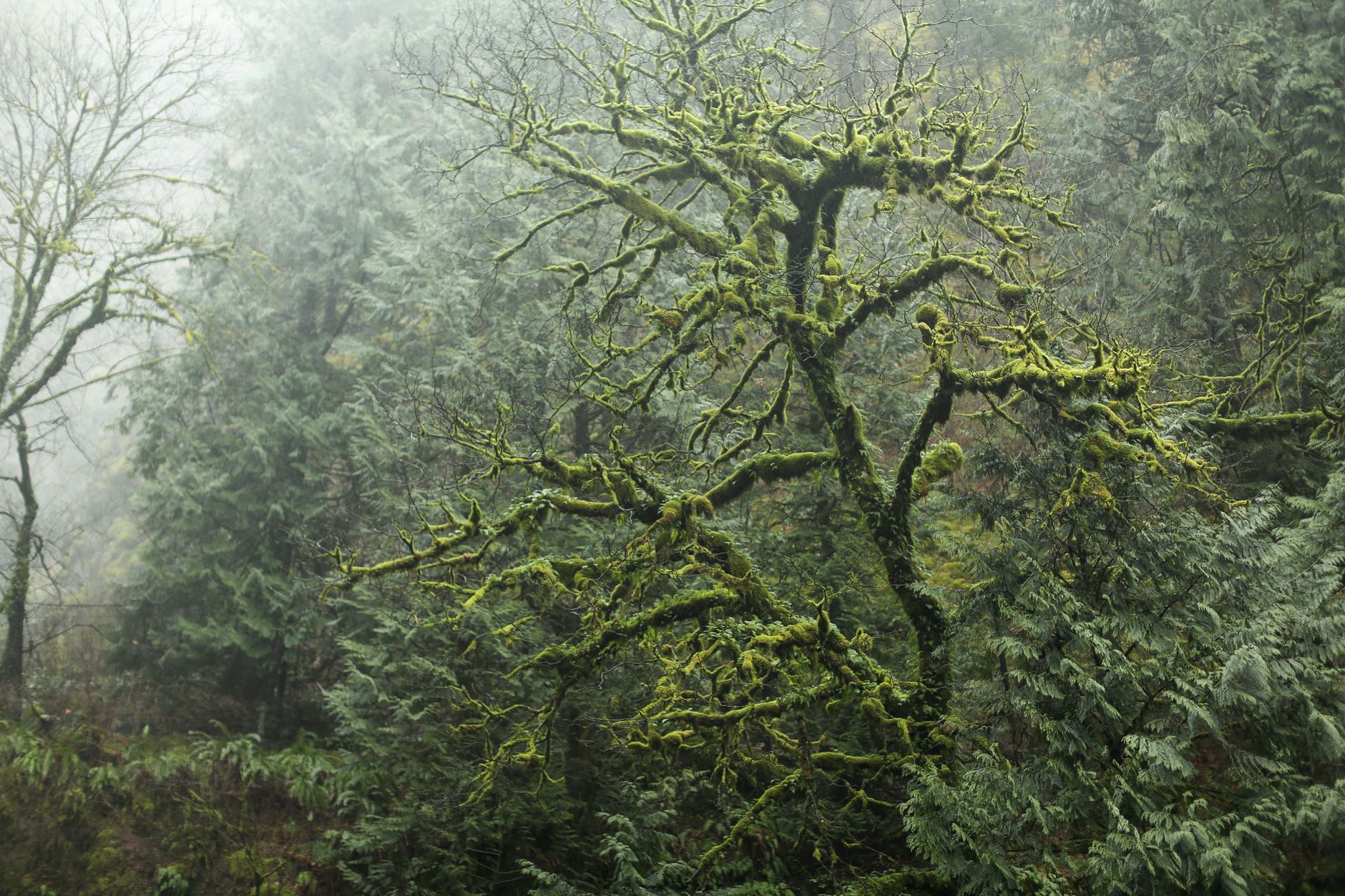
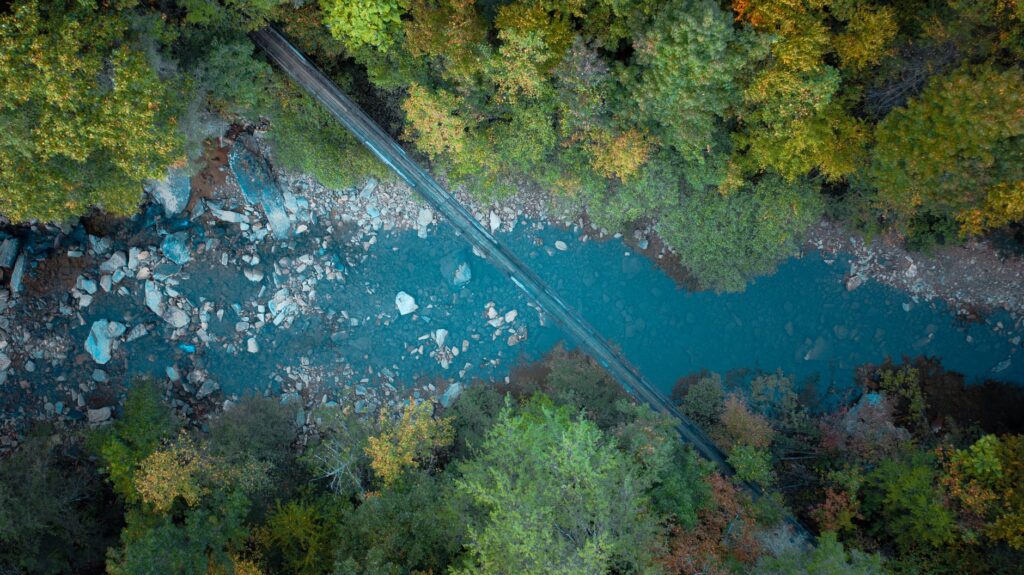
The Valdivian Rainforest is, above all, an ecosystem sculpted by water. Annual rainfall in some areas of the Coastal Range and the Andes can exceed 4,000 millimeters, distributed throughout the year. This hydrological abundance supports a multi-layered forest structure where mosses, lichens, and epiphytic plants almost entirely cover every available surface, from the forest floor to the highest branches of mature trees.
This dense botanical carpet functions as a giant natural sponge. The forest canopy intercepts rainfall, mitigating the erosive impact of water on the clay soils of steep mountain slopes. Subsequently, mosses and forest litter retain the water and release it gradually into watersheds, ensuring a steady flow of clean water even during the driest summer months. This ecosystem service is vital not only for sustaining local biodiversity but also for securing the drinking water supply of human communities living in the adjacent valleys.
«Water in the Valdivian Rainforest is not an external element, but the connective tissue linking the canopy of ancient trees with the microcosm of lichens and amphibians inhabiting the forest floor.»
The Conservation Dilemma: From Resource Extraction to Scientific Ecotourism
Historically, the Valdivian Rainforest has suffered severe degradation due to land clearing for agriculture, livestock ranching, and, quite significantly during the 20th century, the replacement of native forests with plantations of fast-growing exotic species like radiata pine and eucalyptus. These forestry plantations not only diminish local biodiversity but also drastically alter hydrological regimes and increase the landscape’s vulnerability to large-scale forest fires.
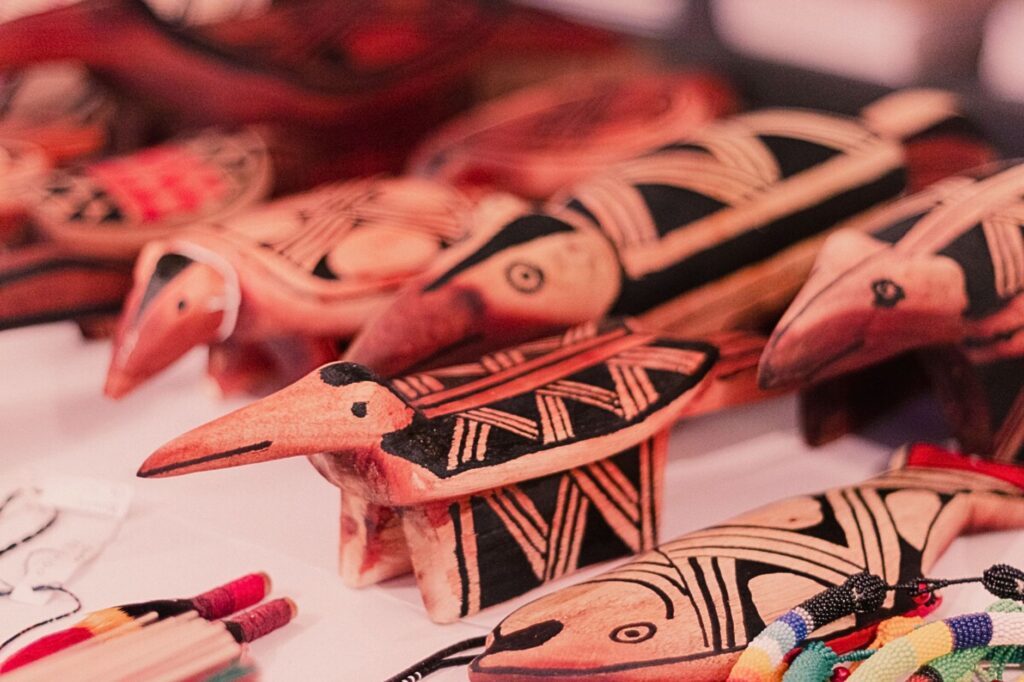
In recent decades, however, a paradigm shift driven by science and social awareness has taken place. Public and private conservation projects, such as the Huilo Huilo Biological Reserve and Oncol Park, have demonstrated that ecosystem preservation can be economically viable through low-impact, scientific ecotourism models. These initiatives not only protect thousands of hectares of pristine forest but also actively engage local communities, honoring the ancestral knowledge of indigenous peoples, such as the Mapuche-Huilliche, whose worldview is deeply rooted in respect for nature and the forces of the forest.
Low-Impact Trails: Exploring Alerce Costero National Park and Huilo Huilo
For the conscious traveler wishing to experience the Valdivian Rainforest in its purest state, there are two geographically distinct yet ecologically complementary destinations. The first is Alerce Costero National Park, located in the Coastal Mountain Range within the Los Ríos Region. This park features the Alerce Milenario trail, a moderate route that winds through a dense forest dominated by ferns and lichens to reach the three-millennia-old giant. Standing before this botanical colossus is a profound exercise in temporal humility.
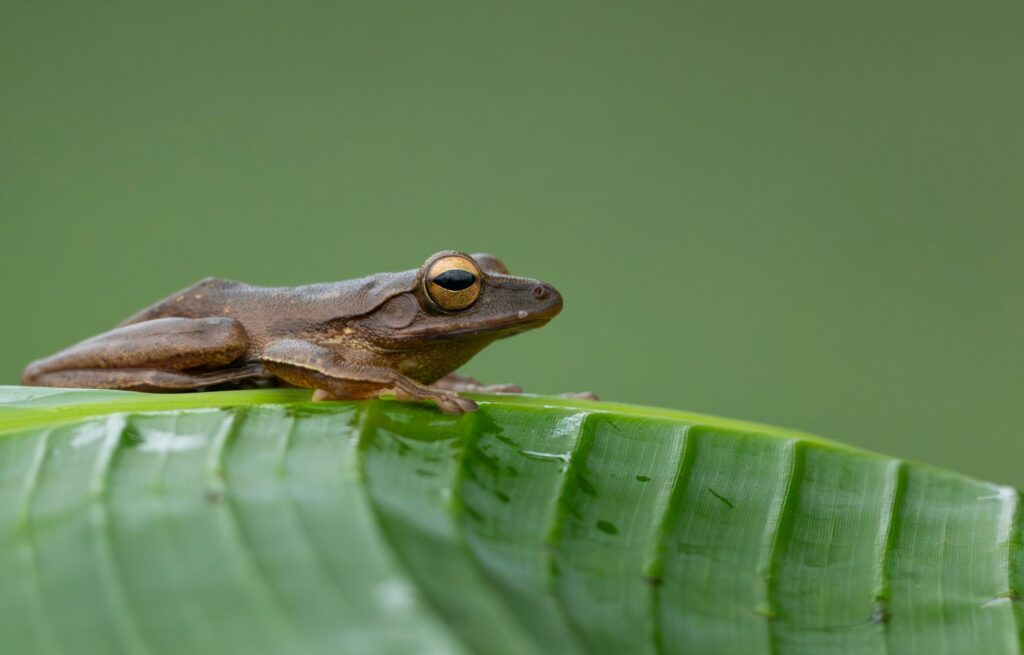
On the other hand, nestled in the Andean foothills lies the Huilo Huilo Biological Reserve. This private conservation project stands out for its focus on biodiversity and sustainable development. Here, the forested landscape is enriched by majestic glacial waterfalls, deep blue lakes, and the active presence of the Mocho-Choshuenco volcano. Huilo Huilo offers a network of self-guided and locally guided trails that allow visitors to observe epiphytic flora up close, track native wildlife, and understand the complex ecological restoration processes being implemented in the area.
Planning and Logistics for the Conscious Traveler
Visiting this ecosystem requires careful planning and a strict commitment to Leave No Trace principles. Below are key recommendations for organizing a responsible expedition:
- Best time to visit: The ideal season to explore the region is during the late southern spring and summer (November to March). During these months, temperatures are milder, and while rain is still common, storms are less intense, making mountain trails safer and more accessible.
- Essential gear: It is crucial to dress in layers, including a high-quality waterproof and windproof outer shell, sturdy waterproof hiking boots with excellent grip, and dry bags to protect cameras and electronic equipment from the constant environmental humidity.
- Access and transport: The primary gateways to the region are the cities of Valdivia and Temuco, both connected by air to Santiago de Chile. From these cities, renting a four-wheel-drive vehicle is highly recommended to safely navigate the access roads to national parks and reserves, which are often gravel and can deteriorate in wet weather.
- Sustainable lodging: Travelers are encouraged to choose accommodations with certified environmental sustainability practices that manage waste responsibly and contribute directly to the local economy.
The Valdivian Rainforest is not a destination for a rushed visit; it is a territory that demands slow travel, keen observation, and a profound respect for the rhythms of nature. Walking its quiet paths and breathing the air thick with oxygen and moisture, visitors do not merely view a landscape of breathtaking beauty—they bear witness to the persistence of life in one of the last truly wild sanctuaries on our planet.