Introduction to the Southern Edge
The southern extremity of South America has represented one of humanity’s greatest geographical challenges for centuries. Across the vast immensity of Chilean Patagonia and the Magallanes region, nature imposes its own rules through icy channels, gale-swept steppes, and mountain ranges that plunge directly into the Pacific Ocean. In this scenario of geographical isolation, transportation systems have played a fundamental role not only in structuring the territory but in guaranteeing the survival of entire communities that depend on maritime and terrestrial connectivity.
While the global narrative of travel often focuses on the comfort of European high-speed trains or conventional highway networks, the deep south demands a radically different perspective. Here, every kilometer of historic railway line, every piece of rail laid across peat bogs and muskeg, represents a genuine engineering feat against the elements. This report examines the reality of travel at the American fringe, moving away from superficial folklore to delve into real infrastructure, logistical challenges, and the transformative experience of journeying through one of the purest and most remote regions on Earth.
The Genesis of Patagonian Rails
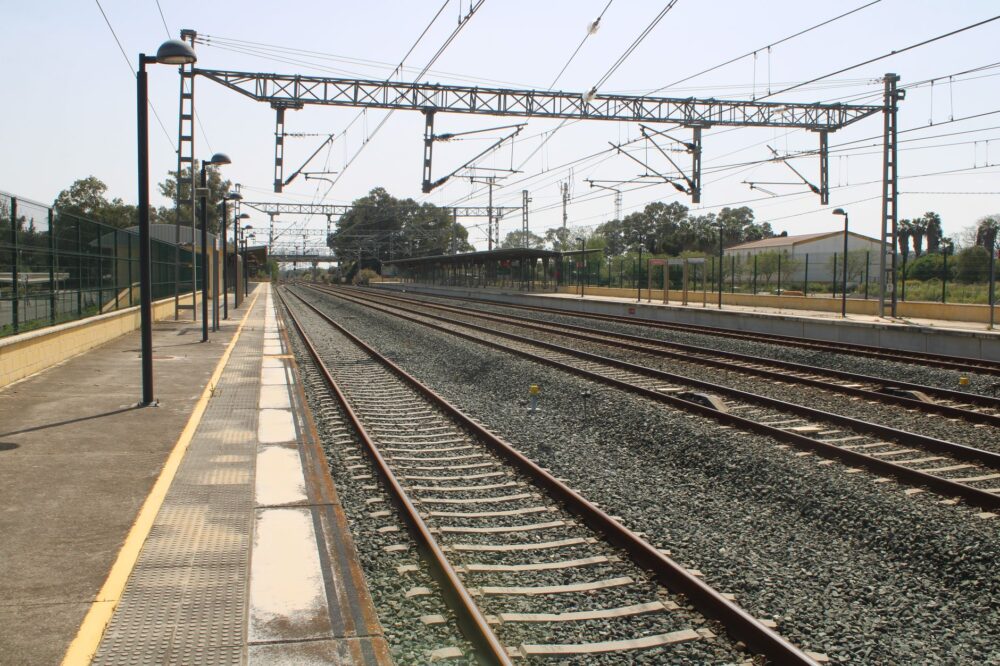
The railway history of southern Chile is intrinsically linked to the gold rushes, extensive sheep farming, and coal and mineral extraction that characterized the late 19th and early 20th centuries. In Punta Arenas and across the remote estancias of Tierra del Fuego, industrial companies built small narrow-gauge railway branch lines to transport wool and coal to shipping ports. Although many of these industrial lines disappeared with the economic restructuring of the past century, their legacy persists in collective memory and in the industrial archaeological vestiges that still dot the steppe landscape.

Unlike the major railway projects in the center of the country, designed to unify a continuous territory, southern railways were born as fragmentary and deeply specialized solutions. They were lines of survival, iron veins laid over swampy terrain and unstable substrates that required constant maintenance due to extreme weather conditions. Understanding this railway architecture is the first step toward appreciating the titanic effort required to open transport routes in a territory where the southern winter imposes sub-zero temperatures and persistent snowfall for much of the year.
The Geography of Wind and Ice
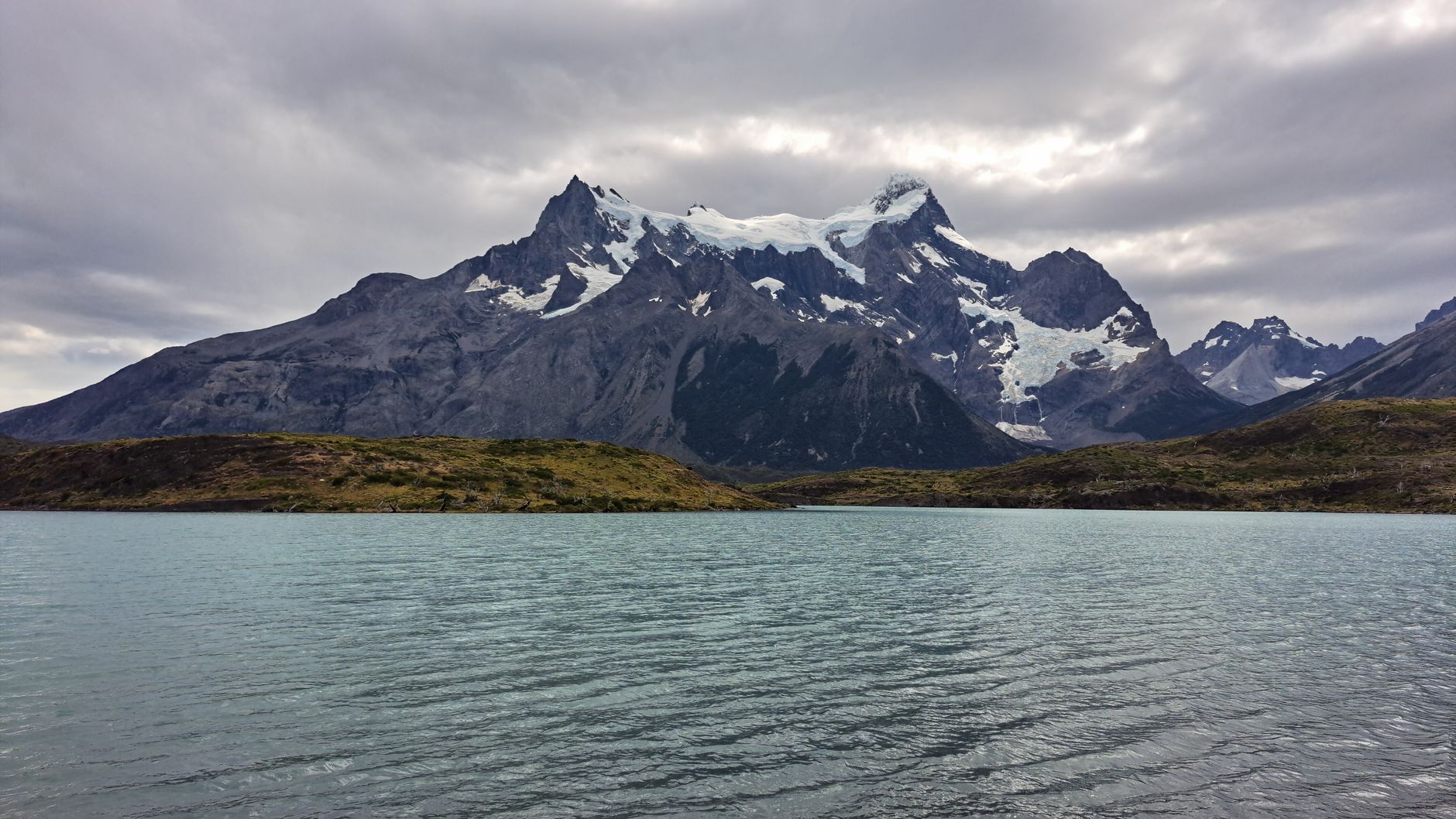
To understand the operational complexities of transport in Patagonia, one must analyze its climatology. The prevailing westerly winds, popularly known as the roaring fifties, batter the region with relentless force that can exceed 120 kilometers per hour. This meteorological condition absolutely dictates the stability of any transport infrastructure, forcing engineers to design specific anchoring and protection systems to prevent train cars from overturning or metal bridges crossing turbulent glacial rivers from collapsing.
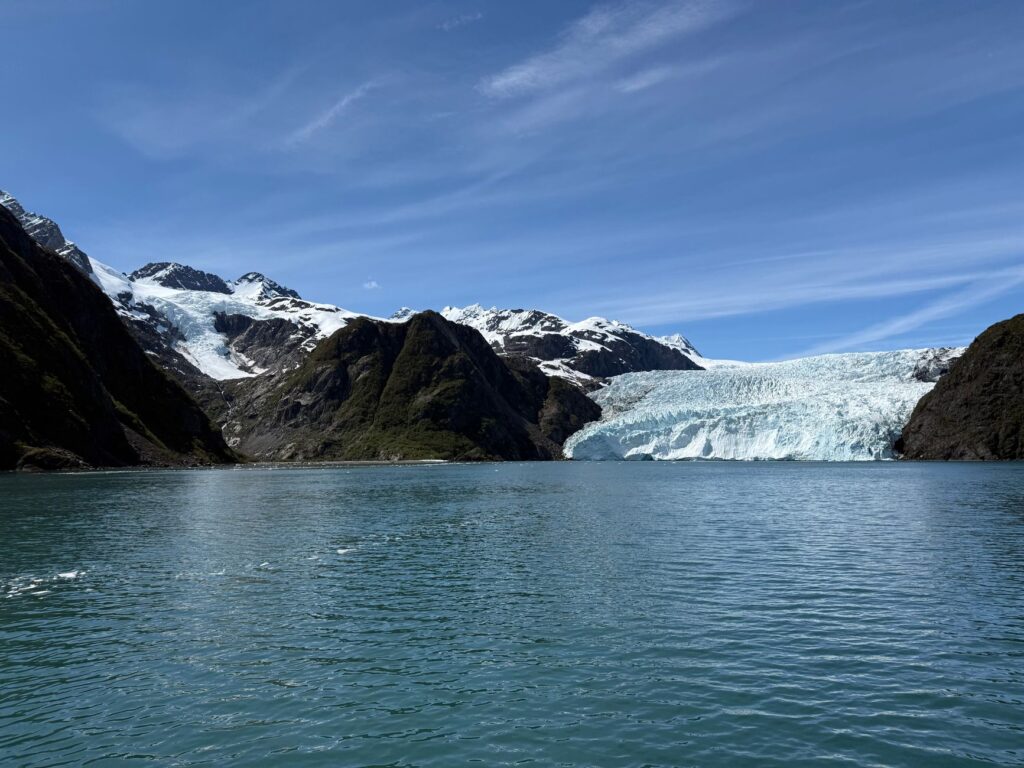
In addition to the wind, the topography is a formidable barrier. The Patagonian Andes crumble into the sea in a labyrinth of fjords, channels, and northern and southern ice fields that make the layout of continuous highways practically impossible. For this reason, the concept of a route at this latitude must be understood as a multimodal system where the train, the ferry, and the gravel road collaborate in a meticulous logistical choreography. Each land segment depends on the punctuality of the maritime link, and any weather disruption in the channels can paralyze regional mobility for days.
Resistance Engineering in Extreme Terrain
Constructing and maintaining transport infrastructure over water-saturated soils, peat bogs, and fractured rock requires technical solutions far removed from conventional standards. Engineers operating in the deep south must face the phenomenon of seasonal permafrost and constant erosion caused by tides and oceanic currents. Railway tracks and roads must literally float on beds of geotextile and specially selected ballast stone designed to dissipate moisture and withstand the dynamic loads of heavy traffic without sinking into the mud.
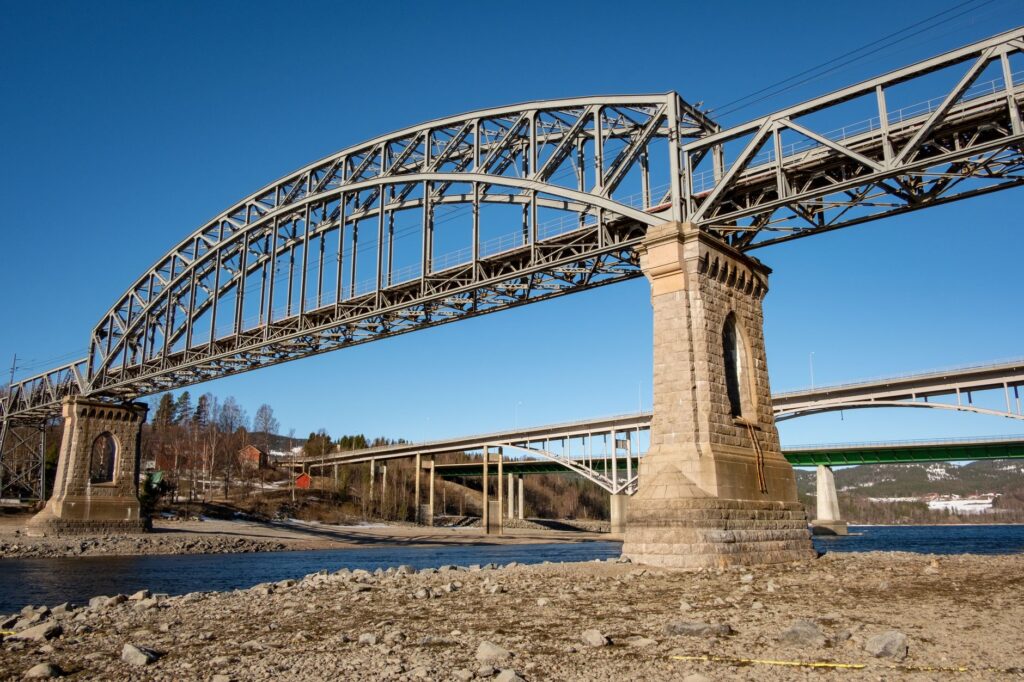
Likewise, the bridges crossing fjords and canyoned rivers are masterpieces of metallurgy and structural calculation. Subjected to marine corrosion and the mechanical stress of gale-force winds, these viaducts require continuous inspections and rigorous preventive maintenance. The logistics of moving heavy machinery and construction materials thousands of kilometers from urban industrial centers turn every improvement project into an operation worthy of high military engineering, where the favorable working window is reduced to the few months of the southern summer.
Transport in the southern fringe is not a mere matter of displacement; it is the nerve fiber that keeps sovereignty, economy, and human life united against the overwhelming indifference of wild nature.
Multimodal Integration: The Bridge Between Land and Sea
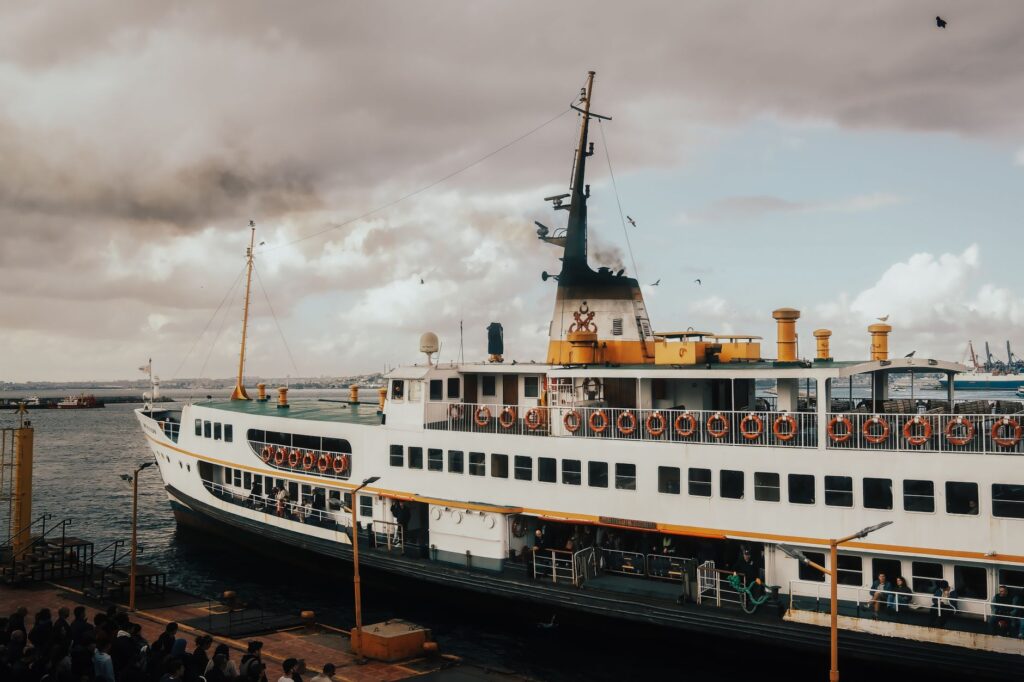
In the Magallanes region and deep Patagonia, the railway and the road never travel alone. They are the terrestrial link of a broader logistical chain that includes coastal ferries and smaller vessels communicating isolated enclaves. Multimodal integration is the operational core of Patagonian mobility. Passengers and freight descending from connecting trains or line buses must transfer to vessels capable of navigating treacherous waters, dodging shallows and unpredictable currents in narrow channels.
This system requires strict coordination between state and private transport companies. Unlike centralized networks, any delay in crossing the cordillera due to a snow avalanche or windstorm disrupts the entire weekly supply chain. Local residents know this dependency well and plan their medical, educational, and commercial trips weeks in advance, accepting climatic uncertainty as an unalienable variable of their lifestyle in the extreme south of the continent.
Expedition Tourism and Mindful Slowness
In recent decades, the rise of expedition tourism has transformed the reading of these infrastructures. What is a vital connectivity necessity for historical residents has become a unique opportunity for contemporary travelers to practice slow travel and deep contemplation. Routes combining historic rail sections with fjord navigation attract a visitor profile seeking to escape overcrowding and genuinely connect with Patagonia’s untamed nature.
This transition toward sustainable tourism requires a delicate balance. Local authorities and tourism operators must ensure that the increase in visitors does not degrade fragile Patagonian ecosystems or overwhelm the limited logistical capacities of local communities. The responsible traveler arriving here understands that absolute priority belongs to the residents and daily dynamics of the territory, patiently accepting detours, delays, and restrictions inherent to a geography that refuses to be tamed by mass tourism.
Practical Information for Trip Planning
Planning a journey through the transport routes of the deep south requires rigor and anticipation. The optimal travel season extends from November through March, coinciding with months of prolonged daylight and milder temperatures in the southern hemisphere, although weather conditions can change radically within hours at any time of year.

- Air Connectivity: The primary gateway to the Magallanes region is Punta Arenas International Airport (PUQ), regularly connected to Santiago de Chile via daily commercial flights.
- Maritime Transport: Ferries connecting central and southern Patagonia (such as those operated by Navimag or Tabsa) require reservations several months in advance due to high demand and limited capacity.
- Clothing and Gear: Packing a technical layering system (waterproof windbreaker, fleece, and thermal wear), mountain footwear with high-traction soles, and broad-spectrum sunscreen is essential.
- Logistical Flexibility: It is strongly recommended to add a buffer of at least 48 to 72 hours to the overall itinerary to absorb potential service suspensions caused by wind or snowstorms.
Traveling through deep Patagonia teaches a fundamental lesson: in the wildest territory on the planet, the destination matters less than the ability to adapt to the rhythm and will of the environment.
Visual Citing and Final Reflection
At dusk, when the golden, oblique light of the southern sun reflects over ancient glaciers and infinite steppes, the silhouette of the railway lines and Patagonian roads acquires an almost poetic dimension. They are not mere lines drawn on a map to connect commercial points, but tangible testimonies of human perseverance. They demonstrate that curiosity, ingenuity, and respect for the environment can carve paths even in the most inaccessible corners of the globe.
Journeying through the deep south and its transport routes is, ultimately, an exercise in humility. It reminds us that the planet still preserves untamed spaces where human beings are temporary guests forced to submit to the laws of climate and geography. For the traveler seeking depth, authenticity, and a renewed sense of adventure, Patagonia stands as the ultimate great frontier where the journey remains a profound internal transformation.