

An archipelago read through the palate
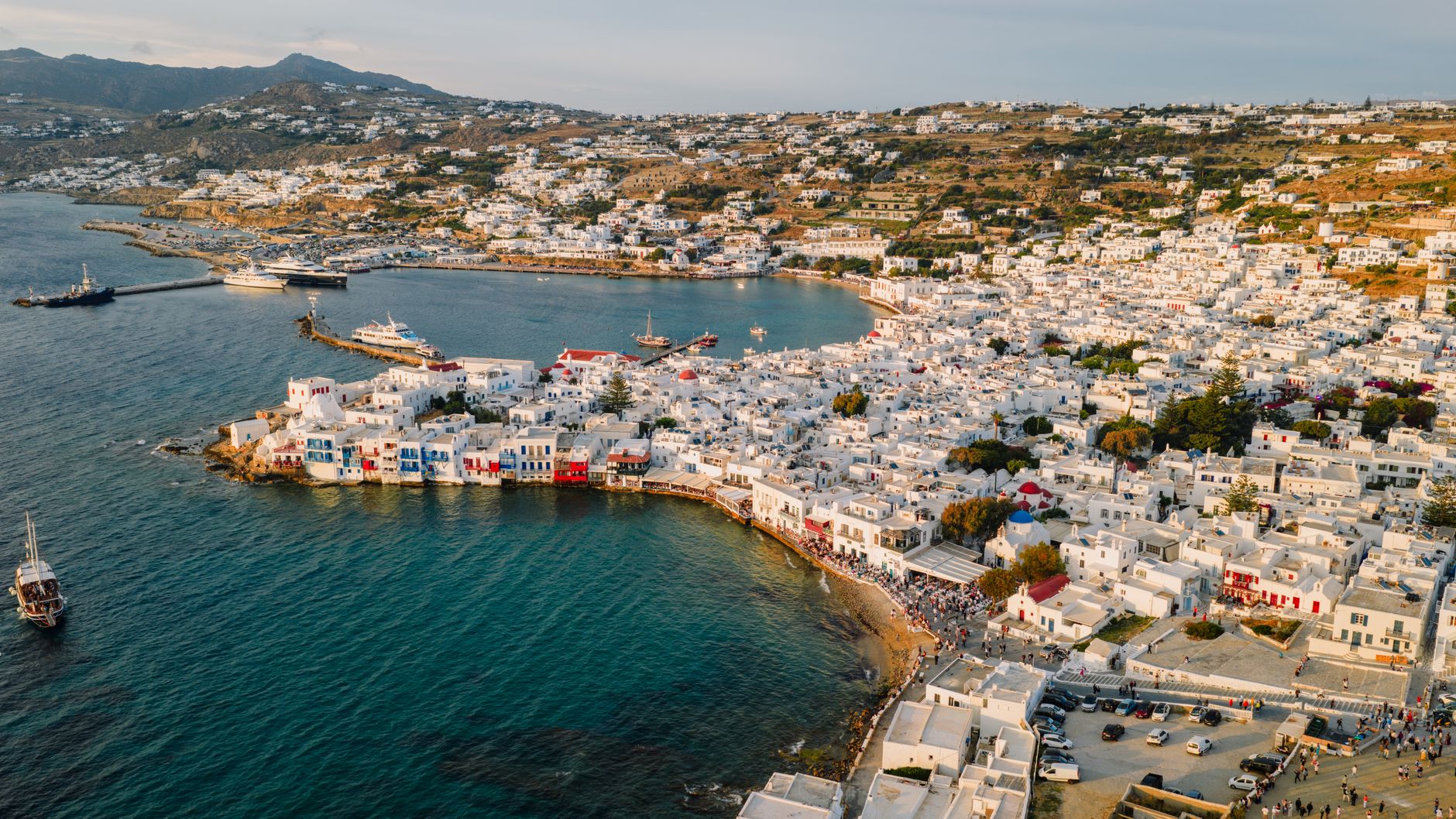
The horizon of the Cyclades is frequently reduced in the collective imagination to a succession of whitewashed facades, indigo domes, and Aegean sunsets repeated with mathematical precision across screens worldwide. Yet beneath that aesthetic surface of a summer postcard lies a geological and cultural complexity of far greater depth. Across this wind-scoured archipelago, individual islands have developed over centuries an ecosystem of survival adapted to water scarcity, arid soils, and geographical isolation. It is precisely within this substrate that cooking ceases to be a mere subsistence resource and becomes the truest archive of collective memory.
Among all the islands of the western group, Sifnos has historically occupied a singular place. It is neither a territory given over to mass tourism nor an isolated, self-contained enclave, but rather a crossroads where clay-rich earth and open sea established an ancient alliance. The recent attention paid by international fine dining figures, such as Australian chef Shannon Bennett, underscores a phenomenon known well to locals: Sifnos is not merely a seasonal holiday destination, but a living gastronomic capital whose culinary language deserves deciphering with international rigor.
The geography of clay and fire
To understand Sifniot cuisine, one must look away from contemporary restaurant menus and direct attention toward the soil that sustains the island. Sifnos is, above all else, a land of potters. The abundance of high-quality clay, rich in minerals and metallic oxides, transformed the island into one of the preeminent pottery centers of the eastern Mediterranean since antiquity. This millenary mastery of fire and earth was not limited to producing amphorae for trade or vessels for storing oil and wine; it penetrated directly into the island’s culinary DNA.
The most iconic dishes of Sifnos cannot be explained without utensils specifically designed to create them. The famous mastelo—tender lamb or goat slowly baked with red wine and fennel inside a porous clay pot—owes its melting texture and unmistakable aroma to the chemical and thermal exchange between the ceramics and the meat juices. Pottery in Sifnos was never separate from cooking; both manual crafts grew in parallel, dictating the cooking times, temperatures, and textures that would define the place’s identity across generations.
Shannon Bennett and the external gaze
The integration of Sifnos into global editorial and gastronomic circuits by Shannon Bennett offers an insightful perspective on how chefs trained in international fine dining perceive island authenticity. Bennett, known for his trajectory in Australian gastronomic avant-garde and his obsession with exceptional produce, has turned his attention to the Greek island to document a pantry operating outside major industrial supply chains. His new culinary guide does not seek to impose foreign techniques or artificially modernize secular recipes, but rather to record the precision with which local artisans manage available resources.
Bennett’s observations on Sifnos highlight an explicit recognition of domestic and communal cooking. While contemporary haute cuisine often seeks surprise through technical artifice, the traditional Sifniot recipe book demonstrates that the highest expression of flavor is achieved through patience, respect for seasonal cycles, and economy of means. This realization reinforces a paradigm shift in global gastronomic travel: travelers and chefs no longer seek eccentricity, but cultural coherence and absolute traceability from source to plate.
The cuisine of Sifnos does not shout; it stews slowly in clay pots that safeguard the geological memory of the island.
The invisible temple of local flavors
Exploring Sifnos with an eye for culinary detail means abandoning main routes and venturing into inland villages such as Artemonas or Kastro, where medieval architecture merges with everyday life. In these urban cores, the structure of food production continues to rely on small family gardens, scattered beehives on hillsides, and artisanal inshore fishing. Here, the concept of local produce is not a fashionable commercial label, but an inescapable physical necessity.
Among the staples structuring the local pantry is wild caper, growing spontaneously on dry-stone walls and imparting a pungent salinity to soups and salads. Added to these are traditional goat cheeses, such as local manouri or xiromizithra, characterized by their lactic acidity and ability to integrate into both savory dishes and island pastry. Thyme honey, harvested from hives exposed to sea salt and dry Aegean winds, possesses a unique aromatic intensity that sharply differentiates Sifnos pastry from that of neighboring islands.
Cooking as cultural resistance
To speak of gastronomy in Sifnos in the 21st century is also to speak of resistance against cultural homogenization. As mass tourism transforms the Mediterranean coastline into an interchangeable theme park, the preservation of farming methods, traditional pottery, and religious festival recipes acts as a bulwark. The guide crafted by international chefs helps bring visibility to this heritage, yet the true weight of conservation rests upon local families who continue firing traditional wood ovens.
Religious festivals, known locally as panygiria, represent the social space where this communal cooking unfolds in all its magnitude. During these celebrations honoring various protective saints of the island, large cauldrons of chickpeas with onions and olive oil—the famous Sunday revithada—are prepared and distributed free of charge to all attendees. This collective act of commensality demonstrates that food in Sifnos is not a commodity subject to market laws, but a social glue binding the community against the pressures of tourist seasonality.
Itineraries of the palate: where and how to seek authenticity
For travelers wishing to approach Sifnos beyond its visual surface, accessing its true essence requires mindful planning. The island lacks an airport, ensuring a natural filter where access is exclusively maritime via ferries departing from the port of Piraeus or hub islands like Milos and Serifos. This insular condition determines a rhythm of life where haste makes little sense and where cooking is strictly governed by the arrival of fishing boats and the opening of local markets.
The optimal months for understanding Sifniot gastronomy do not necessarily coincide with the peak summer rush of August. Experts recommend visiting during late spring or early autumn, when temperatures allow hiking the ancient stone-paved trails connecting villages, and when local producers have the necessary time to share the secrets of their trade. It is during these transitional periods that Sifnos reveals its true human dimension, far from commercial noise.
- Apollonia: The administrative and commercial hub, ideal for observing the blend of tradition and small local produce shops.
- Artemonas: The bastion of traditional pastry, known for almond sweets and stately mansions.
- Kastro: The ancient medieval capital, where historical stratigraphy overlays the daily life of residents.
- Faros and Cherronisos: Fishing ports where seafood is served just meters from the water.
The craft of patience at the stove
One of the most revealing aspects documented by the new culinary approach to Sifnos is the realization that island cuisine rejects immediacy. Iconic dishes like fennel pie (marathopitakia) or dried legume stews demand hours of meticulous preparation. Chickpea pulp for revithada soaks overnight in spring water, and its wood-oven baking lasts at least six hours, sealing the pot with a flour paste to prevent aromatic vapors from escaping.
This culinary discipline contrasts sharply with contemporary urban food culture, based on speed and standardization. In Sifnos, cooking is an exercise in active meditation engaging all senses. The sound of crackling wood, the rough texture of fired clay, the pungent aroma of wild rosemary, and the golden hue of extra virgin olive oil compose a sensory symphony remaining unaltered despite the transformations of the outside world.
Practical notes for the conscious traveler
Approaching Sifnos gastronomy from a respectful perspective requires embracing certain logistical and ethical premises. Given that the island maintains a delicate ecological balance, water and energy consumption must be managed with extreme caution. Likewise, travelers are advised to prioritize establishments working directly with local farmers, herders, and fishermen, avoiding venues resorting to frozen or imported goods to satisfy peak summer demand.
- Transport: Using local bus services or renting compact vehicles is recommended for navigating narrow island roads.
- Accommodation: Opting for family-run guesthouses and restored traditional homes supports the direct local economy.
- Cultural respect: Consulting local schedules and maintaining a receptive attitude during religious festivals and traditional markets.
Understanding Sifnos through its cuisine is accepting that true luxury in the contemporary Mediterranean lies in time, silence, and fidelity to the territory.
Toward a future where the past is a guide
The attention paid by international chefs like Bennett to the Sifniot pantry raises a recurring dilemma: how to reconcile media visibility with the preservation of local identity? The answer, according to Sifniots themselves, lies in traveler education and the strength of their own traditions. As long as pottery continues to shape the valley clay and families keep lighting ovens to share Sunday mastelo, the island will maintain its compass intact.
Sifnos thus consolidates its position as a beacon of gastronomic resistance amid the Aegean. Far from being a fossilized museum, its culinary culture demonstrates boundless vitality nourishing both residents and outsiders willing to listen closely. Ultimately, Bennett’s guide simply confirms a millenary certainty: the smallest places are often those holding the largest answers about how we must relate to the land and the table.
Source: The Greek Herald


