


Introduction to the limestone massif of northern Spain
The Picos de Europa mountain range forms one of the most striking and unique karst landscapes in the Cantabrian Mountains. Divided into three major massifs —the Cornión or Western Massif, the Urrieles or Central Massif, and Ándara or Eastern Massif— these marine limestone formations rise abruptly just kilometers away from the Cantabrian Sea. Throughout history, this labyrinthine terrain has not only served as a sanctuary for biodiversity and a challenge for alpinism, but also as a space deeply shaped by extensive livestock farming and seasonal transhumance.
Walking through the Picos de Europa requires understanding that every trail, every high pasture, and every gorge holds the memory of generations of shepherds who carved out a living from the stone. Far from being an untouched and pristine wilderness, this landscape is the result of a delicate balance between geological harshness and human persistence. This report examines the natural wealth, ethnographic legacy, and essential planning strategies needed to traverse this mountainous bastion with rigor and deep respect for the environment.
Geology and karst modeling: an ocean of stone
The geological history of the Picos de Europa began over three hundred million years ago during the Variscan orogeny, although the current configuration of its massive limestone walls is the result of the subsequent Alpine orogeny. The accumulation of calcium-carbonate-rich marine sediments in shallow seas produced massive limestone layers exceeding one thousand meters in thickness in certain areas.
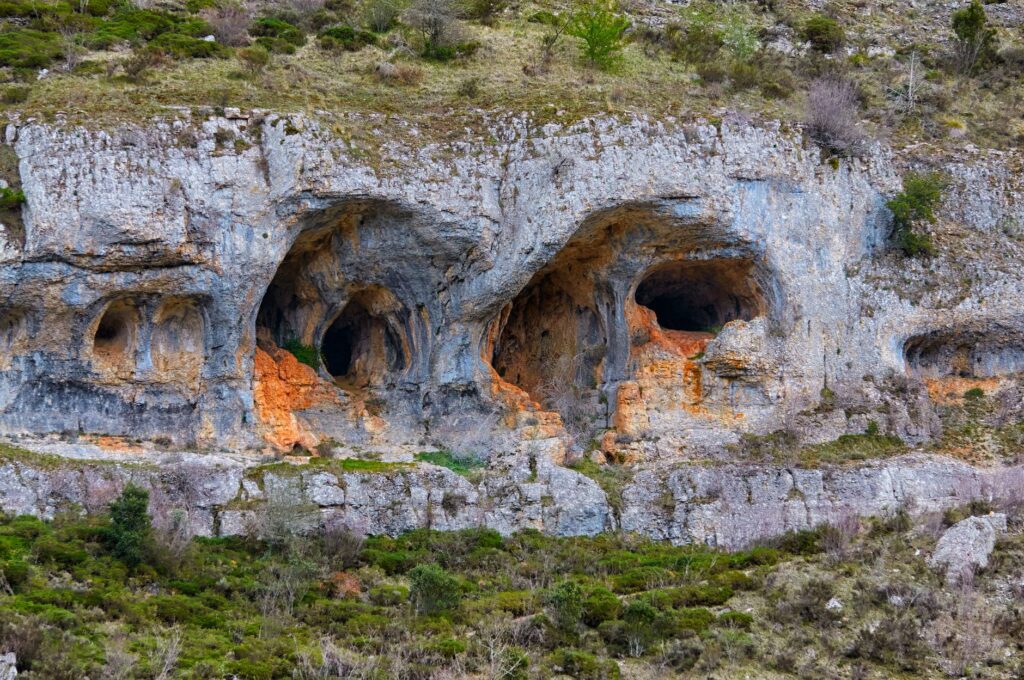
Water, the primary sculptor of this topography, has dissolved the rock relentlessly, creating a landscape of lapiaz, deep shafts, dolines, and vertical channels where surface runoff is virtually nonexistent. The absence of visible rivers on the high peaks contrasts with the roaring rivers originating in their foothills, such as the Sella, Cares, and Deva, which have carved monumental gorges.
The limestone rock of Picos de Europa is a geological archive where water has sculpted an underground labyrinth as fascinating as it is complex.
This subterranean karst system hosts some of the deepest caves in the Iberian Peninsula, including the Trave system and Torca del Cerro. For mountaineers, this geology translates into abrasive terrain, unstable scree slopes, and the absolute necessity to plan water supplies carefully, as natural high-altitude water sources are scarce or nonexistent due to rapid underground drainage.
The ethnographic heritage of high pastures and mountain cheese
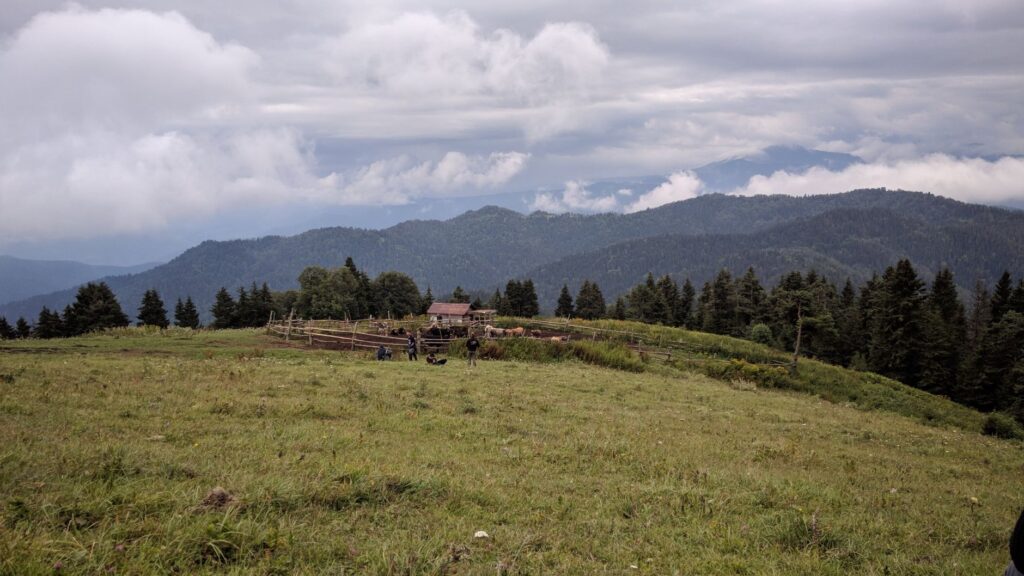
The high-altitude pastures known locally as majadas —where sheep, goats, and cattle spend the summer months— form the cultural heart of the Picos de Europa. These enclaves, situated above one thousand meters of altitude, preserve traditional dry-stone structures with gabled roofs known as invernales or shepherd cabins, built to withstand the harsh Cantabrian winters.
Pastoral activity in these summits is not merely a picturesque postcard scene, but the driving force that has kept pastures open and prevented the massive encroachment of scrubland. Among the artisan goods born from this culture, Gamonéu cheese and, above all, the prestigious Cabrales cheese stand out, aged naturally in limestone mountain caves where humidity and native microbial flora foster the growth of the characteristic mold that yields its spicy flavor and creamy texture.

Preserving the pastoral heritage is indispensable to maintaining the biodiversity and cultural identity of the entire Cantabrian massif.
Cantabrian biodiversity: a refuge for fauna and rupicolous flora
Despite the apparent aridity of its limestone peaks, the Picos de Europa harbor exceptional botanical and faunistic richness. North-facing slopes and humid valley bottoms support mixed forests of beech, oak, and ash, while higher elevations are dominated by alpine meadows and heather-gorse shrublands.
Among the emblematic fauna, the Cantabrian chamois (Rupricapra pyrenaica parva) stands out, perfectly adapted to vertical rock faces and high scree slopes. The recovery of this species, which was on the brink of extinction in the mid-20th century due to poaching, represents one of the greatest conservation management successes in Spain. Additionally, the national park serves as an occasional refuge for the Cantabrian brown bear and the Iberian wolf, alongside hosting significant populations of raptors such as the golden eagle, griffon vulture, and the elusive Cantabrian capercaillie.

The rupicolous flora, meanwhile, features exclusive botanical endemics that have developed extraordinary survival strategies to withstand hurricane-force winds, extreme solar radiation, and persistent snowfall.
The network of historical trails and the impact of mountain tourism
The trail network of the Picos de Europa consists of ancient communication routes between valleys as well as itineraries specifically designed for mountain exploration and hiking. Among the most frequented paths is the Cares Trail, a gorge carved into rock at the beginning of the 20th century for the maintenance of a water channel, which currently attracts hundreds of thousands of visitors annually.
However, occasional overcrowding at specific hotspots such as the Covadonga Lakes or Poncebos contrasts with the absolute isolation of the more rugged sectors of the Central Massif. Mass tourism in fragile high-altitude environments poses a critical challenge that requires strict regulation of motorized access and greater awareness of environmental impact. National park authorities enforce strict regulations regarding camping, noise pollution, waste management, and the prohibition of disturbing wildlife and native flora.
High-mountain refuges: the logistics of overnight stays
Classic mountaineering in the Picos de Europa cannot be understood without its network of warden-staffed refuges, positioned at strategic locations that allow for multi-day traverses. Facilities such as the Urriellu refuge (at the foot of the iconic Naranjo de Bulnes), the Collado Jermoso refuge (offering dizzying views over the Valdeón valley), or the Áliva refuge are mandatory stopping points.
These establishments not only offer shelter, beds, and hot meals, but also act as neuralgic centers for safety and mountain rescue in collaboration with the Civil Guard mountain rescue teams (GREIM) and regional emergency services. Planning and booking months in advance is an essential requirement due to high demand during the summer season.
Naranjo de Bulnes: landmark of peninsular mountaineering
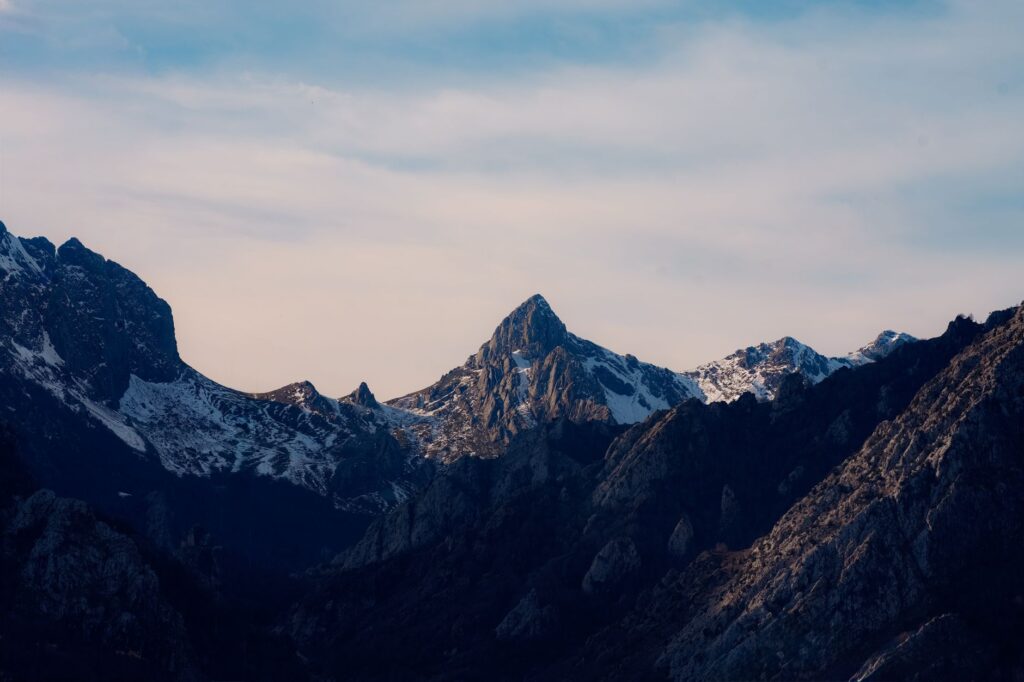
No account of the Picos de Europa is complete without mentioning the Picu Urriellu, popularly known as Naranjo de Bulnes. Rising 2,519 meters above sea level, this monolithic orange limestone tower stands imposingly in the center of the Central Massif. Its first ascent on August 5, 1904, by Pedro Pidal, Marquis of Villaviciosa, and local shepherd Gregorio Pérez ‘El Cainejo’, marked the official birth of alpinism in Spain.
The Naranjo de Bulnes is not only a mountain of great technical difficulty, but the romantic symbol of verticality in Spanish mountaineering.
The vertical walls of Urriellu, featuring world-famous classic and modern rock-climbing routes, continue to test climbers from all over the globe. The approach hike to its base requires overcoming substantial elevation gains, turning this area into a test of endurance and technique for any mountaineering enthusiast.
Practical information, safety, and northern meteorology
The climate in the Picos de Europa is heavily influenced by the proximity of the Cantabrian Sea, generating the locally known ‘cloud sea’ phenomenon and extremely rapid weather shifts. A sunny, clear day in the valleys can transform within minutes into dense fog with zero visibility and severe thunderstorms on the peaks. Therefore, carrying detailed topographic maps, altimeters, compasses, or GPS devices with spare batteries is mandatory.
- Recommended season: From late June to September, when most winter snow has melted.
- Equipment: Sturdy mountain boots with high-traction soles, layered thermal clothing, waterproof and windproof membranes, and high-SPF sun protection.
- Water and food: Carry sufficient water for each stage and high-energy trail rations.
- Regulations: Wild camping is strictly prohibited throughout the national park; bivouacking at high altitudes is only permitted under very specific conditions stipulated by the administration.
Conclusion: the responsibility of conserving a millenary landscape
The Picos de Europa represent an irreplaceable natural and cultural heritage that belongs both to the rural past of Asturias, León, and Cantabria and to the future of sustainable mountaineering. Traversing their trails involves assuming individual and collective responsibility: leaving minimal traces, respecting local communities working in the countryside, and exercising utmost caution in an environment as beautiful as it is unforgiving.
Preserving the geological and ecological integrity of these mountains is the only path to ensure that future generations can continue to experience the vertigo and freedom of their limestone summits. The mountain, in its silent immensity, continues to remind us that our passage through it must always be respectful and temporary.

