Introduction to the backbone of Eurasia
The railway system linking Moscow with Vladivostok is far more than a mere transportation infrastructure; it constitutes a geopolitical and cultural artery that has defined terrestrial mobility for well over a century. Stretching across more than 9,200 kilometers, the Trans-Siberian route crosses eight time zones, connecting Eastern Europe with the Pacific Ocean through landscapes ranging from the Russian plains to the Siberian taiga and the steppes of Mongolia and Manchuria in its historical branches.
Over the past decade, global mobility dynamics have transformed the profile of those traversing these tracks. Far from serving merely as a means for local passenger and freight transport, the corridor has re-emerged in the contemporary traveler’s imagination as the ultimate exponent of slow travel. However, the current operational reality demands a detailed understanding of its connections, borders, and logistical constraints, moving away from romantic idealization to grasp its true technical and social dimension.
Historical origins and imperial ambition
The genesis of the line dates back to the late 19th century, under the reign of Tsar Alexander III and the direct supervision of Sergei Witte, then Minister of Finance. The necessity to integrate the eastern territories of the Russian empire, secure sovereignty over the Pacific coast, and boost international trade spurred a monumental engineering project that officially commenced in 1891 in Vladivostok.

Despite geographical, climatic, and financial challenges, construction progressed at an unprecedented pace for the era thanks to the intensive use of convict and military labor, as well as the import of Western technology and capital. By 1904, trains were already able to run continuously, although the original layout required ferry transshipment across Lake Baikal during the warm months until the completion of the Circum-Baikal section. This infrastructure not only reconfigured the demographic map of Siberia by facilitating the arrival of millions of Slavic settlers, but it also altered the balance of power in the Far East.
Technical backbone and track gauge
One of the most decisive aspects in the operation of the Trans-Siberian network is the Russian track gauge, known as the 1,520-millimeter gauge, which is wider than the European standard of 1,435 milimeters. This technical difference has historically functioned as a geopolitical security barrier, as well as a logistical challenge for the continuity of international passenger and freight transport.
Over the decades, the layout has been subject to successive modernization processes, including the complete electrification of the main line—completed in the 2000s—, the doubling of tracks along most of the route, and the renovation of key stations. The technical efficiency of the current system supports heavy-tonnage compositions and passenger trains that maintain stable commercial speeds despite the severity of the climate. Modern electric locomotives capable of operating at extreme temperatures of up to minus fifty degrees Celsius are the result of engineering strictly adapted to the hostility of the Siberian environment.

The train is not merely a vehicle to cross distances, but a microcosm reflecting the social and territorial transformations of an entire continent.
The impact on local communities and regional economy
The passage of the railway has determined the survival and development of hundreds of towns and cities across central and eastern Siberia. Urban centers such as Nizhny Novgorod, Yekaterinburg, Omsk, Novosibirsk, Krasnoyarsk, and Irkutsk owe their status as industrial and cultural metropolises to their strategic positions along the tracks.
For local economies, the arrival of the train represents the primary supply line for consumer goods, energy, and raw materials, as well as a direct source of employment linked to infrastructure maintenance. Likewise, rail tourism generates vital seasonal economic flow for small communities located near Lake Baikal or in the autonomous republics of Buryatia and Sakha, where long-distance travelers purchase local handicrafts and traditional lodging services.
Historical branches: Trans-Mongolian and Trans-Manchurian
The Trans-Siberian system is not reduced to a single line. Its international variants have played a fundamental role in the regional integration of Northeast Asia. The Trans-Mongolian, inaugurated in the 1950s, diverts its route south from Ulan-Ude to pass through Ulaanbaatar, the capital of Mongolia, before entering the People’s Republic of China toward Beijing.

Meanwhile, the Trans-Manchurian splits off at Tarskaya station, east of Lake Baikal, crossing the Chinese border at Manzhouli to connect Harbin with Beijing. These two routes not only significantly reduced travel distances between Moscow and the Asian giant, but also established essential diplomatic and commercial corridors during the 20th century. Customs management at the Naushki or Zabaikalsk borders remains a rigorous procedure requiring the replacement of bogies on international carriages due to the change in track gauge.
Logistical planning and contemporary travel realities
For sector professionals and researchers interested in transcontinental mobility, planning a journey along the network requires comprehensive knowledge of Russian and Asian railway protocols. Regular services operate year-round, adapting to official Moscow time throughout the entire route, a peculiarity that demands constant attention from the passenger.
Onboard accommodation options are traditionally divided into three categories: Spalny Vagon (first class, two-berth compartments), Kupe (second class, four-berth compartments), and Platskart (third class, open-berth cars). The choice of ticket type determines not only the level of privacy, but the nature of social interaction during the journey, which can last for an uninterrupted week in the case of the full itinerary to the Pacific.

The experience of prolonged travel forces a redefinition of the notion of time and space, substituting the immediacy of commercial aviation for the methodical contemplation of the landscape.
Station infrastructure and digital connectivity
Terminal and connecting stations along the route have undergone architectural and technological renovation processes aimed at improving the user experience. Iconic buildings such as Yaroslavsky station in Moscow or Vladivostok station combine elements of historical heritage with modern access control systems, real-time information screens, and advanced service zones.
In terms of connectivity, the railway lines cross low-population-density areas where mobile network coverage experiences prolonged intermittency. This has turned the train into a unique space for mandatory digital disconnection, although operating companies have begun deploying local Wi-Fi networks in higher-category compositions. Onboard catering infrastructure, traditionally based on the restaurant car and personal provisioning of supplies on platforms during technical stops, remains a central component of the traveler’s self-sufficiency.
Security, regulations, and border protocols
Security across the Trans-Siberian network falls under the direct supervision of specialized railway transport police forces. Internal regulations regarding public order, luggage storage, and the consumption of specific products are strict and uniformly applied throughout the territory of the federation.
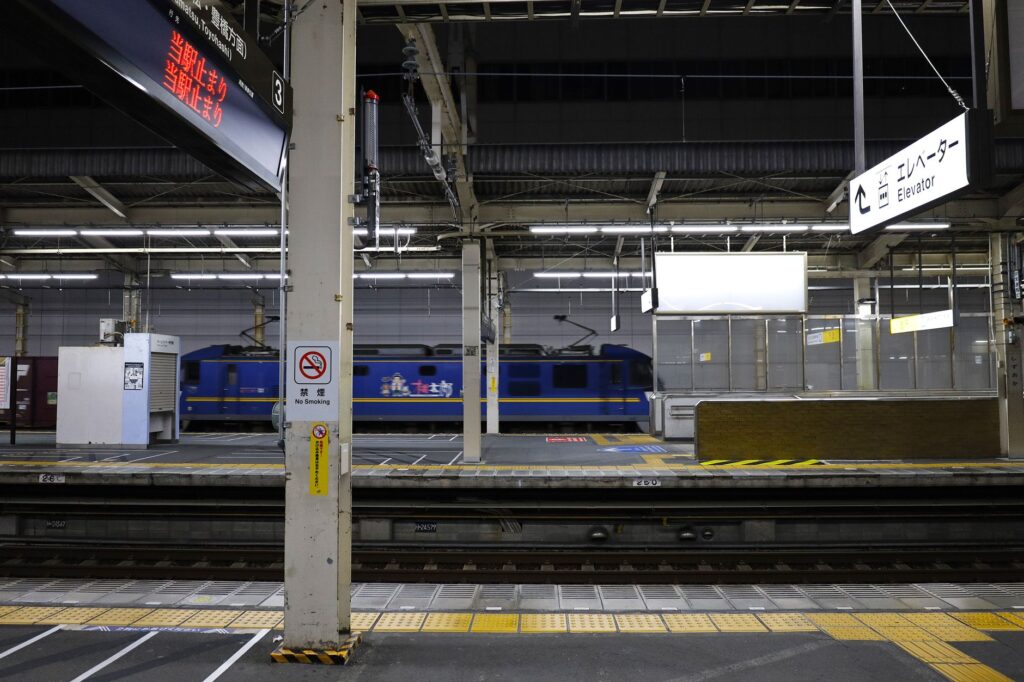
For itineraries crossing into Mongolia or China, border controls are conducted directly at designated checkpoints, where immigration and customs authorities inspect passenger documentation onboard the train or during technical parking maneuvers. Visa validity, entry registrations, and current health requirements constitute critical elements that must be managed well in advance to prevent journey interruption in remote enclaves.
Conclusions on the future of the Eurasian corridor
The strategic weight of the Trans-Siberian corridor remains undeniable in the context of global trade routes and the regional development of Eurasia. While containerized freight transport experiences sustained demand due to its competitiveness against maritime transport in terms of time, specialized rail tourism seeks to consolidate as a niche alternative for travelers with specific cultural and geographical interests.
Far from simplified tourist stereotypes, the great northern route remains a living testimony to the human capacity to connect extreme territories through engineering and logistical perseverance. Its rigorous study and transit continue to offer an irreplaceable perspective on the geography and history of the world’s most extensive continent.