


The Hejaz desert in the western reaches of the Arabian Peninsula has been a territory of rigorous transit for millennia, defined by scorching winds, black basalt plains, and shifting dunes that historically erased the paths of camel caravans. Today, that same horizon is pierced by a silver double-track line upon which one of the Middle East’s most ambitious and complex civil engineering projects glides at three hundred kilometers per hour: the Haramain High-Speed Railway. This 453-kilometer rail corridor is not merely a milestone of contemporary infrastructure; it serves as the backbone of an unprecedented social, economic, and logistical transformation in the region.
The Trajectory of Sand and Wind
The genesis of the Haramain project stems from both a spiritual and a pragmatic necessity. With the constant increase in the number of pilgrims traveling annually to the holy cities of Mecca and Medina for the Hajj and Umrah, regional highways and local airports were facing imminent gridlock. The response from Saudi transport authorities was the design of a high-speed network capable of moving sixty million passengers a year, reducing road travel times from over five hours to just two hours and twenty minutes between the two sacred metropolises.
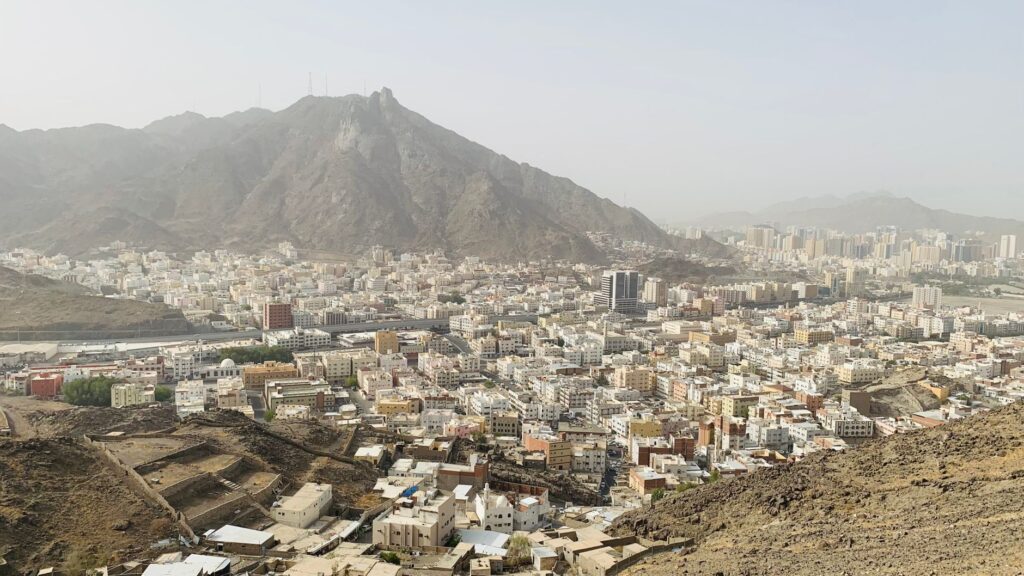
The railway route traverses an unforgiving geography. From the coastal plains of Jeddah, the terrain rises gradually toward the interior plateau, crossing active dune fields and volcanic mountain ranges. The planning of this route demanded topographical and geological studies of millimeter precision to bypass the most unstable areas of shifting sands, a factor that historically doomed the old Hejaz railway of the early 20th century to oblivion.
Extreme Engineering Against the Thermal Desert
Operating a high-speed train in an environment where summer temperatures easily exceed fifty degrees Celsius required the development of highly specific adaptation technologies. The rolling stock, based on the Talgo 350 platform, had to be substantially modified to withstand sand abrasion and extreme heat. Traction systems and air conditioning units were redesigned with special filters and hermetic seals to prevent airborne dust from penetrating the engines and passenger cooling systems.
The track superstructure also posed monumental challenges. In sections highly exposed to prevailing winds, sand-retaining walls and accumulation trenches were constructed, and specialized polymers were applied to the surrounding soil to stabilize the dunes and prevent them from encroaching on the tracks. Furthermore, overhead lines and power cables were reinforced to withstand the extreme thermal expansion that occurs between day and night in the desert.

«The true challenge was not achieving three hundred kilometers per hour, but ensuring that the infrastructure could withstand the silent, relentless wear of desert sand for decades to come.»
The Nexus of the Five Nodes
The Haramain line is articulated through five monumentally designed stations, conceived by the renowned architecture firm Foster + Partners. Each of these terminals operates as an independent urban gateway, inspired by traditional Islamic architecture but executed with 21st-century materials and techniques. The stations share a common visual language of self-supporting structural arches, yet they are distinguished by specific color palettes reflecting each city’s unique identity.
- Makkah (Mecca Station): Characterized by golden hues that evoke the solemnity of the Grand Mosque, it serves as the final destination for pilgrims and features massive passenger dispersal capabilities.
- Madinah (Medina Station): Featuring green and copper tones that pay tribute to the Prophet’s Green Dome, offering an atmosphere of serenity and welcome to travelers arriving from the north.
- Jeddah Central (Jeddah Al-Sulaimaniyah): A vibrant urban hub with silver and gray finishes that connect with the coastal city’s maritime and industrial aesthetic.
- King Abdulaziz International Airport (KAIA): A station integrated directly into the airport terminal, facilitating a seamless transition for international travelers landing in the Kingdom.
- King Abdullah Economic City (KAEC): Located near the Red Sea deep-water port, this station features a sleek, minimalist design focused on northern commercial and residential development.
The Onboard Experience of the Desert Falcon
Traveling on the Haramain is an exercise in comfort and efficiency. The train interiors are divided into two primary classes: Business and Economy. In Business Class, passengers enjoy generously sized leather seats, individual entertainment screens, power outlets, and a dining service that blends local gastronomy with international standards. Hot Arabic coffee with cardamom and fresh dates are served as a gesture of traditional hospitality before the train begins its near-silent journey.
Economy Class does not compromise on comfort, offering a spacious seating layout and large double-glazed windows with high-density solar filters. These windows allow passengers to gaze at the majesty of the desert landscape without suffering from glare or external thermal radiation. The cabin’s soundproofing is so effective that the whistling of the outside wind and the contact of the wheels on the rails are reduced to a faint background whisper, allowing for an environment of rest and contemplation.

Mass Logistics During the Hajj
During the Hajj season, the Haramain transforms into the most important mass transit system in the Islamic world. Train schedules are adjusted to operate continuous frequencies, with departures every ten minutes between Mecca and Jeddah. Coordinating this massive passenger flow requires a state-of-the-art operations control center located in Jeddah, where artificial intelligence systems analyze real-time platform crowding and optimize dwell times.
Baggage management and security are paramount during these peak periods. Stations feature screening systems comparable to those at international airports, but optimized to process thousands of travelers per hour. Coordination with shuttle bus services at the line’s terminuses ensures that the flow of people never stops, allowing millions of pilgrims to complete their religious rites safely, orderly, and with dignity.

«The transformation of the sacred journey through railway technology represents the greatest logistical advancement in the modern history of the Hejaz.»
Sustainability and the Future of Peninsular Rail
Beyond its religious and passenger transport functions, the Haramain High-Speed Railway is a cornerstone of Saudi Arabia’s Vision 2030 plan, which aims to diversify the economy and reduce oil dependency. By replacing millions of annual car and bus trips with high-speed electric journeys, the railway prevents the emission of hundreds of thousands of tons of carbon dioxide into the atmosphere each year, contributing significantly to the nation’s sustainability goals.
This corridor is also the first step toward a much broader national and international rail network. Advanced plans exist to integrate the Haramain line with the Saudi Landbridge project, a freight and passenger rail line that will cross the entire country from the Red Sea to the Arabian Gulf, connecting Jeddah with the capital, Riyadh, and opening a strategic new trade route in the region.
Practical Guide for the International Traveler
For travelers wishing to experience this marvel of engineering, advance planning is essential. Tickets can be purchased via the official Haramain High Speed Railway mobile application or its official website. It is highly recommended to book several weeks in advance, especially during the holy month of Ramadan and Hajj dates, when demand multiplies exponentially.

It is important to note that while the stations of Jeddah, KAEC, and the Airport are accessible to all international visitors, access to the terminal stations located within the sacred boundaries of Mecca and Medina is subject to Saudi Arabian visa and entry regulations for non-Muslims. Travelers must verify current requirements before planning their detailed itinerary.
The Horizon of Metal and Sand
The Haramain High-Speed Railway has proven that the desert is not an insurmountable obstacle to modernity, but a canvas where human engineering can design new forms of connection. By uniting the immemorial tradition of pilgrimage with the most advanced technology of the 21st century, this railway does not merely shorten physical distances; it builds a steel bridge toward the future of an entire region.


