
The Dawn of a New Railway Era on the Northern Coast
March 16, 2024, will be remembered in the annals of global transportation as the day Japanese precision engineering once again redrew the map of its domestic geography. With the official opening of the Hokuriku Shinkansen extension, which now connects the historic city of Kanazawa with the strategic port of Tsuruga in Fukui Prefecture, a long-awaited high-speed corridor has finally materialized. This 125-kilometer stretch is not merely an addition to the country’s already dense rail network; it represents a paradigm shift in the distribution of travel and commercial flows across the archipelago.
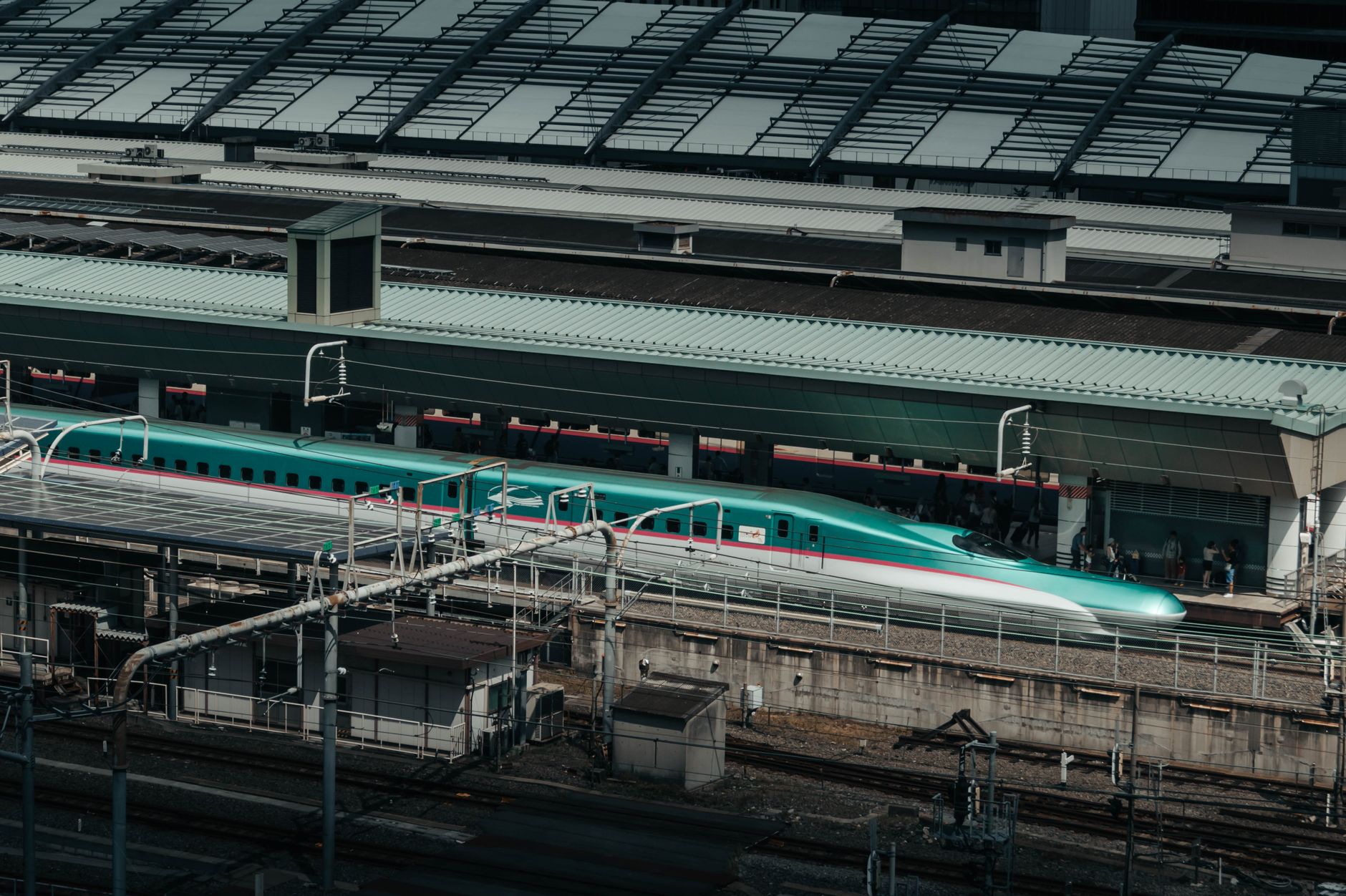
For decades, Fukui Prefecture remained in a logistical shadow for international travelers, shielded by the imposing natural barrier of the Japanese Alps and accessible only via limited express trains that required complex transfers from major metropolises like Tokyo, Kyoto, or Osaka. Today, the iconic aerodynamic nose of the E7 and W7 series trains slices through the winds of the Sea of Japan coast, reducing travel time from Tokyo Station to Fukui to just two hours and fifty-one minutes. This infrastructural transformation not only redefines the concept of distance in contemporary Japan but also offers a viable, sustainable alternative to the saturated Tokaido corridor, the heavily trafficked southern artery linking Tokyo, Kyoto, and Osaka.
The Geography of Isolation: Overcoming the Japanese Alps
The construction of this new segment of the Hokuriku Shinkansen has been described by engineers at the Japan Railway Construction, Transport and Technology Agency (JRTT) as one of the most complex civil engineering feats of the 21st century in Japan. The route traverses one of the snowiest regions on Earth, where the mountains of Ishikawa and Fukui Prefectures plunge abruptly into the sea. To overcome this hostile topography, approximately 70% of the track runs underground or over elevated reinforced concrete viaducts, designed to withstand major earthquakes and snow accumulations several meters deep.
The Shin-Hokuriku Tunnel, stretching over 19 kilometers, forms the backbone of this engineering marvel. Drilling through the region’s hard granite and active geological fault lines required state-of-the-art tunnel boring machines and real-time seismic monitoring systems that can automatically halt trains at the slightest precursory vibration. Furthermore, the tracks are equipped with high-pressure warm water sprinklers that utilize underground water to melt snow on the rails, ensuring seamless operations even during the northern winter’s most severe blizzards.
High-speed rail does not merely shorten physical distances; it redefines the emotional geography of a country by integrating communities once bound by the rhythm of winter isolation.
Tsuruga as a Hub: The Sea of Japan’s New Gateway
Tsuruga Station, the temporary terminus of this extension, has been transformed into an architectural colossus rising 37 meters above ground level—equivalent to a twelve-story building. This monumental scale is not an aesthetic whim but a vital functional necessity: housing the Shinkansen tracks, conventional limited express lines, and local transit platforms within a single three-level vertical structure. Tsuruga has ceased to be a simple transit stop, evolving into western Japan’s premier dry port and distribution hub.
Historically, Tsuruga was always a vital gateway for cultural and commercial influences from the Asian continent. At the dawn of the 20th century, it was the departure point for trains connecting to ferries bound for Vladivostok, allowing travelers to board the Trans-Siberian Railway toward Europe. The arrival of the Shinkansen revives this international legacy, positioning the city as the ideal starting point for exploring the northern coast—a region defined by its rugged coastal beauty, world-class seafood, and deeply rooted spiritual heritage.
The Art of the Transfer: Temporal Synchronization at Tsuruga Station
One of the greatest operational challenges following the extension’s inauguration has been managing the flow of passengers continuing their journeys toward Kyoto and Osaka. Since the Shinkansen’s final southern path remains unbuilt due to environmental and budgetary debates, Tsuruga Station serves as a critical transfer point. Here, travelers must disembark from the Shinkansen on the upper level and descend to the lower platforms to board the Thunderbird or Shirasagi limited express trains.
The synchronization of transfers at Tsuruga Station has been meticulously designed to take place within a window of just eight minutes, a testament to the Japanese obsession with logistical efficiency. JR West engineers designed a system of nineteen high-capacity automatic ticket gates and continuous-flow escalators to ensure that hundreds of Shinkansen passengers can change trains without friction or crowding. This transfer, far from being an obstacle, has become a practical demonstration of how technology and human-flow design can mitigate infrastructure gaps.
Beyond High Speed: The Echizen Local Network and the Path to Eihei-ji
The true value of the Shinkansen lies not only in its ability to connect major hubs but in how it articulates with capillary transport networks reaching deep into rural Japan. Upon arriving at Fukui Station, the prefectural capital, travelers gain immediate access to the Echizen Railway, a private narrow-gauge railway operating with nostalgic charm that offers an immersive journey through the region’s agricultural heartland. This contrast between the supersonic speed of the Shinkansen and the leisurely pace of local trains is one of the journey’s greatest appeals.
The Echizen Railway is the ideal conduit to Eihei-ji, the «Temple of Eternal Peace.» Founded in 1244 by Zen Master Dogen, Eihei-ji is one of the two head temples of the Soto school of Zen Buddhism and remains an active monastery where over a hundred monks practice rigorous daily discipline. The journey combines the local train with a brief bus ride winding through ancient cedar forests and mountain streams. Thanks to the Shinkansen, a trip that once required multi-day planning from Tokyo can now be completed with astonishing fluidity, allowing visitors to experience zazen meditation in an unaltered, authentic setting before sunset.
Mitigating Overtourism: The Shinkansen as a Tool for Decentralization
At a time when iconic destinations like Kyoto, Mount Fuji, and Tokyo face the acute challenges of mass tourism, the opening of the Hokuriku Shinkansen to Fukui serves as a strategic national policy for tourism decentralization. The Japanese government and local authorities have actively promoted the «Hokuriku» brand as a peaceful sanctuary where visitors can experience traditional Japan without the crowds of the Golden Route.
The extension of the Hokuriku Shinkansen to Tsuruga, opened in March 2024, represents Japan’s most significant rail infrastructure milestone of the decade. By diverting a portion of visitor flows to the Sea of Japan coast, it relieves pressure on southern infrastructure and injects economic vitality into prefectures facing demographic decline. Travelers choosing this route discover the dramatic basalt cliffs of Tojinbo, the traditional knife-forging workshops of Echizen, and the Fukui Prefectural Dinosaur Museum in Katsuyama—one of the world’s leading paleontological research centers—all seamlessly connected by high-precision public transit.
The true success of the Japanese railway system lies not in the speed of its trains, but in the millimeter-precise choreography of its transfers.
The Architecture of Travel: Stations in Dialogue with the Landscape
Each of the new Shinkansen stations built for this extension in Fukui Prefecture has been conceived as an architectural work of art reflecting the cultural identity of its surroundings. Awara Onsen Station, famous for its hot springs, incorporates local timber and traditional lattice screens that evoke the atmosphere of a classic ryokan. Meanwhile, Fukui Station features a soaring glass facade reflecting the regional sky, alongside life-sized dinosaur animatronics in its public plazas, celebrating the prefecture’s rich fossil heritage.
These stations are not mere transit points; they are community hubs and cultural interpretive centers. Inside, travelers find spaces dedicated to promoting local crafts, such as Echizen Washi paper (boasting over 1,500 years of history) and Wakasa lacquerware. The architectural design ensures that the travel experience begins the moment a passenger steps onto the platform, merging the cutting-edge technology of the Shinkansen with the reverent respect for craftsmanship and natural materials that defines Japanese design.
Practical Logistics for the International Traveler: Passes, Booking, and Baggage
For travelers planning to embark on this new route, logistics are remarkably straightforward thanks to integrated reservation systems. Following the recent price adjustments of the global Japan Rail Pass, the Hokuriku Arch Pass stands out as the most cost-effective and strategic transit alternative to avoid the price hikes of the national JR pass. This specific pass allows unlimited travel for seven consecutive days from Tokyo to Kyoto and Osaka via the Hokuriku route, fully covering the new Shinkansen segment to Tsuruga.
- Seat Reservations: On E7 and W7 series trains, reserving seats in advance is highly recommended, especially for the premium Green Car or the exclusive Gran Class, which offers an experience equivalent to international first-class flights, complete with locally sourced seasonal bento boxes and beverages.
- Baggage Management: Due to oversized baggage regulations on high-speed trains, travelers carrying luggage with total dimensions exceeding 160 cm must reserve specific seats with dedicated luggage space. A highly recommended alternative is utilizing luggage forwarding services (Takuhaibin), which seamlessly ship suitcases directly between hotels nationwide for reasonable fees, allowing travelers to move freely with just a light daypack.
- Digital Connectivity: Integrated IC transit cards (such as Suica or Pasmo) are fully compatible with the local feeder lines connecting to Shinkansen stations, making it incredibly easy to hop on regional buses and local trains without purchasing individual paper tickets.
The Future of the Route: The Pending Link to Kyoto and Osaka
Although the Shinkansen’s arrival in Tsuruga marks a historic milestone, the original plan for the Hokuriku Shinkansen envisions its ultimate extension to Shin-Osaka via Kyoto. Current debates center on the environmental impact of proposed tunnels beneath the mountains north of Kyoto, an ecologically sensitive area containing vital underground water sources for the ancient capital. Estimates suggest the construction of this final segment could take several decades, cementing Tsuruga Station as the definitive transfer hub for the foreseeable future.
While future routes are being debated, today’s reality offers an exceptional travel corridor where technological dynamism and tranquil traditions meet along the tracks. A journey on the Hokuriku Shinkansen is, ultimately, an invitation to discover a different Japan—one measured not by the haste of arrival, but by the depth of the landscapes and cultures that unfold just outside the window.