


Introduction to Europe’s Great Fluvial Axis
Water is the mirror of European civilization, and few riverbeds concentrate as much history, commerce, and mythology as the Rhine. Rising in the alpine glaciers of Graubünden, this river carves valleys, crosses lakes, marks natural boundaries, and empties into the bustling ports of the North Sea. Traversing its banks on two wheels via EuroVelo 15, formally known as the Rhine Cycle Route, represents one of the most structured, accessible, and transformative slow-travel experiences on the continent. Far from the speed of highways or the sterile distance of airplanes, river cycling offers direct immersion in the landscape, allowing travelers to understand geography one pedal stroke at a time.
This report examines the infrastructure, planning, and operational reality of this international corridor, designed to connect travelers with the natural and cultural heritage of Switzerland, France, Germany, and the Netherlands. It is not merely a physical activity, but an exercise in sustainable mobility that promotes tourism respectful of local ecosystems and deeply enriching for personal well-being.
The Geography of the Source: The Swiss Alps and Lake Constance
The journey begins in the high Swiss mountains, specifically in Andermatt or near the source of the Anterior Rhine (Vorderrhein), where the water gushes forth with crystal-clear purity and imposing cold. In these initial stretches, the route demands respect and physical preparation. Elevation changes are notable, and secondary roads meander through breathtaking gorges such as the Ruinaulta ravine, popularly known as the Swiss Grand Canyon. Here, cantonal authorities have invested in impeccable signage and safe footpaths that allow cyclists to progress without friction with motorized traffic.
As the river descends northward, the alpine landscape gives way to green hills and the shores of the majestic Lake Constance (Bodensee). This vast mirror of water shared by Switzerland, Germany, and Austria acts as a peaceful haven before the Central European crossing. Cycling infrastructure in this basin is a global benchmark, combining asphalted two-way bike lanes with services adapted for rapid repair, drinking water fountains, and rest areas equipped with informative panels on migratory flora and fauna.
Passing Through Alsace and the Black Forest: A Franco-German Corridor
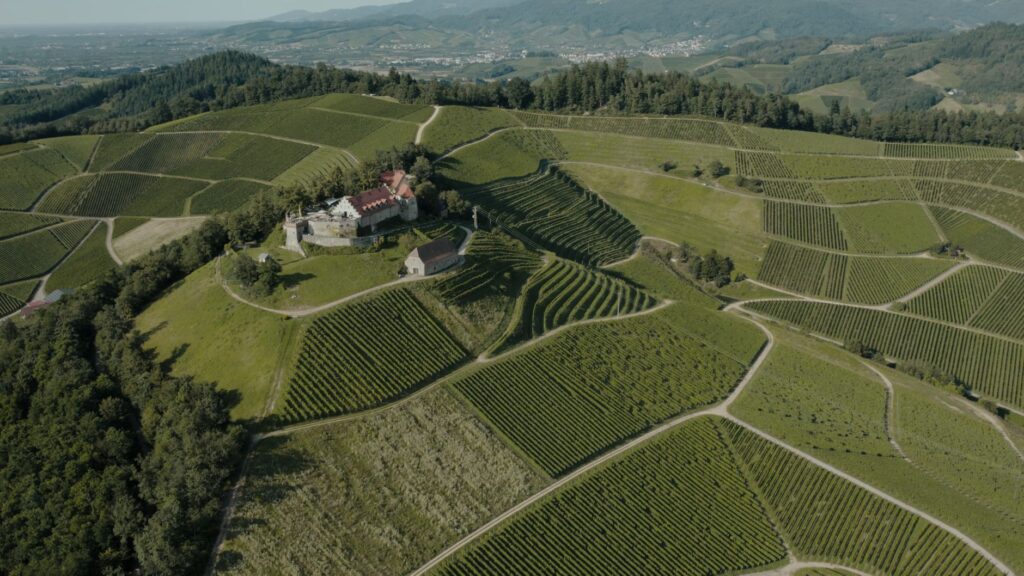
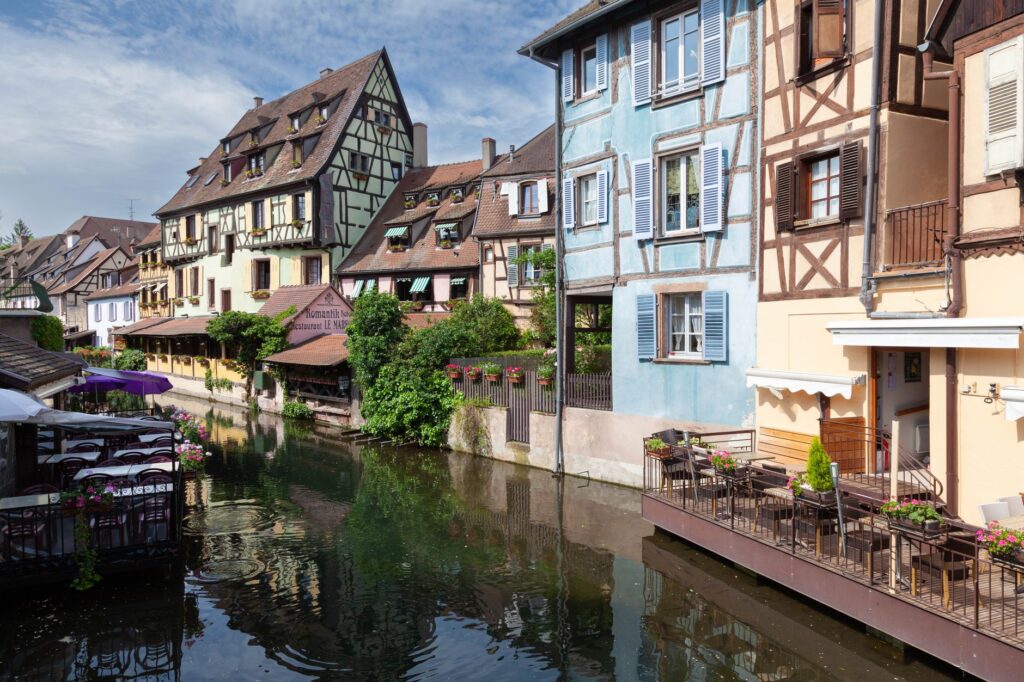
Leaving the lake behind, the Rhine heads north and becomes the natural border between France and Germany. This middle section offers a fascinating cultural duality. On the left bank, the French region of Alsace displays its half-timbered villages, terraced vineyards, and a gastronomy that fuses Germanic tradition with Gallic finesse. Cities like Strasbourg, seat of the European Parliament, are fully adapted for bicycles, featuring a network of lanes that prioritize the cyclist and facilitate intermodal access with the regional railway network (TER).
On the right bank, Germany’s Black Forest (Schwarzwald) invites brief but demanding detours into forested valleys where silence is broken only by the murmur of streams and birdsong. The spa towns of Baden-Baden and Bad Krozingen represent mandatory stops for well-being, offering medicinal mineral baths that relieve the muscular fatigue accumulated during days in the saddle. The coexistence of cycling infrastructure on both banks allows travelers to alternate countries via historical bridges and local ferries that exclusively transport pedestrians and cyclists.
The Middle Rhine Gorge: Castles, Legends, and World Heritage
The section between Mainz and Koblenz, known as the Upper Middle Rhine Valley, constitutes the visual and historical heart of the route. Declared a UNESCO World Heritage Site, this river gorge is dotted with medieval castles perched on rugged cliffs, impossibly terraced vineyards, and the mythical Lorelei rock, where legend places the nymph who lured sailors.
For cyclists, this sector requires attention due to the narrowness of the valley, where the national highway, high-speed railway lines on both sides of the river, and the bike path coexist. However, investment in separate sections and bicycle-specific tunnels has significantly increased safety over the past decade. Riverbank towns such as Bacharach, Boppard, or Sankt Goar offer specialized cycle-tourism hotel infrastructure, known in Germany as Bett+Bike, which guarantees secure bicycle storage, basic repair tools, and energy breakfasts tailored to athletes’ needs.
The Rhenish Metropolis: North Rhine-Westphalia and Industrial Transformation
From Bonn and Cologne onward, the Rhine changes its physiognomy. The rural and romantic landscape gives way to a dense, dynamic metropolitan region where the industrial past is reinvented under criteria of urban sustainability. Duisburg, Düsseldorf, and Cologne demonstrate how former port areas and steel industries have been transformed into cultural spaces, linear parks, and interconnected greenways.
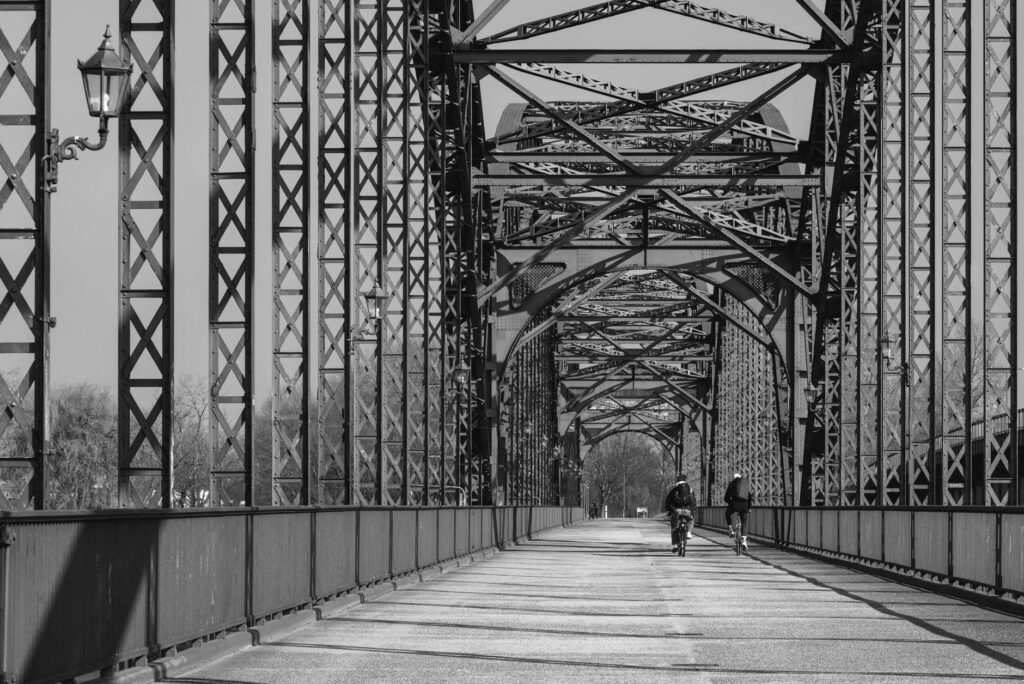
Cycling circulation in this area is an example of advanced urban engineering. Bridges over the Rhine feature dedicated segregated lanes for bicycles, and electronic signage provides real-time information on bike traffic conditions and weather. This section proves that cycle tourism is not only an activity for pristine nature, but also a tool for urban mobility and regional cohesion, allowing travelers to explore contemporary art museums, gothic cathedrals, and design centers without relying on combustion-engine vehicles.
The Dutch Delta: The Final Journey Toward the North Sea
In its final stretch, upon entering the Netherlands, the Rhine breaks down into a vast and complex river delta emptying into Rotterdam and the North Sea. Here, cycle tourism reaches its institutional zenith. The Netherlands is, by definition, the homeland of the bicycle, and EuroVelo 15 infrastructure integrates seamlessly into the national numbered route network (knooppunten).
Paths are impeccably paved, protected from wind and heavy traffic by dikes and canals. River navigation and cycling go hand in hand; combining pedaling stages with trips on river ferries crossing delta branches is standard practice. Arrival in Hoek van Holland, where the Rhine finally merges with the salty sea, offers a profound sense of personal accomplishment. The contrast between the harshness of alpine glaciers and the open immensity of the Dutch estuary encapsulates the grandeur of an itinerary traversing the European continent along its liquid spine.
Infrastructure, Planning, and Safety on EuroVelo 15
Embarking on the EuroVelo 15 route requires rigorous planning due to its length—approximately 1,320 kilometers from Andermatt to Rotterdam—and the diversity of regulations among the four countries it crosses. Although the surface is paved for over 90% of the route, stretches with compacted dirt roads exist, requiring mixed-tread or trekking tires.
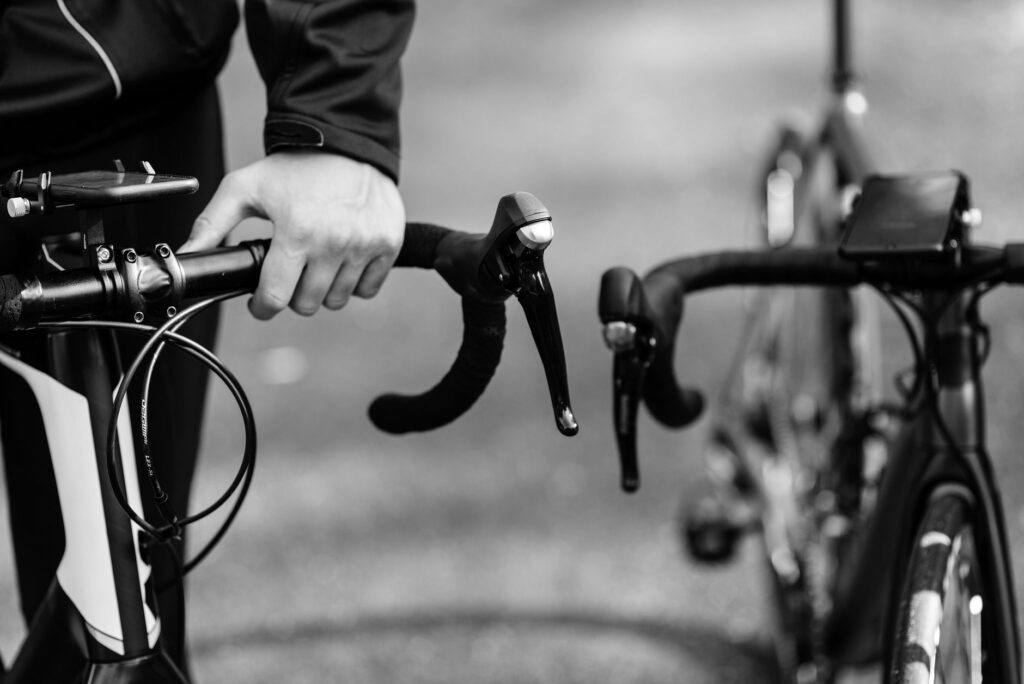
Signage is generally excellent, but utilizing updated GPS navigation applications and official maps provided by national tourism offices is recommended. In terms of safety, helmet use is mandatory in some regions for minors and highly recommended for all users, as are reflective elements and operating lights, given that the route shares some secondary urban sections with local traffic. Weather forecasts should be consulted daily, as crosswinds in the middle valley and sudden rains in alpine sections can significantly alter stage times.
Equipment and the Logistics of Slow Travel
The success of a long-distance cycle-touring journey depends directly on equipment optimization. The philosophy of slow travel dictates carrying only the strictly necessary items: breathable quick-drying technical clothing, a complete tool kit (spare tubes, multi-tool, chain breaker, and pump), high-capacity waterproof panniers, and an adequate hydration system.
Cycle tourism does not measure success by the speed of arrival at the destination, but by the depth with which the intermediate landscape is absorbed and the respect with which the territory is traversed.
Intermodality is another major logistical pillar of the route. Regional trains in Switzerland, Germany, France, and the Netherlands are adapted for bicycle transport, though reserving bicycle space on Long-Distance trains (such as German ICE or Eurocity trains) during the peak summer season is mandatory. Additionally, luggage transport companies operate along the main stages, allowing travelers to ride with a light backpack while main luggage is transferred from hotel to hotel.
Sustainability and Well-being: The Positive Impact of Cycle Tourism
Beyond physical performance and cultural discovery, EuroVelo 15 represents a paradigmatic model of sustainable tourism. By dispensing with motorized transport, travelers drastically reduce their carbon footprint, but the benefits extend far beyond mere environmental accounting. The leisurely pace of pedaling fosters digital detox, lowers cortisol levels, and stimulates mindfulness through direct interaction with natural elements.

Local economies in river valleys benefit from distributed, respectful tourism that supports proximity commerce, traditional agricultural markets, and family-run accommodations. This human exchange strengthens the social fabric of rural communities and ensures the preservation of scenic heritage for future generations.
Conclusion: The Legacy of a River in Motion
The Rhine Cycle Route is much more than a sum of paved kilometers alongside a watercourse. It is a living lesson in geography, history, and European cooperation. From the monumental solitude of Swiss glaciers to the bustling openness of the Dutch delta, every pedal stroke connects the traveler to the essence of a continent that has successfully transformed its natural borders into spaces of encounter and freedom.
Traveling by bicycle along the Rhine is accepting an invitation to patience, discovering that the true beauty of Europe is not found in its grand capitals, but in the small details emerging at the leisurely pace of the water.
Planning this adventure demands respect, consistency, and an open attitude toward the unexpected. At the end of the journey, when the wheels stop before the marine immensity of the North Sea, travelers understand that the true destination was never the final point on the map, but the internal transformation experienced along the banks of Europe’s great river.

