
Introduction to the Boreal Edge on Rails
Northern Europe guards secrets that only the slow movement of the railway can properly unveil. While modern highways prioritize straight lines and maximum speed, Norway’s railway system—particularly its northernmost stretch known as the Nordland Line—defies the continent’s most rugged topography to connect civilization with the edge of the Arctic. This journey, linking the historic city of Trondheim with the vibrant coastal town of Bodø, stands as one of the most honest and breathtaking travel experiences in the northern hemisphere. This is not merely a means of transportation, but an exercise in geographical contemplation where the traveler has a front-row seat to the radical transformation of the European landscape.
Spanning over seven hundred kilometers of single track, the train meanders between dark fjords, wind-swept plateaus, and valleys where human presence shrinks to isolated red wooden farms and fishing ports that seem frozen in time. The Nordland Line is also a masterpiece of human perseverance, its construction spanning decades, surviving the dark years of the Second World War and demanding titanic engineering solutions to conquer permafrost, steep gradients, and the rigors of a perpetual winter.
Departure from Trondheim: Medieval History and Architecture
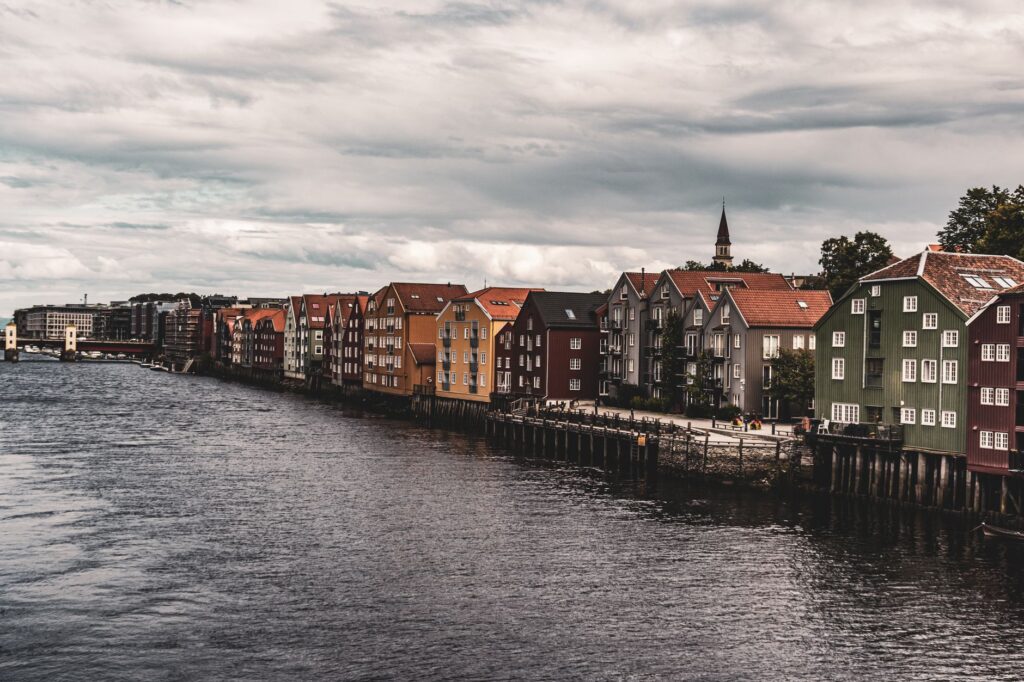
The journey begins in Trondheim, Norway’s third most populous city yet possessing a human scale that invites pause. Before boarding the train, walking through the Bakklandet district is essential, flanked by old wooden houses resting on piles along the Nidelva River. The wooden Bybroen bridge offers a perfect perspective of traditional Norwegian architecture, while the imposing Nidaros Cathedral, the northernmost Gothic sanctuary in the world, recalls the city’s medieval past as a destination for continental pilgrimage.
Trondheim’s central station, perfectly integrated into the national network of state operator Vy, marks the physical starting point. Leaving the platforms, the train initially rolls through fertile agricultural land in the Stjørdal valley, skirting the Trondheim Fjord. In this first stretch, the atmosphere is tranquil; fir forests and birch groves alternate with small rural communities where traditional turf roofs continue to fulfill their insulating function. It is the necessary prelude before nature hardens and the horizon opens toward alpine immensity.
Conquering the Saltfjellet Plateau
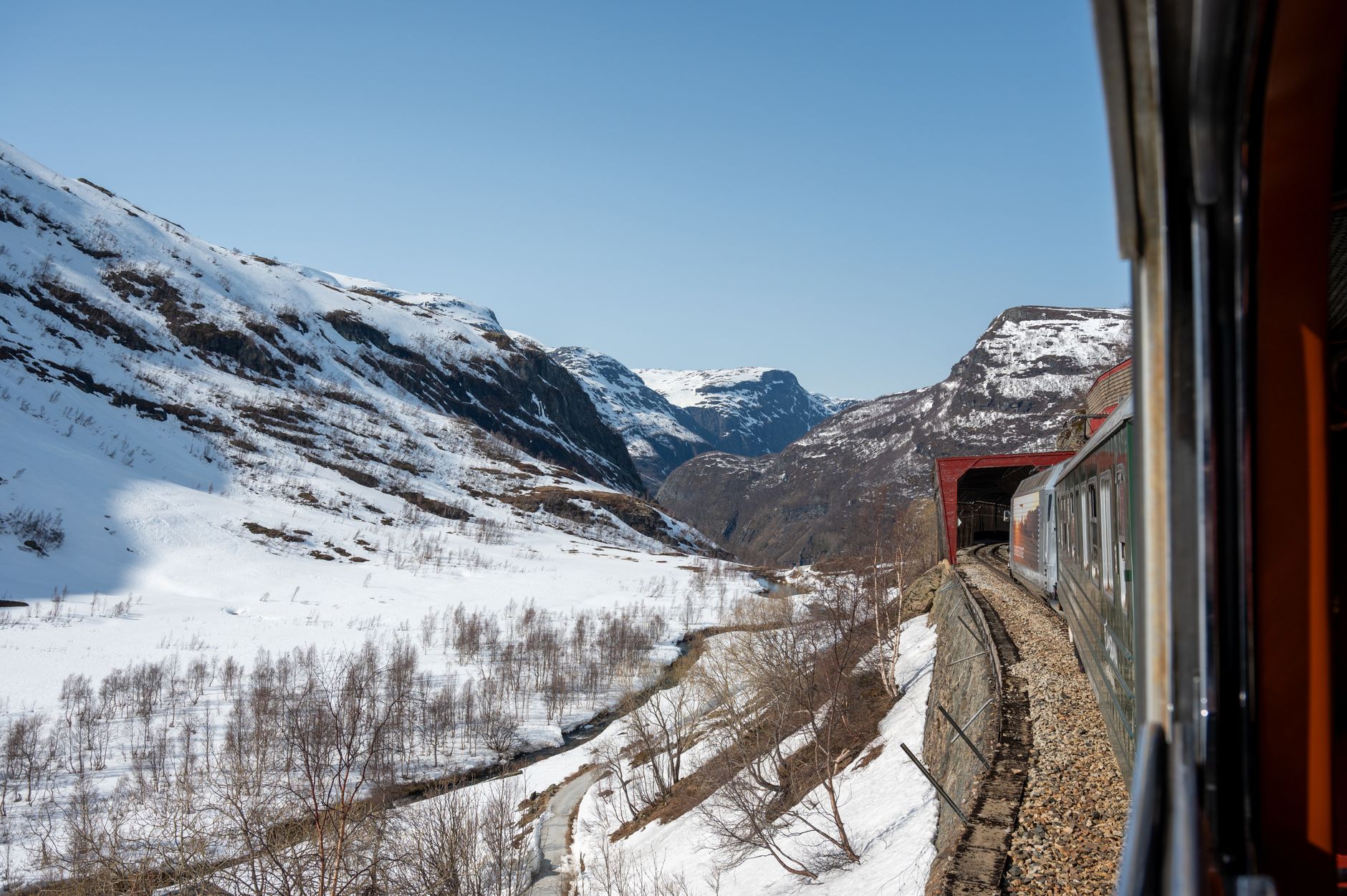
As the convoy pushes north, crossing latitude 66°33′, the landscape shifts dramatically. Trees progressively disappear, choked by altitude and low temperatures, giving way to the open tundra of the Saltfjellet plateau. This desolate and fascinating highland forms the emotional and geographical heart of the route, a white desert in winter or an expanse of reddish mosses and glacial lakes during the summer months.
Crossing Saltfjellet by train conveys a profound sense of respectful isolation. The tracks glide across terrain where the wind blows unobstructed and weather can shift in minutes. Here lies the landmark marking official entry into the Arctic Circle, a stone monument passengers observe from windows as the train slows slightly. At this point, light acquires unreal qualities: during winter, darkness is broken by the flickering glow of northern lights, while in summer the midnight sun bathes the plateau in a golden, low-slung tone stretching into dawn.
Engineering and Resilience in Extreme Terrain
Building the Nordland Line was not merely a technical challenge, but a geopolitical and social feat. Begun in the late 19th century, northward track extension suffered chronic delays, accelerating tragically during the German occupation in World War II, when thousands of prisoners of war were forced into inhuman labor conditions. Today, vestiges of that era coexist with modern maintenance infrastructure guaranteeing line operability 365 days a year.

Norwegian engineers designed specific systems to combat accumulated snow and avalanches. Snowsheds, powerful rotary plows coupled to rescue locomotives, and satellite early-warning systems form the invisible apparatus allowing trains to run with British punctuality amid Arctic storms. Every iron bridge crossing a raging torrent and every trench carved into living rock stand as tangible testimony to the stubbornness of keeping a nation united across complex coastal orography.
Stations with Soul: Stops on the Journey North
Although the entire trip can be completed without transfers in just over ten hours, stopping at intermediate stations significantly enriches the travel experience. Lierne and Grong provide access to the region’s first major salmon rivers, famed for water purity and sustainable sport-fishing traditions practiced by local communities.
Further north, Mo i Rana station functions as the industrial and cultural engine of the Helgeland region. Located at the inner tip of the Ranfjorden, this town combines a steel-making past with a vibrant contemporary arts scene and serves as the gateway to Saltfjellet-Svartisen National Park, home to Norway’s second-largest glacier. Observing Svartisen’s bluish ice—accessible via a short boat crossing and moderate hike from the main road—reveals the millennial dynamics of icy masses continuing to carve surrounding valleys.
The Sami Culture: Guardians of the Boreal Territory
Traversing northern Norway without acknowledging the Sami people remains incomplete. Reindeer herders have roamed these territories since time immemorial, adapting their nomadic lifestyle to animal migration cycles between interior zones and the coast. From train windows, herds grazing on Saltfjellet and Saltdal plains under watchful breeder supervision are frequently sighted.
Cultural influence manifests in local gastronomy available in route communities, based on reindeer meat, fresh North Atlantic fish, and wild berries like cloudberries (molte), locally known as Arctic gold. Several local cooperatives offer respectful experiences exploring duodji, traditional Sami craftsmanship rooted in wood, leather, and antler work, reflecting a philosophy of absolute utilization of natural resources permeating life at these latitudes.
«The journey on the Nordland train measures its value not by the speed of reaching the destination, but by the landscape’s capacity to slow human thought.»
Fauske and Bridges Across Atlantic Fjords
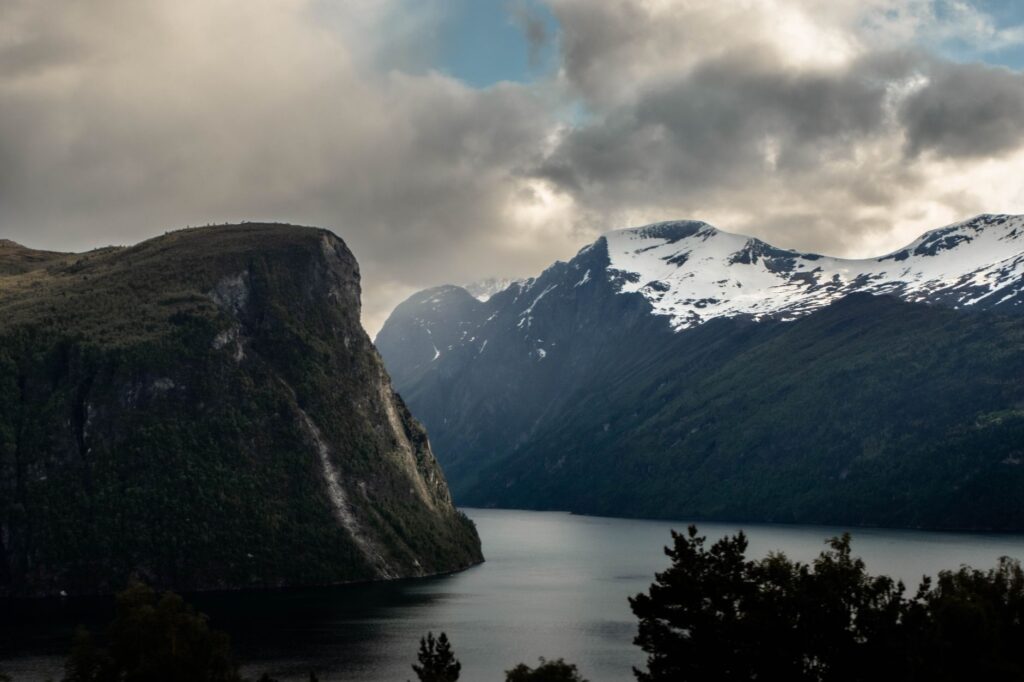
As the train descends from the plateau toward the Norwegian coast, alpine scenery yields to a marine labyrinth where saltwater penetrates deeply into the land. Metal bridges and viaducts follow in rapid succession, offering dizzying perspectives over narrows and tidal currents churning water between islands.
Near Fauske, railway tracks run parallel to the Skjerstad Fjord, famed for Saltstraumen, considered the world’s strongest tidal current. Although the train does not cross the strait directly—located a few kilometers away by road from Bodø—passengers perceive open ocean proximity in air humidity, seabird presence like gulls and puffins, and subtle chromatic palette shifts where rock grays compete with intense Norwegian Sea blues.
Bodø: The Final Port Under Northern Light
The journey concludes at Bodø station, situated meters from the harbor where ferries depart for the Lofoten Islands. Bodø is a modern city, rebuilt after World War II bombings, which successfully reinvented itself as a European Capital of Culture and epicenter for Arctic adventure.
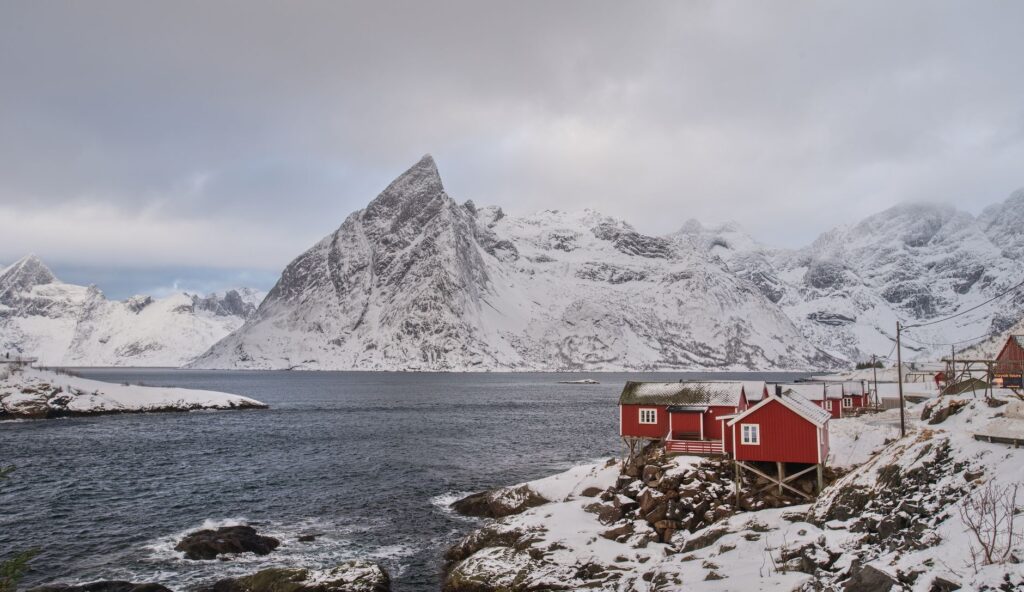
The port district bustles with fishing boats and fast catamarans connecting the mainland to remote archipelagos. Nearby, Stormen cultural center offers bold wood and glass architecture contrasting harmoniously with harsh marine surroundings. Walking along the breakwater at dusk, with jagged Lofoten peaks silhouetted on the western horizon like a sawtooth wall, forms the perfect culmination for a railway journey challenging Europe’s geographical limits.
Practical Information for the Rail Traveler
Planning the traverse across the Nordland Line requires attending to essential logistical recommendations ensuring an optimal experience. The full Trondheim-Bodø route operates with two daily passenger frequencies managed by state-licensed operator SJ Norge, including a daytime service and a sleeper train equipped with comfortable berths.
- Tickets and reservations: Booking seats in advance is highly recommended, especially during summer months (June to August) and peak northern lights viewing periods (November to February). Tickets go on sale ninety days ahead via official Vy or SJ Norge portals.
- Weather and equipment: Arctic weather is volatile. Layered clothing utilizing thermal and windproof materials is advised, even in summer, as mountain stop temperatures can drop abruptly.
- Connectivity and onboard services: Trains feature a dining car with hot and light meal options, seat power outlets, and free Wi-Fi, though data signals may temporarily drop in remote plateau stretches.
- Luggage: No strict weight restrictions apply, but traveling with manageable bags is appreciated due to overhead rack space in passenger carriages.
«Arriving in Bodø in silence, after crossing the Arctic Circle on rails, leaves the enduring sensation of having touched the very edge of the known world.»
Epilogue: The Permanence of Slow Travel
In an era obsessed with immediacy and mass air travel, the Trondheim-Bodø railway reclaims the value of the journey as a substantial part of the tourism experience. Observing the slow mutation of boreal forests into frozen tundras, listening to the steady rumble of diesel engines over ties, and sharing space with locals using trains as daily links to the outside world provides an irreplaceable human dimension.
This report confirms that great contemporary journeys do not necessarily require crossing distant oceans, but rather choosing appropriate rhythms. The Nordland train does not merely connect two points on a Norwegian map; it builds a lasting bridge between the traveler’s curiosity and the untouched majesty of the deep north.