


Introduction to the Myth of Speed on Rails
Few symbols embody the modernity and discipline of a nation quite as precisely as the Shinkansen. Since its inauguration in October 1964, coinciding with the Tokyo Olympic Games, this high-speed train system not only redefined the concept of geographical distance but also established a global paradigm in civil engineering and logistical management. What began as a bold bet to connect the capital with Osaka via the Tokaido line has evolved into an arterial network that anchors the main islands of the Japanese archipelago.
For the contemporary traveler, boarding a Shinkansen represents an experience that shifts movement beyond mere transit; it is an immersion in a ritual where time is compressed and precision becomes an architectural norm. Over the decades, the network has evolved from the iconic Series 0 models, with their characteristic fighter-jet-inspired noses, to today’s aerodynamic trains capable of exceeding 300 kilometers per hour without passengers experiencing disruptive vibrations or interruptions to their comfort.
The Birth of a Giant: History and Vision of the Tokaido Line
The genesis of the Shinkansen was not without financial and technical skepticism. In the 1950s, Japan’s traditional narrow-gauge railways suffered from chronic saturation, unable to absorb the country’s postwar demographic and industrial growth. The decision to build a standard-gauge network (1,435 mm), completely separated from the existing system and free of level crossings, was a visionary undertaking led by engineers such as Hideo Shima and Shinji Sogo, then-president of the Japanese National Railways (JNR).

The construction of the Tokaido line required excavating numerous tunnels and erecting extensive viaducts to keep the alignment as straight and level as possible. This titanic effort not only proved the technical viability of rapid land transport, but also laid the groundwork for the Japanese economic miracle by unifying the country’s primary industrial and cultural centers. The resounding success of the project dispelled any initial doubt and demonstrated that massive investment in high-quality public infrastructure constitutes an indispensable engine for long-term development.
Aerodynamic Engineering and the Challenge of Urban Noise
As commercial speeds increased, railway engineers faced one of the most complex physical phenomena known as the tunnel boom. When a high-speed train enters a narrow tunnel at over 250 kilometers per hour, it compresses the air ahead of it, generating a shock wave that produces a disruptive sonic blast upon exiting into the open air.
To mitigate this inconvenience, train design evolved dramatically. Inspired by nature, engineers adopted biomimetic solutions. The nose cone of the Series 500 Shinkansen and subsequent versions was designed by emulating the profile of the kingfisher’s beak, a bird that plunges into water at high speed with virtually no splash. These innovations reduced aerodynamic drag, lowered energy consumption, and drastically minimized acoustic impact in densely populated areas.
Safety as Dogma: Zero Fatalities
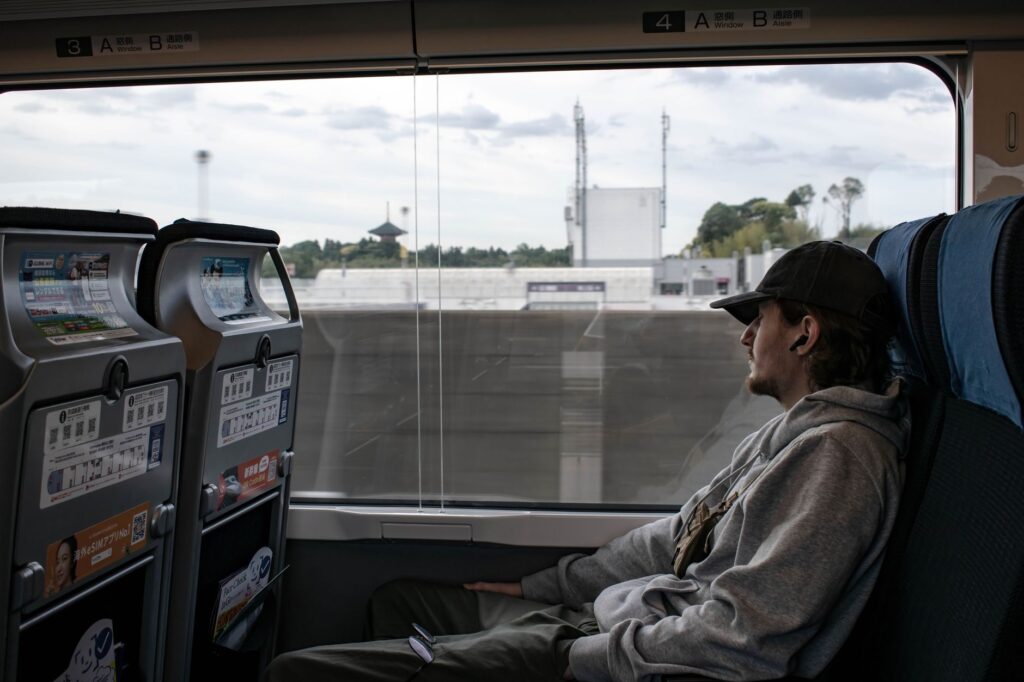
One of the most extraordinary and studied aspects of the Shinkansen is its flawless safety record. In over half a century of intensive commercial operations, transporting billions of passengers, there has not been a single fatality or serious injury resulting from derailments or collisions.
This exceptional achievement is rooted in a holistic approach combining cutting-edge technology with rigorous human protocols. Among them is the Automatic Train Control (ATC) system, which eliminates sole reliance on the driver by regulating speed through continuous electronic signals. Additionally, Japan features the UrEDAS (Urgent Earthquake Detection and Alarm System), designed to detect primary seismic waves (P-waves) before more destructive secondary waves arrive, automatically triggering emergency braking within seconds.
Safety on the Shinkansen is not the result of chance, but of an industrial culture where zero error is not a rhetorical aspiration, but a daily operational requirement.
Pinpoint Punctuality: The Choreography of the Platform
To the foreign visitor, the punctuality of the Shinkansen often generates a mix of astonishment and disbelief. Trains operate with average delays measured in seconds per year. This precision is no accident; it is the product of a minutely rehearsed choreography involving both automated systems and ground personnel.
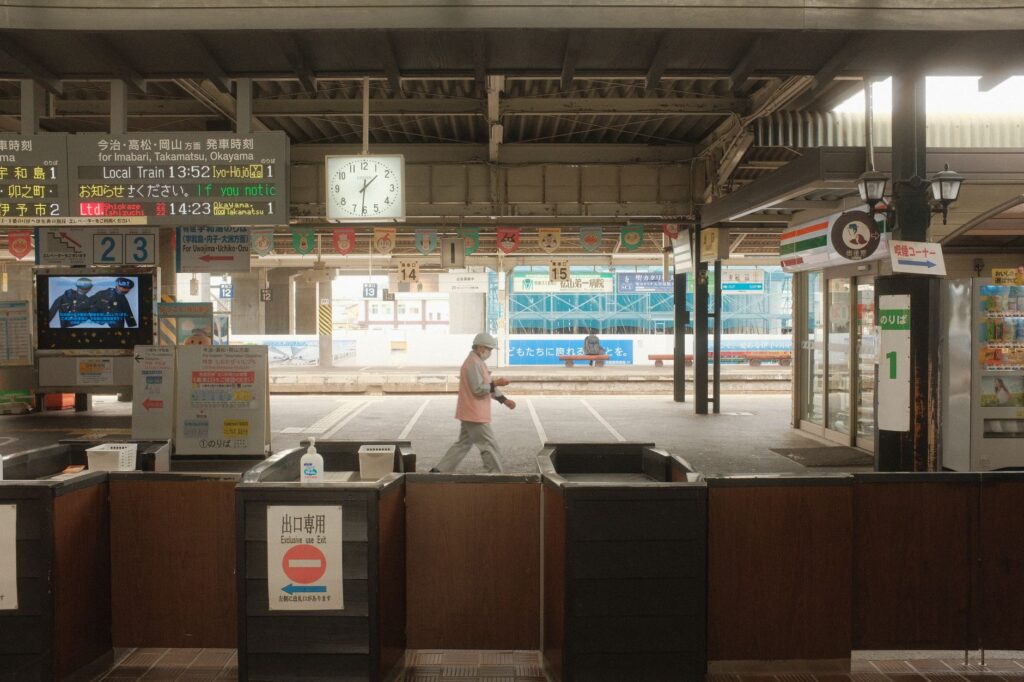
At major stations like Tokyo or Shin-Osaka, platform dwell times are strictly regulated. Once the train stops with millimeter precision against floor markers, the doors open, passengers alight and board fluidly, and cleaning crews execute an express intervention known as the ‘seven-minute miracle,’ leaving the interior pristine before the next departure. This operational efficiency maximizes line capacity, allowing entire formations to run at intervals of just a few minutes during peak hours.
Territorial Impact: Decentralization and Regional Cohesion
The rollout of various Shinkansen lines—such as the Tohoku, Joetsu, Hokuriku, and Kyushu networks—has profoundly transformed Japan’s human geography. Traditionally, the Tokyo megalopolis concentrated the vast majority of economic and cultural activity. However, high-speed rail has shortened relative distances, allowing formerly peripheral cities like Kanazawa, Sendai, and Fukuoka to integrate into the country’s dynamic axis.

This phenomenon has altered residential and tourism patterns. Interior regions and coastal prefectures have found in domestic and international tourism a lever for economic revitalization, attracting visitors seeking authentic experiences away from the urban bustle of major metropolises. At the same time, it has facilitated corporate and academic commuting, fostering a more balanced and accessible model of territorial development.
The Human Factor: Drivers, Controllers, and Service Culture
Behind the high technology and complex IT systems lies a robust culture of human labor. Becoming a Shinkansen driver requires passing an extremely rigorous selection process and years of training in advanced simulators, complemented by solid experience on conventional trains.
During operation, drivers and cabin crew consistently practice *shisa kanko*, a pointing-and-calling method that involves pointing at control instruments and loudly announcing the status of indicators. This simple practice significantly reduces cognitive errors stemming from fatigue or routine. Furthermore, onboard passenger service is governed by traditional principles of Japanese hospitality (*omotenashi*), where discretion, kindness, and absolute respect for the traveler’s space are unwavering hallmarks.

Practical Guide for Traveling on the High-Speed Network
Planning a trip on the Shinkansen requires understanding certain operational procedures to optimize the experience and avoid unnecessary setbacks:
- Seat Types: Most trains offer two primary classes: the standard car (*Futsu-sha*) and the Green car (*Green-cha*), equivalent to a more spacious and quiet first class. On select high-end lines, Gran Class is also available, offering catering service and dedicated attendants.
- Ticket Reservations: Although tickets can be purchased on the day of travel, advance reservations are highly recommended, especially during key Japanese holiday periods such as Golden Week, Obon, or New Year.
- Oversized Baggage: Since May 2020, specific regulations have been implemented for oversized luggage (items whose total dimensions exceed 160 cm up to 250 cm). Passengers carrying such items must reserve seats with dedicated large-luggage storage space located at the back of designated cars.
- Rail Passes: While the traditional Japan Rail Pass (JR Pass) has undergone tariff and usage adjustments, it remains a useful planning tool for complex itineraries combining multiple long-distance journeys. However, preliminary calculations should be made to verify whether the investment outweighs purchasing individual tickets.
- Onboard Dining (*Ekiben*): One of the most endearing traditions of rail travel in Japan is purchasing an *ekiben* (station bento) before boarding. These packaged meals reflect the local gastronomy of each region and are designed to be enjoyed comfortably at your seat.
The true luxury of the Shinkansen lies not in superficial ornamentation, but in the seamless synergy between punctuality, safety, and respect for the traveler’s time.
Looking to the Future: The Maglev Era and New Challenges
While the current network continues to optimize its services with the gradual introduction of new models such as the N700S Series, the horizon of Japanese rail transport is already experimenting with the next great technological revolution: the superconducting magnetic levitation train, or Chuo Shinkansen Maglev.
Currently in advanced development, this line will link Tokyo and Nagoya (and eventually Osaka) using superconducting maglev technology, enabling commercial speeds of up to 505 kilometers per hour and reducing travel time between the two major metropolises to just over forty minutes. This monumental project reaffirms Japan’s pioneering vocation in sustainable mobility, demonstrating that rail remains the quintessential backbone transport mode to face the climate and demographic challenges of the 21st century. Ultimately, the Shinkansen transcends its status as a means of locomotion to stand as a living testament to what a society can achieve when it combines technical rigor with a humanist vision of progress.


