The Renaissance of Rail Travel Across the European Continent
For decades, low-cost aviation dictated the rules of continental movement in Europe. However, a convergence of environmental, regulatory, and comfort factors has driven an unprecedented railway renaissance. The train has ceased to be a mere means of transport and has become a conscious travel experience, where the journey itself recovers its intrinsic value. Public administrations and private operators now compete to offer a mesh network connecting capitals and peripheral regions based on energy efficiency criteria.
Understanding the Fare Framework and Advance Booking
Unlike airline ticketing, European railway pricing responds to complex agreements among national and international operators. Understanding sale opening windows, which typically range from 60 to 120 days before departure, is essential to secure promotional fares. Advance planning is the only foolproof method to avoid costly last-minute prices, especially along high-demand high-speed corridors linking Spain, France, Germany, and Italy.
The Strategic Role of Global and Partial Rail Passes
For itineraries involving multiple stops and border crossings, flexible passes remain a tool worth considering. Nonetheless, it is essential to calculate the cost per journey before purchasing any global pass, as mandatory seat reservation supplements on high-speed trains can significantly increase the final travel budget.
How Mandatory Seat Reservations Work
Numerous cross-border services require specific seat reservations in addition to the main transport ticket. Ignoring this requirement can result in denied boarding, even with a valid pass in hand. It is advisable to review the particular conditions of each operating company prior to departure.

Reclaiming the Tracks: The Surge of Night Trains
The segment experiencing the most radical transformation is overnight travel. State operators from various countries have revitalized long-distance connections, allowing passengers to sleep in one city and wake up in the heart of another without losing useful tourism or business days. Sleeper trains optimize travel time while drastically reducing the carbon footprint compared to equivalent air shuttles.
Types of Onboard Accommodation
- Reclining seats: the most economical option, recommended only for short journeys or travelers with high fatigue tolerance.
- Couchettes or shared berths: compartments with four or six beds, ideal for families or groups, including basic bed linen.
- Private cabins or tourist sleepers: maximum privacy, integrated washbasin, and breakfast included in most superior categories.
Core Corridors and Key Cross-Border Connections
The European rail map is structured around backbone axes that facilitate mobility without abrupt disruptions. The connection between the Iberian Peninsula and the rest of Europe has improved substantially with the interoperability of high-speed trains across the Catalan border, allowing passengers to reach Paris or Lyon without complex transfers at the demarcation line.
The Central and Alpine Corridor
In the center of the continent, base tunnels in the Alps have drastically shortened travel times between northern Europe and the Italian peninsula. The alpine crossing offers some of the most memorable views on the continent from the comfort of the dining car.
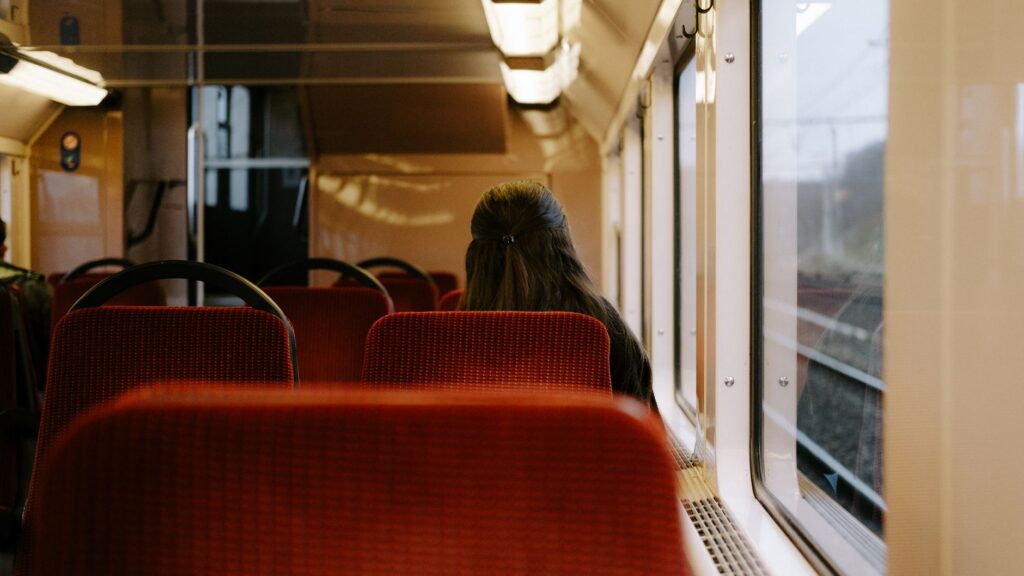
The train is not merely transport infrastructure, but the guiding thread uniting Europe’s cultural and landscape diversity at a human and sustainable pace.
Logistical Planning in Major Railway Hubs
Major European stations—such as Berlin Hauptbahnhof, Zurich HB, or Paris Gare de Lyon—operate as autonomous cities. Mastering connection times in these terminals prevents the loss of critical transfers, especially when combining different national operators.
Practical Tips for Transit in Complex Stations
- Check departure boards in advance, as high-speed trains usually close doors two minutes before scheduled departure.
- Locate automated luggage lockers to make the most of long layovers without carrying heavy bags.
- Verify the exact location of departure platforms, especially in stations with multiple underground levels.
Luggage, Accessibility, and Passenger Rights
Unlike air transport, the vast majority of European trains do not enforce strict weight or volume restrictions on carry-on luggage, provided the passenger can handle it independently. Traveler rights in case of delay or cancellation are protected by strict EU regulations, which obligate operators to offer partial or full refunds, as well as on-ground assistance depending on accumulated delay minutes.
Practical Information for the Rail Traveler
Digitalization has simplified document management. Today, most tickets are stored on mobile devices, though keeping a screenshot is recommended in case of connectivity failures in rural areas or long tunnels. Onboard connectivity via free Wi-Fi is expanding progressively, although performance varies depending on the terrain’s topography and terrestrial mobile network coverage density.
Conclusion and Future Outlook
Traveling by train through Europe requires curiosity, planning, and flexibility. Far from the impersonal homogeneity of peripheral airports, the railway network invites travelers to understand continental geography through its natural transitions, establishing itself as the preferred choice for those who value both the destination and the journey.