
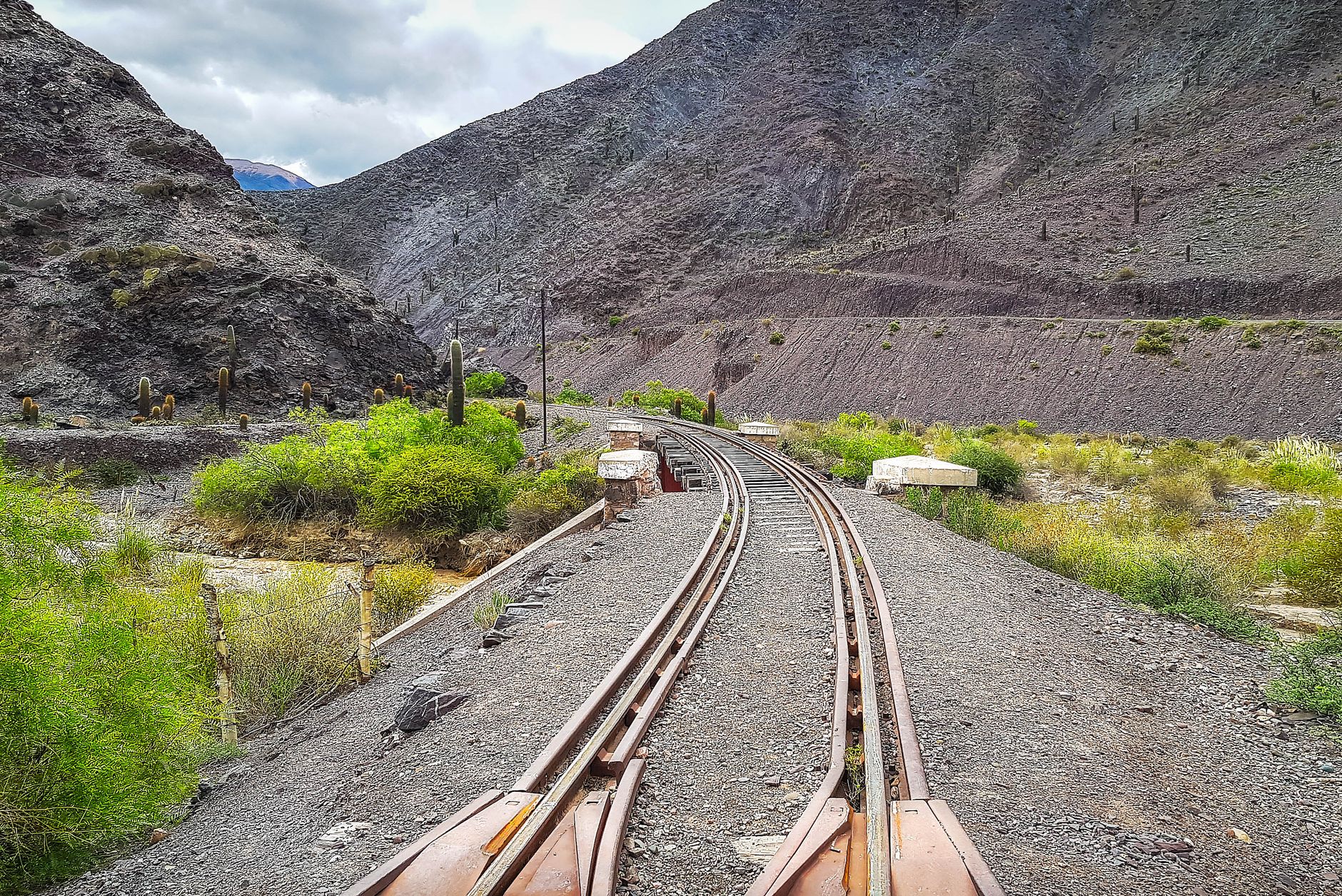

In the vast, ochre expanse of the Argentine Puna, where the air grows thin and the horizon seems to curve under the weight of the Andes, beats one of the most extraordinary engineering feats of the 20th century. The C-14 branch of the General Belgrano Railway, globally known as the Train to the Clouds (Tren a las Nubes), is not merely a transport infrastructure; it is a testament to human will defying the laws of gravity and the hostility of the terrain. Inaugurated after decades of titanic effort, this iron path snakes through the Quebrada del Toro, overcoming impossible gradients through an engineering system that famously eschewed traditional rack-and-pinion mechanisms.
Understanding the Train to the Clouds requires looking beyond the purely tourist perspective to delve into the logic of transcontinental connectivity. Originally conceived to link Northwest Argentina with the Chilean port of Antofagasta, this railway was the response to a logistical need for regional integration and mineral export. Today, traversing its tracks is like attending a masterclass in railway architecture, where every viaduct, tunnel, and zigzag tells the story of thousands of workers and technicians who, under the direction of engineer Richard Maury, transformed an impossible dream into a reality of steel and stone.
The Legacy of Richard Maury: A Dream of Steel in the Puna
The history of the C-14 branch is inextricably linked to Richard Fontaine Maury, an American-born engineer who became a naturalized Argentine citizen and took on the challenge of surveying the line in 1921. Maury was no conventional technician; he possessed a romantic yet rigorous vision of engineering. His premise was revolutionary for the time: to build a simple adhesion track, without the use of cogwheels, despite the extreme slopes. This required an ingenious layout design that utilized the mountain slopes organically.
For years, Maury and his team lived in camps at altitudes exceeding 3,000 meters, facing sub-zero temperatures and persistent altitude sickness. The construction was not just a technical challenge but a human epic. It is estimated that at the height of activity, more than 1,300 workers were employed simultaneously across different fronts. Maury’s precision was such that it is said the calculations for curves and levels were performed with an accuracy that still amazes specialists today, even in the age of digital tools.
«The mountain is not an obstacle; it is the board where we write progress with lines of steel,» Maury used to tell his collaborators during the freezing nights in the Puna camps.
The engineer did not only concern himself with the tracks; he designed stations, housing for personnel, and water catchment systems in arid environments. His legacy is now a national historic monument in Argentina, and his tomb, located in the small town of Campo Quijano, overlooks the mountains he managed to conquer with his ingenuity.
The Architecture of the Ascent: Zigzags and Loops Without Cogs
One of the most fascinating aspects of the Train to the Clouds is how it gains altitude. By rejecting the rack system for reasons of cost and maintenance, Maury turned to geometric solutions. The layout uses zigzags and loops (rulos) to soften the gradient. In the zigzags, the train moves forward in one direction, enters a dead-end track, and then reverses onto another track that climbs at an inverse angle, allowing it to gain meters of altitude in confined spaces.
The loops are perhaps the most aesthetic part of the C-14’s engineering. The train describes a complete circle over itself, gaining height while crossing its own path via bridges and tunnels. This technique ensures that the locomotive never exceeds a 2.5% gradient, a standard that guarantees safety and traction in variable weather conditions. The harmony between the iron of the rails and the rock of the mountain is total, minimizing the visual impact on the desert landscape.
The total infrastructure of the branch includes 21 tunnels, 29 bridges, 13 viaducts, and 2 loops. Each of these pieces was assembled with precision logistics, transporting heavy materials from Salta and Buenos Aires into the heart of the Andes. The absence of modern welding in the original sections highlights the value of the rivets and the manual assembly engineering that has withstood nearly a century of seismic and thermal activity.
The La Polvorilla Viaduct: The Peak of Argentine Engineering
If there is one icon that defines this report, it is the La Polvorilla Viaduct. Located at over 4,200 meters above sea level, it is a steel structure 224 meters long and 63 meters high. Its curved design is not capricious; it responds to the need to absorb the extreme thermal expansions of the Puna and the dynamics of the train as it enters the final station of the current tourist route.
La Polvorilla is a masterpiece of metallurgy. It was built in the workshops of the Italian company Ansaldo and assembled on-site like a giant puzzle. Most surprisingly, the structure does not rest on traditional rigid foundations but on supports that allow for slight movement, essential in a zone of high tectonic activity. Watching the train come to a halt over this steel abyss is an experience that challenges the perception of human scale against nature.
From a logistical standpoint, La Polvorilla represented the greatest bottleneck of the project. Its completion in 1932 marked the technical success of the endeavor, although the full line to the Chilean border would not be formally inaugurated until 1948. Today, it is the most photographed point and the ultimate symbol of Argentine technological sovereignty in the last century.
Logistics and Connectivity: From Minerals to Regional Integration
Although we primarily associate it with tourism today, the origin of the C-14 branch was strictly logistical and geopolitical. In the early 20th century, Northwest Argentina (NOA) needed an efficient outlet for its agricultural products and, above all, for its growing mineral production. The connection with the port of Antofagasta opened doors to the Pacific market, reducing maritime transport by weeks compared to the Strait of Magellan or the Panama Canal.
- Mineral Transport: The branch was key for moving borax, lithium, and copper from the Puna mines.
- Social Integration: Stations became hubs of life for isolated indigenous and criollo communities.
- Geopolitics: It consolidated the presence of the Argentine state in hard-to-access border areas.
- Supply: The train carried water, food, and fuel to mining towns that lacked reliable land routes.
The decline of the Argentine railway system in the 1990s deeply affected the branch, reducing its cargo use. However, the strategic importance of the bioceanic corridor has resurfaced in recent years with the lithium mining boom. The C-14 is once again seen not just as a historical relic, but as a vital artery for 21st-century economic development in the Lithium Triangle.
Landscapes of Lithium and Salt: The Geology of the C-14 Branch
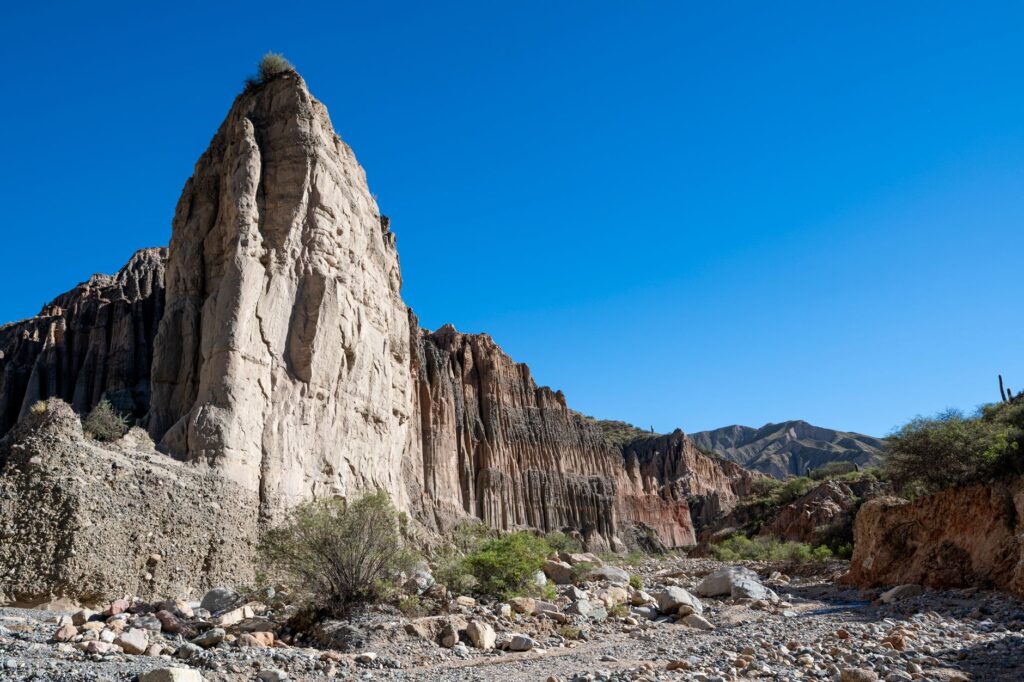
The train’s journey is also a voyage through Earth’s geological history. Leaving the city of Salta at 1,187 meters, the landscape changes drastically from mountain rainforest (Yungas) to high-altitude desert. The Quebrada del Toro displays vibrant geological strata—reds, greens, and yellows—indicating the presence of various minerals oxidized over millions of years.
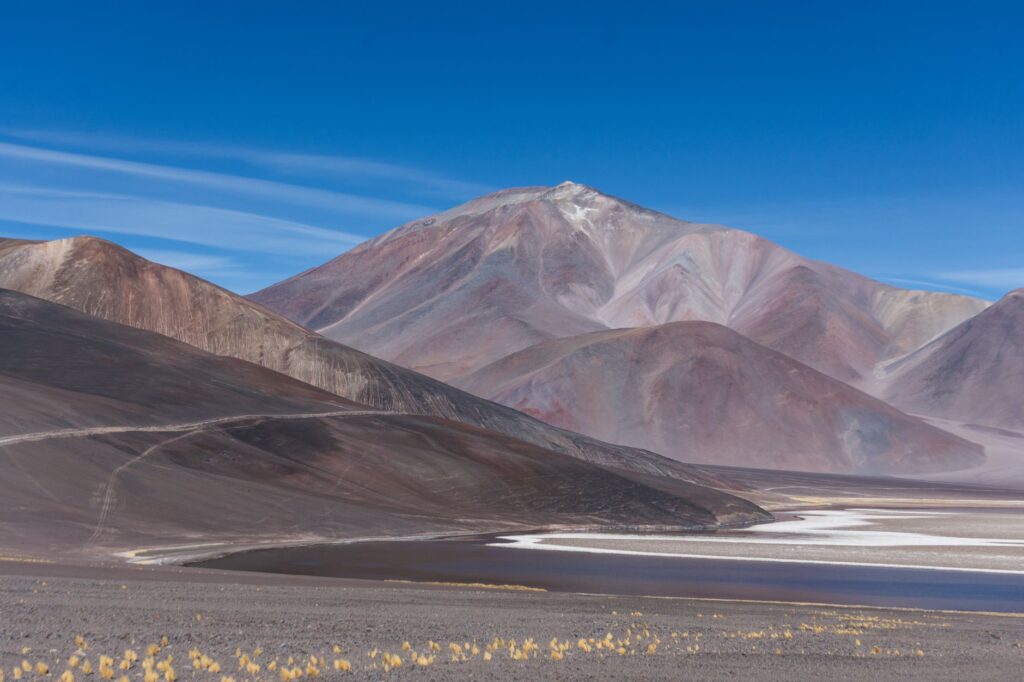
As altitude is gained, vegetation gives way to cardones (giant cacti) and, eventually, the Puna steppe. Here, the landscape is dominated by salt flats and dormant volcanoes. The purity of the air allows for visibility of dozens of kilometers, creating an atmosphere of unreality. The train crosses areas where the ground glitters with salinity, reminding us that this region was, eons ago, a seabed elevated by the movement of tectonic plates.
This extreme environment imposes constant logistical challenges. The tracks must be cleared of sand blown by Puna winds and protected against rare but violent summer storms that can cause mudslides (volcanes). Maintaining the track is a heroic task performed by railway crews, heirs to the craft of the original builders.
The Human Factor: The Stations Time Could Not Erase
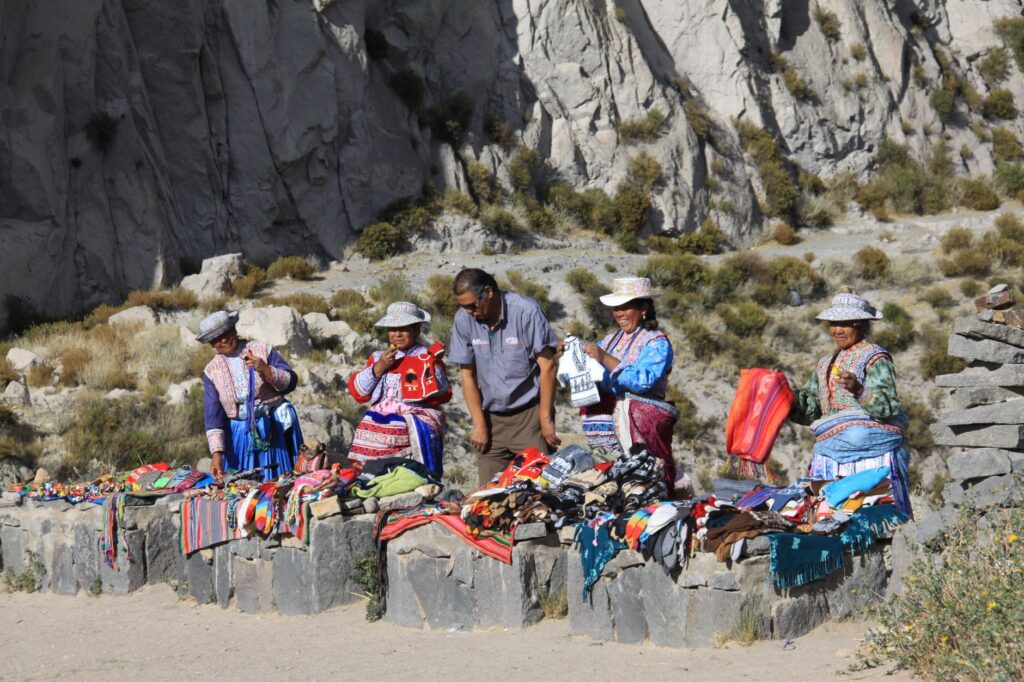
Beyond the steel, the Train to the Clouds is about the people of the Puna. Stations like San Antonio de los Cobres, Gobernador Solá, or Puerta de Tastil are meeting points where Andean culture manifests in its most authentic form. In San Antonio de los Cobres, the most important town on the route at 3,775 meters, the arrival of the train remains an event that mobilizes the community.
Local artisans offer llama and alpaca wool textiles, silverwork, and typical foods like Salteña empanadas or goat cheese. There is a deep symbiosis between the railway and the local economy. For many Puna inhabitants, the train was historically the only link to the outside world, and that gratitude is felt in the hospitality with which they receive travelers.
«The train brought the world to us, but it also allowed us to show the world who we are,» says a textile vendor at the San Antonio station, as the locomotive’s whistle echoes through the valley.
Preserving these traditions is fundamental for sustainable tourism in the region. An editorial report cannot ignore that behind the technical marvel, there is a social fabric that has resisted oblivion thanks to the resilience of the railway.
Practical Guide
For those wishing to experience this engineering marvel, rigorous planning is essential due to the extreme altitude and climate conditions. The current service combines a road segment and a rail segment, optimizing the logistical experience for the visitor.
Logistics and Reservations
The trip usually starts in the city of Salta. It is recommended to book at least two months in advance, especially during high season (July and January). The standard package includes bus transfer from Salta to San Antonio de los Cobres, with photo stops at key points like the Toro Viaduct and the Tastil archaeological site, before boarding the train to the La Polvorilla Viaduct.

Health and Acclimatization
Soroche or altitude sickness is a real factor. It is advised to drink plenty of water, avoid heavy meals the day before, and consume coca tea, a very effective ancient natural remedy. Most services have oxygen tanks and medical staff on board to assist those feeling the effects of the altitude.
Climate and Clothing
The Puna is characterized by extreme thermal amplitude. Even in summer, temperatures can drop below 0°C (32°F) at dawn and exceed 25°C (77°F) at noon with very strong solar radiation. It is essential to dress in layers, use high-factor sunscreen, a hat, and UV-protection sunglasses.
The Echo of Metal in the Immensity
At the end of the journey, as the sun begins to tint the Andean peaks violet, one realizes that the Train to the Clouds is much more than a tourist attraction. It is a monument to persistence. In a world dominated by digital immediacy, this iron colossus reminds us that great works require time, sacrifice, and a vision that transcends generations.
The silence that follows the train’s passage in the immensity of the Puna is a silence inhabited by history. Every rivet of the viaduct and every curve of the layout are echoes of an era when progress was measured in kilometers of track conquered from the mountain. The Train to the Clouds remains there, defying the wind and time, as an eternal bridge between the sky and the Argentine earth.


