Contemporary summer is almost automatically associated with the bustle of the coast, the feverish search for a strip of sand, and mass tourism that saturates the Mediterranean littoral. However, in the interior of Catalonia, the province of Lleida traces an alternative geography where heat yields to high-altitude breezes, large urban centers fade away, and time recovers its natural pulse. From the limestone peaks of Aigüestortes i Estany de Sant Maurici National Park to the orchards of Segrià and the Romanesque stone of the Boí Valley, this territory offers a journey that is both demanding and restful, designed for those who understand travel not as a checklist of sights, but as a deep immersion in the landscape.
Far from conventional circuits, the Lleida region combines rigorously protected biodiversity with an architectural heritage that testifies centuries of border life, isolation, and Pyrenean commerce. Traversing these districts demands attention and respect for an environment that does not surrender immediately, but reveals itself step by step, among gorges carved by rushing rivers and monastic silences. This report addresses the keys to a different summer, where pause, material culture, and the memory of the territory become the true protagonists of the route.
The geography of water and high Pyrenean peaks
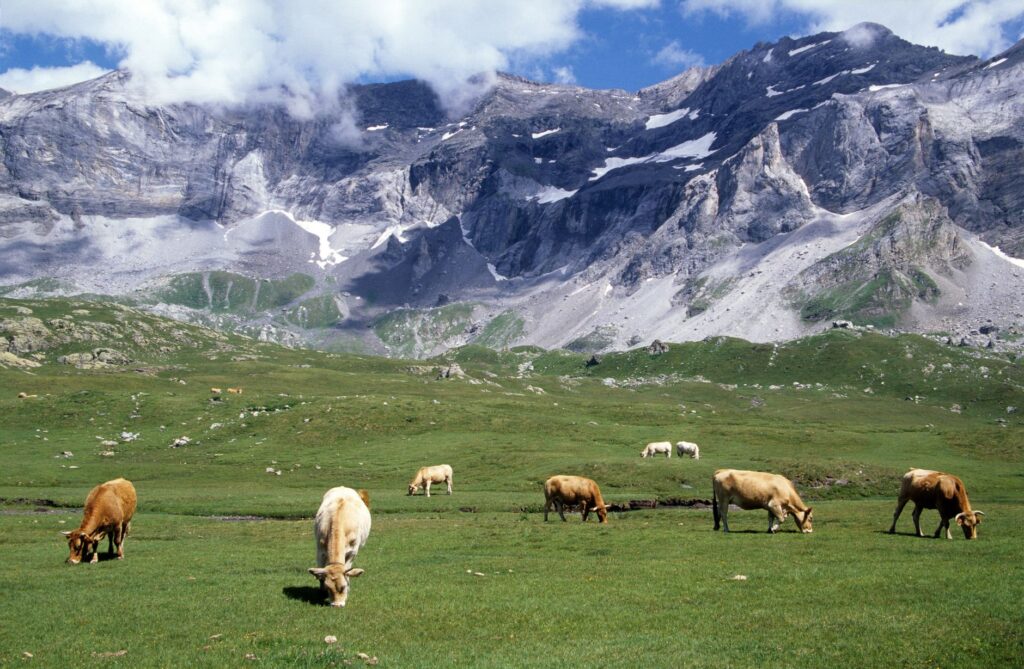
The green heart of Lleida beats strongly in Aigüestortes i Estany de Sant Maurici National Park, the only space of its kind in Catalonia. With more than two hundred glacial tarns and peaks exceeding three thousand meters, the park constitutes an ecological sanctuary where water is the great sculptor of the landscape. Here, crystal-clear torrents rush fiercely down U-shaped valleys, feeding alpine meadows where nursing cows and free-roaming horses graze.
To understand the magnitude of this ecosystem, it is necessary to leave the asphalt behind and venture onto marked trails departing from enclaves like Espot or Boí. Unlike other European national parks, Aigüestortes maintains a fragile yet sustainable balance between traditional livestock farming and the influx of hikers. Local guides insist on the importance of respecting park regulations: staying on marked paths and avoiding unnecessary noise that might disturb native fauna, such as the capercaillie or the chamois.

High-altitude refuges and historic trail networks
The network of staffed mountain refuges crisscrossing the Lleida Pyrenees allows hikers to plan multi-day traverses without leaving the high mountains. Classic routes like Carros de Foc connect the nine shelters of the national park in a technically demanding circular route. Sleeping at over two thousand meters of altitude, beneath a sky free of light pollution, offers a unique perspective on the immensity of the territory.
These paths are not a touristic invention, but the ancient transhumance and smuggling routes that linked Pyrenean valleys with France. Every stone placed in dry-stone walls, every single-arch bridge crossing a foaming river, tells a story of survival and commerce under extreme conditions. The modern trekker thus walks upon the very same footsteps that for centuries sustained the economy of these isolated communities.
Romanesque art as the language of the valleys
If nature defines the verticality of the Lleida landscape, Romanesque art marks its historical depth. The collection of churches in the Boí Valley, declared a UNESCO World Heritage Site in 2000, constitutes one of the most extraordinary testimonies of 11th- and 12th-century European Romanesque architecture. Sant Climent de Taüll, with its slender six-story bell tower, stands as the flagship of this architectural legacy.

What is fascinating about these constructions is not only their technical craftsmanship—built with unhewn granite ashlar blocks and covered with slate roofs—but their original function as visual and spiritual landmarks in a narrow, dark valley. Today, 3D projection technologies applied inside Sant Climent allow visitors to recover the original frescoes that were removed in the early 20th century to prevent looting and are now preserved in the National Art Museum of Catalonia in Barcelona.
Pyrenean Romanesque is not a museum fossil, but the living architecture of communities that sculpted their faith into the hardest stone of the territory.
A few kilometers from Boí, in the Aran Valley, religious architecture adopts nuances typical of Occitan influence, featuring steeper slate roofs to withstand heavy winter snowfalls and exterior porches designed to host local councils. Churches like Santa Eulària d’Unha or Sant Andreu de Salardú demonstrate that the Pyrenees were never an isolated territory, but a cultural bridge between the Iberian Peninsula and southern France.
Border castles and medieval memory
Beyond the Pyrenean peaks, the central strip of the province, known as the Noguera and Segarra regions, unfolds a landscape of arid plateaus and stately castles that recall the borderland character this land held during the Reconquista. The fortress of Montsonís, erected in the 11th century, rises on a rocky promontory overlooking the course of the Segre River. Unlike other fortresses converted into romantic ruins, Montsonís remains inhabited by the same family for generations, which has guaranteed its complete preservation.
Touring its rooms provides insight into the daily life of the lower feudal nobility, their alliances, and their conflicts with Catalan counts and neighboring Taifa kingdoms. Nearby, Castell de Mur, in the Pallars Jussà region, offers one of the purest examples of military and religious architecture of Catalan Romanesque, with its imposing curtain wall and adjoining collegiate church.
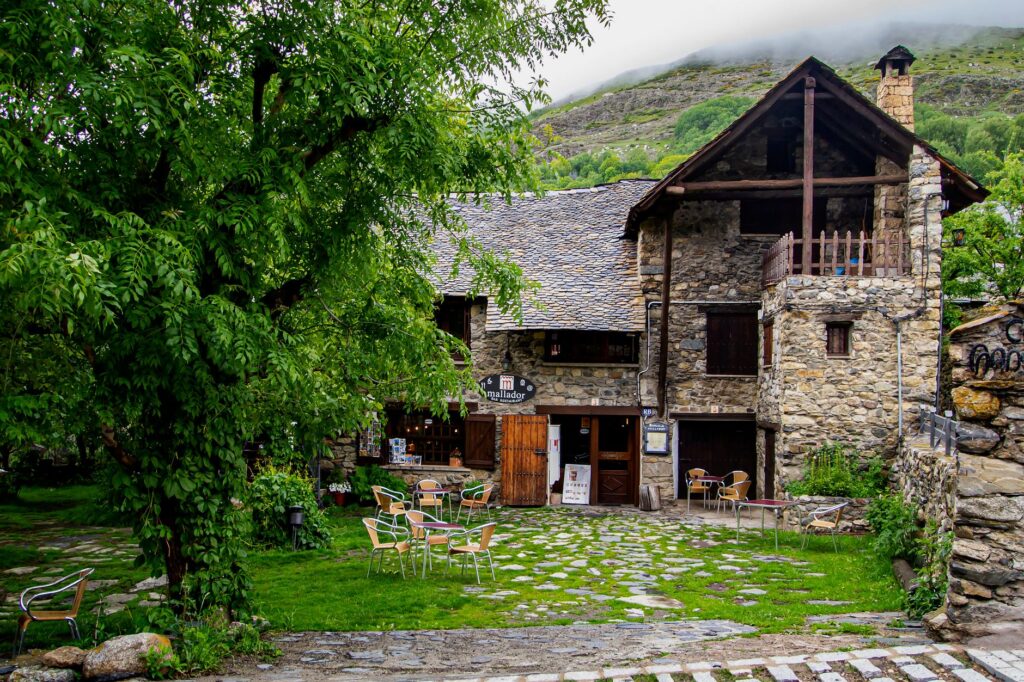
- Montsonís Castle: Inhabited 11th-century fortress offering daytime and night guided tours.
- Castell de Mur: Exceptional monumental complex including the castle, the wall, and the church of Santa Maria.
- Àger Wall: Former canonical enclosure overlooking the Noguera Pallaresa river.
The silent revolution of Segrià and the orchards
Descending southward, the landscape changes radically. Granite peaks and fir trees give way to the horizontal immensity of the Segrià plain, where the Segre River waters one of the most important fruit-growing regions in Europe. During spring, this territory becomes a visual spectacle of pink and white tones thanks to the blossoming of peach, nectarine, and cherry trees. In summer, the landscape acquires a golden, intense, and industrious tone.
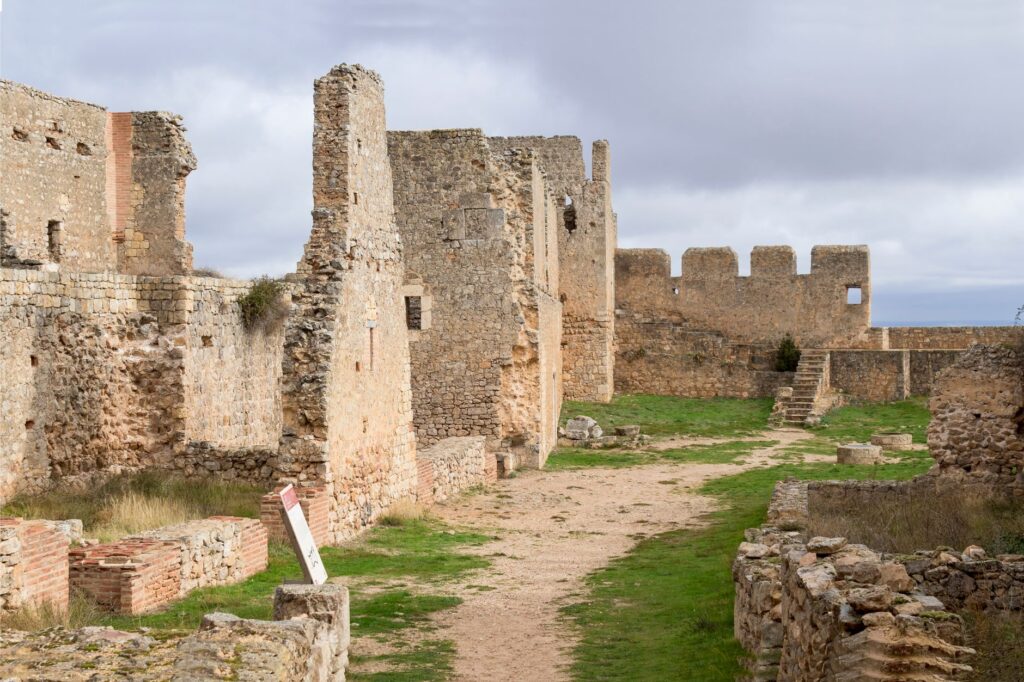
Lleida city, located at the center of this depression, often goes unnoticed by mass tourism, which is actually one of its greatest assets. La Seu Vella, the old cathedral crowning the city hill, dominates the valley with a striking blend of Romanesque and Gothic styles. Consecrated in 1278, Old Seu was converted into a military barracks in the 18th century, a use that altered its appearance but paradoxically saved it from more invasive later renovations. Climbing up to its open cloister at dusk, when the golden stone absorbs the last rays of sun, is one of the most intense urban experiences in Catalonia.
Practical guide
How to get there: Lleida is perfectly connected via the high-speed train line (AVE), placing the Lleida-Pirineus station less than an hour from Barcelona and two from Madrid. To explore the Pyrenean regions and natural parks, having a private or rented vehicle is essential.
When to go: Although summer is ideal for high-altitude mountains and hiking above two thousand meters, the months of June and September offer milder temperatures and lower visitor numbers in the valleys and monumental complexes.
Accommodation: Lodging is concentrated in small family-run hotels, rehabilitated rural houses (turisme rural), and staffed mountain refuges. Booking several months in advance is recommended for the summer months in the Boí and Aran Valleys.
Local recommendations: In protected natural spaces, such as Aigüestortes, respect civic officers’ guidelines and use accredited local guides for technical ascents or flora and fauna interpretive routes.
The slow pulse of halted time
The journey through the lands of Lleida concludes right where it began: in the respectful silence of its landscapes. When the sun hides behind the Pyrenean crests and the evening air descends cool through the valleys, one understands that the true value of this territory lies in its resistance to contemporary acceleration. Here, the millennial stone of the churches, the purity of glacial lakes, and the sober hospitality of its people remind us that travel remains, in its purest essence, an act of attention, listening, and wonder before the enduring.
The experience of this interior summer leaves no strident marks, but a lasting sediment in the memory of those who dare to divert their gaze from the coast and venture into the entrails of the high land. A territory that needs no artificial inventions because it has spent centuries being precisely what it is: a refuge of stone, water, and memory.
Source in EN: El Viajero in EL PAÍS (https://elpais.com/elviajero/2026-08-17/el-verano-que-se-esconde-entre-montanas-lagos-y-pueblos-de-piedra.html)