

The sun filters through the metal shutters of a sleeper car that has witnessed decades of history, while the rhythmic clatter of steel on rails sets the pace for one of Africa’s most ambitious engineering projects. The TAZARA (Tanzania-Zambia Railway Authority) railway, popularly known as the Freedom Railway or Great Uhuru, is not merely a means of transport; it is a backbone spanning 1,860 kilometers of jungles, deserts, and mountain escarpments, linking the Tanzanian port of Dar es Salaam with the mining heart of Zambia in Kapiri Mposhi.
This iron colossus represents one of the greatest milestones of international technical cooperation in the Southern Hemisphere, having been built in the 1970s to break the isolation of a Zambia surrounded by hostile regimes. Today, the line stands as a living testament to logistical resilience, uniting isolated communities and offering a unique perspective on the physical and human geography of East and Southern Africa, where time is measured in stations and efficiency is negotiated with nature.
The legacy of the Great Uhuru: a landmark in transcontinental engineering
The genesis of TAZARA is a tale of technical audacity and political determination. Conceived at a time when Western powers dismissed the project as a financial and geological impossibility, the railway was ultimately funded and built by China between 1970 and 1975. The scale of the work is staggering: more than 88 million cubic meters of earth and rock were moved to lay a 1,067 mm gauge track (the Cape gauge), allowing for interoperability with the railway systems of the southern continent.
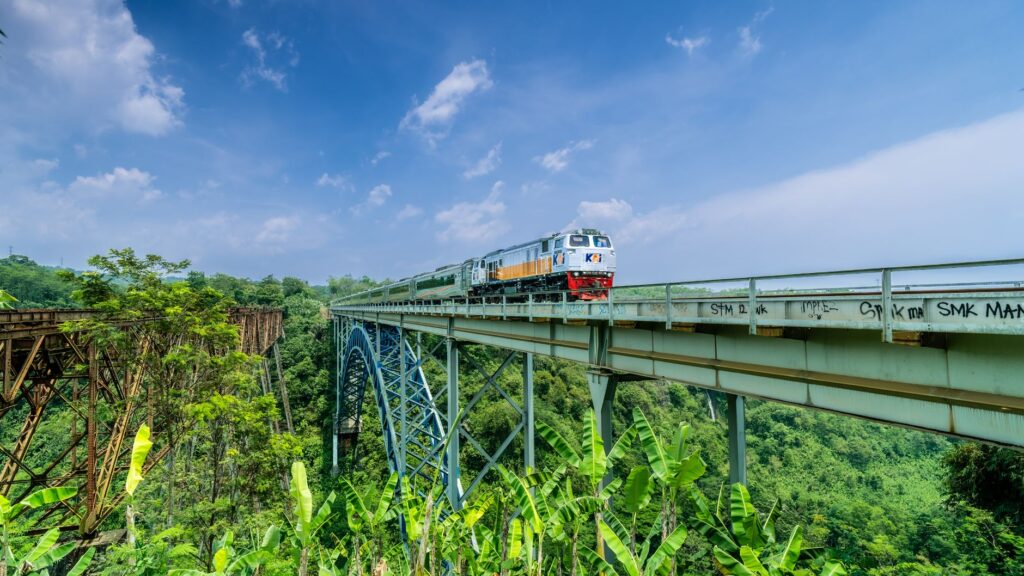
From a technical standpoint, TAZARA involved the deployment of over 50,000 workers and the design of engineering solutions to overcome the Great Rift Valley. The infrastructure includes 300 bridges and 23 tunnels, most concentrated in the critical section of the Udzungwa Mountains in Tanzania. This section required a winding alignment and precise gradients to allow heavy diesel-electric locomotives to haul convoys laden with copper and essential supplies through elevation changes exceeding 1,200 meters above sea level.
«TAZARA was not designed just to move goods, but to cement the sovereignty of a region desperately seeking its own outlet to the sea without depending on colonial routes.»
The durability of the work, despite limited maintenance investment during certain periods, speaks to the quality of the original materials. The high-strength steel rails and concrete sleepers were designed to withstand not only the weight of the trains but also extreme thermal variations and the monsoon rains of the region. Every kilometer of track is a reminder of the centralized planning that sought technical self-sufficiency in an unforgiving geographical environment.
The geographical layout: from the Indian Ocean shores to the Zambian plateaus
The journey begins at sea level, at the Dar es Salaam terminal, a brutalist structure evocative of the independence era’s aesthetic. From here, the track heads into the coastal plains of Tanzania, where the humidity of the Indian Ocean feeds lush vegetation. As the train moves southwest, the landscape transforms drastically, shifting from mangroves and palm groves to the open savannah of the Selous Game Reserve, one of the largest protected areas in the world.
In this stretch, the railway acts as a privileged vantage point. It is not unusual for railway logistics to be interrupted by the presence of wildlife, forcing drivers to slow down as herds of elephants or giraffes cross the tracks. This coexistence between heavy infrastructure and the pristine ecosystem is one of TAZARA’s hallmarks, where the steel seems to have organically integrated into the African landscape after nearly half a century of presence.
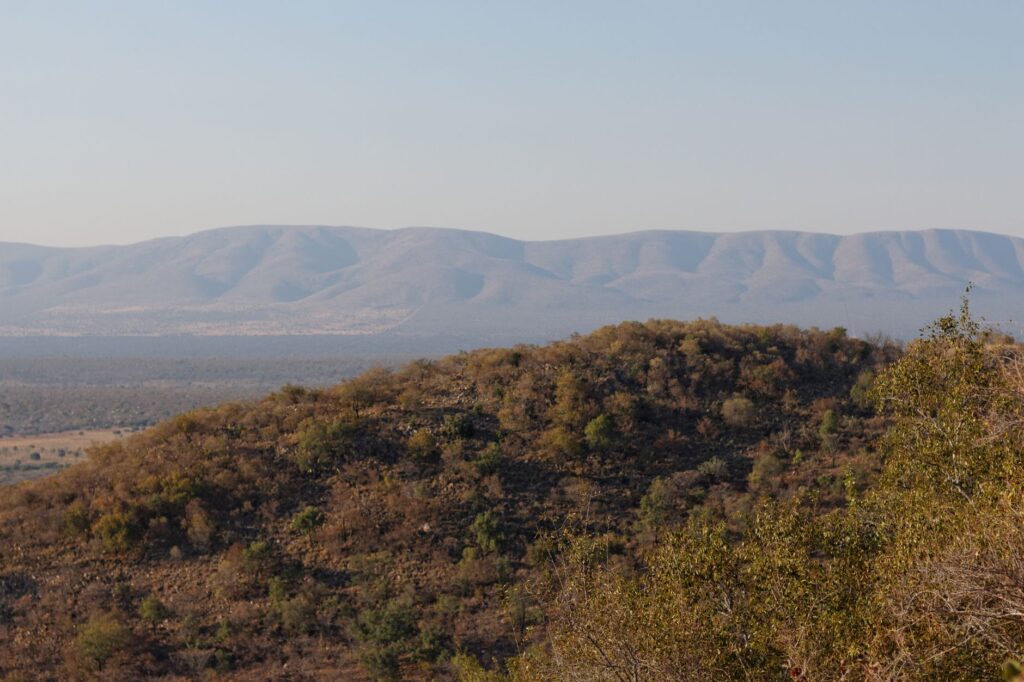
Leaving the plains behind, the train faces the ascent toward the highlands. The climatic transition is notable: the suffocating heat of the coast gives way to cooler, drier air as the foothills of the Kipengere Mountains are reached. Here, the alignment becomes more complex, with sharp curves allowing the traveler to observe the full length of the convoy—an iron serpent twisting through gorges and viaducts that seem to float over mist-covered valleys.
Mountain logistics and the challenge of the Mlimba tunnels
The sector between Mlimba and Makambako is undoubtedly the crown jewel of TAZARA’s engineering. In just 150 kilometers, the track climbs from the lowlands to the central plateau, crossing the Mlimba Pass. This stretch required the construction of the line’s longest tunnels, excavated through solid rock under unpredictable geological conditions. The precision in aligning these tunnels was fundamental to ensuring that heavy freight trains could maintain a constant speed without compromising track integrity.
Operational logistics in this area are extremely demanding. Locomotives must manage dynamic braking on long descents, while on ascents, traction must be maximized to prevent wheel slip on rails that are often damp from low cloud cover. Maintenance of this section is a priority for the railway authority, as any interruption here would completely block the commercial flow between the port of Dar es Salaam and the continent’s interior.
In addition to physical challenges, managing safety in high-altitude tunnels and bridges involves rigorous protocols. Each structure is periodically inspected by track and works teams residing in remote stations, whose only connection to the outside world is the train itself. These railway communities form a unique social ecosystem, where life revolves around the—often flexible—schedule of the passing convoys.
The strategic role in the African copper belt
Beyond its scenic value, TAZARA is a vital economic artery. Zambia is one of the world’s leading copper producers, and the railway was specifically designed to transport this mineral to international markets. The line’s cargo capacity allows for the movement of thousands of tons of copper cathodes much more efficiently and economically than road transport, which is hampered by poor road conditions and long border wait times.
Intermodality is a key concept in TAZARA’s operation. At the Dar es Salaam terminal, freight cars connect directly with port cranes, facilitating a seamless transition from rail to ocean-going vessel. This logistical efficiency is fundamental to the competitiveness of Zambian exports. Similarly, in the reverse direction, the train carries fuel, heavy machinery, and fertilizers essential for subsistence and commercial agriculture in the interior of Tanzania and Zambia.
However, competition with road transport has forced TAZARA’s administration to seek new profitability strategies. Modernizing the wagon fleet and implementing satellite cargo tracking systems are necessary steps to maintain the line’s relevance in the 21st century. The regional integration promoted by the Southern African Development Community (SADC) positions TAZARA as an essential component of the Northern Development Corridor, connecting not just two countries but facilitating sea access for nations like the Democratic Republic of the Congo.
Life on the rails: passenger management and on-board services
The passenger service, generally operated by the Mukuba (Zambia-bound) and Kilimanjaro (Tanzania-bound) trains, offers a mobility experience that has largely disappeared from the Western world. The class structure—first, second, and third—reflects a functional stratification of space. First class, with four-berth compartments, offers a level of comfort that allows travelers to endure the 48 to 72 hours that the full journey between the two main terminals usually takes.
The dining car is the train’s social epicenter. Here, supply logistics are put to the test: meals are served using fresh ingredients purchased at intermediate stops. The menu is usually simple but hearty, based on ugali (maize porridge) or rice with chicken and fish, accompanied by local beers kept cold by refrigeration systems dependent on the convoy’s own power generation.
«The train doesn’t run, the train flows; on the TAZARA, one learns that punctuality is a relative concept, but arrival is an absolute certainty.»
Managing passengers on such a long journey requires meticulous organization. Train managers and service staff must handle customs formalities that take place on board at the Tunduma/Nakonde border. This process, which occurs while the train is moving or briefly stopped, is an example of administrative efficiency that spares passengers the grueling waits at land border crossings. Life on board creates a fleeting camaraderie among travelers of various nationalities, united by the journey’s deliberate slowness.
Technical challenges and the future of Southern connectivity
Despite its importance, TAZARA faces significant challenges threatening its long-term viability. The aging of much of the rolling stock and the need for comprehensive track rehabilitation require investments exceeding the current capacities of the Tanzanian and Zambian governments. It is estimated that hundreds of millions of dollars are needed to modernize signaling systems and replace older locomotives with more efficient, less polluting models.
Interest from international investors, particularly Chinese consortia and global development entities, suggests that TAZARA may be on the verge of a new renaissance. Expansion plans include the possibility of connecting the line with Malawi’s railway network and improving links with the mines of Katanga Province in the Congo. This expansion would transform TAZARA from a binational line into a true regional logistical hub.
The digitalization of railway management is another open front. Implementing electronic ticketing and improving internet connectivity at main stations are growing user demands. However, the most persistent technical challenge remains slope maintenance and landslide prevention in high mountain areas, where climate change is causing more erratic and intense rainfall patterns that test the track’s original drainage systems.
Practical guide
- Trip Planning: Long-distance trains typically depart twice a week in each direction. It is imperative to check schedules at Dar es Salaam or Kapiri Mposhi stations, as they are not always updated online.
- Ticket Booking: It is recommended to purchase first and second-class tickets at least one week in advance. Booking offices at the Dar es Salaam terminal accept Tanzanian shillings, while in Zambia, the kwacha is used.
- Documentation and Borders: The border crossing takes place between Tunduma (Tanzania) and Nakonde (Zambia). Visas should be arranged beforehand, or ensure your nationality allows for a Visa on Arrival on the train itself.
- Health and Supplies: It is essential to carry enough bottled water, although it is sold on board. The area is endemic for malaria, so standard precautions and repellent should be used, especially during night stops.
- Luggage: There are no strict weight restrictions like on airplanes, but space in first-class compartments is limited. Soft-sided suitcases that can be stowed under the bunks are recommended.
- Connectivity: Mobile phone signal is intermittent along the route, especially when crossing the Selous Reserve and the Udzungwa Mountains. There is no Wi-Fi on board.
The TAZARA journey culminates as the lights of small Zambian villages begin to flicker in the darkness of the plateau. After days of immersion in a world of steel and nature, the traveler understands that this railway is not just a triumph of engineering, but an act of faith in human connectivity. Upon disembarking at the final station, one is left with the sense of having participated in a rite of passage, an odyssey connecting two worlds through an iron thread that refuses to surrender to oblivion.
The last image the retina holds is that of the train pulling away toward the depot, enveloped in a cloud of steam and dust gilded by the African sunset. It is a reminder that in a world obsessed with immediacy, there are still routes where the journey is the destination and where every kilometer traveled tells a story of freedom, effort, and the indomitable will to unite what geography tried to separate.


