
Introduction to the Arabian Frontier
At the southeastern tip of the Arabian Peninsula, where the waters of the Arabian Sea merge with the vast expanse of the Indian Ocean, the Kuria Muria islands stand out as one of the most challenging and isolated enclaves in the Middle East. This granitic archipelago, lashed by seasonal monsoons and shrouded in dense marine mist for long periods of the year, requires a complex transport infrastructure to maintain its link with the mainland. Unlike the major urban centers of the Gulf, mobility here is not resolved through high-capacity highways or high-speed rail, but through a delicate network of bush aviation, offshore navigation, and intricate coastal logistics operations.
Studying this transport system reveals how local communities and state authorities manage the supply of essential goods, passenger transit, and emergency connectivity within an unforgiving geographical setting. From compacted limestone airstrips to converted deep-sea fishing vessels serving as supply ships, every journey in this remote corner of the sultanate constitutes a masterclass in engineering applied to insular survival.
The Geography of Isolation and Marine Topography
Understanding the logistics of the Kuria Muria requires analyzing their complex topography first. The archipelago comprises five main islands—Al Hasikiya, Al Gharbiya, Al Hallaniya, As Saudah, and Qibliya—of which only Al Hallaniya is permanently inhabited. Separated from the coast of the Dhofar Governorate by distances ranging from forty to eighty kilometers of open sea, the islands bear the full brunt of the Khareef, the summer monsoon that transforms the surrounding waters into an arena of unpredictable currents and fierce winds.

Weather conditions dictate the operational pulse of any transport medium in the region. During the summer months, maritime navigation is scaled back to a bare minimum due to the aggression of the swells, forcing total reliance on light aviation. This climatic phenomenon turns the archipelago into a living laboratory of seasonal intermodality, where transport schedules must adapt with millimeter precision to the whims of the monsoon and the reduced visibility caused by ocean haze.
Bush Aviation as an Umbilical Cord
Given the impossibility of maintaining regular maritime routes year-round, the Al Hallaniya airstrip acts as the true umbilical cord of the archipelago. Managed under strict protocols by Omani aviation authorities, this infrastructure features a compacted surface adapted to receive twin-engine turboprop aircraft capable of operating on short, unpaved runways. Regular flights, though scarce, transport mail, technical personnel, urgent medical supplies, and the few residents needing to travel to Salalah.

Planning these flights is an exercise in high-precision logistics. Pilots must contend with unpredictable crosswinds sweeping in from the Indian Ocean and the absence of complex ground visual aids, relying instead on instrument navigation and expert knowledge of the terrain. Every aircraft touching down on the island represents far more than a simple mode of transport: it is the guarantee that isolation does not turn into a total break with the continent.
Coastal Navigation and the Supply Challenge
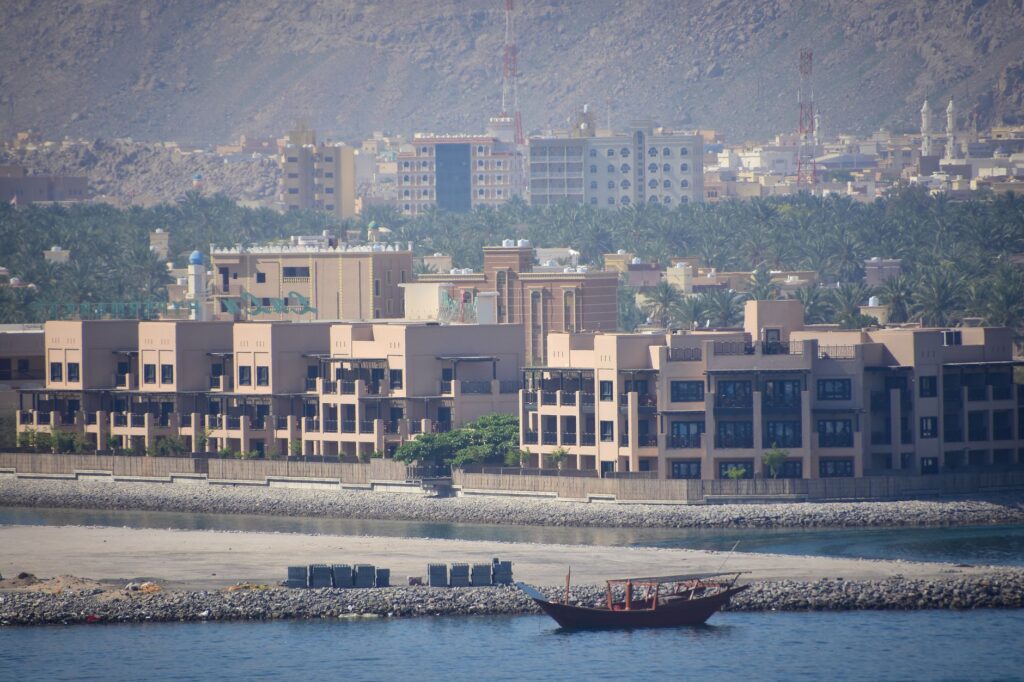
When the sea permits, maritime transport reclaims its historical prominence. Multi-purpose cargo ships and traditional motorized dhows set sail from the fishing ports of southern Oman laden with fuel, construction materials, and non-perishable food. However, the absence of a deep-water port in Al Hallaniya necessitates offloading operations via auxiliary lighters, a process technically known as open-roadstead lighterage operations.
The Arabian Sea offers no free routes; every ton of cargo unloaded onto the surf of Al Hallaniya is the result of a millimetric calculation balancing tide, wind, and seamanship.
This offshore discharge system exposes goods and crews to considerable risks. Captains must accurately calculate the low and high-tide windows to bring vessels close to the coastal shelf without running aground on submerged reefs. The modernization of these routes has introduced satellite tracking systems and advanced oceanographic forecasts, narrowing margins of error in a maritime corridor where room for maneuvering is always extremely tight.
Port Infrastructure and the Modernization Dilemma
In recent years, the Omani government has advanced various projects to endow the archipelago with more robust port infrastructure. The construction of small breakwater jetties and the provision of ramps for light watercraft seek to mitigate the vulnerability of maritime transport against adverse weather conditions. Nonetheless, engineers face a constant dilemma: how to protect facilities from heavy monsoon swells without disrupting the delicate marine ecosystems surrounding the islands.
Balancing logistical development with environmental conservation is particularly delicate in this zone, considered a sanctuary for numerous cetacean and seabird species. Dredging and pier extension works are executed under strict environmental regulations limiting impacts on coral reefs and seagrass meadows. Consequently, the evolution of the transport network in the Kuria Muria is governed by a principle of minimal intervention and maximum operational efficiency.
Operational Safety and Emergency Protocols
The remoteness of the Kuria Muria makes managing medical and technical emergencies a critical priority. The transport system is integrated with the long-range air rescue services of the Sultan of Oman’s Armed Forces, capable of deploying long-range helicopters in situations of extreme sanitary urgency. These operations require flawless coordination between local health outposts, mainland control centers, and flight crews who must frequently operate at night or under severe weather conditions.
Likewise, safety for recreational and commercial navigation transiting near the archipelago relies on a network of high-frequency radio communication stations and navigational aids. Although tourist traffic is practically nonexistent due to access restrictions and the harshness of the environment, the presence of expedition yachts and industrial fishing fleets requires constant monitoring of adjacent shipping lanes.
Sustainability and the Future of Insular Mobility
Looking ahead, the primary challenge for the Kuria Muria lies in transitioning toward cleaner energy models for transport infrastructure. The supply of fossil fuels to power generators and vessels represents a high logistical and environmental cost. Pilot initiatives are currently underway to integrate solar energy sources into local airport and port facilities, seeking to reduce reliance on traditional supply convoys.
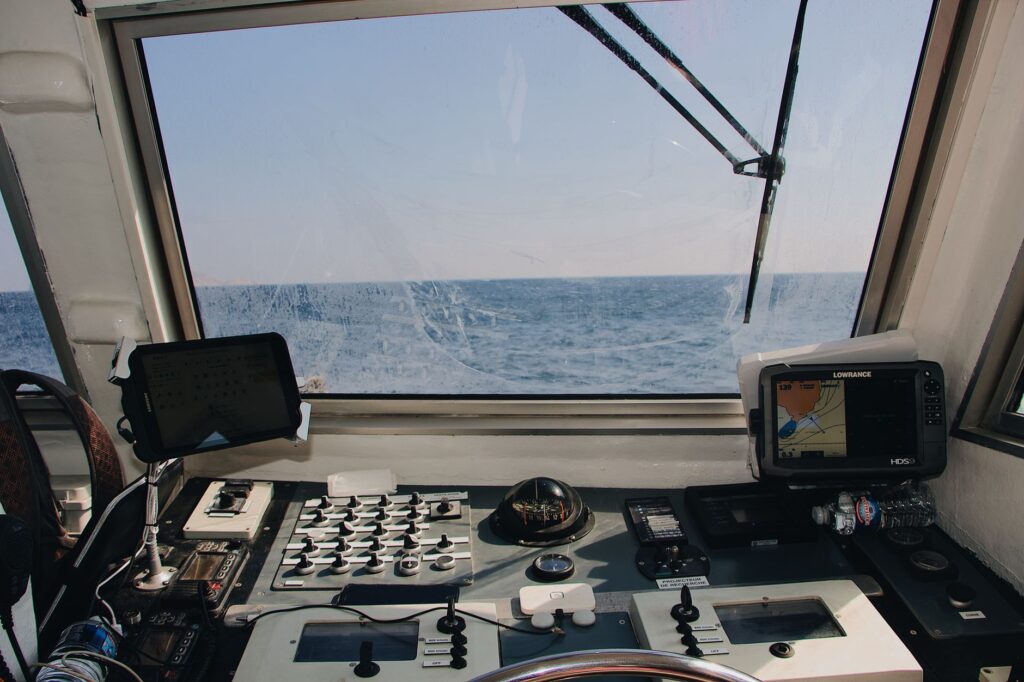
Maintaining this fragile transport ecosystem demonstrates that connectivity in extreme regions depends not solely on large budgets, but on human adaptability to nature’s rhythms. The Kuria Muria remain a living testament to how bush aviation and traditional seamanship can ally to sustain life on the most remote frontier of the Arabian Peninsula.
Practical guide
- Access and Restrictions: The Kuria Muria archipelago is a zone of highly restricted access regulated by Omani authorities. There are no commercial tourist services or regular passenger connections for private visitors.
- Logistical Planning: Any travel or research in the area requires special permits issued months in advance by the Ministry of Interior and the sultanate’s security forces.
- Weather and Seasonality: Air and maritime transport operations are frequently suspended between June and September due to the Khareef monsoon. The safest window for navigation falls between November and February.
- Communications: Mobile phone coverage is limited outside the main settlements of Al Hallaniya. Carrying satellite communication systems is indispensable for any authorized expedition or transit.
- Supplies and Autonomy: The islands lack commercial provisioning infrastructure for visitors. Every expedition must be entirely self-sufficient in terms of drinking water, food, and technical support.
The Invisible Pulse of the Arabian Sea
As dusk falls over the rugged shores of Al Hallaniya, the distant roar of an approaching turboprop engine cuts through the monotony of the oceanic wind. That fleeting, precise moment encapsulates the essence of existence in the Kuria Muria: a fragile mechanical heartbeat connecting the mineral solitude of the rocks with the pulse of the outside world. In this confine where geography dictates its own rules, every flight and every voyage are not mere displacements, but daily acts of resistance against the immensity of the ocean.