
The Journey as a Cinematic Threshold
Every journey to the Rockaway Film Festival begins long before hitting the sand. It starts deep in the underground tunnels of Manhattan, where the metallic roar of New York City’s A train pulls passengers out of urban urgency and carries them, over the course of more than an hour, toward the southern tip of Queens. This is no ordinary commute; it is a voyage through dark tunnels and elevated steel viaducts that suddenly open up to the vast, gray-blue expanse of the Atlantic Ocean. This railway transit functions as a natural prologue, a bridge of iron and cables that isolates the traveler from the metropolis’s noise to prepare them for a radically different cultural experience.
In an era dominated by streaming platforms and impersonal suburban multiplexes, attending this festival involves a deliberate act of displacement. It is not simply about watching a movie, but about reclaiming the old custom of traveling to look together in the dark. The commuter train thus becomes the first link in an experience where territory and moving images converse constantly, reminding us that cinema, at its origin, was always tied to physical movement and geographical discovery.
Reinventing Open-Air Cinema on the Peninsula
Set along a narrow strip of land beaten by tides and winds, the Rockaway peninsula has historically served as a summer retreat for New Yorkers. However, its modern identity navigates a complex tension between coastal gentrification and the scars left by natural disasters like Hurricane Sandy. Within this intricate geographical context, the Rockaway Film Festival has taken root without imposing itself, using community spaces, hidden gardens, and sandy stretches as ephemeral screening rooms that challenge traditional exhibition architecture.

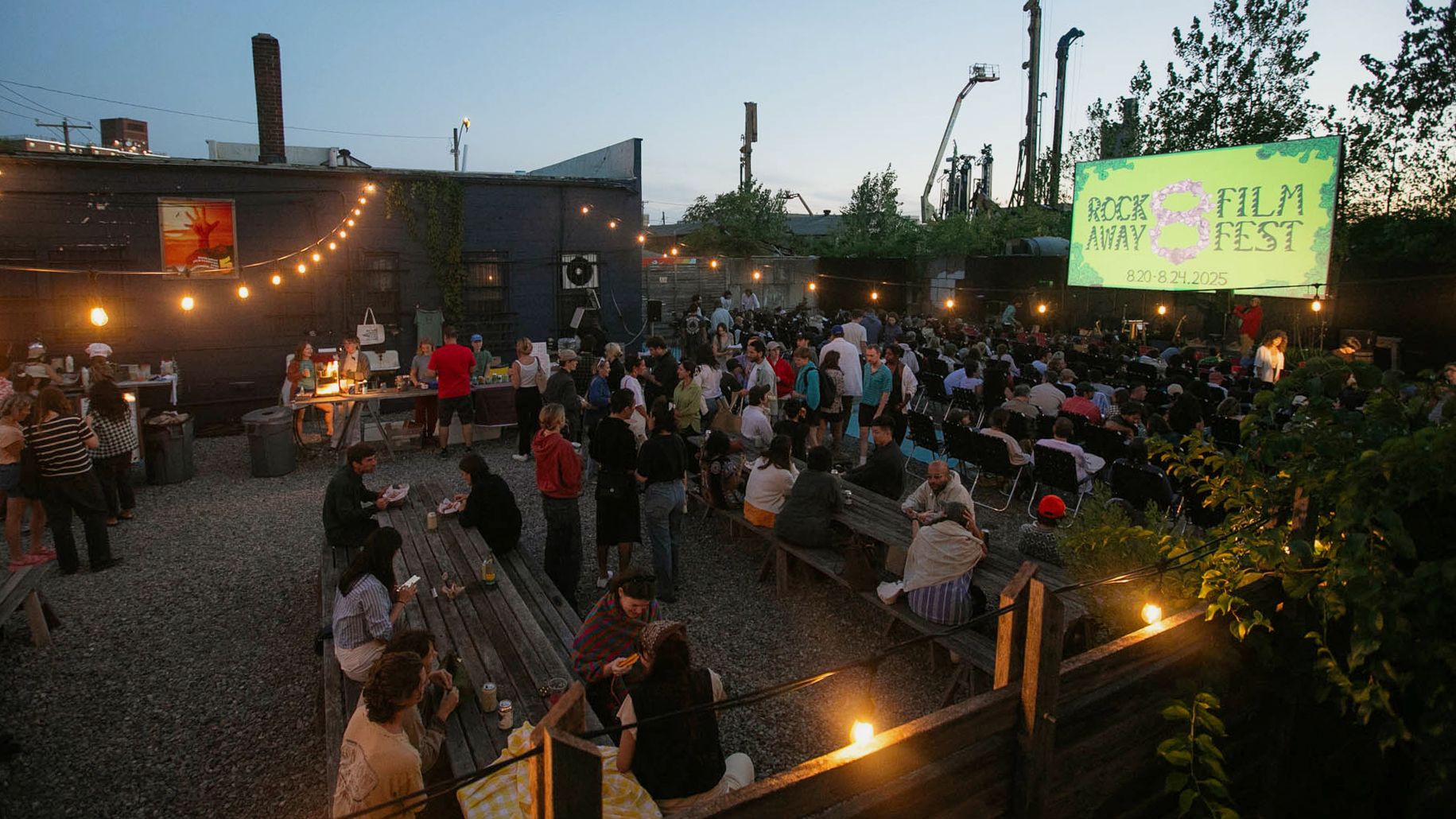
The organizers have understood that the magic of this event lies not in technological display, but in the friction between the natural environment and the projected fiction. Watching celluloid or digital files while the sea breeze moves the trees or distant waves compete with the soundtrack creates an unmatched atmosphere. Far from the sterility of commercial theaters, the elements here become part of the curation: the unpredictable weather of the Atlantic coast turns every outdoor screening into an unrepeatable event, where the audience shares both the dramatic tension of the screen and the sudden chill of the night.
Traveling to watch films in Rockaway is a reminder that images need space and community to breathe, far away from the digital solitude of individual screens.
Programming Anchored in Local and Global Memory
The heart of this festival beats to an eclectic selection that rejects blockbuster releases in favor of independent cinema, experimental short films, and archival documentaries. The curation deliberately avoids algorithms. Instead, it pairs contemporary works by emerging filmmakers with forgotten gems of world cinematography, building cultural bridges that connect the realities of the working-class New York neighborhoods with global issues.

This decentralized approach to film culture is reflected in the audience. Unlike exclusive industry festivals, the crowd here is a genuine mosaic: lifelong Rockaway residents, surfers, urban cinephiles who crossed all five boroughs on public transit, and local families share the same wooden benches and lawn blankets. The programming acts as a mirror of that diversity, addressing themes of gentrification, coastal identity, and community resistance without falling into condescension.
The Transit Logistics: The Subway as Cultural Experience
To grasp the scale of the experience, it is essential to analyze the role of public transportation in the festival’s logistics. The A train is not merely a way to get there; it is part of the event’s social infrastructure. During the festival weekends, the subway cars progressively fill with spectators carrying folding chairs, jackets for the evening breeze, and printed programs, generating an invisible bond among strangers sharing a destination.
This railway pilgrimage contrasts sharply with the typical experience of attending elite film festivals, where attendees travel in private cars or exclusive transport services. In Rockaway, democratic access via mass transit sets the egalitarian tone of the event. The journey requires planning return schedules, calculating late-night train times, and accepting minor logistical inconveniences as an intrinsic part of the cultural adventure.

Unusual Screening Spaces Within the Community
The festival venues stand as testimony to the vernacular architecture and social history of the peninsula. Screenings take place in local community centers, backyards of neighborhood organizations, and public spaces rehabilitated after years of abandonment. Each location adds a layer of political and affective meaning to the films shown, linking visual content with the neighborhood’s daily struggles to preserve its territory against real estate speculation.
This choice of ephemeral spaces demands considerable technical effort, yet rewards the viewer with an intimacy impossible in major commercial circuits. There are no red carpets or impenetrable security barriers; directors, actors, and attendees share the same space to converse after screenings, smoking a cigarette or sharing a drink near the sand. This horizontal interaction redefines the traditional hierarchy between creator and spectator.
Impact on Local Economy and Neighborhood Identity
The steady growth of the Rockaway Film Festival has sparked a necessary debate about cultural tourism and the preservation of neighborhood identity. Unlike mass events that crowd out and displace resident communities, this festival has sought integration into the local economy, collaborating with neighborhood shops, family restaurants, and artistic projects rooted in the Queens area.

The organizers maintain a policy of free or highly accessible ticket pricing for most screenings, ensuring that art access does not become an economic privilege. This strategy protects the popular character of the event, allowing local youth and working-class families to feel a sense of ownership over the cultural initiative rather than remaining passive spectators of cultural gentrification.
The true value of initiatives like this lies in their ability to weave neighborhood solidarity networks through art, resisting the homogenization of urban and coastal spaces.
Practical Information for the Cinephile Traveler
Attending the Rockaway Film Festival requires planning, particularly regarding transportation and personal gear. The following fundamentals help ensure a smooth experience:

- How to get there: Take the A train toward Far Rockaway – Mott Avenue and get off at the peninsula stations corresponding to the venue (usually around Beach 90th St). The trip from Midtown Manhattan takes roughly 75 to 90 minutes.
- When it takes place: The festival is typically held in late summer or early autumn, a time when daytime temperatures are pleasant but coastal nights can be notably cool and windy.
- Recommended gear: Layered warm clothing, windbreakers, blankets, and, for greater comfort, a portable camping chair or cushions for outdoor screenings are essential.
- Tickets: While many screenings are free or open-access, advance booking through the official website is strongly recommended due to the limited capacity of community venues.
A Model for the Future of Film Exhibition
The success and persistence of the Rockaway Film Festival offer an urgent lesson for today’s entertainment industry: the need to decentralize culture and return it to communities. By transforming a subway ride and an Atlantic beach into an impromptu cinema, this project demonstrates that audiences have not lost interest in collective screenings; they simply crave more human, honest contexts connected to the territory they inhabit.
While major theater chains struggle to sustain business models based on standardization and fast consumption, coastal initiatives like Rockaway open an alternate path. They remind us that going to the movies can be a form of travel, a ritual of gathering, and a perfect excuse to rediscover the geographical and social limits of our own cities.
Source in EN: Condé Nast Traveler