
Introduction to the Great Eurasian Artery
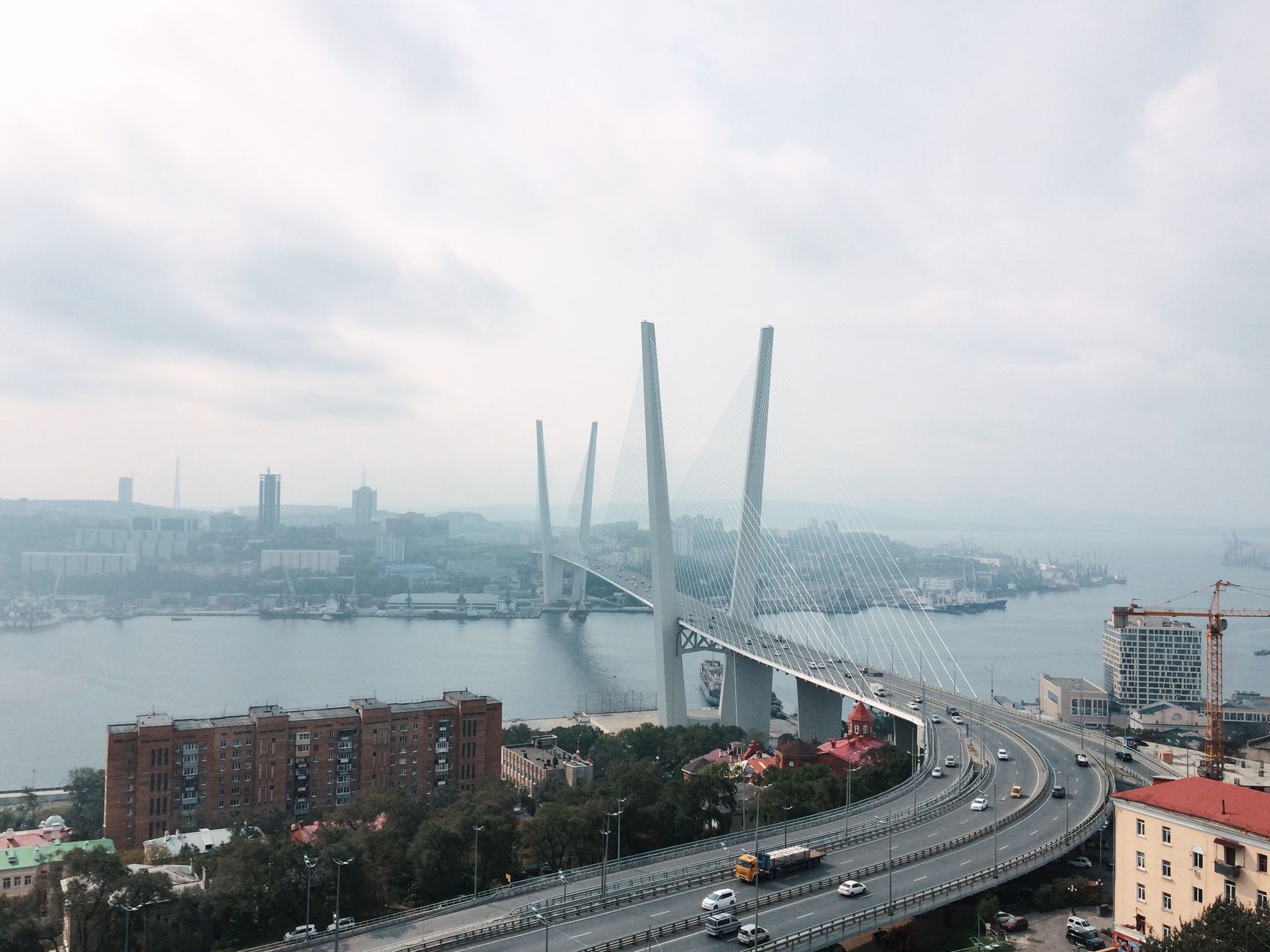
The Trans-Siberian Railway is not merely a transport infrastructure; it constitutes a masterwork of civil engineering and a geopolitical artery that redefines the scale of overland travel. Spanning over 9,280 kilometers in its classic route to Vladivostok, this corridor links European Russia with the coasts of the Pacific Ocean across eight time zones. Since its imperial conception in the late 19th century, driven by the tsars and directed technically by Russian and Western engineers, the layout has represented a colossal challenge against the extreme geography of Eurasia. Studying its current operation involves understanding a logistical system where high-capacity freight, long-distance passenger trains, and a network of stations acting as miniature cities converge.
The operational complexity of this line lies in its capacity to maintain commercial and passenger operations under extreme thermal variations. During the Siberian winter, temperatures can drop below minus fifty degrees Celsius, demanding special steel alloys in the rails, centralized heating systems in each carriage powered by coal boilers or high-resistance electricity, and permanent maintenance brigades deployed along thousands of miles of untouched taiga. The progressive modernization of the corridor, which began intensively during the Soviet era with double tracking and the gradual electrification of key sections, has transformed a rudimentary iron path into a technologically advanced route, albeit deeply tied to its historical heritage.
The Historical Layout and the Vision of Imperial Engineers
The decision to build the Trans-Siberian responded to an urgent need for territorial integration and economic expansion toward the Far East. By the late 19th century, the transport of goods and passengers between Saint Petersburg and Vladivostok depended on vulnerable maritime routes or dirt roads impassable during seasonal thaws. The Trans-Siberian Committee, instituted in 1892 under the direct supervision of the then Tsarevich Nicholas, mobilized massive financial resources and thousands of engineers specialized in high-mountain topography and swampy terrain.

Orographical and geotechnical obstacles were countless. The crossing of the Urals, although geologically old and of low altitude, demanded precise rock cuts and reinforced embankments to prevent slope landslides. Further east, the crossing of the great Siberian rivers—the Ob, the Yenisei, and the Amur—required the erection of monumental bridges whose metallic structures had to withstand not only the weight of period steam locomotives but also the brutal pressure of floating ice during spring thaws. The bridge over the Ob River in Novosibirsk and the subsequent Khabarovsk bridge over the Amur became milestones in world engineering.
Broad-Gauge Engineering and the Challenge of Permafrost
Unlike European railway standards of standard gauge (1,435 millimeters), the Trans-Siberian was designed with the Russian broad gauge of 1,520 millimeters. This technical decision, adopted for military security and stability on difficult terrain, gives the convoys a broader center of gravity, improving riding comfort at sustained cruising speeds on flat ground. However, it imposes significant logistical challenges at border interchange points with China and Mongolia, where carriage bogies must be replaced or adapted through complex hydraulic systems in specialized terminals.
In the eastern regions, the phenomenon of permafrost—permanently frozen ground—adds an extreme layer of technical complexity. During the summer months, the top layer of soil thaws, turning the terrain into unstable mud. Trans-Siberian engineers have had to apply advanced deep foundation techniques, thermostabilizing piles, and subsurface drainage systems to prevent the trackbed from suffering catastrophic deformations. Maintaining the geometric alignment of the tracks requires continuous inspections using track-recording cars equipped with lasers and inertial sensors.
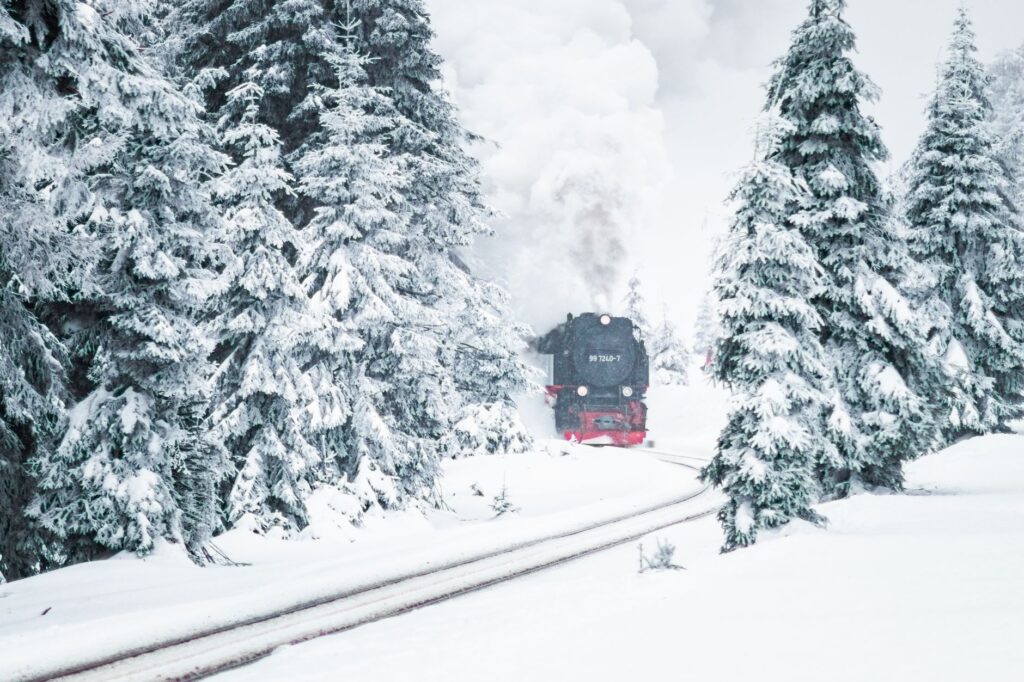
The Trans-Siberian is not a high-speed line, but a monument to human persistence that demonstrates how steel and engineering can stitch together a continent torn apart by distance and climate.
Electrification and the Modernization of Traction Systems
During the first half of the 20th century, Trans-Siberian traction depended exclusively on steam locomotives fueled by coal and wood extracted from surrounding forests. With Soviet industrial development, this dependence became unsustainable due to enormous energy consumption and slowness on steep gradients. The electrification process began fragmentarily in the 1930s and accelerated massively after World War II, adopting 3 kV direct current in western sections and 25 kV alternating current in the more modern sections of eastern Siberia.
Today, the corridor is electrified over more than eighty percent of its total length. Modern electric locomotives, capable of developing power outputs exceeding 8,000 kilowatts, haul heavy freight trains of up to 6,000 tons without requiring multiple assistance in most mountain passes. This tractive power is fundamental to maintaining the corridor’s competitiveness against road transport, guaranteeing an uninterrupted flow of raw materials, manufactured goods, and containers along the Asia-Europe axis.
The Traveler Experience and Life Aboard the Convoys
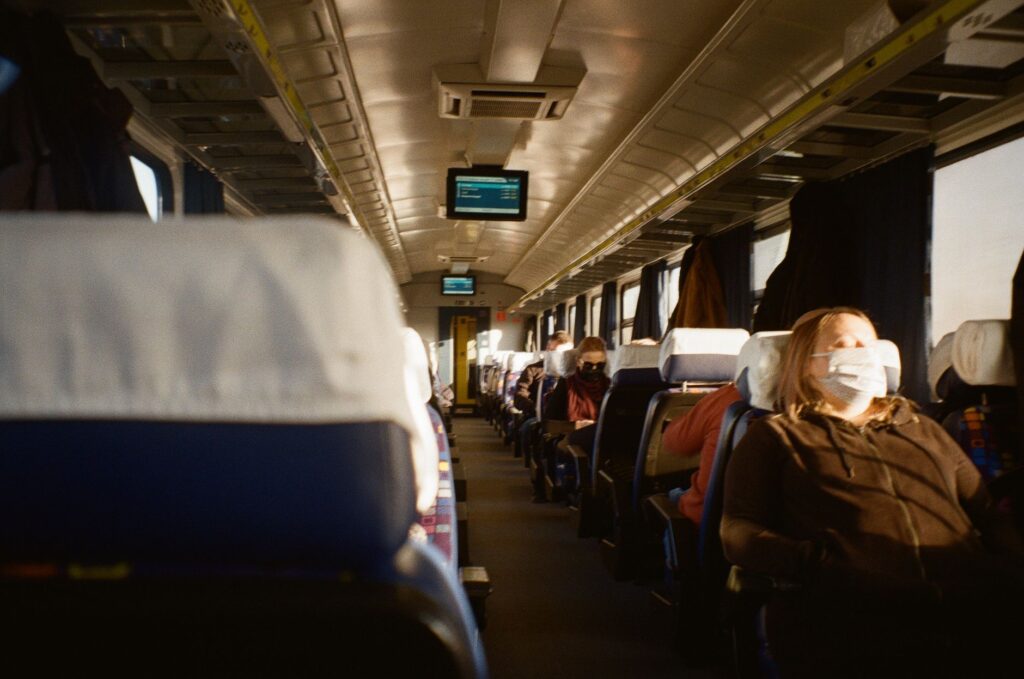
Traveling end-to-end across the Trans-Siberian represents an immersion in a unique railway culture where time acquires another dimension. Long-distance passenger trains, operated primarily by Russian Railways (RZD), are structured into clearly differentiated classes: Spalny Vagon (first class or two-berth compartments), Kupé (second class or four-berth compartments), and Platskart (third class or open-berth dormitories integrated into the central corridor).
Life on board is organized around leisurely routines. Each carriage has its respective provodnik or provodnitsa (carriage attendant), responsible for maintaining cleanliness, monitoring the traditional hot water boiler (known as a modern samovar or tiatan), and ensuring passenger safety. Stops at intermediate stations, which can last from two to thirty minutes, generate a communal dynamic where travelers step down onto platforms to acquire local products—such as smoked Baikal fish, wild berries, or homemade bread—offered by local vendors on the platforms.
The Station Ecosystem: Logistical and Urban Nodes
Trans-Siberian stations act as the most important urban planning milestones across the vast Siberian plains. Cities like Yekaterinburg, Omsk, Novosibirsk, Krasnoyarsk, and Irkutsk owe their exponential growth and consolidation as industrial powerhouses to the arrival of the railway in the late 19th and early 20th centuries. The passenger buildings of these stations reflect Russia’s architectural evolution, from the historicist eclecticism of the tsarist era to functionalist Soviet brutalism and modern contemporary intermodal terminals.
These railway complexes not only manage passenger traffic but also integrate large classification yards for freight sorting, heavy rolling stock maintenance workshops, and direct connections with river transport networks and regional airports. The synchronization of these nodes is vital to avoid bottlenecks on a single-track line in many eastern sections, where traffic management is carried out through centralized automatic block signaling systems.
The Trans-Mongolian and Trans-Manchurian Branches
The Trans-Siberian system branches into two main international routes that extend its geopolitical and tourist influence toward the heart of East Asia. The Trans-Mongolian Railway diverges at Ulan-Ude station, east of Lake Baikal, plunging into the Mongolian steppe via Ulaanbaatar before crossing the Chinese border to connect with Beijing. This route presents unique topographical challenges, including the ascent to mountain passes situated over 1,300 meters above sea level and the management of native wildlife crossing the tracks.

Meanwhile, the Trans-Manchurian Railway separates from the main line at Tarskaya, east of Chita, crossing the Manchuria region in northeastern China before also converging on the Chinese capital. Both routes require complex customs and immigration procedures directly inside the carriages during technical border stops, a process that can take several hours due to the bogie change necessary to adapt to the standard Chinese track gauge.
Logistical Planning and Practical Tips for the Traveler
Undertaking a journey of this magnitude requires rigorous logistical planning, especially regarding ticket booking, visa management, and the selection of the time of year. Although tickets can be purchased up to ninety days in advance through official digital platforms, it is essential to understand cancellation policies and the time differences governing train tickets in Russia, where Moscow time is always used on printed schedules on board and at stations.
Time of Year: The summer months (June to August) offer extended daylight hours and mild weather, ideal for disembarking in intermediate cities, while winter (November to February) grants snow-covered landscapes of great photographic beauty and guaranteed heated carriages.

Provisioning: Although trains feature a dining car offering hot dishes and drinks, passengers are advised to board with non-perishable provisions, dried fruits, and tea, taking advantage of the unlimited access to hot water in the carriage.
Connectivity and Documents: It is essential to carry printed copies of electronic tickets and updated passports, as mobile phone coverage can be intermittent or nonexistent during prolonged stretches in the Siberian taiga.
The true scale of the Trans-Siberian is only understood when observing how the horizon remains unaltered for hours, reminding us of the immense scale of the planet and the audacity of those who decided to unify it on steel rails.
Conclusion: Relevance and Future of the Great Siberian Route
In the 21st century, the Trans-Siberian Railway maintains its strategic relevance intact. Facing competition from passenger air transport and container shipping lanes, the overland railway offers a highly reliable alternative for Eurasian trade, drastically reducing transit times for goods between East Asian industrial centers and the European market. Continuous investments in infrastructure modernization, increased axle load capacity, and the digitization of traffic control systems ensure that this centennial corridor continues adapting to future logistical demands without losing its historical essence.