Introduction to the Sargasso Sea
Across the vast checkerboard of the North Atlantic, bounded not by land borders but by a system of ocean currents known as the subtropical gyre, lies one of the planet’s most unique geographies: the Sargasso Sea. Unlike any other known sea, this body of water is entirely devoid of continental coastlines. Its boundaries are traced by the Gulf Stream to the west, the North Atlantic Current to the north, the Canary Current to the east, and the North Equatorial Current to the south. This liquid geography creates a haven of remarkably clear, warm, and stable waters, where the apparent monotony of the surface masks a marine ecosystem of extraordinary complexity.
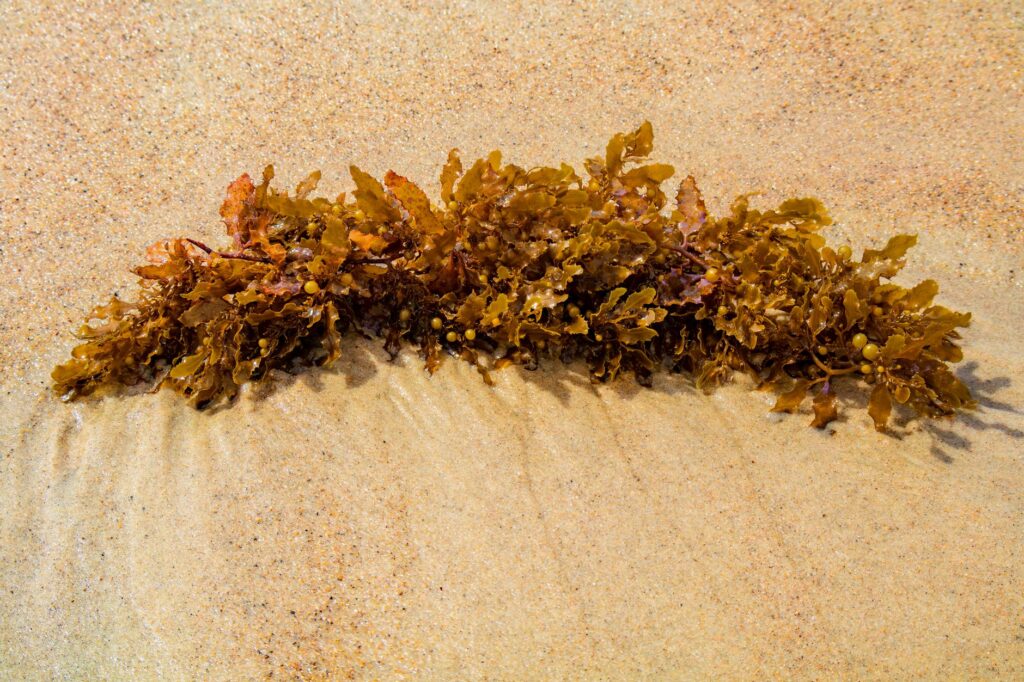
The defining element of this region is the massive presence of floating macroalgae of the genus Sargassum, primarily the species Sargassum natans and Sargassum fluitans. Unlike benthic algae that grow anchored to the seafloor, these species complete their entire life cycle floating freely in the water column. They utilize small gas-filled vesicles, called aerocysts, to stay afloat and absorb direct sunlight. This floating habitat drifts to the rhythm of winds and currents, becoming a true drifting rainforest in the middle of the open ocean.
For centuries, mariners observed this phenomenon with a mixture of fascination and dread. The chronicles of Christopher Columbus’s expeditions describe how ships entered golden meadows that seemed to stretch into infinity, slowing the progress of the caravels and fueling myths about sea monsters and waters of no return. Today, modern science has stripped the region of its aura of supernatural mystery to reveal an even more fascinating ecological reality: the Sargasso Sea acts as a critical nursery, a biodiversity refuge, and a fundamental piece in the Atlantic’s climatic health.
The Dynamics of the Ocean Gyre and Ecosystem Stability
To understand how the Sargasso Sea functions, it is necessary to analyze the physical forces that shape it. The North Atlantic gyre acts as a gigantic natural centrifuge. The peripheral currents circulate clockwise, trapping water and floating debris toward the center while largely preventing mixing with the cold, nutrient-rich waters of the surrounding depths. As a result, the sea surface within the gyre is slightly elevated relative to the average level of the outer ocean.
This dynamic generates extreme oceanographic characteristics. The waters of the Sargasso Sea are among the clearest in the world, with visibility that can exceed sixty meters in depth due to the scarcity of suspended phytoplankton. The lack of mineral nutrients limits primary productivity in the open sea, but the sargassum algae themselves and their associated community have developed remarkable metabolic adaptations to thrive in this blue desert. Nutrient recycling within the floating biomass is highly efficient, allowing the community to maintain a stable biomass throughout the seasons.
The Sargasso Sea is not a static geographical accident, but a masterpiece of planetary hydrodynamics, where currents act as invisible walls protecting a unique high-seas ecosystem.
Furthermore, the surface water temperature remains elevated year-round, ranging from eighteen degrees Celsius in winter to twenty-eight degrees in the height of summer. This thermal stability turns the zone into a subtle yet constant climatic regulator. Interactions between the atmosphere and the ocean in this sector influence the formation of weather systems and the intensity of hurricanes that subsequently cross toward the Caribbean Sea and the American continent.
The Floating Forest: Biodiversity and Endemism on the High Seas
The golden mats of Sargassum constitute a three-dimensional floating ecosystem that supports a rich and diverse community of marine organisms. Several animals have evolved to develop perfect cryptographic camouflage, mimicking the color, texture, and even lobed shapes of the leaves and vesicles of the algae. Among the most notable examples are the sargassum fish (Histrio histrio), a relative of anglerfish that spends its entire adult life hopping among the fronds, and specific crabs such as Planes minutus, whose limbs are adapted to firmly grasp the floating thallus.
This habitat also serves as a critical refuge for the juvenile stages of numerous pelagic species of commercial and ecological importance, including needlefish, dolphinfish, tunas, and marlins. These animals find among the algae not only protection against larger predators patrolling the open waters, but also a constant source of food in the form of small crustaceans, copepods, and larvae of other marine invertebrates that form the base of the trophic web.
Sea turtles, particularly loggerhead turtle hatchlings (Caretta caretta), depend critically on these natural rafts during the first years of their life cycle. After emerging from nesting beaches in North America or the Caribbean, the tiny turtles swim offshore until they reach the Sargasso Sea. There they find abundant food and safe refuge from oceanic predators, using the algae mats as a floating home while growing large enough to venture into the open ocean as independent juveniles.
The Great Mystery of Eels: Migration and Life Cycle
One of the most extraordinary chapters in marine biology is inextricably linked to this inland sea. Both the European eel (Anguilla anguilla) and the American eel (Anguilla rostrata) undertake titanic migrations from the rivers, estuaries, and freshwater lakes of Europe and North America to converge in the Sargasso Sea for a single purpose: reproduction.
For decades, scientists debated the exact spawning point of these species until pioneering research by the Dane Johannes Schmidt in the early twentieth century revealed that the smallest and youngest larvae, known as leptocephali, were found exclusively in the waters of the Sargasso Sea. The adults, after sexually maturing and transforming their anatomy to withstand the pressure and salinity of the deep ocean, swim thousands of kilometers guided by geomagnetic cues, currents, and temperature.
Once in the depths of the sea, between two hundred and one thousand meters below the surface, spawning takes place. The adults die after reproduction, completing a biological cycle that astonishes with its complexity. The transparent, willow-leaf-shaped larvae are captured by the Gulf Stream, which acts as a natural conveyor belt, distributing them over several years toward European and American coasts, where they transform into glass eels and ascend rivers to live as adults for decades before beginning the return journey.
Contemporary Threats: Pollution and Climate Change
Despite being located on the high seas, far from the direct sovereignty of any single nation, the Sargasso Sea faces unprecedented environmental pressures in recent history. One of the most visible problems is the accumulation of plastics and microplastics. Due to the operation of the ocean gyre, which acts as a sink for floating waste, tons of synthetic garbage from human activities on land and maritime traffic become trapped among the algae, altering the chemical composition of the water and endangering wildlife that mistakes plastic fragments for food.
Concurrently, global warming and ocean acidification threaten to alter the chemistry and temperature of surface waters. Changes in water temperature directly affect algal metabolism and the stability of associated biological communities. Furthermore, alterations in global wind and current patterns could modify the extent and drift of floating meadows, destabilizing the migratory corridors of species that depend on them.
Another complex phenomenon is the massive proliferation of sargassum biomass on the coasts of the Caribbean and the Gulf of Mexico, driven by increased nutrients from agricultural and industrial runoff in large continental rivers, as well as climate variability. Although this phenomenon occurs primarily in peripheral coastal zones, it reflects the general perturbation of biogeochemical balances connecting the open Atlantic waters with continental shelves.
Conservation Strategies in International Waters
The legal protection of the Sargasso Sea represents a monumental challenge due to the principle of freedom of the high seas enshrined in international law. Because it does not belong to the exclusive jurisdiction of any coastal State, the management and conservation of its resources require multilateral cooperation between governments, scientific organizations, and international bodies.
A crucial milestone in this effort was the signing of the Hamilton Declaration in March 2014, promoted by the government of Bermuda along with several countries and conservation organizations. This intergovernmental agreement established the Sargasso Sea Commission, whose primary objective is to promote the conservation of this ecosystem through scientific research, monitoring of navigation and fishing activities, and public education on the ecological importance of the high seas.
Effective management of the Sargasso Sea serves as a definitive stress test for global ocean diplomacy, demonstrating whether the international community is capable of protecting critical habitats located beyond national borders.
Scientists insist on the need to designate specific marine protected areas within the subtropical gyre that restrict destructive fishing practices, such as deep-sea bottom trawling, and regulate commercial vessel traffic. The recent ratification of the United Nations High Seas Treaty (BBNJ) opens a hopeful legal pathway to establish these safeguards in international waters, providing the scientific community with legal tools to shield the planet’s most vulnerable pelagic ecosystems.
Practical Information for Researchers, Navigators, and Conscious Travelers
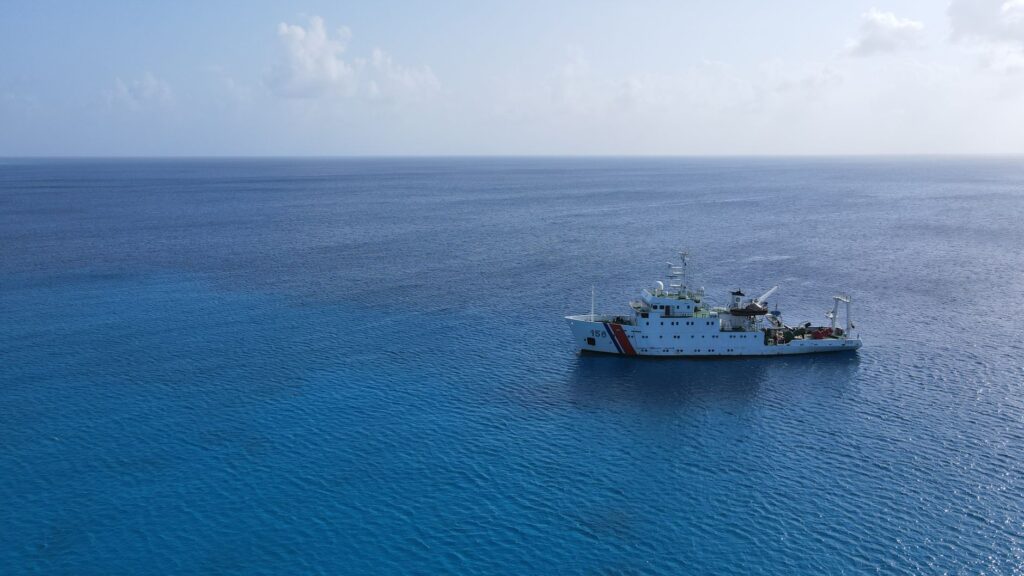
Due to its location in the middle of the Atlantic Ocean, the Sargasso Sea is not a conventional tourist destination accessible via commercial cruises or regular ferry routes. Navigation in the area is primarily reserved for scientific expeditions, oceanographic vessels, and experienced ocean sailors crossing the Atlantic between Europe, the Caribbean, and North America.
- Geographical Location: Situated in the western quadrant of the North Atlantic, approximately between meridians 30°W and 70°W and parallels 20°N and 35°N, east of the Bermuda Islands.
- Maritime Access: The closest and most logistically viable land support point for study expeditions or navigation is the Bermuda archipelago, which features port infrastructure and marine research centers.
- Weather Conditions: The area is predominantly warm and sunny, but is subject to the influence of seasonal hurricanes between the months of June and November, meaning any journey requires rigorous weather monitoring.
- Environmental Regulations: Any vessel navigating the area must strictly comply with international conventions on zero discharge at sea (MARPOL) and avoid unauthorized alteration or harvesting of sargassum biomass.
- Citizen Science and Research: International initiatives allow private sailors to record marine fauna sightings, water temperatures, and plastic presence to collaborate with global scientific databases.
Visual Closing: The Golden Mirror of the Atlantic
Observing the Sargasso Sea from the deck of a vessel during an Atlantic crossing is contemplating one of nature’s most beautiful paradoxes: a liquid desert that blooms in the distance, where life organizes itself without any anchor other than the current itself. The vast expanses of golden algae, rocked by the sea breeze under an immense sky, remind us that the Earth is a deeply interconnected system, where invisible processes occurring on the high seas determine the health of continental rivers and the stability of distant coastlines.
At a time when oceans face unprecedented pressures from human activity, understanding and protecting this floating sanctuary transcends mere academic interest. The Sargasso Sea remains a testament to evolutionary resilience and an urgent reminder of our collective responsibility for natural spaces that recognize neither flags nor borders, demanding a firm global commitment to ensure that the great golden heart of the Atlantic continues to beat in freedom.