
The Persistence of a Territory with Its Own Vocation
In the southern expanse of Mexico City, the ancient settlement of Coyoacán maintains a rhythm far removed from the metropolitan urgency that surrounds it. Walking through its cobblestone streets means noticing a layout that traces its roots back to pre-Hispanic times, when the lakeshore and freshwater springs defined aquatic life. With a population exceeding six hundred thousand residents within its borough, this space has managed to preserve a human scale where single-story houses with colorful facades and wide entrance halls continue to shape the urban experience. The arriving traveler discovers that heritage here is not confined solely to museums, but instead inhabits the tempered afternoon air, the sound of church bells, and the residents’ willingness to keep the doors of community memory open.
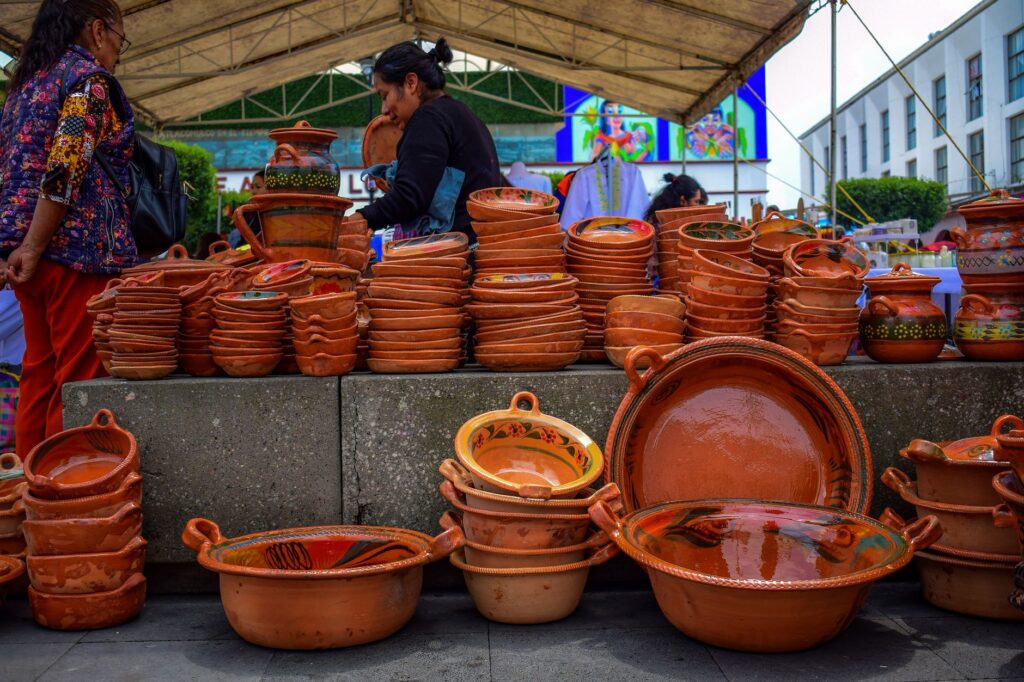
The urban geography of this Mexican enclave is articulated through a network of leafy squares and small plazas that function as true outdoor living rooms. Plaza Hidalgo and Jardín Centenario serve as the nodes where the footsteps of locals and visitors converge, creating a dynamic mosaic of everyday interactions. Indian laurel trees cast dense shadows over wrought-iron benches, while artisans and food vendors set up their stalls with a naturalness that clashes with standardized commercial circuits. This balance between the preservation of the historic environment and present-day social dynamics defines the unique character of the area, making it an essential reference point for understanding the cultural evolution of the central valley.
Viceregal Architecture and the Permanence of Volcanic Stone Walls
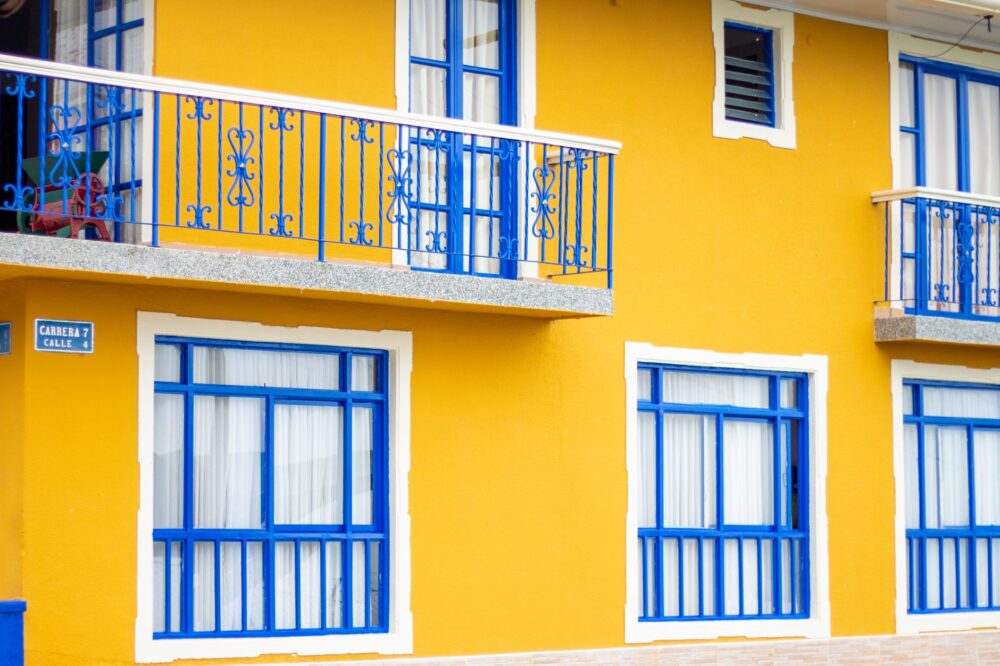
The use of tezontle and grey cantera stone characterizes the historic masonry flanking Coyoacán’s main thoroughfares. These volcanic stones, quarried from nearby pedregales, give buildings a visual solidity that has weathered centuries of political and urban transformation. One- and two-story houses with sloping tile roofs and central courtyards surrounded by arcades demonstrate a mastery of domestic space designed to mitigate climate severity and foster family coexistence. Each facade tells a story of adaptation, where ornamental elements of viceregal lineage blend with the simplicity of whitewashed walls.
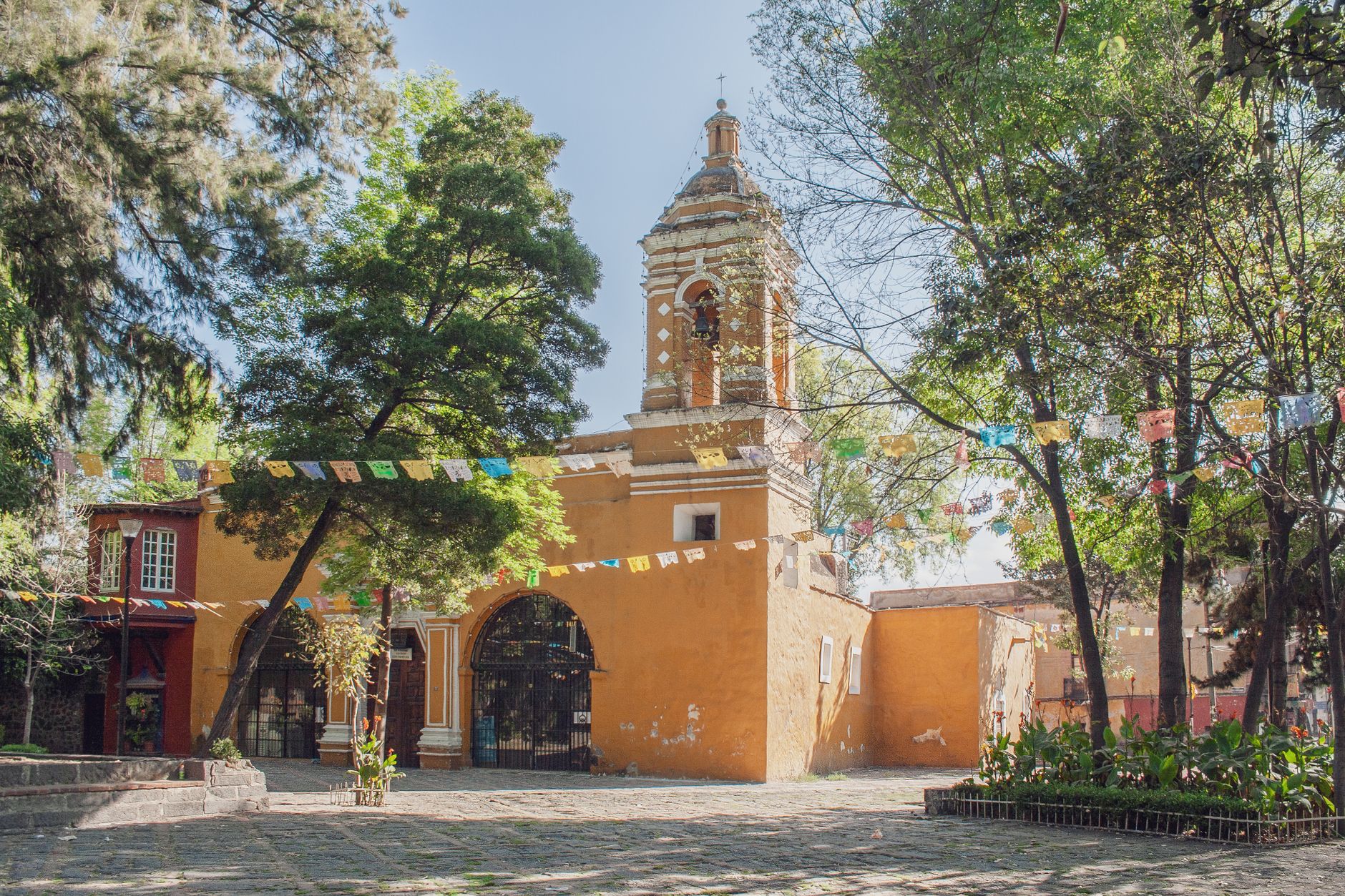
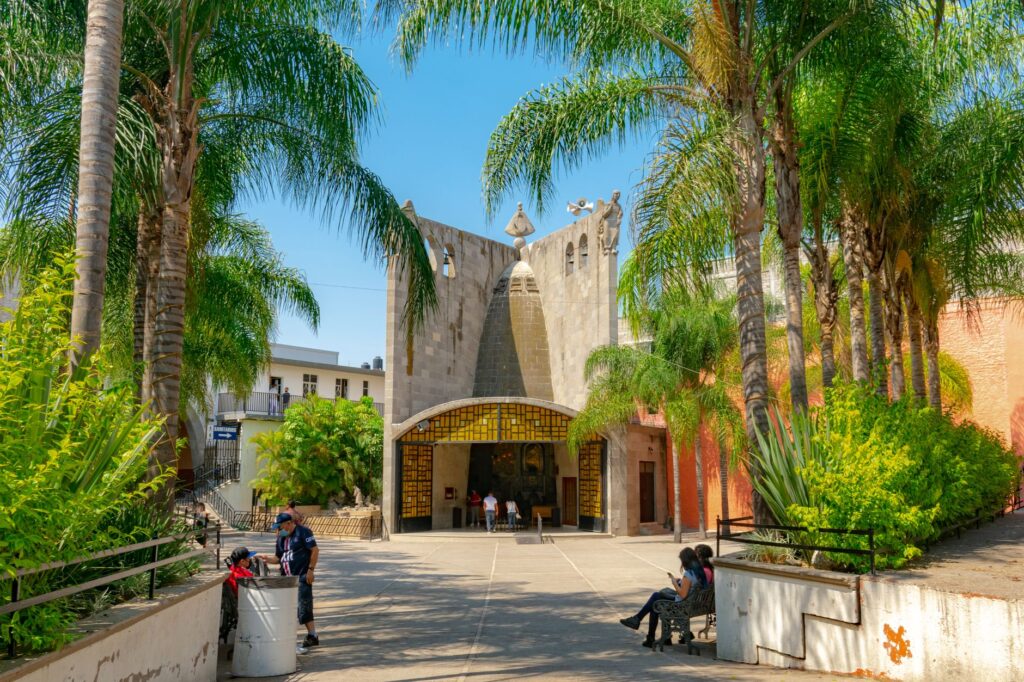
Among these structures, churches and former monasteries stand out, having structured the region’s spiritual and administrative life during the New Spanish period. The church of San Juan Bautista, featuring a leafy atrium and a carved stone doorway, exemplifies the artistic synthesis that took shape in the sixteenth century through the work of local artisans under the guidance of religious orders. Its interior altars and preserved mural paintings allow observers to read layered meanings of cultural significance. The attentive visitor notices that architecture here is not merely a scenographic backdrop, but a living organism that conditions how light enters courtyards and how street noise softens upon crossing the threshold.
The Mercantile Pulse in Neighborhood Markets
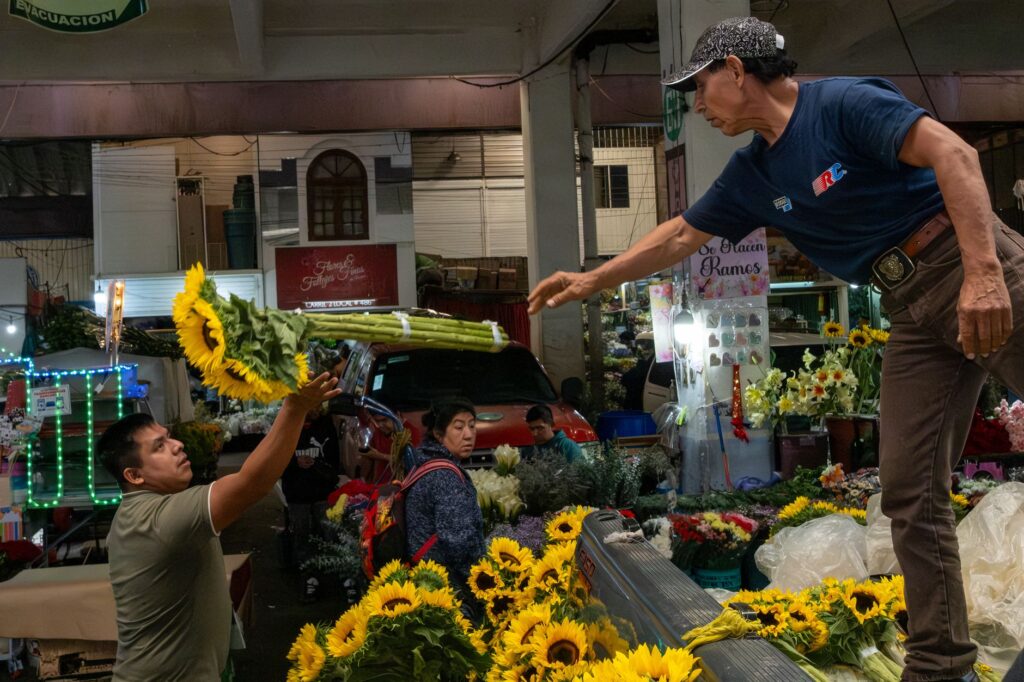
Beyond monumental circuits, Coyoacán’s vitality is experienced with unusual intensity in its public markets. The Coyoacán Market, opened in the middle of the last century, constitutes a neuralgic center where proximity economics and regional agriculture meet. The interior aisles display an inexhaustible palette of colors and aromas: from dried chiles arranged in conical heaps to fresh aromatic herbs used in traditional cooking, alongside seasonal fruits from the agricultural zones south of the Valley of Mexico. Here, commercial exchange maintains a strongly human component, based on direct conversation between stallholders and consumers.
Market food stalls prepare dishes that summarize a mestizo culinary heritage, from nourishing broths to snacks crafted from native corn. Observing these dynamics allows visitors to understand that everyday food is not an isolated fact, but the continuation of ancestral knowledge passed down through generations. Diners share communal tables in an atmosphere where social differences dissolve in favor of the shared pleasure of the meal. This respect for local produce and traditional recipes represents a fundamental line of defense against the homogenization of global consumption habits.
Literary and Artistic Legacy in the Streets
The peaceful atmosphere and beauty of its corners turned Coyoacán, during the twentieth century, into an undisputed magnet for creators, intellectuals, and artists from diverse latitudes. Painters, writers, and photographers found in this old neighborhood the necessary stillness and inspiration to develop works that shaped Ibero-American culture. Tree-lined streets and houses with large orchards offered a propitious refuge for gathering and critical thought. Even today, walking beside the high walls of historic residences evokes the presence of those figures who decided to anchor their lives in this volcanic soil.
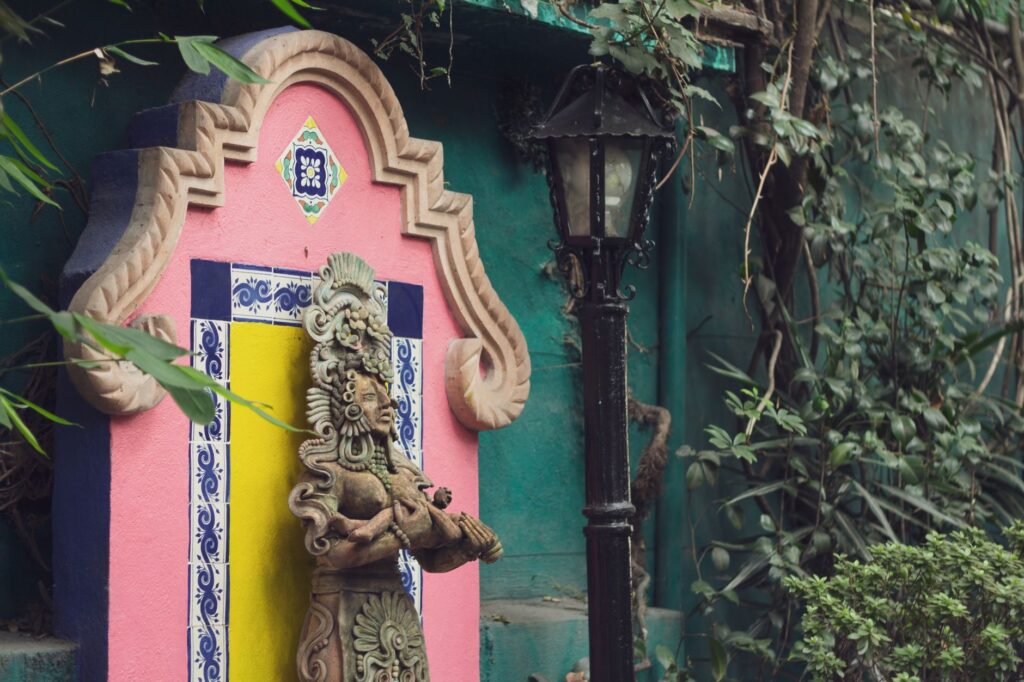
Spaces converted today into museums allow visitors to glimpse the creative intimacy of universal figures such as Frida Kahlo and Diego Rivera, whose homes reflect a passion for collecting folk art and integrating pre-Hispanic elements into modern life. Beyond cultural mythology, however, the true legacy of these artists lies in the way they taught people how to look at their surroundings: an acute attention to details of domestic life, the vibrant colors of popular facades, and the dignity of artisanal labor. This cultural substrate continues to influence independent galleries, literary cafes, and print workshops dotting the current urban fabric.
Daily Life in Parks and Traditional Neighborhoods
Coyoacán’s daily rhythm unfolds with special clarity in its traditional neighborhoods such as Santa Catarina and La Concepción, where secondary plazas maintain an intimate, residential scale. In the mornings, residents walk their dogs or buy bread at neighborhood bakeries that preserve traditional ovens. Children play in small squares while older adults converse under the shade of ash trees. This continuity in community practices is the true treasure of the borough, resisting the pressure of mass tourism through the strength of its neighborhood bonds.
On weekends, public space transforms with the arrival of families seeking recreation in public nurseries and parks. Vivero Coyoacán, with its dense forest mass of pines, eucalyptus, and cedars, acts as a green lung and a fundamental center for environmental education where trees destined for metropolitan reforestation are cultivated. Exploring its compacted dirt trails offers a sensory pause where urban bustle is muffled by foliage. It is in these spaces of coexistence that the shared responsibility of caring for a natural and cultural heritage belonging to both past and future becomes perceptible.
Guidelines for a Respectful and Conscious Visit
The constant flow of visitors received by Coyoacán poses the urgent challenge of managing tourism under criteria of sustainability and respect for the resident community. Local authorities and neighborhood committees promote initiatives aimed at discouraging the massive use of private automobiles, encouraging walking and public transit use instead, including nearby metro stations and trolleybus routes. The conscious traveler understands that traversing historic streets requires moderating voice volume, avoiding the obstruction of private accesses, and purchasing primarily from local commerce establishments.
Likewise, the conservation of architectural and environmental heritage requires tourists to adopt a stance of reflective observation, avoiding the alteration of urban elements and respecting access rules to cultural enclosures. Supporting traditional artisans by purchasing their pieces directly, without abusive intermediaries, ensures that the neighborhood economy benefits those who sustain their trades. In this way, the visit ceases to be mere visual consumption and transforms into a respectful exchange contributing to the preservation of neighborhood identity for future generations.
Practical guide
How to get there: Access to Coyoacán from downtown Mexico City can be achieved via Line 3 of the Metro rapid transit system, getting off at Coyoacán or General Anaya stations, or via Line 2 to Tasqueña and transferring to local transport. Various trolleybus and urban bus routes also operate.
When to go: The climate in this area of the central valley is temperate most of the year. The months from November to April offer clear mornings and lower rain probabilities, ideal for outdoor walks. Early mornings and sunsets are the most propitious times to enjoy the tranquility of the plazas.
Where to stay: It is recommended to choose small boutique hotels located in restored mansions or family lodging options in the Santa Catarina and Barrio de la Concepción neighborhoods, allowing for a more authentic immersion in local daily life.
Recommended gastronomy: It is essential to sample traditional snacks at the Coyoacán Market, such as tostadas, sopes, and Oaxacan tamales, accompanied by café de olla prepared with cinnamon and unrefined cane sugar in the historic cafes of the center.
Rules of coexistence: Respect opening and closing hours of churches and museums. Avoid flash photography inside historic enclosures and maintain a discreet attitude in residential areas during nighttime hours.
The Green Refuge and Enduring Memory
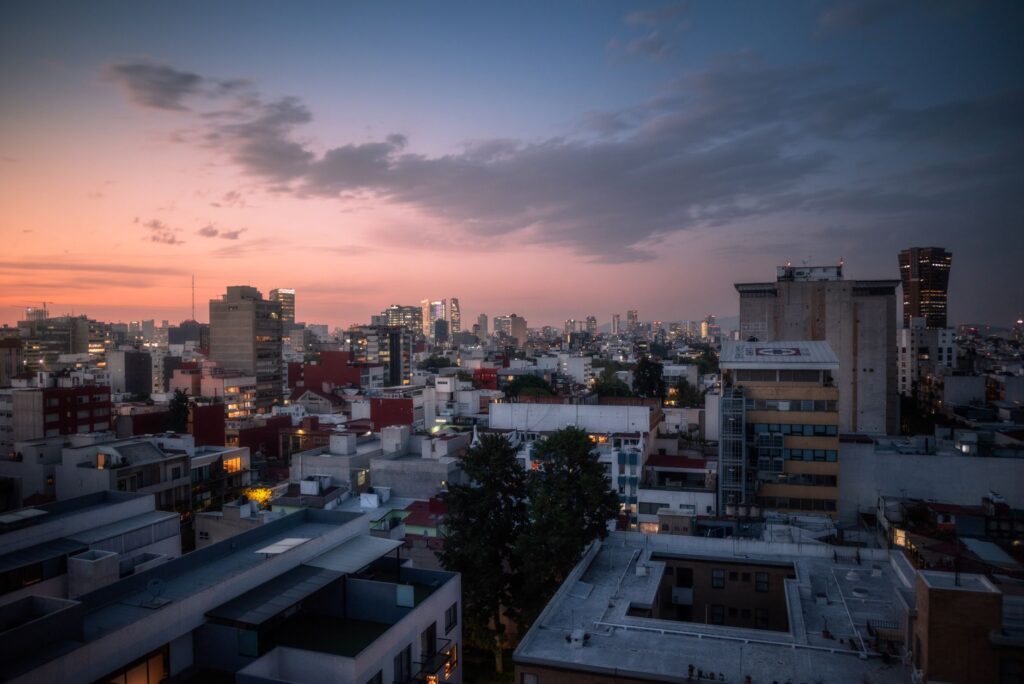
Concluding a tour of Coyoacán requires pausing one’s march and observing how the sunset light dyes stucco walls and colonial church domes in ochre tones. At that precise moment, when the bustle of daytime visitors begins to yield to nocturnal calm, the neighborhood recovers its intimate, essential heartbeat. Plaza benches are reclaimed by longtime residents, those who have seen fashions and governments change without losing their sense of belonging to a community rooted in volcanic earth. Understanding this corner of the southern capital implies accepting that its true value does not lie in the accumulation of monuments, but in the constant capacity of its inhabitants to make daily life an art of harmony and mutual respect.