
The Invisible Geometry of Ancient Streets
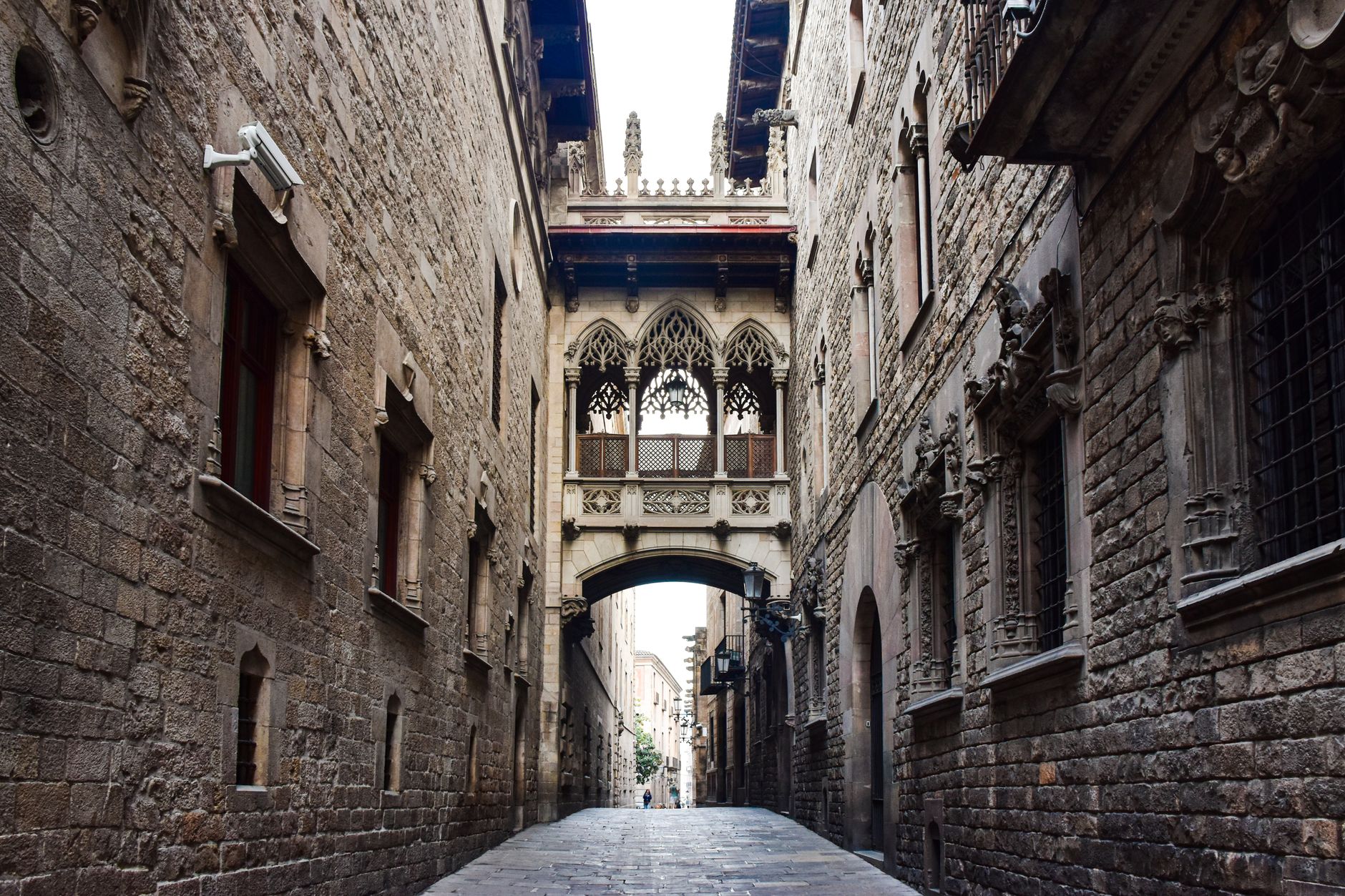
Walking the pavements of Barcelona in Spain means accepting an invitation to decipher overlapping layers of history that endure beneath the pressures of global tourism. In the Gothic Quarter, the stones of Roman walls and the ogival arches of the cathedral coexist with the daily comings and goings of residents buying bread at bakeries opened over a century ago. There is no stage-set artifice in this network of dark alleys and quiet squares such as Sant Felip Neri; what beats here is an urban persistence where every balcony hung with laundry tells a story of rootedness. Barcelonians have successfully protected a communal pulse that manifests in the custom of greeting the lifelong shopkeeper and in the peaceful occupation of stone benches as evening falls.
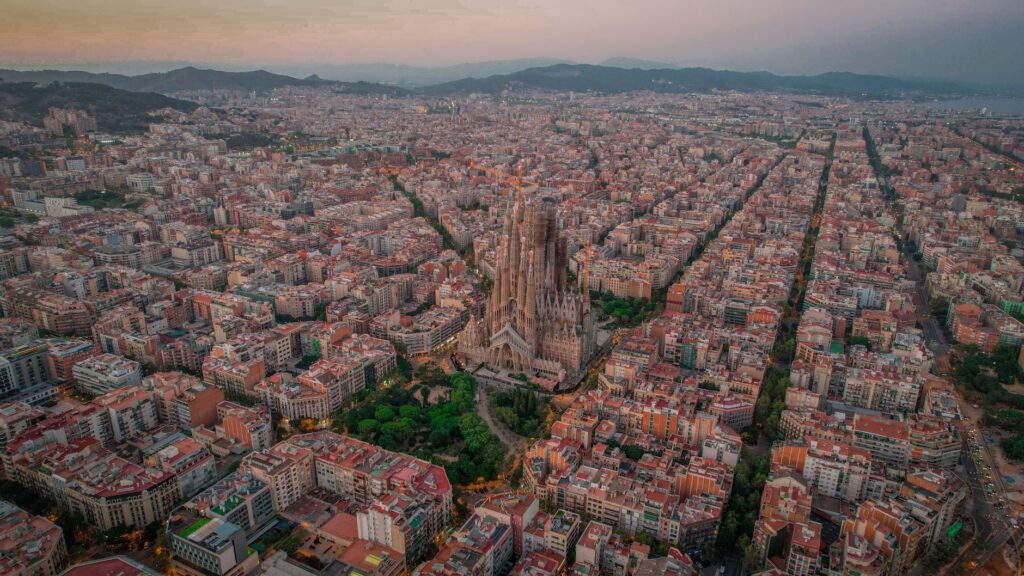
This medieval fabric cannot be understood without its evolution toward the grid expansion designed by Ildefons Cerdà. The chamfered blocks, originally conceived to guarantee ventilation and social equity, transformed the way the community relates to public space. While the historic core narrows visual perspectives, the Eixample opens wide diagonal avenues where the pace accelerates without losing a sense of human proportion. Walking from Plaza de Cataluña to the Sagrada Família basilica allows one to observe how the geometric grid absorbs both mercantile bustle and the pause of those seeking refuge under the shade of urban plane trees.
Modernist architecture, far from being a mere catalogue of ornamented facades for postcards, functions as a reminder of the industrial bourgeoisie that sought to redefine its identity through design. Passeig de Gràcia and its adjoining streets display residential blocks where wrought-iron railings mimic plant stems and interior courtyards act as green lungs within the block. Residents traverse these spaces with the naturalness of those who inhabit a living museum, aware that heritage beauty is also the stage where weekly shopping, portal chats, and morning coffee unfold in terraces sheltered by modernist arcades.
The Flavor of Land and Sea
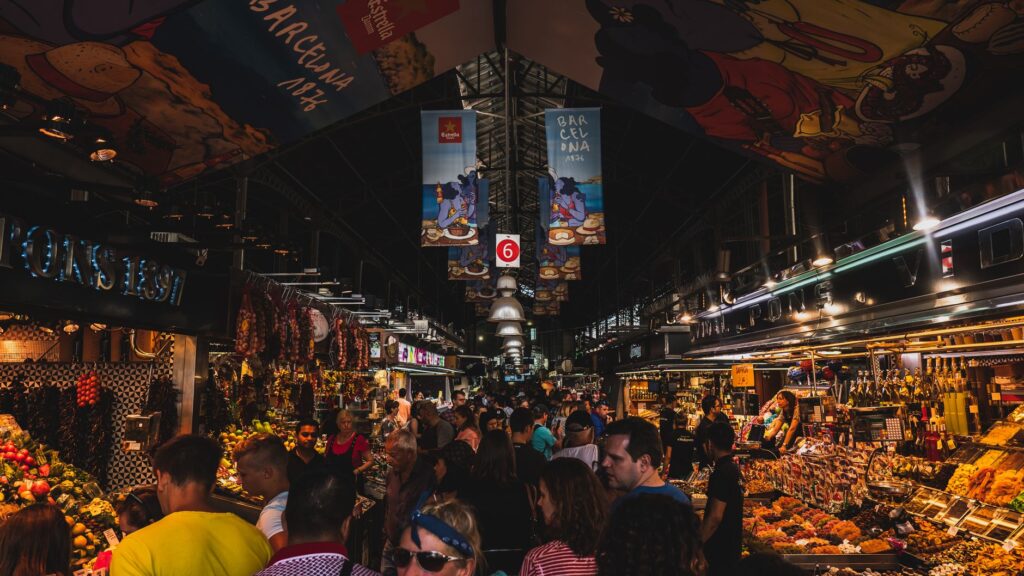
Barcelona’s relationship with food possesses a deep cultural dimension that transcends simple gastronomic offerings for tourists. In municipal markets such as La Boqueria, right on the Rambla, or Santa Caterina, with its undulating multicoloured ceramic roof, Catalonia’s larder unfolds. Stalls featuring fresh fish display catches from the Mediterranean that hours earlier sailed off the coast of the Barcelonès, while charcuterie counters offer cured fuet, bull, and Pyrenean goat cheeses. These enclosures are not merely sales points, but authentic neighborhood agoras where locals discuss the season of El Prat artichokes or the precise boiling point of calçots.
Local cuisine reflects a geographical synthesis between the agricultural plain of Baix Llobregat, the sea, and the interior mountains. Traditional dishes like pa amb tomàquet, escudella, or seafood rice are part of a domestic liturgy passed down from generation to generation. In neighborhood taverns in Poblenou or Sant Andreu, menus written in Catalan remind visitors that the local language is the natural vehicle for naming the products of the land. Locals visit these establishments not out of trendiness, but for the fidelity to recognizable flavors that structure festive calendars and weekend family gatherings.
The phenomenon of responsible dining has gained ground in recent years, driven by chefs and small producers who champion zero-kilometer ingredients and sustainable fishing. This commitment to local produce not only preserves the agricultural landscape surrounding Barcelona, but also educates the visitor in respecting natural cycles. When a restaurant in Ciutat Vella or Gràcia announces vegetables grown in the Baix Llobregat agrarian park, it is establishing a pact of trust with the diner, reminding them that every dish carries the implicit effort of farmers defending their trade against urban pressures.
Working-Class Memory and Industrial Character
Beneath the artistic and tourist surface, Barcelona preserves the stubborn memory of its industrial past. Neighborhoods like Poblenou, formerly known as the Catalan Manchester due to the density of their red-brick chimneys and textile factories, have transformed their manufacturing spaces into cultural creation centers, universities, and loft-style housing without renouncing their past. The former textile and metalworking warehouses now host design cooperatives, artist workshops, and civic centers where local residents participate in pottery workshops and community theater. This reconversion demonstrates a capacity for urban resilience very specific to Catalonia.
Workers’ and neighborhood associations have been the engine that has prevented the depersonalization of these industrial enclaves. Neighborhood festivals, such as those in Gràcia or Sants, are the most visible example of this community self-management. During a week in August, residents organize for months to decorate streets with recycled materials, turning roadways into papier-mâché jungles, seabed scenes, or tributes to literature. This collective celebration reinforces neighborly ties that counteract the anonymity of large cities and remind us that the city belongs, above all, to those who inhabit it daily.

The memory of the labor movement is also legible in the headquarters of former workers’ athenaeums and consumer cooperatives still operating in peripheral districts like Horta or Nou Barris. These spaces, created in the late 19th and early 20th centuries by organized working classes, functioned as schools, libraries, and centers for political debate. Today, their recovery as self-managed cultural centers ensures that new generations know the history of a city built on collective effort, class solidarity, and a strong yearning for cultural emancipation.
Blue and Green as Natural Boundaries
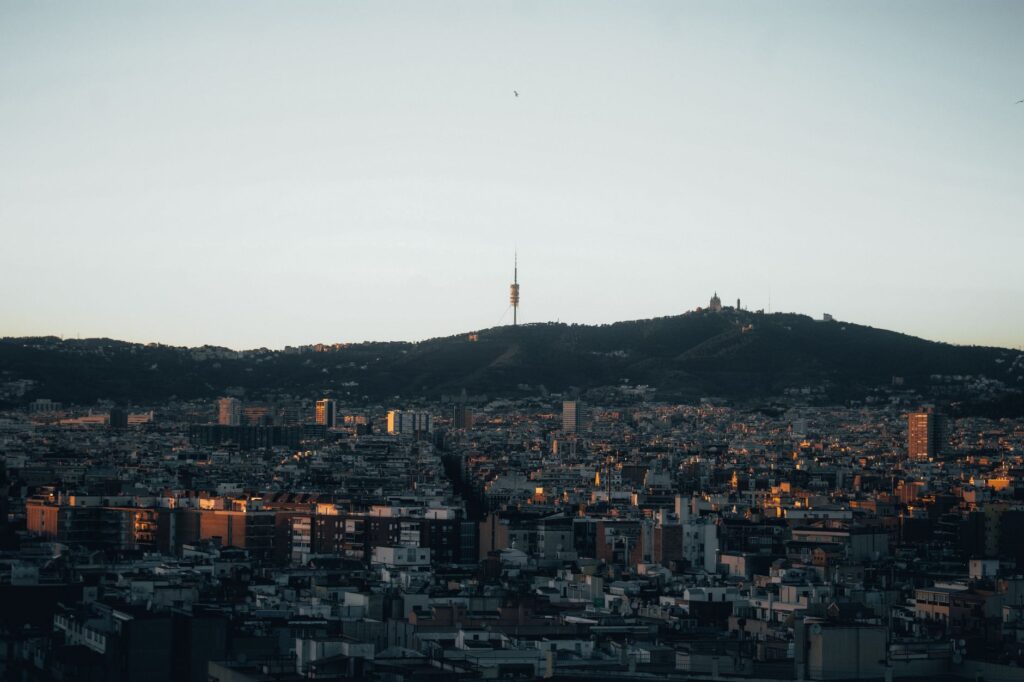
Barcelona’s physical geography strictly defines its character between the Collserola mountain range and the open waters of the Mediterranean Sea. This amphibious condition gives its inhabitants a very specific perspective of the territory. On one hand, the Collserola mountain acts as a green belt of over eight thousand hectares that curbs urban expansion and offers trails where local hikers seek silence among pine and holm oak forests. From viewpoints like Tibidabo, the metropolis unfolds as an orderly grid that flows into the blue line of the marine horizon, reminding us of the fragility of ecological balance.
On the other hand, the Barcelona coastline, profoundly transformed for the 1992 Olympic Games, has recovered its condition as an accessible public space. Beaches like Barceloneta or Bogatell are no longer merely summer bathing zones, but meeting areas where citizens exercise at dawn, walk dogs, or gather to converse facing the waves. The recovery of this maritime front has changed the orientation of the city, which for decades turned its back on the sea to focus on its interior manufacturing activity. Today, the blue of the Mediterranean is a constant visual reference that moderates the climate and defines the open temperament of the citizenry.
The balance between these two natural extremes demands rigorous management policies from local administrations. Recurrent drought in the Mediterranean basin and tourist pressure on the protected natural spaces of Collserola force a rethinking of water use and mobility. Residents increasingly participate in sustainability committees and urban gardens, demonstrating that defending the natural environment is no longer a technical issue exclusive to experts, but a transversal civic demand that conditions the future of the Catalan capital in the 21st century.
Cultural Life in Athenaeums and Bookshops
Barcelona’s intellectual pulse beats in its independent bookstores and cultural athenaeums scattered across different districts. Places like the Ateneu Barcelonès on Canuda Street are not merely study centers, but laboratories where literature, politics, and art have been debated since the 19th century. In these stately mansions, converted into intergenerational meeting points, conferences and poetry recitals are held, keeping alive a tradition of critical thinking deeply rooted in Catalan culture. Members come to read the press in silence in the reading rooms or to debate in the historic cafés where figures of the stature of Joan Maragall or Mercè Rodoreda once gathered.

In parallel, the network of neighborhood bookshops, specializing in essays, Catalan narrative, or children’s literature, functions as a capillary tissue that resists the standardization of large commercial surfaces. Independent booksellers act as cultural prescribers, recommending new releases and recovering forgotten classics on solid wood shelves. These bookstores organize book presentations, reading clubs, and writing workshops that turn the act of buying a book into a social experience. Neighbors enter looking for a specific read and leave with the weekend’s cultural activity agenda under their arm.
Municipal civic centers complement this decentralized cultural map. Often located in restored historic palazzos or modern architectural facilities, these centers offer everything from Catalan language courses for newcomers to documentary photography exhibitions, independent film cycles, and traditional dance workshops like the sardana. This democratization of culture ensures that access to art and knowledge is not an exclusive privilege of large museum institutions, but a daily right within reach of any resident in their own district.
Sustainable Mobility and Pedestrian Pace
Getting around Barcelona requires a constant negotiation among pedestrians, cyclists, public transport users, and drivers of motorized vehicles. The implementation of the orthogonal bus network and the expansion of bike lanes have substantially modified the mobility habits of Barcelonians. Superblocks, urban projects that restrict vehicular traffic inside several Eixample blocks to return space to pedestrians, have become international laboratories for tactical urbanism. In these spaces freed from engine noise, children play on the pavement and residents set up benches and tables to chat without traditional acoustic pollution.
The metro and regional trains complete a capillary public transport system that makes it possible to dispense with private cars for the vast majority of daily commutes. Users read books, newspapers, or simply observe the comings and goings of a diverse society while trains run beneath the city’s subsoil. This reliance on collective transport fosters a silent yet constant coexistence, where citizens share the same underground rhythm connecting peripheral districts to the historic center in minutes.
Despite these advances in sustainable mobility, challenges persist. Tourist overcrowding during peak hours on the most central lines and congestion on metropolitan access routes constantly require planning new investments in rail and metropolitan transport infrastructure. Neighborhood collectives demand a balance between the needs of international tourism and the residents’ right to efficient and affordable public transport, reminding us that urban mobility must serve those who live and work in the city year-round.
Invisible Heritage and Popular Religiosity
Beyond the most photographed monuments, Barcelona’s historical heritage hides traditions of popular religiosity and neighborhood festivities rooted in medieval centuries. Holy Week processions in Ciutat Vella or festivities dedicated to La Mercè, the patron saint of the city, mobilize brotherhoods, choral groups, and castelleras groups that raise monumental human towers in squares and courtyards. These manifestations are not mere folkloric attractions, but living expressions of social cohesion where entire families participate for months in rehearsals and preparations.
The colles castelleras, recognized as Intangible Cultural Heritage of Humanity by UNESCO, represent a perfect metaphor for the Catalan character: strength, balance, courage, and seny. Building a castell requires millimeter coordination where each member of the base supports the weight of companions climbing to the summit. Watching a pilar de quatre rise in a small square in the Gràcia neighborhood or in front of the Santa Maria del Mar basilica transmits a collective emotion that transcends sport to become a ritual of identity and community affirmation.
This intangible heritage is completed by the preservation of traditional artisan trades in workshops of the old town, from luthiers repairing cellos to cabinetmakers restoring modernist furniture. These artisans, who often rent premises with protected old contracts, keep alive manual techniques that mass industry has left behind. Their presence in the secondary streets of the Gothic Quarter or La Ribera provides a unique human and labor texture, reminding the visitor that the authenticity of a great European capital lies in the survival of its daily trades and respect for its material memory.
Practical guide for a conscious visit
Traveling to Barcelona in the 21st century requires adopting a reflective attitude that minimizes impact on residents’ lives and protects cultural heritage. The phenomenon of gentrification and tourist overcrowding in certain points of the historic center has strained the housing market and neighborhood coexistence. Therefore, choosing regulated accommodations outside saturated cores, respecting nighttime quiet in residential streets, and avoiding inappropriate use of public space are basic rules of civic courtesy that every visitor must observe.
Supporting local commerce by shopping in food markets, consuming in neighborhood establishments, and hiring cultural guides who explain the city’s real history without falling into folkloric clichés contributes to a fairer tourist economy. Likewise, prioritizing travel on foot, by bicycle, or via the extensive public transport network reduces the carbon footprint and relieves congestion on main arteries. The Catalan capital offers its best version to those who take the time to walk without haste, observe architectural details, and listen to everyday conversations in neighborhood squares.
Key recommendations for the responsible traveler in Barcelona:
- Regulated accommodation: Choose officially licensed hotels or tourist apartments located in different districts to decentralize visitor flows.
- Efficient transport: Use the metro, urban buses, and the bike lane network, avoiding private vehicles for metropolitan journeys.
- Neighborhood commerce: Conduct daily shopping in municipal markets and small establishments to support local economy.
- Neighborly respect: Mind volume and behavior in residential and historic zones, remembering that tourism and daily working life coexist.
- Local culture: Engage with intangible heritage, attend civic centers, and value the use of Catalan as the native and vehicular language of the territory.