The secret cartography of the estuaries
For decades, the vast aquatic labyrinths of eastern India remained far outside conventional tourist routes. While tiger safaris monopolized international headlines, the muddy estuaries and dense mangroves harbored one of the planet’s most formidable predators: the saltwater crocodile. This prehistoric reptile, capable of exceeding six meters in length, lived in near-absolute anonymity, protected solely by the geographical inaccessibility of its habitat and minimal media attention. The lack of infrastructure and the local communities’ reverential fear of these aquatic colossi kept the region entirely off the radar of wildlife travelers.
The turning point did not originate from a massive government campaign, but rather from rigorous exploratory journalism. A travel guide published by The Christian Science Monitor documented with scientific precision and ethnographic sensitivity the rich biodiversity of these wetlands. By detailing the complex interaction between wildlife and riverside populations, the report demonstrated that crocodile observation could be managed under strict conservation parameters. The publication mapped a destination that combined ecological rigor with genuine adventure, drawing the attention of naturalists worldwide.
The rediscovery of the estuary
The publication’s breakthrough into the international arena forced local forestry authorities to rethink territorial management. What was once an unregulated buffer zone quickly transformed into an experimental model for low-emission tourism. Strict limits were established on the number of boats permitted in the main channels, and the use of noisy combustion engines in nesting areas during critical breeding months was categorically prohibited. These initial measures ensured that visitor influxes did not alter the territorial behavior of the reptiles.
Simultaneously, local tour operators were required to undergo rigorous training programs. Approaching the mudbanks where crocodiles sunbathe in the mornings shifted to being conducted exclusively by certified naturalist guides in absolute silence. This qualitative transformation elevated the destination’s profile, attracting wildlife photographers and university researchers rather than mass tourism. The park proved that strict preservation and economic viability could coexist if there was a genuine commitment to the environment.
Liquid architecture and mangroves
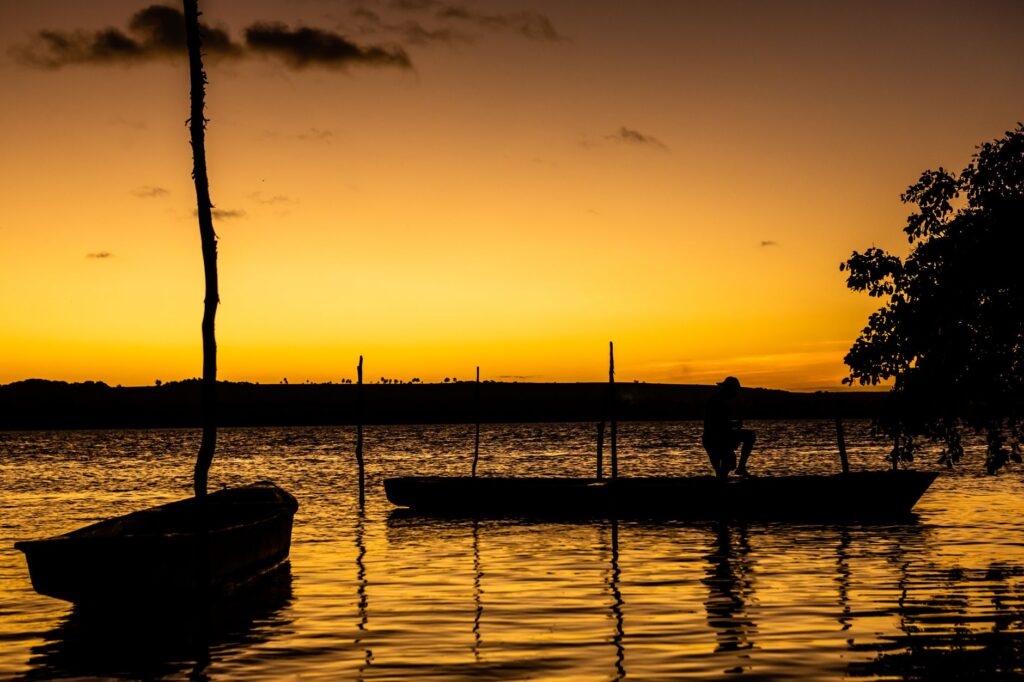
The ecosystem supporting this crocodile population is an intricate network of tides, brackish water channels, and mangrove forests adapted to high salinity. The stilt roots of these plants act as natural barriers against coastal erosion and serve as nurseries for numerous fish and crustacean species. It is within this dense plant labyrinth that crocodiles find the perfect refuge for hunting and camouflage. The landscape’s natural architecture imposes its own rules: human movement must occur in small wooden canoes propelled solely by oars, respecting the rhythms of the tide.

Park management has prioritized the comprehensive conservation of this plant infrastructure over any attempts at urban development. Elevated wooden boardwalks built in peripheral sectors allow visitors to observe the mangrove canopy and watercourses without trampling the fragile soil of the wetland. Every construction element has been designed to minimize the carbon footprint and prevent alterations to natural hydrological flows, which are vital for the survival of endemic flora and fauna.
True ecoturismo is not about bringing nature closer to humans at all costs, but about educating travelers until their need to dominate the environment disappears.
Local communities as guardians of the water
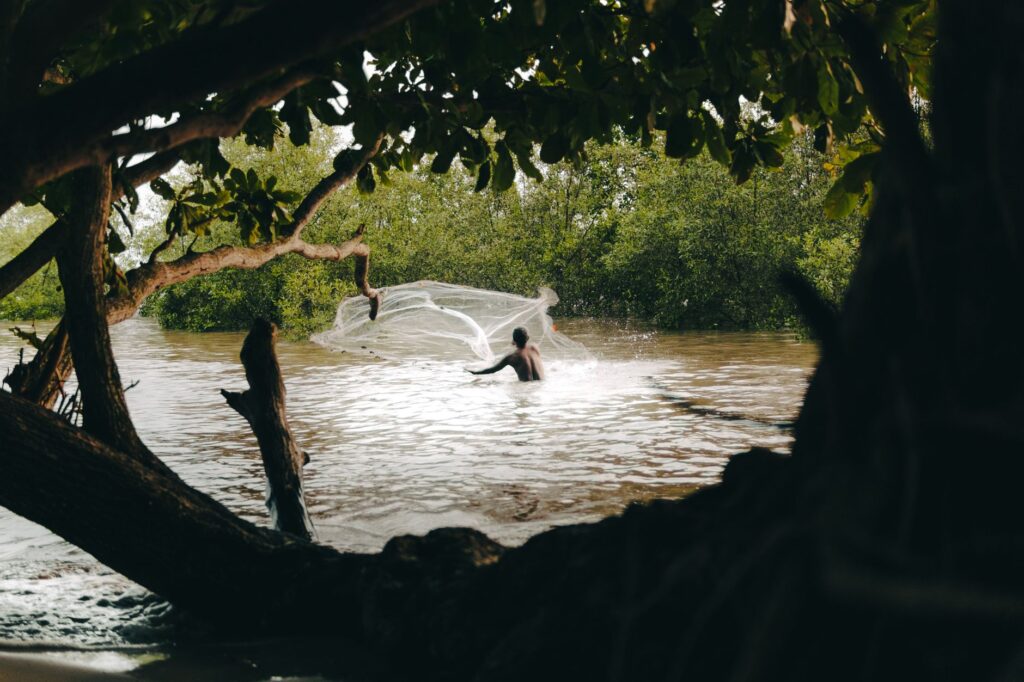
The success of the initiative rests upon the shoulders of traditional fishing communities that have inhabited these margins for generations. Traditionally, the relationship between fishermen and crocodiles was marked by direct conflict due to competition for fishery resources and occasional accidents. However, the arrival of ecotourism driven by the guide offered a viable economic alternative. Former hunters and artisanal fishers were integrated as rangers, boat captains, and expert guides, transforming their profound practical knowledge of the terrain into a fundamental asset for conservation.
This shift in economic paradigm generated a communal sense of ownership and pride toward local wildlife. Today, the residents themselves patrol the area against illegal fishing and poaching. Economic benefits derived from park entrance fees and community-managed lodgings are directly reinvested in local schools and potable water systems, demonstrating that biodiversity protection can tangibly improve human quality of life.

The behavior of the estuary colossi
Studying the saltwater crocodile in its natural habitat requires infinite patience and absolute respect for safety distances. Unlike other Indian species, this reptile exhibits fierce territoriality and remarkable tactical intelligence during hunting. During morning hours, it is common to observe them motionless on muddy banks with their jaws open to thermoregulate their body temperature. This static behavior can be deceptive; their acceleration speed in water and over short distances on land is astonishing.
Researchers have documented complex migratory patterns that lead adult specimens to travel dozens of miles across open sea to colonize new estuaries. The guide emphasized the importance of protecting these marine biological corridors, arguing that confining animals to the strict limits of a terrestrial national park is insufficient to ensure the species’ genetic viability over the long term. The preservation of brackish water routes is therefore a non-negotiable scientific priority.
Contemporary challenges and climate change
Despite the international recognition achieved, the refuge faces formidable threats beyond local control. The increasing frequency and intensity of tropical cyclones in the Bay of Bengal drastically alter estuary salinity and destroy hectares of protective mangroves. Likewise, gradual sea-level rise progressively reduces the sandy beaches where females deposit their eggs, forcing them to seek nesting zones further inland, which inevitably increases the likelihood of conflict with surrounding human populations.

Faced with this scenario, park managers and scientists collaborate on satellite monitoring programs to track climate impacts on reptile populations. Artificial mangrove nurseries have been implemented to accelerate the reforestation of degraded coastal zones. The current challenge consists of maintaining the balance between visitor flow generating conservation revenue and the ecological carrying capacity of an ecosystem increasingly fragile and battered by the global climate crisis.
Protecting the final refuge of the great reptiles is not an act of ecological nostalgia, but the ultimate test of our ability to share the planet.
Practical information for the responsible traveler
Visiting this sanctuary demands rigorous planning and absolute respect for local regulations. The optimal wildlife observation season extends from November to February, a period when temperatures are moderate and monsoon rains decrease significantly. Access is strictly regulated and requires prior permits issued by the state forestry department, which can be arranged through authorized local tour operators committed to sustainability guidelines.
Travelers must stay exclusively in certified community eco-lodges situated on the periphery of the park, which operate on solar energy and wastewater treatment systems. Wearing neutral-toned clothing is mandatory to minimize visual impact on the environment, and the use of drones or loud audio equipment is strictly prohibited. Additionally, hiring accredited local guides and maintaining a minimum distance of fifty meters from any wild crocodile—both on banks and in the water—is strongly advised.
The horizon of ethical ecoturism
The impact generated by the publication of The Christian Science Monitor demonstrates the transformative power of environmental journalism when grounded in rigor and respect for territories. The park has evolved from a geographical secret into a global benchmark on managing coexistence between large predators and developing human communities. The model proves that tourism can be an effective conservation tool if ecological integrity is prioritized over unbridled economic growth.
The future of these estuaries will depend on continuous adaptive capacity in the face of climate challenges and firmness in enforcing protection regulations. For the contemporary traveler, this destination offers a profound lesson in humility and contemplation. Far from impersonal tourist circuits, the Indian mangroves invite a rediscovery of the intrinsic value of wild nature, reminding us that true adventure lies in observing without disturbing the fragile balance of wildlife.
Source in EN: The Christian Science Monitor (https://news.google.com/rss/articles/CBMipAFBVV95cUxQcm9fZ3lHajNPVXV4Yk1Lc1V0MWUtZEZudE9aSFNfbjRKaDlqdFh3ZTVKekhhc1BlRUhCMkFjUWxEVzZnWWtsSFNXSlotY0pSa0M2aFNDX05ROHpGYkRqR2NqbHNSWmljR2M2R1NVSE1lYThITjVTYnFVbnlCZkhUTElQOC0tNjlYa2FGQVRIbEtYc1g3aDRXdFU1SnhoN2JHd0t6QdIBvgFBVV95cUxQdDBwbC1paWZNUVphTXZySzhOSV9Va2E4MUVTSG5iZnVGQVhWRFBHYTlaeWNMb1J6bTRwZzVjVG1Cd0V4SUxpVENPS2tTQk5OS2hsdFF4TnBTb0FudDlsd294MHpCWm1kQWNQQWQ3dmVLZGV3Z1FPclVmdzJBR3dRMVF3SERFQXJTci15THlVdUtGR1RFZ1d2SkVrUlZxdlpYQ21pdDJ1Q1pRcVo3Rm8tOEVhMThLQWFKYVB0R3lR?oc=5)