
An Alpine Enclave Where Water Sets the Community’s Pace
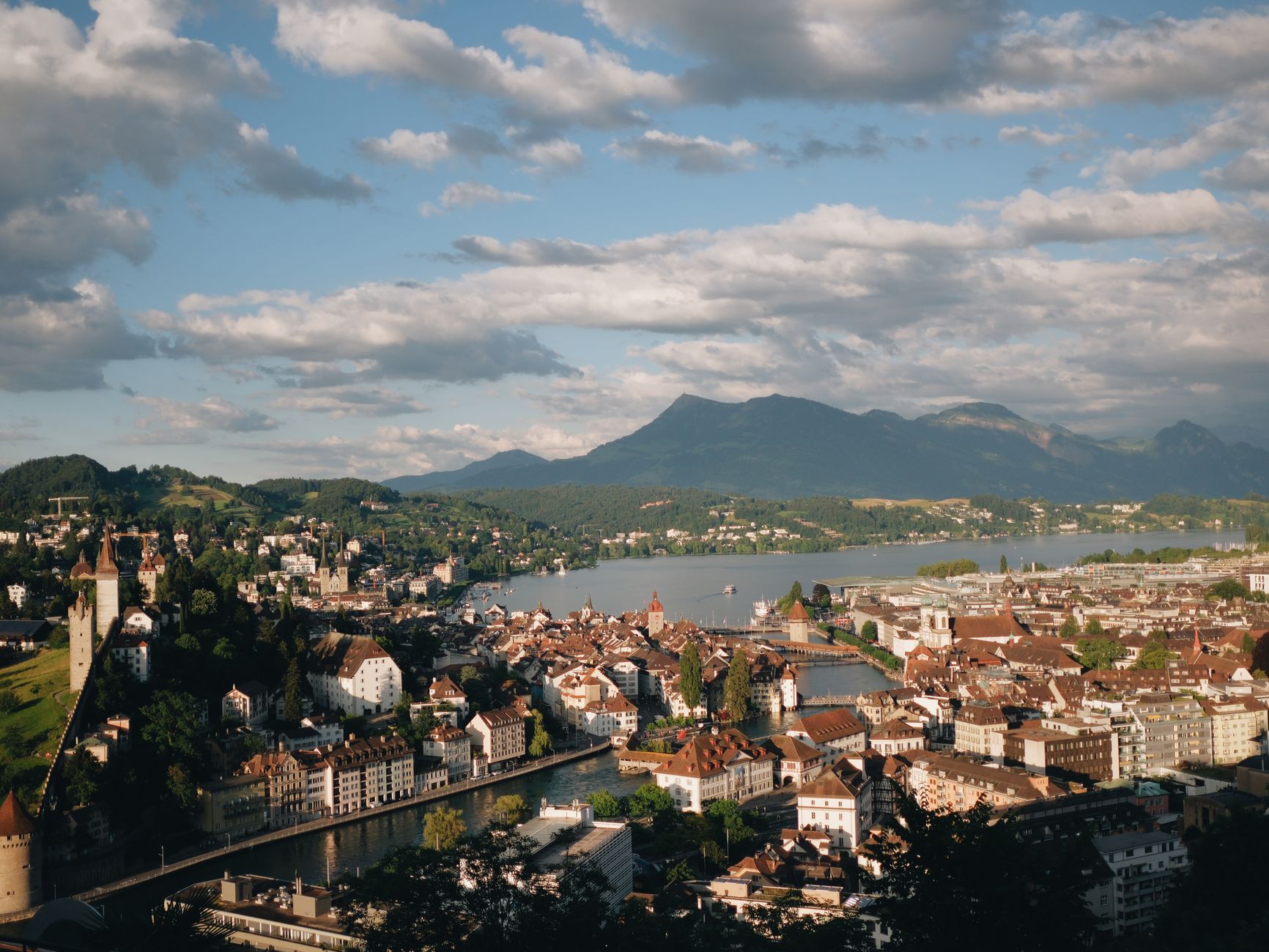
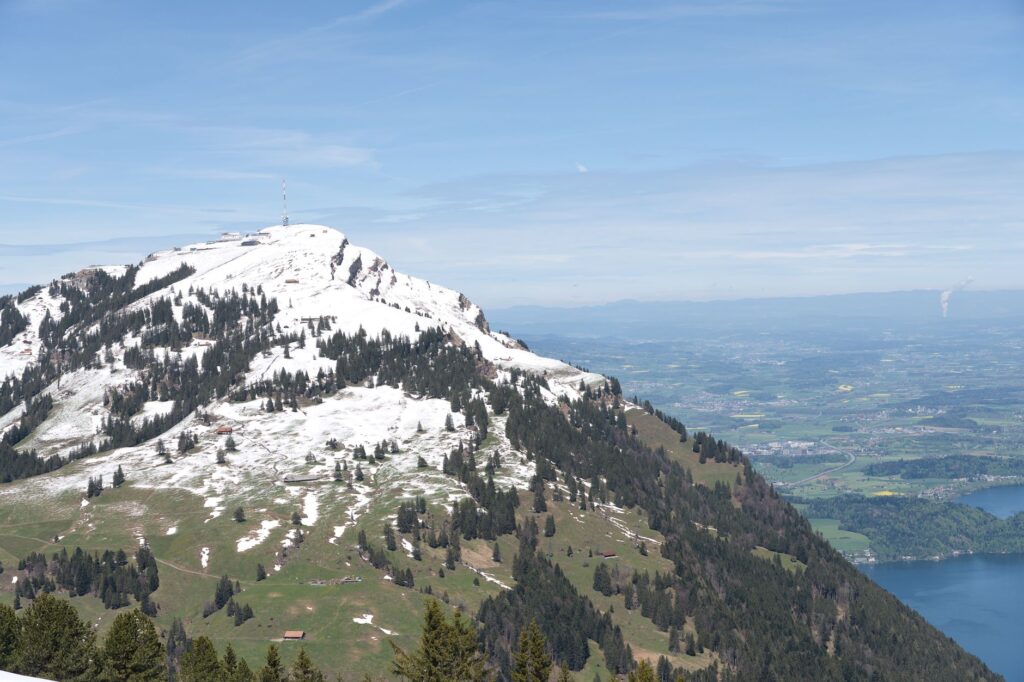
On the shores of Lake Lucerne, the Swiss city organizes its daily life among reflections of snow-capped peaks and an urban fabric that has successfully preserved its human scale. Unlike the country’s major financial centers, here the rhythm is dictated by the steady movement of steam-powered ferries, cyclists along the quays, and the unhurried cadence of morning markets. The geography of the place, nestled between guardian mountains such as Pilatus and Rigi, conditions not only the architecture of pointed rooftops and painted facades, but also the way residents understand their relationship with the natural environment.
Local identity is woven in the small squares of the old town, where sixteenth-century stone fountains continue to supply crystal-clear water and serve as spontaneous meeting points. In these minor plazas, far from the bustle of main commercial arteries, residents exchange impressions about the weather, the harvest in nearby valleys, and community events. Respect for historical heritage is not experienced as a museum burden, but as a living framework inhabited with naturalness. Each flowered balcony and each restored wooden arcade reflects a collective commitment to preserving the traditional urban landscape.
The Murmur of the Reuss River and the Layout of Historic Bridges
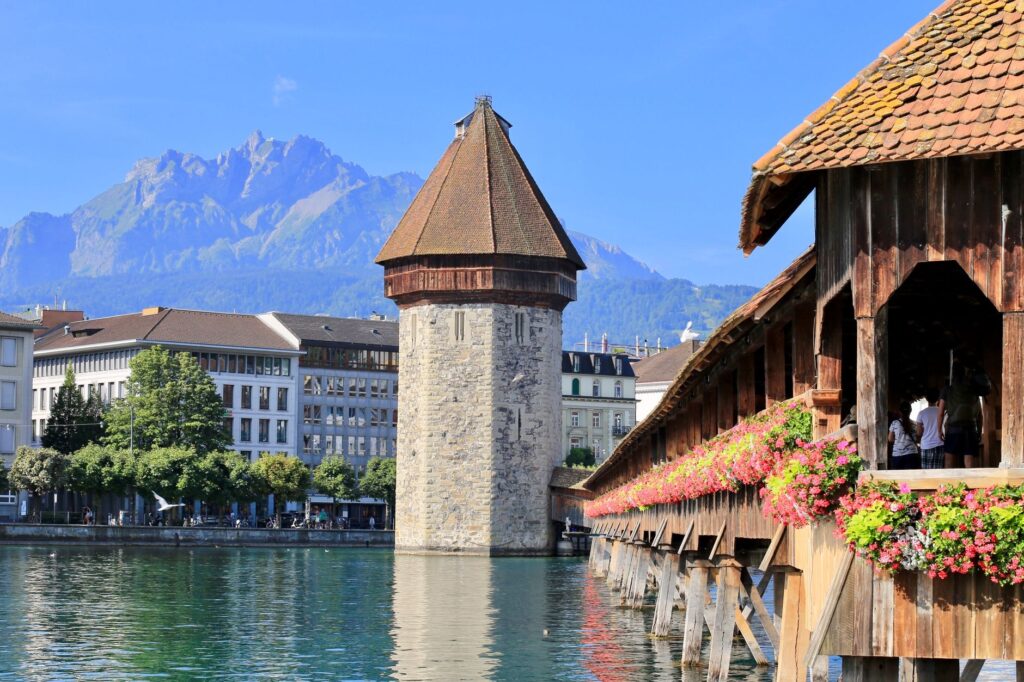
The Reuss River acts as the backbone that divides and simultaneously unites the different neighborhoods of the locality. Its green and swift current, flowing directly from the heart of the Alps, crosses the historic core under the watchful gaze of secular structures defying the passage of time. The covered wooden bridges, originally erected as part of the medieval defensive system, today offer a sheltered transit space where pedestrians take refuge from the rain or simply pause to watch swans and pleasure boats go by.
Walking across these dark-planked footpaths provides an understanding of the region’s urban evolution. The triangular paintings adorning the interior beams narrate episodes of local chronicle and Swiss history, turning the simple act of crossing from one bank to the other into a didactic journey. On the other side of the river, steep streets ascend toward the remains of the Musegg defensive walls, whose towers quietly overlook the valley. From these elevated viewpoints, the city unfolds as a tridimensional map where red clay roofs converge harmoniously with the blue sheet of the lake.
The conservation of a historic heritage does not depend on the rigidity of its rules, but on the daily willingness of its inhabitants to inhabit it with respect and a sense of community.
This balance between heritage preservation and modern life extends also to green spaces and peripheral residential areas, where community gardens and forest trails guarantee direct connection with nature without leaving the municipality. Residents make massive use of integrated public transport, reducing the presence of private vehicles in the historic center and prioritizing cycling and pedestrian mobility. This conscious decision reinforces the quiet character of neighborhoods and protects air quality against seasonal tourist pressure.
Provisions Markets and the Commercial Pulse of Neighborhoods
Far from strictly monumental circuits, Lucerne’s daily life finds its most genuine expression in the weekly markets set up next to river quays. On Tuesdays and Thursdays, producers coming from rural communes of the canton display their stalls with seasonal vegetables, artisan cheeses produced in mountain farms, and rye breads kneaded in traditional stone ovens. These spaces for direct commercial exchange foster a proximity economy that benefits both local farmers and consumers conscious of zero-kilometer products.
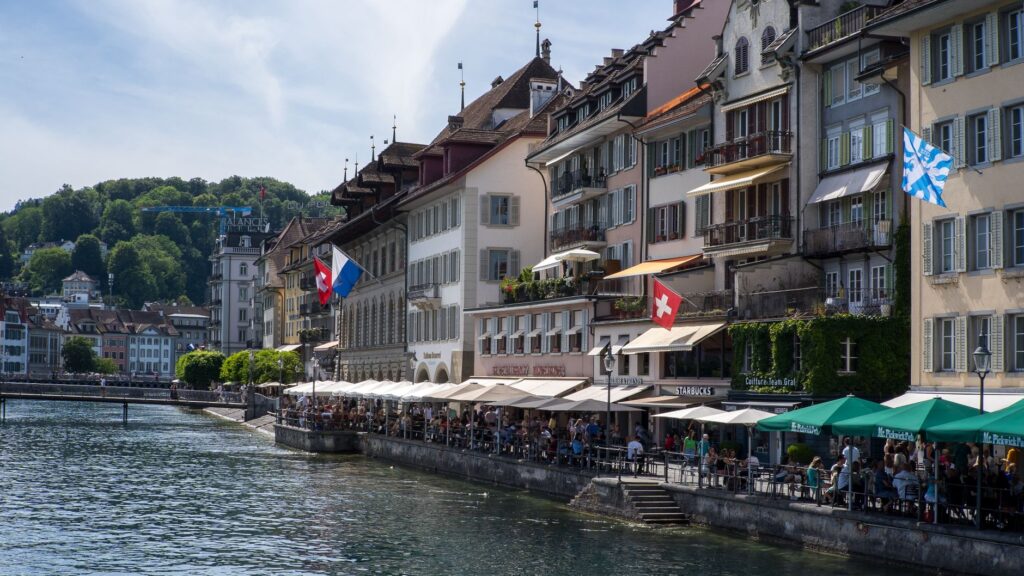
The relationship between countryside and city is manifest in every conversation between merchants and buyers, discussing the peculiarities of the latest harvest or the influence of recent snowfalls on alpine pastures. These daily interactions reinforce the social fabric and prevent the historic center from becoming a mere soulless postcard set. Small grocery stores, independent bookstores, and artisan bookbinding and watchmaking workshops lining secondary streets complete a diversified and sustainable commercial ecosystem.
Responsible Heritage Management and the Visitor’s Role
The constant flow of travelers choosing the city as a resting destination poses complex challenges in terms of urban sustainability. Local authorities and neighborhood associations collaborate closely to regulate tourist pressure, promoting longer stays, the use of accommodations certified with ecological seals, and the exploration of less crowded routes toward surrounding hills. The objective is to ensure that the arrival of visitors does not alter community coexistence or degrade the natural resources sustaining the quality of life in the region.
For travelers seeking a deeper experience, the key lies in adopting an attitude of listening and respect toward the unwritten rules of the community. This ranges from utilizing railway and lake transport networks—examples of efficiency and low carbon emission—to maintaining a respectful tone in residential areas during nighttime rest hours. Participation in local cultural activities, such as choral concerts in historic churches or seasonal popular festivities, allows visitors to integrate discreetly into the daily pulse without disrupting its natural rhythm.
Civil Architecture and the Footprint of Stone in the Landscape
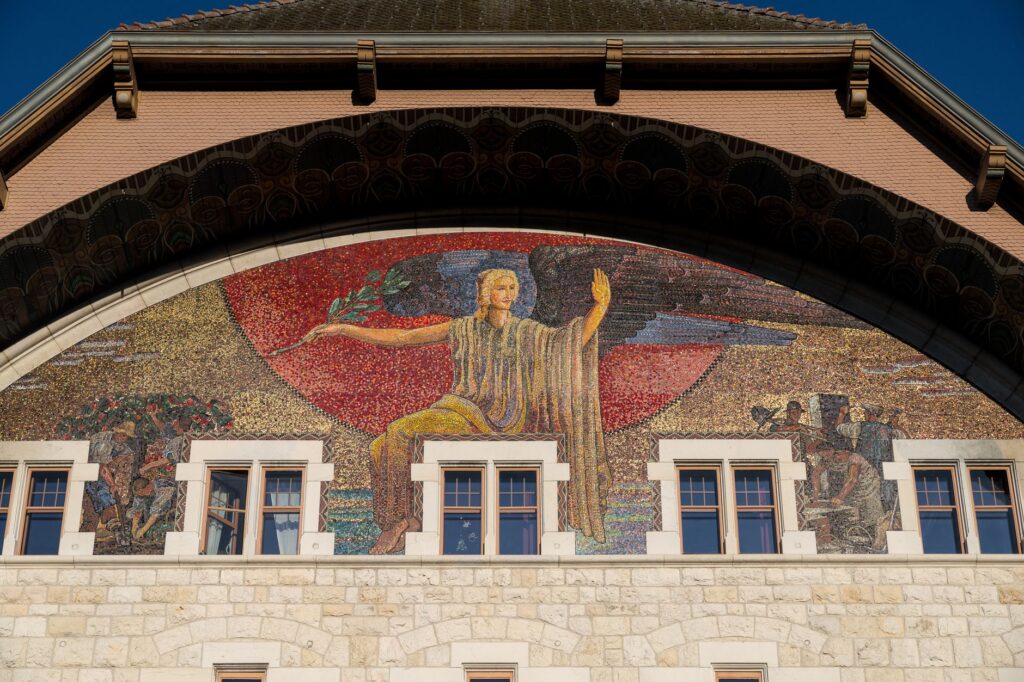
Lucerne’s architectural heritage is not exhausted by its bridges and walls; market squares are flanked by guild buildings whose facades are decorated with detailed frescoes narrating moral allegories and historical episodes. These constructions, carefully maintained over the centuries, show the importance the city held as a mercantile and political center in the heart of the Swiss Confederation. Limestone used in foundations and structural elements dialogues with the wood of upper floors, creating a rich and coherent visual texture.
The interior courtyards of these historic townhouses, many accessible to the public during the day, function as oasis of tranquility where the murmur of fountains contrasts with external traffic noise. Small temporary exhibitions of local artists or antique markets are frequently organized in these spaces, keeping the cultural vocation of the buildings alive. Architecture thus becomes a tridimensional archive that citizens constantly update through daily use and rigorous care.
Riverside Trails and the Green Connection with the Pre-Alps
The experience of inhabiting and exploring Lucerne is completed by following paths winding along the lake shores toward neighboring localities of Meggen or Kriens. These paths, frequented both by Sunday walkers and workers choosing bicycles for daily commutes, offer changing perspectives of the aquatic and mountainous landscape. As one moves away from the urban center, riparian thickets and small wooden boat docks give way to traditional mowing meadows where dairy cows graze under the supervision of alpine farmhouses.
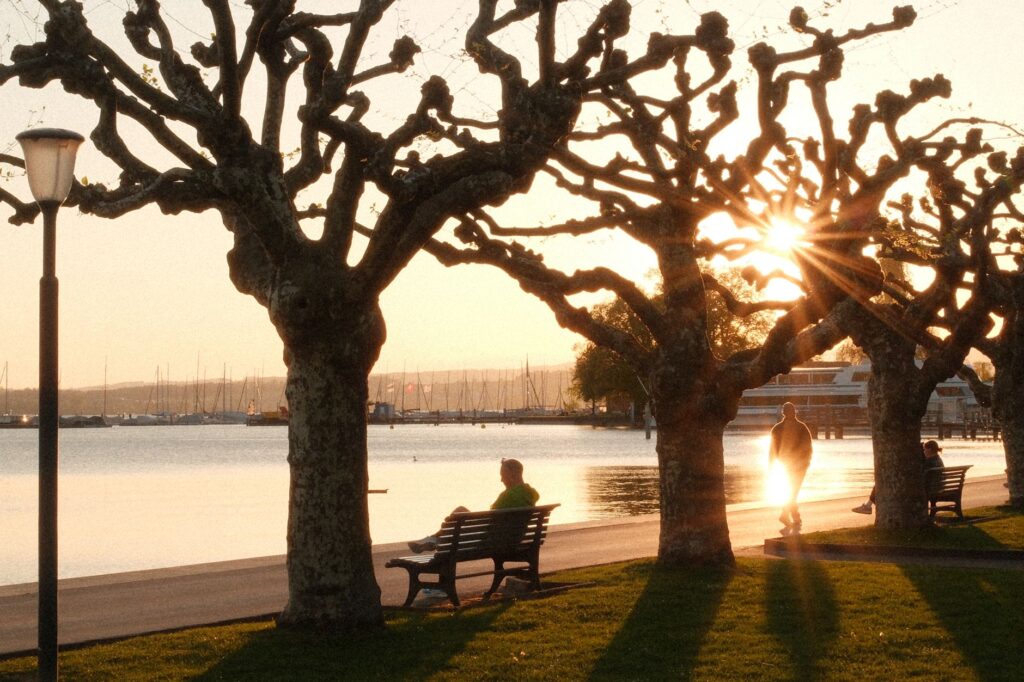
This peripheral green belt acts as an indispensable ecological lung and a corridor for local biodiversity. Municipal ordinances strictly protect these strips of land against real estate pressure, ensuring that access to water and nature remains a shared right for all residents. Walking along these paths at dusk, when golden light illuminates the peaks of Pilatus and lake water turns leaden, reveals the true essence of a territory where modernity and tradition coexist in sustainable harmony.
The true value of a journey lies in the ability to stop and observe the silent details that make up the life of a community beyond its most celebrated attractions.
Practical guide
How to get there: The Swiss railway network offers direct and frequent connections with Zurich, Bern, and Geneva. Lucerne’s central station, located next to the lake, provides walking access to most points of interest in the historic center.
Local transport: The use of private vehicles is discouraged in the old town. The city features an excellent network of urban buses, trolleys, and lake ferries integrated into the same transport pass. Bicycles are ideal for exploring quays and peripheral bike lanes.
When to visit: Spring (May to June) and autumn (September to October) offer moderate temperatures, lower visitor influx, and a changing natural landscape allowing visitors to enjoy trails and markets peacefully.
Accommodation: It is recommended to prioritize family hotels and guesthouses holding ecological sustainability certifications and supporting local product consumption in their dining offers.
Gastronomy and shopping: Tuesday and Saturday provision markets are the best place to acquire artisan cheeses, rye bread, and seasonal fruits. Respect local business hours and residential spaces to ensure harmonious coexistence.