

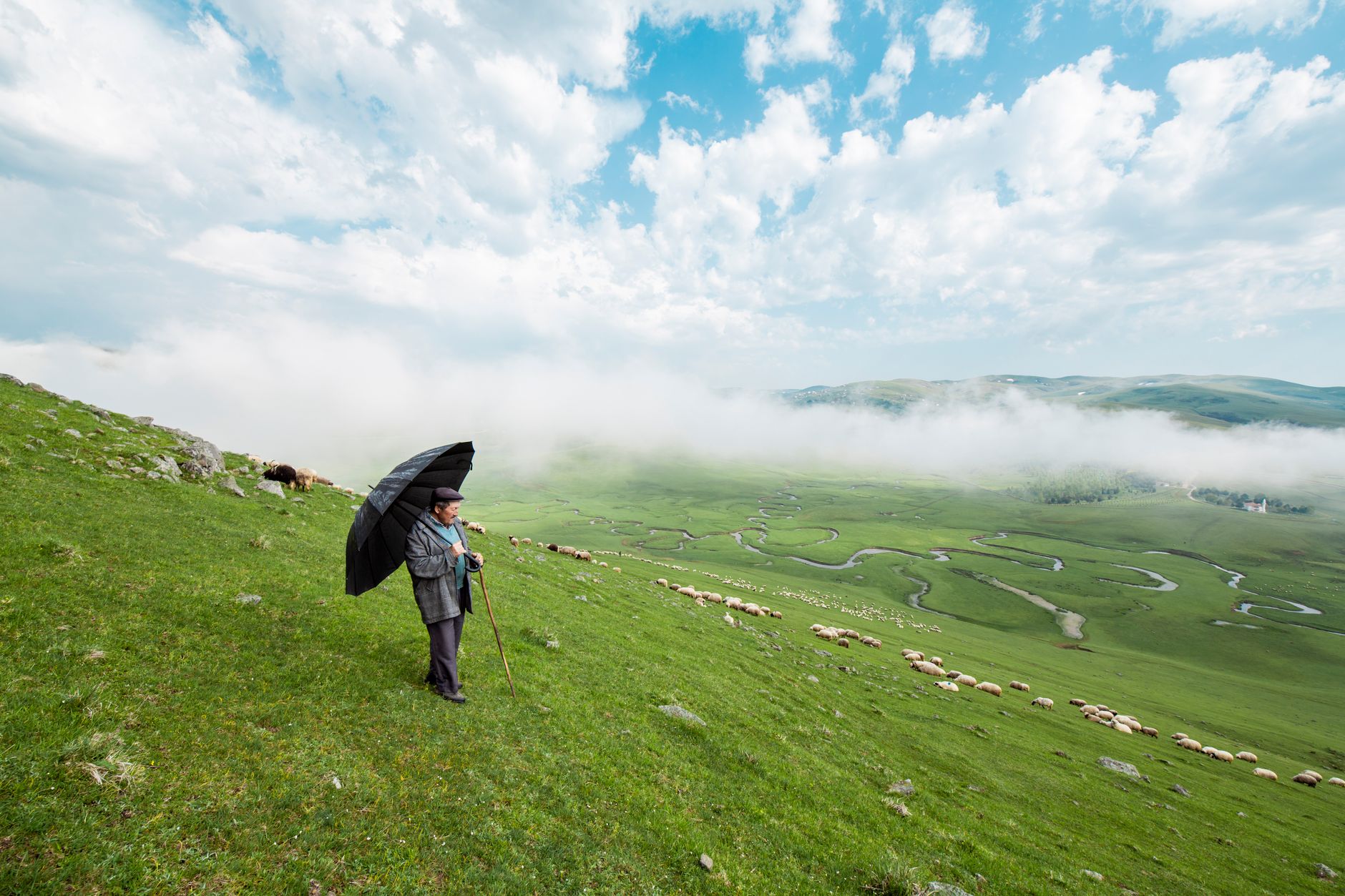
The Invisible Roots of a Landscape Sculpted by Hooves and Mist
The mist descends with the consistency of heavy wool over the meadows of Aralar, erasing the exact line where the pastures end and the gray Basque sky begins. In this mountainous enclave shared by Gipuzkoa and Navarre, the landscape is not an aesthetic geographical accident, but the direct result of thousands of years of agroecological management. Here, every ridge and every dolmen tell the same story: that of a symbiotic relationship between man, animal, and a wild environment that has resisted modern homogenization. The Latxa sheep, an animal with a rustic fleece and proud head, is the cornerstone upon which this entire cultural architecture rests. Its milk, low in volume but exceptionally rich in protein, holds the memory of endemic high-altitude flora, infused with wild clovers, heather, and grasses sprouting among the limestone rocks.
The territory of Aralar cannot be understood from the asphalt, but rather through the physical effort of climbing to the high mountain passes. For centuries, shepherds have practiced a form of vertical transhumance that defies the rhythms of the global economy. When the summer heat scorches the valleys, entire flocks begin their trek toward the high meadows, where spring water maintains the necessary freshness for livestock to graze in freedom. This millenial routine does not seek industrial efficiency, but the preservation of an ecosystem in balance. Without the constant pressure of extensive grazing, high-altitude pastures would quickly scrub over, losing biodiversity and drastically increasing the risk of uncontrolled wildfires. Every wheel of Idiazábal cheese maturing in traditional cellars is, essentially, an edible landscape.
The Anatomy of Raw Milk: The Triumph of the Latxa Sheep
To understand the organoleptic complexity of Idiazábal cheese, one must venture into the barns during the dawn milking. Unlike intensive farming operations, where the uniformity of feed guarantees identical dairy profiles, the Latxa sheep offers a seasonal rollercoaster of flavors. In spring, the milk overflows with herbal and floral notes; toward autumn, with falling temperatures and the consumption of more mature grasses, it acquires dry, nutty nuances and a dense, buttery unctuousness. This natural variability, far from being a flaw by industrial standards, is precisely the hallmark sought by artisan makers who produce the item under protected designation of origin rules.
The Regulatory Council’s regulations are inflexible on this point: only raw milk from Latxa or Carranza sheep is permitted, unpasteurized, preserving intact the indigenous microbiota that gives the cheese its unmistakable personality. Natural enzymes and lactic bacteria from the local environment act as an invisible signature on every wheel. During the curdling process, carried out at a controlled temperature with natural suckling-lamb rennet, the artisan monitors the cutting of the curd with the precision of a goldsmith. The size of the grain determines the amount of moisture retained inside, a critical factor that directly influences the final texture after months of cellar aging.
True gastronomic vanguard does not consist in inventing artificial flavors, but in having the courage not to corrupt the memory of the land we walk upon.
The Mystery of Smoking: Between Beechwood and Hearth
One of the most debated and fascinating hallmarks of Idiazábal is its unmistakable smoked rind. Although excellent unsmoked versions exist that respect the lactic profile in its purest state, the tradition of subjecting the wheels to beechwood smoke responds to a historical need for preservation. In old Basque farmhouses, cheeses were hung in open kitchens, right above hearths where wood fires burned almost continuously during the coldest winter months. The smoke acted as a natural protective shield against ambient humidity and insects, while imbuing the outer layer with phenolic compounds that provided balsamic and toasted aromas.
Today, this process is carried out in smoking chambers specifically designed to replicate that domestic phenomenon, using exclusively noble beechwood. The exposure time is a closely guarded secret by each producer; too much smoke ruins the delicate acidity of the interior paste, while a fleeting pass leaves the rind devoid of character. When cutting a properly smoked wheel, a subtle dark ring is appreciated beneath the rind, a silent testimony to the slow penetration of smoke. On the nose, the cheese deploys notes reminiscent of toasted caramel, crusty hearth bread, and a subtle background of cold chimney that anticipates the complexity of the bite.
From Mountain Pasture to Cellar: The Slow Art of Aging
The cheese’s lifecycle does not end with molding or smoking; in fact, it is in the aging cellar where the product reaches its intellectual maturity. In farmhouses nestled in the foothills of Aralar, temperature and humidity conditions are regulated naturally thanks to centuries-old stone walls and a northern orientation that avoids direct sunlight. Oak wood shelves hold hundreds of wheels that are hand-turned and brushed weekly, a physical ritual that prevents the appearance of unwanted molds and homogenizes fat distribution within the mass.
During the first months, the cheeses develop a firm yet elastic rind. As the curing time progresses—extending from two months to over a year in wheels destined for the most demanding palates—water slowly evaporates. The result is a contraction of the protein structure that leads to a compact texture, slightly crumbly in older specimens, which melts in the mouth releasing crunchy tyrosine crystals. On the palate, the initial attack is clean and slightly acidic, quickly evolving into spicy and buttery notes that linger for minutes in the aftertaste.
Territory Cuisine: Idiazábal Beyond the Cheeseboard
Although the most honest way to approach this cheese remains consuming it on its own, cut into firm wedges with a wide-bladed knife and accompanied occasionally by artisanal apple compote or quince paste, high Basque cuisine has successfully integrated it into complex preparations without losing respect for its integrity. Territory chefs use it finely grated over seasonal creams, melted in game broths, or incorporated into emulsions accompanying oily fish such as red tuna or hook-and-line hake. Its saline and fatty profile provides an extraordinary umami counterpoint that enhances the main ingredients without masking them.
One of the most celebrated applications in Gipuzkoan workshops is its use in reinvented traditional pastry, especially in fluid-texture cheesecakes where the power of Latxa milk successfully replaces foreign industrial cream cheeses. The contrast between the creaminess of the dessert and the smoky intensity of the rind integrated into the dough demonstrates that the product possesses unsuspected culinary versatility. However, traditional shepherds insist that the best pairing remains a glass of young red wine from Rioja Alavesa or freshly poured Basque natural cider, whose sharp acidity cleanses the mouth and prepares the palate for the next beat.
Preserving the culture of artisan cheese requires committing to a conscious consumption model that pays a fair price for the invisible labor of farming families.
Practical Information for the Traveler and Food Lover
For those interested in delving into the culture of Idiazábal cheese on the ground, the itinerary should be structured with pause and respect for local rhythms. The Aralar Natural Park features a well-marked network of trails connecting major pastoral enclaves, though visits to artisan dairies always require prior reservation, as production is subject to the seasonal availability of milk and the natural cycle of the livestock.
- How to get there: Access to the Goierri region and the Aralar valleys is mainly by private vehicle from San Sebastián or Pamplona via the A-1 highway, taking the exits toward Ordizia or Alsasua depending on whether the Gipuzkoan or Navarrese side is preferred.
- Recommended season: Spring months (May to July) allow visitors to witness the livestock ascending to the high mountain passes and enjoy production with fresh pasture milk, while autumn offers the most authentic atmosphere in the farmhouses with the first long-aged wheels.
- Unmissable points of interest: The weekly market in Ordizia, active since the Middle Ages, remains the most important commercial showcase where shepherds sell their best wheels directly to consumers and prestigious restaurateurs.
- Accommodation and dining: Numerous restored farmhouses operating as rural lodgings offer the opportunity to stay in the heart of the territory, combining rural rest with tasting menus based on zero-kilometer local produce.
The Future of the Mountain Passes: Resistance Against Depopulation
The greatest challenge facing the culture of Idiazábal today is neither technical nor commercial, but demographic. Generational handover in the Aralar mountain pastures is threatened by the extreme harshness of a profession demanding dedication three hundred and sixty-five days a year, with no holidays or meteorological truces. Many young shepherds hesitate to take up the baton due to a lack of basic infrastructure in high altitudes and the pressure of a globalized market rewarding volume over biodiversity and tradition.
Despite these difficulties, a hopeful movement is emerging led by a new generation of educated women and men who combine techniques inherited from their grandparents with modern tools of commercial management and environmental sustainability. They understand that their work goes far beyond making excellent food; they are guardians of a unique cultural landscape in Europe. Supporting the consumption of artisan Idiazábal cheese direct from the producer is not a gourmet whim; it is an act of civic responsibility to prevent the meadows of Aralar from falling silent and the beechwood fire from going out forever in the homes of the Basque mountains.


