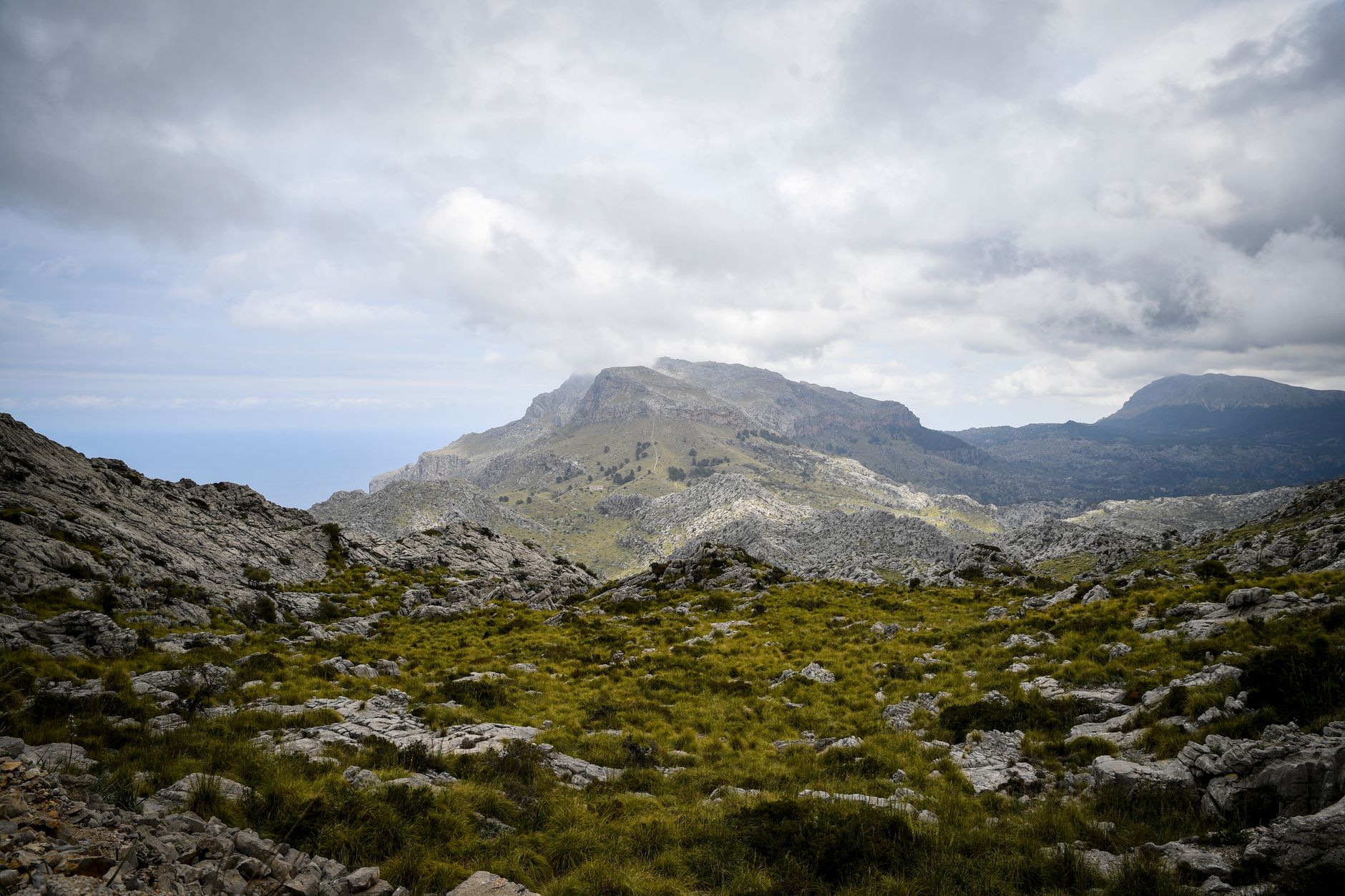

The Serra de Tramuntana occupies the northwestern third of Mallorca, in Spain, stretching for about ninety kilometres between Andratx and Cape Formentor. It is a limestone range of abrupt relief that rises directly from the sea and reaches its highest point at Puig Major, above 1,400 metres. At its feet, the city of Palma concentrates most of the island’s population and serves as the gateway to a mountain territory that receives visitors throughout the year.
The range is not a theme park of scenery. It is an inhabited space, with dry-stone villages, declining agricultural holdings and a network of historic trails that for centuries connected estates and coves. Since 2011, UNESCO has inscribed the Serra de Tramuntana on the World Heritage list as a cultural landscape, a recognition that underlines the relationship between human activity and a demanding physical environment.
A mountain built from limestone
The geology of the Serra de Tramuntana explains much of its character. Limestone rocks deposited in shallow marine environments during the Mesozoic predominate, later folded and fractured by the Alpine orogeny. The result is a relief of ridges, walls and ravines where water infiltrates quickly and circulates through underground conduits.
That karstic nature has visible consequences: a scarcity of surface streams, the presence of springs and resurgence points on the slopes, and intense modelling by the dissolution of limestone. Walking through the range is walking over a geological archive that can be read in the strata, in the marine fossils embedded in the rock and in the shapes of the walls.
The range cannot be understood without the stone: it shapes the paths, the crops, the water and even the way the villages are built.
Dry-stone construction, a technique without mortar, appears in boundaries, terraces and shelters. It is one of the elements UNESCO values as part of the cultural landscape, along with historic water systems and terrace cultivation.
High-altitude and shaded ecosystems
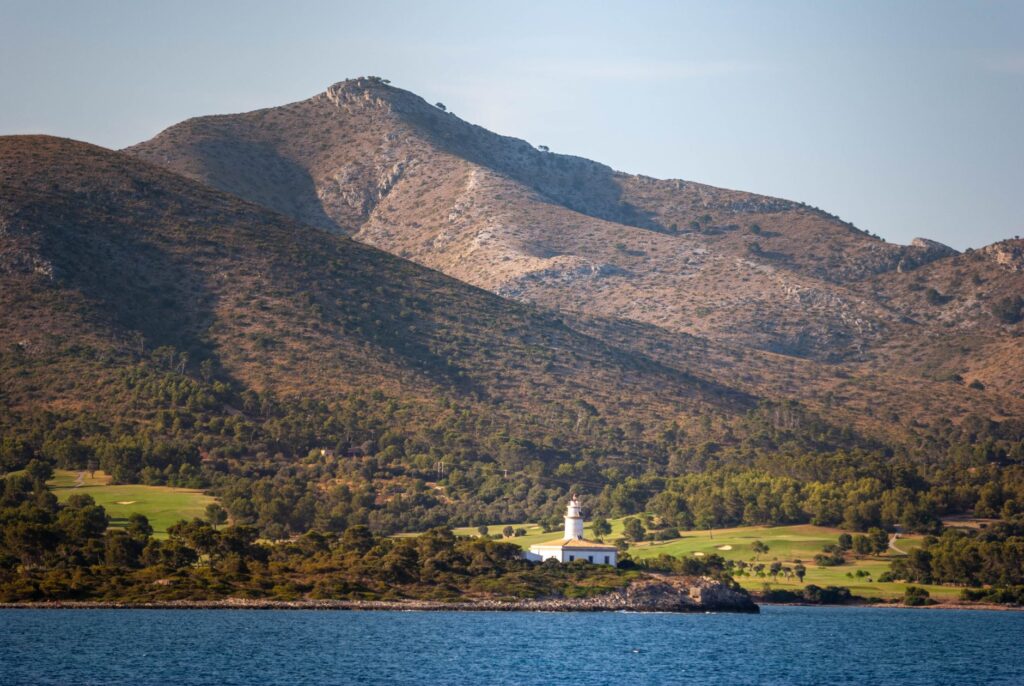
Although the maximum altitude does not exceed 1,500 metres, the range presents a remarkable variety of environments for its scale. On the summits and exposed ridges, low and rupicolous scrub dominates, adapted to wind and scarce soil. On the middle slopes, Aleppo pine forests appear and, in the cooler, shaded areas, holm oak and mixed woodland.
The marine influence softens temperatures, but the mountain generates its own contrasts: slope fog, summer storms and episodes of strong wind. Riverside vegetation and gallery forests are concentrated in the ravines, where moisture is better preserved.
Discreet fauna and responsible observation
Fauna includes birds of prey, corvids, small mammals and a community of reptiles and invertebrates linked to rocky environments. Visitors rarely see large animals, and that discretion is part of the ecosystem: the mountain is observed with patience and distance. Responsible observation practices, such as not feeding animals and keeping a distance, are especially relevant in an area under tourist pressure.
Historic trails and mountain refuges
The trail network of the Serra de Tramuntana combines bridle paths, old communication routes between villages and signposted recreational routes. Some sections form part of long-distance itineraries and connect towns such as Sóller, Deià, Valldemossa or Pollença. Signage varies by section, and official sources should be checked before setting out.
Refuges and hostel-style houses offer accommodation at altitude, but capacity is limited and demand concentrates in high season. Booking in advance is not a luxury tip: it is a practical condition for traversing the range continuously.
- Check trail conditions and current restrictions before each stage.
- Carry enough water: natural springs are not reliable in summer.
- Wear footwear with good grip and use sun protection, even on cloudy days.
- Avoid the central hours of the day in July and August.
When to go: seasons and climate
Spring and autumn are the most balanced seasons for walking: moderate temperatures, greater accommodation availability and light that favours reading the landscape. Winter can be cold at altitude and bring intense wind, although it offers tranquillity and exceptional visibility on clear days.
Summer imposes heat and high visitor numbers, especially on coastal routes and access paths to coves. The Mediterranean mountain is not a place for improvisation in August: sun exposure, the lack of shade on some sections and the risk of dry storms demand planning.
In the Serra de Tramuntana, the season does not only change the weather: it changes the number of people on the trail and the availability of water and shelter.
Safety in a Mediterranean mountain
Proximity to the sea and moderate altitude can create a false sense of security. Yet the range records rescues every year, often due to disorientation, lack of water or underestimating the terrain. Limestone walls can be slippery, and some sections lack mobile coverage.
The basic recommendation is to carry a map or a downloaded navigation app, communicate the itinerary and adapt the route to the group’s experience. In case of doubt, it is better to give up a summit than to force a risky situation. Mallorca’s emergency services attend incidents in the range, but prevention is the first tool.

Water and shade: two scarce resources
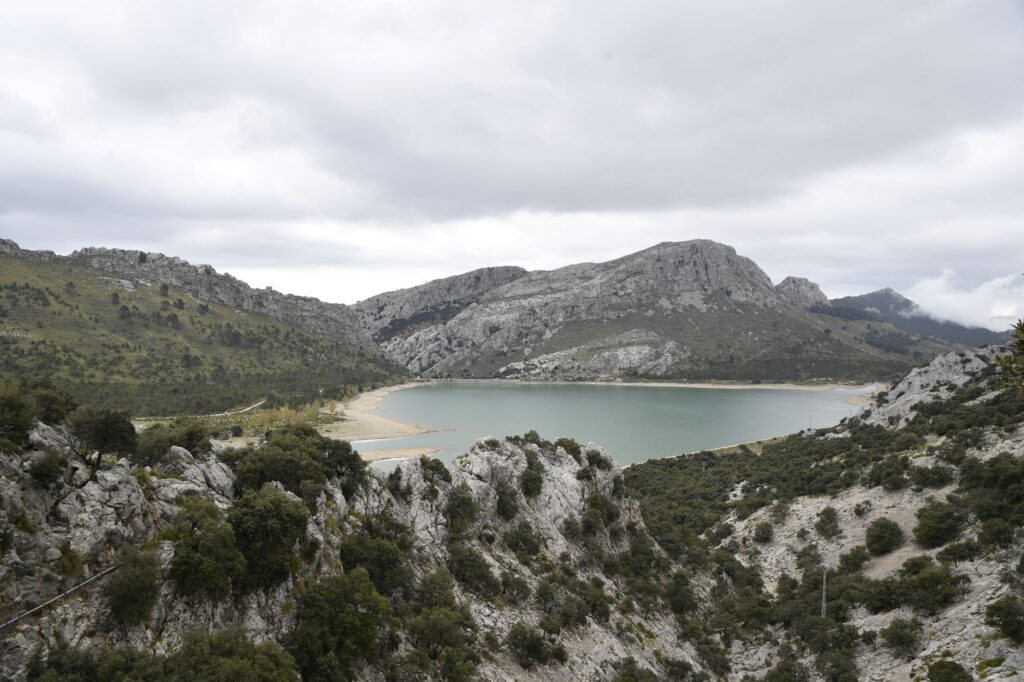
The karstic nature reduces the presence of surface streams. Springs shown on maps may not be operational, and shade is irregular on the ridges. Planning stages around both factors is a safety measure, not a detail.
Conservation and tourist pressure
The Serra de Tramuntana is a protected and inhabited area, and that dual condition defines its tensions. Hiking tourism has grown, and with it pressure on paths, car parks and fragile areas. Local authorities and conservation bodies work on managing access and raising visitor awareness.
The cultural landscape recognised by UNESCO includes agricultural elements that depend on human activity: terraces, irrigation channels, paths and dry-stone structures. Their abandonment degrades the landscape as much as overcrowding. Conservation, therefore, is not only about protecting nature but about keeping a system of traditional use alive.
For travellers, the difference lies in concrete details: staying on marked trails, leaving no waste, respecting private property and restricted access areas, and choosing local providers that operate with sustainability criteria.

Heritage and mountain culture
The villages of the range preserve stone architecture, churches, mills and water systems that tell a story of adaptation to the environment. The culture of olive oil, almonds and vines has shaped the landscape for centuries. In towns such as Valldemossa or Deià, religious heritage and manor houses coexist with everyday life that does not revolve exclusively around tourism.
That cultural dimension is part of the mountain experience: walking among abandoned or working terraces, crossing old bridges and observing how dry stone orders the territory. The mountain is not only a sporting stage; it is a landscape built by generations.
Practical guide
Getting there: Palma concentrates the airport and the bus station, from where connections depart to the villages of the range. A car facilitates access to trailheads, but parking is limited in high season. Check updated schedules and frequencies on official sources.
Where to stay: options include mountain refuges, rural houses and hotels in the villages. Capacity is limited, and advance booking is advisable in spring and autumn. For multi-day routes, verify refuge availability before fixing the itinerary.
What to bring: enough water for the stage, sun protection, light warm clothing, mountain footwear, a map or downloaded navigation and a charged phone. In summer, avoid the central hours of the day.

Rules and conservation: respect signage, stay on paths, leave no waste, do not feed wildlife and respect private property. Check current restrictions in protected areas.
Language and context: Catalan and Spanish are the everyday languages of Mallorca. Visitors will find signage in both, and in tourist areas also in English and German.
The Serra de Tramuntana does not offer the epic scale of the great mountain ranges, but it proposes a Mediterranean mountain of human scale, where geology, agrarian culture and conservation intertwine. Walking it with respect is the best way to keep it a living landscape.