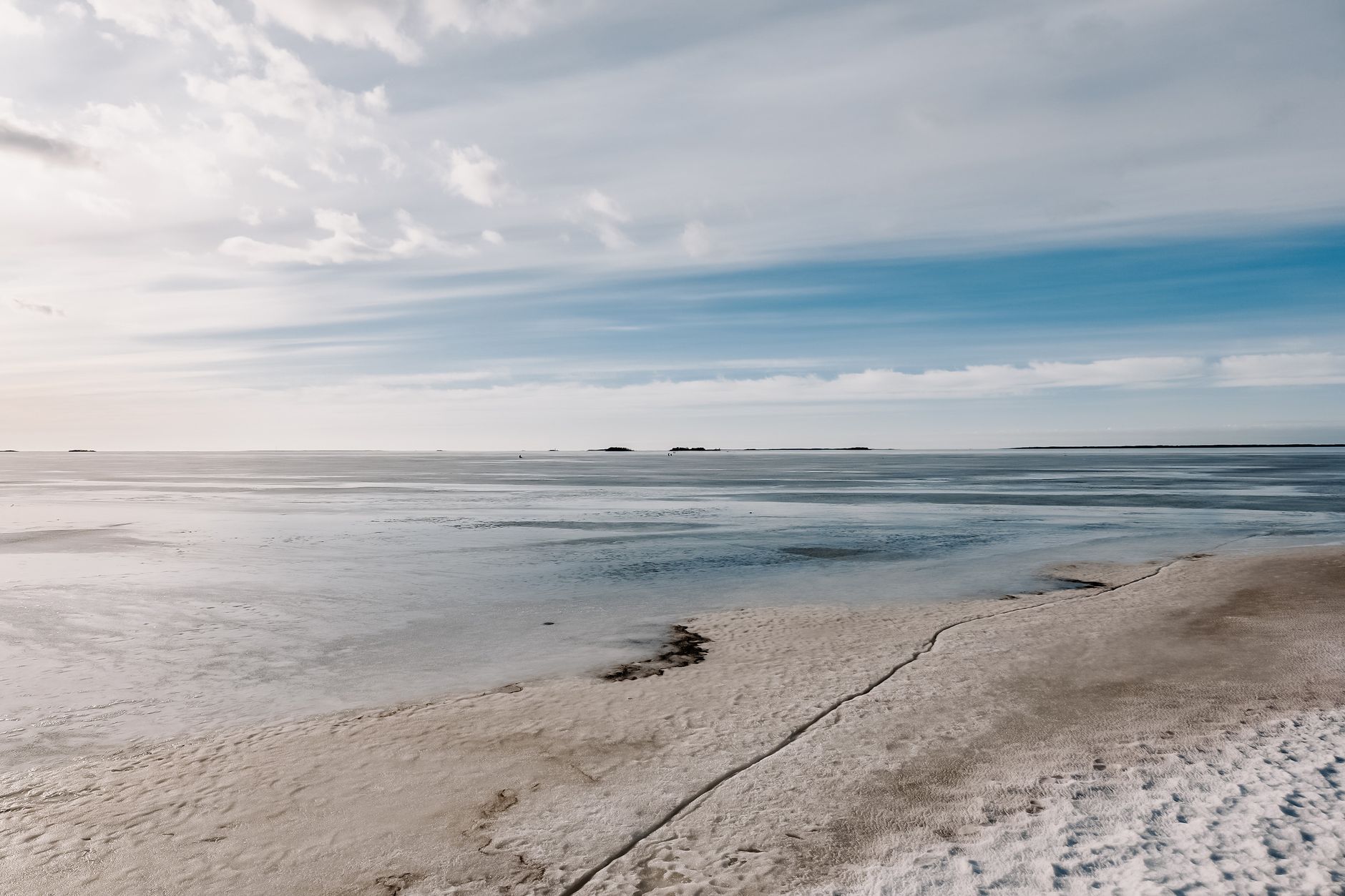

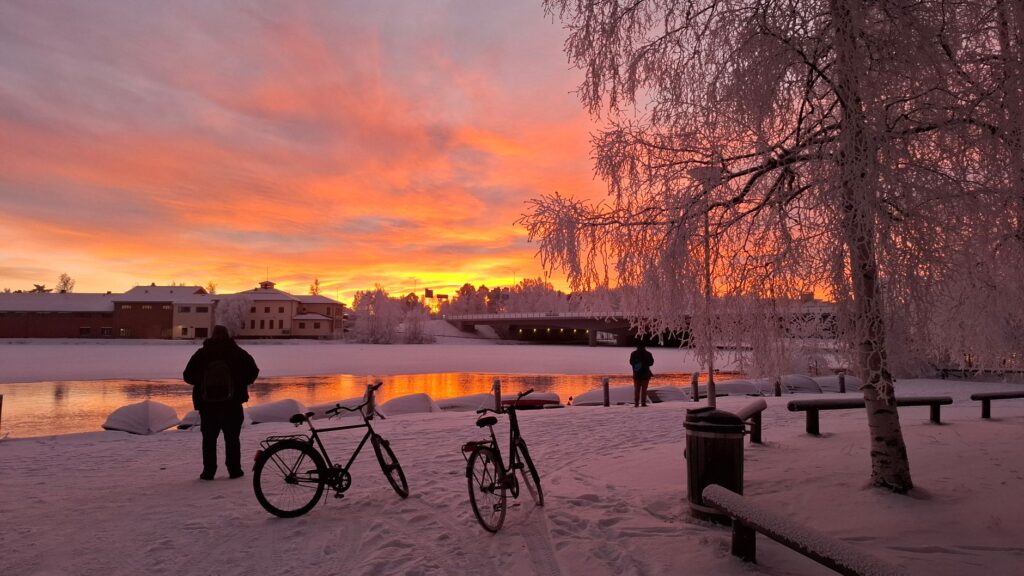
In northern Finland, on the shore of the Gulf of Bothnia, Oulu has turned winter living into a matter of everyday design. Snow does not interrupt the city’s rhythm; it reorganises it. Residents walk through covered passages, leave bicycles in supervised parking areas and cross the centre along routes that avoid the worst gusts. For a first-time visitor, the initial impression is not the cold but a city that has decided not to surrender to it.
Oulu is the largest city in northern Finland and the administrative capital of North Ostrobothnia. Its identity does not rest on a single monument but on a sum of small decisions: pavements cleared according to clear criteria, signposted winter lanes and a civic culture that treats mobility as a shared service. This report proposes exploring the city through that lens, without inventing figures or attributing testimonies, and with an eye on what visitors can learn in order to move more responsibly.
A city that thinks in seasons
In Oulu, the calendar matters more than the clock. Light changes radically between summer and winter, and that variation shapes schedules, routines and ways of getting around. The months of scarce light are not treated as an anomaly but as a season that demands a different logistics: more lighting on pedestrian routes, greater attention to signage and domestic planning built around the weather forecast.
That relationship with the weather explains why the city invests in infrastructure that seems invisible until it is missing. A well-maintained lane, an ice-free ramp or a pedestrian crossing sheltered from the wind are elements visitors barely notice, yet they sustain the daily life of thousands of people. Responsible mobility in Oulu begins by accepting that the climate is not an unforeseen event but a permanent condition.
In the north, the most valuable infrastructure is the one that lets you leave home without fearing the ice.
The winter lane as civic heritage
Oulu is known for its cycle network, and part of that network is designed to function in winter too. This is not a tourist curiosity but an urban policy decision that affects daily life. Lanes are signposted, maintained and integrated into the fabric of the city, so that the bicycle stops being a summer leisure object and becomes a possible means of transport for much of the year.
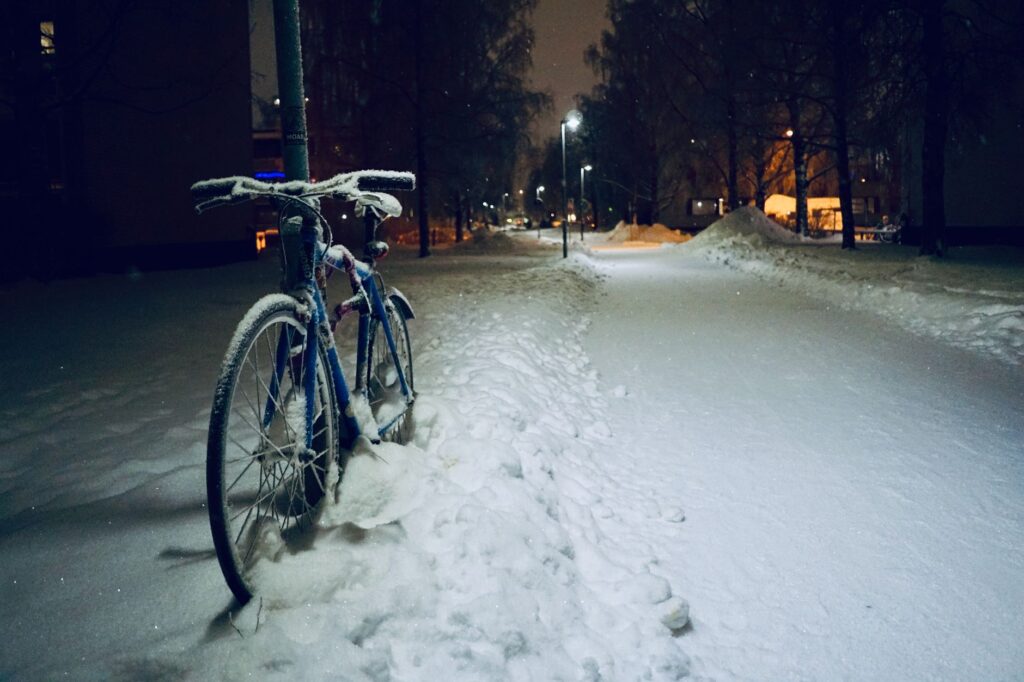
For visitors, the lesson is twofold. First, understand that bicycles do not compete with pedestrians but share space with them. Second, recognise that safety depends less on individual heroism than on collective maintenance. A clean lane is a form of public courtesy. Anyone renting a bicycle in Oulu should check which routes are open in each season and respect pedestrian priorities, especially in the centre.
What to look for in the layout
Walking through the city, it is worth noticing the details that reveal how coexistence is organised: the separation between pavements and lanes, lighting at crossings, bicycle parking next to public facilities and multilingual signage in some places. None of these elements is spectacular, but they explain why Oulu works as an everyday laboratory of winter mobility.
Neighbourhoods by the water and port memory
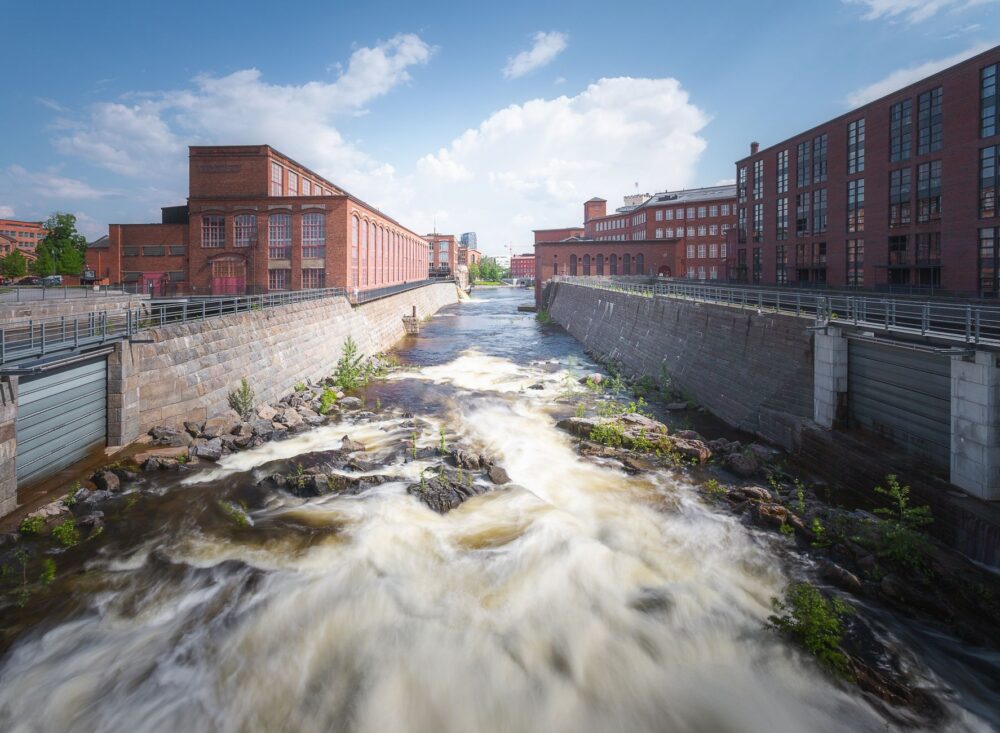
Oulu grew around the sea and trade, and that heritage remains present in its geography. The Oulujoki river crosses the city and flows into the Gulf of Bothnia, and the relationship with water has shaped both the economy and the local imagination. The neighbourhoods near the port and the river mouth keep a scale that invites walking, with low buildings, open spaces and light that changes with the season.
Industrial and port heritage is not presented as a closed museum but as a working landscape. Some former buildings have been converted into cultural or educational spaces, and pedestrian routes allow visitors to read that transformation without a guide. The recommendation is to explore the area slowly, respect private access and avoid the hours of lowest light if the terrain is unfamiliar.
Daily life in the market and at the table
The Oulu market is one of those institutions that give the week its shape. People buy fish, bread, seasonal produce and everyday goods there, and its activity reflects the seasonality of the north. Local food relies on simple ingredients: freshwater and sea fish, potatoes, berries, mushrooms and dense breads that withstand the climate well.
Eating in Oulu does not require grand gestures. A hot soup, grilled fish or a coffee and pastry break can be the best way to understand the local rhythm. Responsible visitors should prioritise seasonal produce and nearby businesses, and remember that sustainability is also practised at the table, by avoiding waste and choosing reusable packaging where possible.
A cultural note
The city has an active cultural life that adapts to winter: libraries, concert halls and community spaces function as climate shelters and meeting points. For travellers, these places offer a way to know the city without depending entirely on the weather outside.
Nearby nature without leaving the municipality
Oulu allows a shift from the urban fabric to a natural setting within minutes. The forests and coastal areas around the city offer routes of varying difficulty, and in winter some become skiing or snowshoeing itineraries. The key is to check conditions before setting out, wear appropriate clothing and avoid improvising on icy ground.
Nearby nature is not a backdrop: it is part of local identity and of the economy of free time. Many families combine neighbourhood life with short trips to the forest, and that habit explains the importance given to access, signage and respect for protected areas. For visitors, the rule is simple: leave no trace and follow the indications of each trail.

Oulu’s nature is not visited like a theme park; it is shared with those who live there all year round.
Responsible choices for those arriving from elsewhere
Travelling to Oulu responsibly means accepting a few small sacrifices. The first is speed: here distances are measured in real time, not kilometres. The second is planning: check the weather forecast, verify route conditions and wear suitable footwear. The third is respect for local rules, from waste sorting to the use of shared spaces.
Public transport and bicycles cover most visitor needs, and the centre is easily walkable. Staying near the main axes reduces dependence on the car and allows the city to be explored at a more human pace. In winter, it is advisable to check available services and avoid long journeys during the hours of lowest visibility.
What to avoid
- Do not walk along cycle lanes without paying attention to signage.
- Do not improvise routes on ice without proper equipment.
- Do not leave waste in natural areas or in the urban environment.
- Do not assume that all services operate the same way in every season.
Architecture that shields itself from the climate
Oulu’s architecture combines historic buildings with contemporary constructions that respond to the climate. Arcades, covered entrances and well-insulated façades are part of a logic that prioritises thermal comfort and durability. The result is not a spectacular city but a habitable one, in which public space is designed to be used all year round.
For visitors interested in architecture, the most useful route connects the centre with the residential neighbourhoods and the riverbank. There, the human scale is maintained even in the most recent developments. The best architecture in Oulu is the kind that goes unnoticed because it works.
A winter lesson for the rest of the year
Oulu offers no magic formula, but it does provide a concrete example of how a city can organise its daily life around sustainability and mobility. The key lies not in a single grand project but in the combination of maintenance, signage, civic education and respect for the environment. For visitors, the experience is useful in any season: learning to move with less haste, to share space and to adapt to the climate.
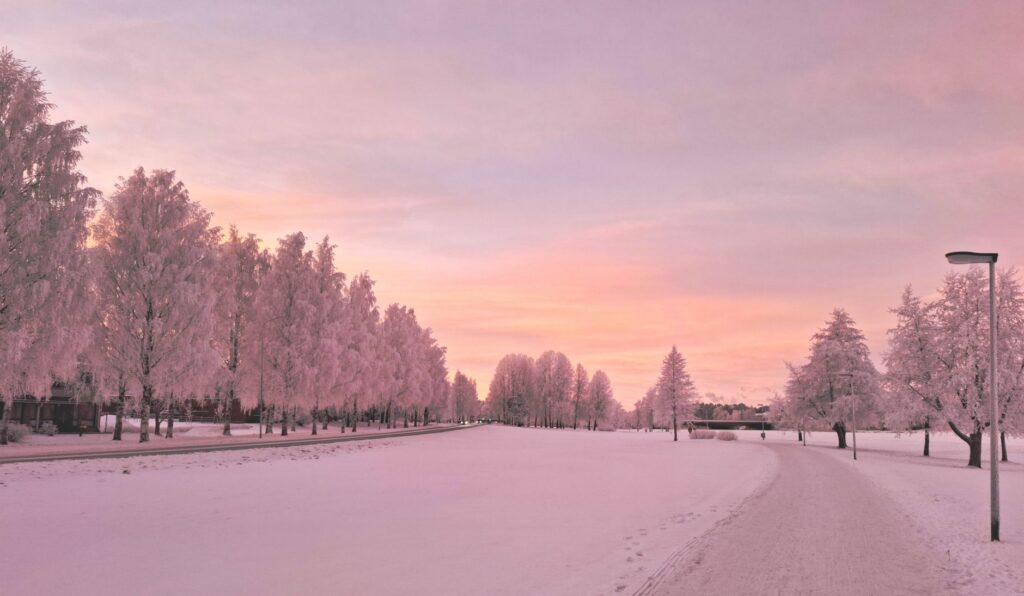
At the end of the journey, what remains is not a monumental image but a sense of gentle order. The city works because many people accept small daily responsibilities. That is, perhaps, the most valuable lesson Oulu can pass on to those arriving from outside.
Practical guide
When to go: each season offers a different experience. Summer allows the city to be explored on foot and by bicycle with abundant light; winter demands planning and suitable clothing but shows the city in its most characteristic form.
Getting around: the centre is walkable. Bicycles are a practical option if designated routes and local rules are respected. Public transport covers longer journeys.
What to bring: waterproof footwear, warm layers, gloves and wind protection in winter; light clothing and mosquito repellent in summer.
Civic rules: sort waste, respect cycle lanes, do not enter private property and follow trail signs.
Budget: check current accommodation and transport prices before travelling, as they vary by season.
Language: Finnish is the main language, but English is widely used in tourism.
Safety: check route conditions in winter and avoid travelling through icy areas without suitable equipment.