
Introduction to Southeastern Australian Connectivity
The territory of New South Wales presents a cartographic and engineering challenge of considerable proportions. With a geography fluctuating between a densely populated coastal strip and the rugged peaks of the Great Dividing Range, interurban mobility has historically depended on a complex combination of variable-gauge railways, intricately routed highways, and regional aviation networks. Understanding transport logistics in this vast corner of Oceania requires looking past superficial tourist appeal and delving into the operational systems that sustain the daily movement of freight and passengers.
The backbone of this system articulates outward from the metropolis of Sydney, acting as the central node from which road and rail arteries branch northward, westward, and southward. As government policies seek to decongest primary urban cores and encourage balanced regional development, transport infrastructure investments have taken center stage in technical and economic debates of the highest order. This report examines the current state of connectivity, the mechanical challenges of the routes, and practical tools for navigating this complex system.
The Role of the Great Dividing Range in Transport Engineering
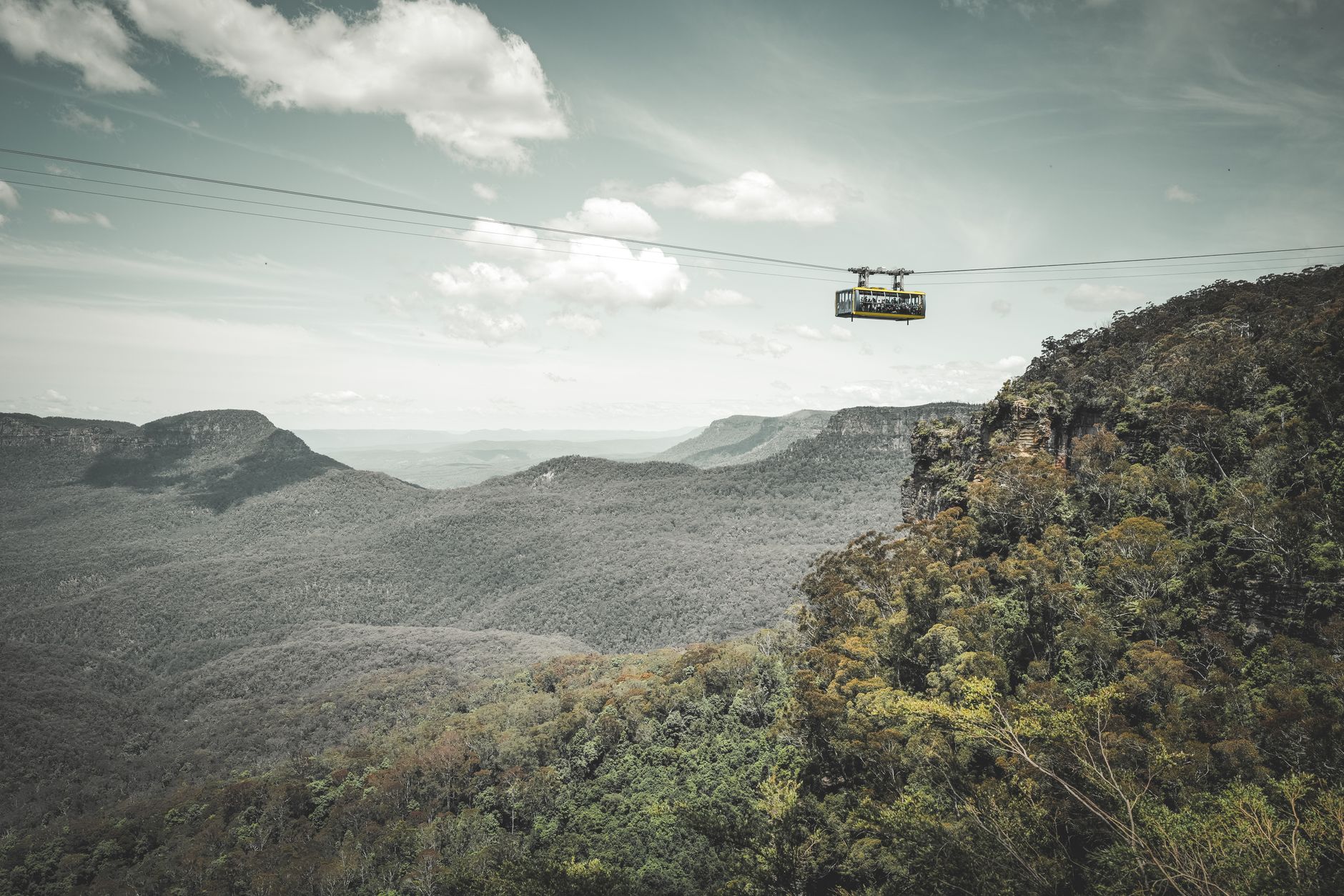
A primary determinant in shaping the New South Wales transport network is the mountainous relief known as the Great Dividing Range, particularly its Blue Mountains section. This natural barrier has conditioned road alignment since the colonial era. Overcoming this obstacle required monumental engineering solutions across the nineteenth and twentieth centuries, such as the famous zig-zag railway in Lithgow, designed to negotiate extreme gradients through a system of reverse running.
Today, although modern tunnels and viaducts have smoothed the profile of the primary western route (the Great Western Highway and the Main Western railway line), maintaining these tracks remains a titanic task. Landslides triggered by extreme weather events and constant erosion on clayey terrain demand continuous geotechnical inspections. Transport authorities invest substantial sums in slope-monitoring systems and embankment stabilization to prevent prolonged interruptions in supply chains connecting interior agricultural plains to coastal export ports.
The geography of New South Wales is not merely a scenic backdrop, but an active agent dictating operational rules, speed limits, and maintenance costs for every kilometer of track laid across southeastern Australia.
The Regional Rail Network: Operations and Fleet Challenges
Long-distance passenger service in New South Wales is primarily operated by the NSW TrainLink regional network, connecting Sydney with centers as diverse as Dubbo to the south, Albury to the south, and Armidale to the north. Unlike European or Asian high-speed networks, Australian regional trains operate on tracks shared with heavy freight traffic, imposing strict operational limits on commercial speed and punctuality.
The current fleet combines electric multiple units for commuter interurban services with tilt-diesel Xplorer units and locomotive-hauled carriages for long-distance routes. Integrating these services requires millimeter-precise logistical coordination. Given that coal and grain freight lines hold economic priority across many single-track segments, passenger trains must fit into tight scheduling slots at specific passing loops. Fleet renewal plans announced in recent years aim to introduce more efficient bi-mode trains capable of operating on overhead electric catenary and advanced diesel generators alike, thereby reducing urban emissions while maintaining autonomy in the remote interior.
The Road Backbone: Highways and Freight Logistics
Running parallel to the rail system, the New South Wales road network bears the primary volume of the state’s economic activity. Corridors such as the Hume Highway, linking Sydney to Melbourne, and the Pacific Highway northward, have undergone radical transformations over recent decades, evolving into dual-carriageway divided freeways that bypass heavy traffic away from local town centers.
Nevertheless, managing road freight logistics presents singular challenges due to vast distances between production and consumption hubs. The use of large-capacity trucks—known locally as B-doubles and road trains in more arid western zones—requires rigorous safety standards and a network of rest areas equipped with adequate driver fatigue-management infrastructure. Digitalization of the supply chain through dynamic weighing systems and real-time satellite tracking has optimized transit times, though dependence on fossil fuels remains a critical vector of vulnerability amid global energy price volatility.
Intermodal Integration and the Role of Regional Airports
No analysis of New South Wales connectivity is complete without considering the role of regional aviation. Due to vast distances, airports in places like Wagga Wagga, Orange, Tamworth, and Dubbo act as vital gears connecting interior communities to Sydney’s financial hubs and beyond. These facilities generally operate with regional turboprop fleets, such as Dash 8 models, optimized for efficiency on short- and medium-haul routes.
The true test of transport policy lies in the fluidity of intermodal transfer. While Sydney features acceptable integration between its international airport and the metropolitan rail network (Sydney Trains), connections between regional airports and local rail stations frequently rely on coordinated coach services or private transport. Contemporary urban planning in the state prioritizes creating multimodal transport interchanges in key regional cities, reducing private vehicle dependency for last-mile journeys.
Sustainability and Energy Transition in Regional Transport
The transport sector in New South Wales accounts for a significant portion of the state’s greenhouse gas emissions, spurring an ambitious decarbonization strategy. In rail, feasibility studies for partial electrification of core corridors and the introduction of green hydrogen technologies are underway, particularly for routes where traditional catenary proves economically unfeasible due to low population density.
Simultaneously, the regional and interurban bus fleet is undergoing a gradual transition toward battery-electric and fuel-cell vehicles. This process is not without technical hurdles; battery range on long-distance routes crossing areas with extreme temperatures and steep gradients requires high-power charging stations strategically located along major road corridors. Collaboration between the public sector and private energy utilities is fundamental to ensuring energy and road infrastructure expands in tandem with clean fleet adoption.
The transition toward a sustainable transport model in low-density regional areas demands decentralized technological solutions, where energy and road infrastructure are planned as a single integrated system.
Practical Planning and Logistics Guide for the Traveler
For those wishing to explore New South Wales utilizing the public and regional transport network, meticulous planning is essential. Unlike urban networks with high frequencies, regional train and coach services sometimes operate on limited daily or weekly frequencies, necessitating mandatory advance reservations, especially during school holiday periods and long weekends.
- Fare Payment and Access: Within the greater Sydney metropolitan area and surrounding zones (including the Blue Mountains, Central Coast, and Newcastle), the Opal system permits unified access to trains, ferries, and buses via contactless cards or mobile devices. However, NSW TrainLink long-distance services operate under an independent reservation system with fares based on distance tiers.
- Digital Connectivity: Mobile phone coverage is excellent along coastal corridors and main highways, but can drop out entirely when entering forested mountain ranges or western plains. Downloading offline maps and printed timetables before starting any rural journey is strongly recommended.
- Seasonal Flexibility: Weather conditions, including severe summer storms and occasional flooding or winter snowfall in highland zones, can suddenly disrupt rail and road schedules. Checking official traffic (Live Traffic NSW) and transport (Transport Info) portals is an indispensable prerequisite for any trip.
- Luggage and Restrictions: Regional rail services offer generous checked and carry-on luggage allowances, but dimensions must be verified when traveling with bulky equipment such as bicycles or camping gear, which often require advance space reservation in the freight carriage.
Conclusion and Future Outlook
The transport network of New South Wales stands as a testament to human perseverance against a complex and demanding geography. From early tracks laid upon indigenous pathways to contemporary multimodal corridors, infrastructure has evolved to sustain the social and economic cohesion of an immense territory. While significant challenges persist regarding financing, climate resilience, and energy transition, continuous investment in technological modernization ensures southeastern Australia keeps its arteries open and efficient for future generations of travelers and residents.