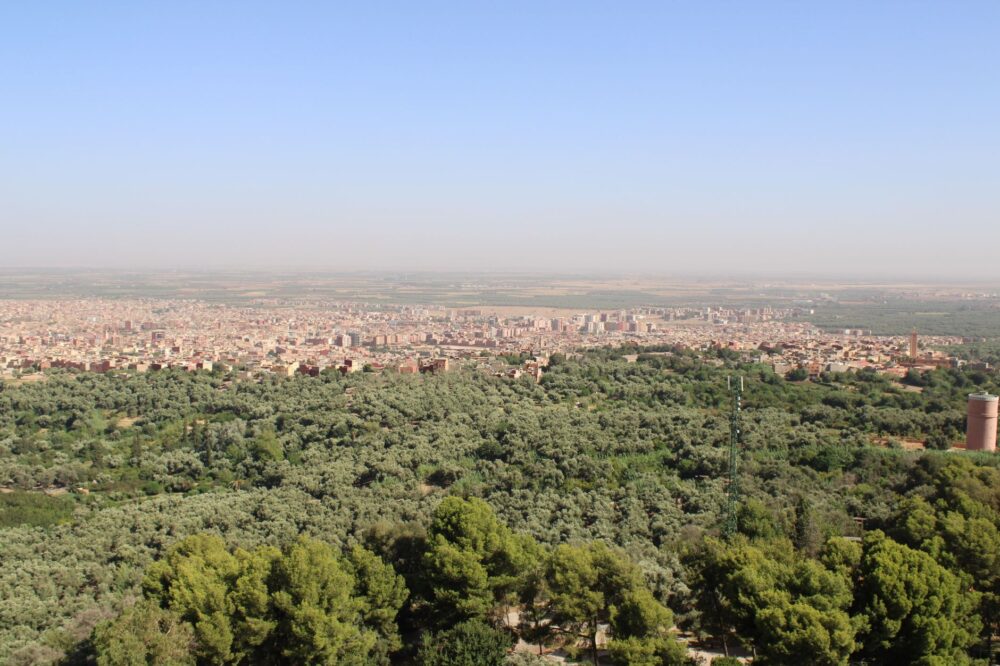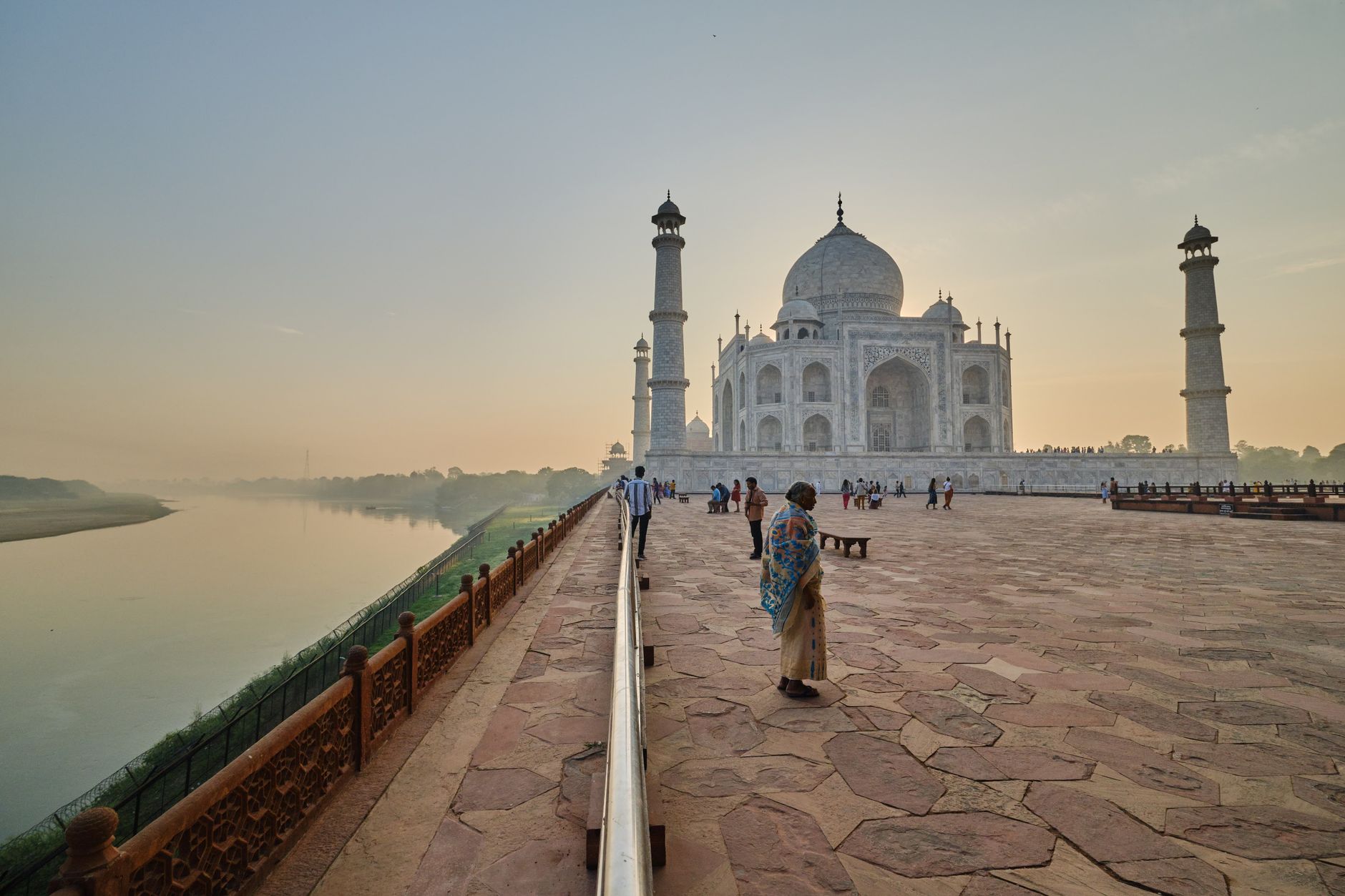

Agra is far more than the Taj Mahal. This city in Uttar Pradesh, northern India, home to more than one and a half million people, is a maze of bazaars, congested avenues and neighbourhoods where life unfolds to the rhythm of temple bells and train whistles. Every year, millions of visitors arrive drawn by the mausoleum Shah Jahan built for Mumtaz Mahal, but the experience of travelling through Agra —arriving, getting around, eating, sleeping— demands more than a pre-booked ticket. It demands understanding how a mid-sized Indian city works, with its railway network inherited from the British Raj, its local buses, its cycle rickshaws and its newer metro lines.
This report offers a practical and respectful approach to mobility in Agra. It is not a list of tricks to dodge crowds, but a guide to understanding the city’s logic, choosing the right hours, moving safely and contributing, as far as possible, to ensuring that tourism does not devour what makes it possible: the heritage, the neighbourhood life and the hospitality of its people.
A city of trains and stations
Agra has been a crossroads for centuries. Its position on the Gangetic plain, beside the Yamuna River, made it a mandatory stop between Delhi and eastern India. Today that legacy translates into a dense railway network, with several stations serving different purposes that are worth distinguishing before buying a ticket.
The main station, Agra Cantt, is the most used by long-distance trains connecting the city with Delhi, Jaipur, Gwalior and Varanasi. Its platforms, always busy, are a good place to observe daily life: tea sellers, families with piled-up luggage, travellers checking the departure board. Another relevant station is Agra Fort, closer to the fort and the Taj Mahal, used by some trains and by the commuter service. There is also Idgah station, useful for certain regional routes.

Arriving by train is, for many travellers, the most comfortable way to enter Agra from Delhi. Journeys usually take between two and three hours, depending on the service, and offer a gradual introduction to the landscape of Uttar Pradesh: mustard fields, brick villages, small stations where the train barely stops.
Moving through Agra means accepting that the city is not organised around the visitor, but around its own rhythms: the train that leaves at six in the morning, the market that closes at noon, the river that sets the direction of the wind.
The airport and connections to the rest of the country
Agra has an airport, Pandit Deen Dayal Upadhyay, located about thirteen kilometres from the centre. Its connections are limited compared to Delhi, but there are domestic flights that can be practical for those combining several cities in northern India. Most international visitors, however, arrive through Delhi airport and continue by road or rail.
The road journey from Delhi, along the Yamuna Expressway, is fast when traffic cooperates, although peak hours can lengthen it considerably. Taxi services and intercity buses cover this route frequently. For those who prefer the train, the offer is broad and usually more punctual than the road.
Metro, buses and urban mobility
Agra has incorporated a metro system in recent years aimed at easing congestion in the centre. The line connects some key points, although its coverage does not yet reach all tourist neighbourhoods. Local buses, meanwhile, form an extensive but not particularly intuitive network for the newly arrived: stops are not always clearly signposted and routes can be long.
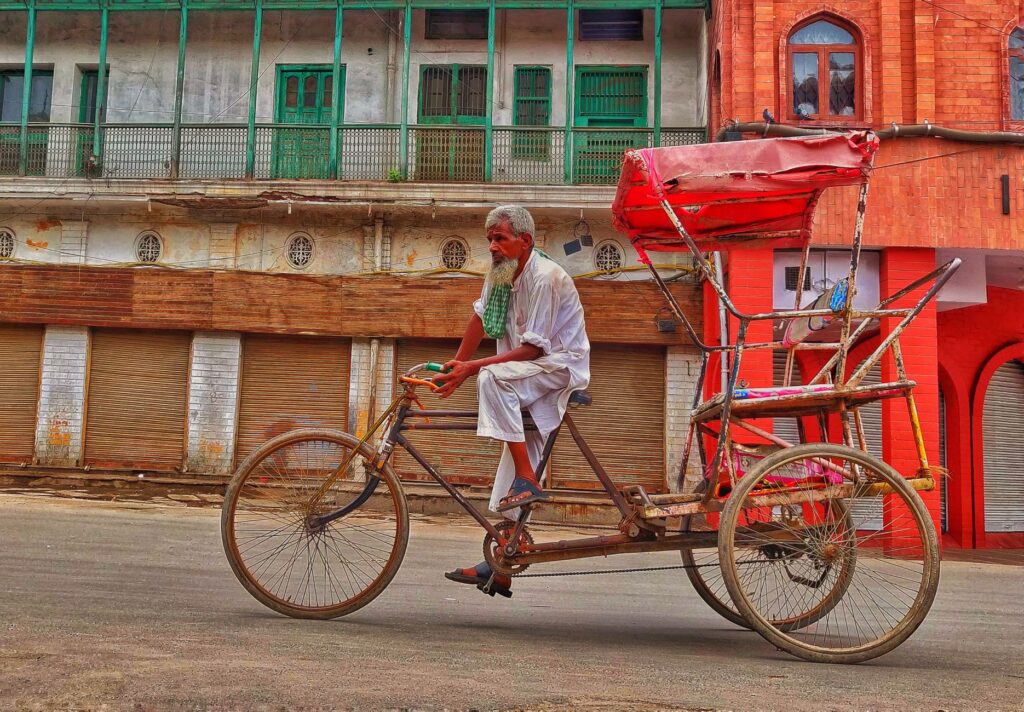
For short distances, the cycle rickshaw remains the most common means. Negotiating the fare before getting on is standard practice and avoids misunderstandings. Drivers know the shortcuts and narrow streets that no map records. There are also auto-rickshaws, faster over medium distances, and app-based taxis, useful when travelling with luggage or seeking greater comfort.
- Cycle rickshaw: ideal for short trips and exploring old neighbourhoods.
- Auto-rickshaw: practical for medium distances; agree on the price or insist on the meter.
- App-based taxi: comfortable and with a fixed price, though it depends on mobile coverage.
- Metro: useful for specific journeys; check timetables and stations before setting out.
The Taj Mahal: hours, access and respect
The Taj Mahal opens at dawn and closes at sunset, and remains closed on Fridays. The main entrance for visitors is on the east side, although there are other gates with different flows. Arriving early not only avoids the hottest hours, but also allows you to observe the monument in rapidly changing light and with fewer people in the gardens.
Access to the mausoleum is subject to strict rules: food, cigarettes and metal objects are not allowed, and there are security checks at the entrance. Photography is permitted outside, but not inside the tomb. Respecting these rules is not just a legal obligation, but a way of contributing to the conservation of a building that, despite its fame, remains a place of memory.
The Taj Mahal is not a backdrop: it is a funerary monument, a testimony to love and mourning, and a place where the crowd can become noise if we forget that we are standing before a tomb.
Agra Fort and the historic neighbourhoods
A short distance from the Taj Mahal, Agra Fort is another of the great works of Mughal architecture. Its construction, begun by Akbar and continued by his successors, combines red sandstone and white marble. From its walls you get one of the best views of the Taj Mahal, especially at sunset.
Around the fort extend neighbourhoods such as Kinari Bazaar, where the trade in fabrics, jewellery and spices fills narrow streets. Walking through them demands patience and attention: traffic is dense, smells are intense and vendors are insistent. But they also offer a vision of the city that does not appear in postcards: the Agra that works, cooks and negotiates every day.

Eating and sleeping: decisions with impact
Agra’s culinary offer ranges from street stalls selling chaat and parathas to restaurants with views of the Taj Mahal. Choosing where to eat is also a decision about how tourism’s benefits are distributed. Family-run establishments, neighbourhood cafés and local canteens often offer a more authentic experience and contribute to a less concentrated economy.
As for accommodation, the city has options for all budgets. Hotels near the Taj Mahal allow you to walk to the monument, but they also concentrate tourist activity. Staying in slightly more distant neighbourhoods, well connected by auto-rickshaw or metro, can offer a quieter and often cheaper perspective.
Heritage and responsible tourism
Agra is part of a region with exceptional heritage: in addition to the Taj Mahal and the Fort, the city preserves gardens, mosques and tombs that testify to Mughal splendour. That heritage coexists with real problems: air pollution, pressure on water, congestion and inequality.
Visitors can contribute to more responsible tourism by choosing less crowded hours, respecting monument rules, shopping in local businesses and avoiding activities that exploit animals or degrade the environment. It is not about giving up comfort, but about understanding that travelling to Agra is also a way of relating to a community that lives there all year round.

Practical guide
When to go: the winter months, from November to February, offer milder temperatures. Summer can be extremely hot and the monsoon, from July to September, brings heavy rain.
Getting there: the train from Delhi is a frequent and comfortable option. The Yamuna Expressway connects both cities by road. Agra airport has limited domestic flights.
Getting around: combine metro, auto-rickshaw and cycle rickshaw depending on distance. Agree on the fare before getting on. Avoid peak hours near the Taj Mahal.
What to bring: comfortable shoes, water, sun protection and clothing that covers shoulders and legs for the monuments. At security checks, it is best to carry as little as possible.
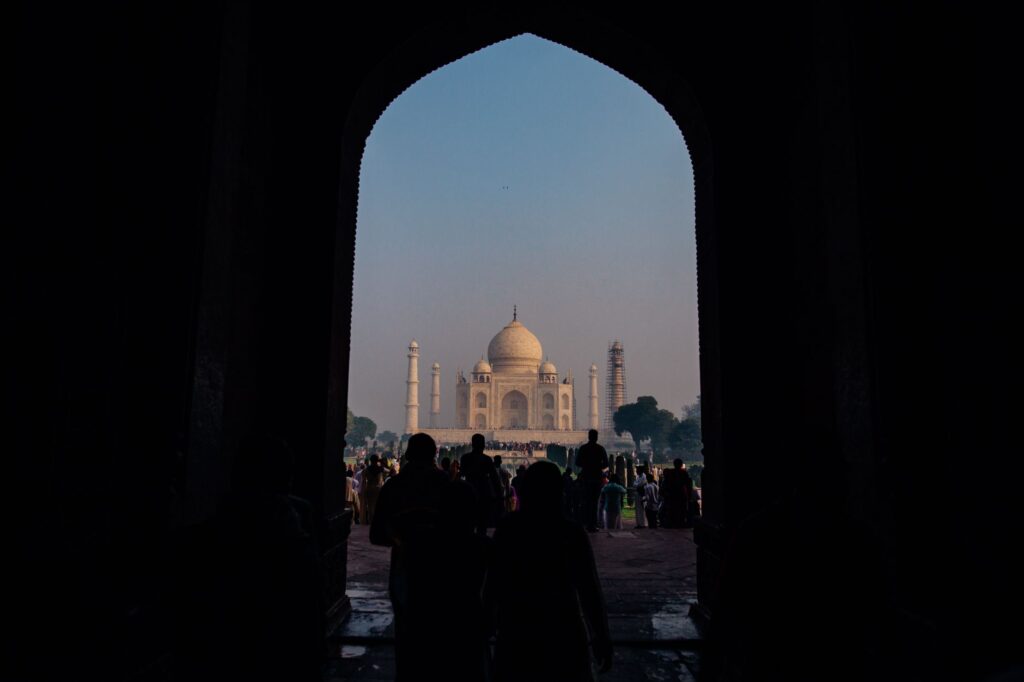
Respect: the Taj Mahal is a mausoleum. Keeping your voice low, not touching surfaces and following staff instructions are simple gestures that help preserve it.
A city that remains alive
Agra is not exhausted in a single visit. Those who stay a few days discover markets that change with the hour, temples where people sing at dawn and streets that fill with children when school lets out. The Taj Mahal, for all its grandeur, is only one part of a city that breathes, works and celebrates.
Moving through Agra with respect and curiosity is, in a way, the best way to honour what the city offers: a heritage that belongs to humanity, but also to those who live in its shadow.