
Some cities are visited; others are inhabited. Bologna belongs to the latter. Nestled between the Reno River and the foothills of the Apennines, in the Emilia-Romagna region of Italy, this city of around 394,000 people has built its identity on a network of porticoes stretching nearly 38 kilometers, recognized by UNESCO as a World Heritage Site in 2021. But reducing Bologna to its arcades would be a mistake. Here, daily life is measured in spoonfuls of ragù, in conversations at the foot of a fountain, in students crossing squares with books under their arms. It is a city to be savored and read.
The question guiding this report is not what to see in Bologna, but how life is lived there. And the answer, as with almost everything in Italy, has to do with the table, the street, and a particular way of understanding heritage as something not to be contemplated but used.
A horizontal city best explored on foot
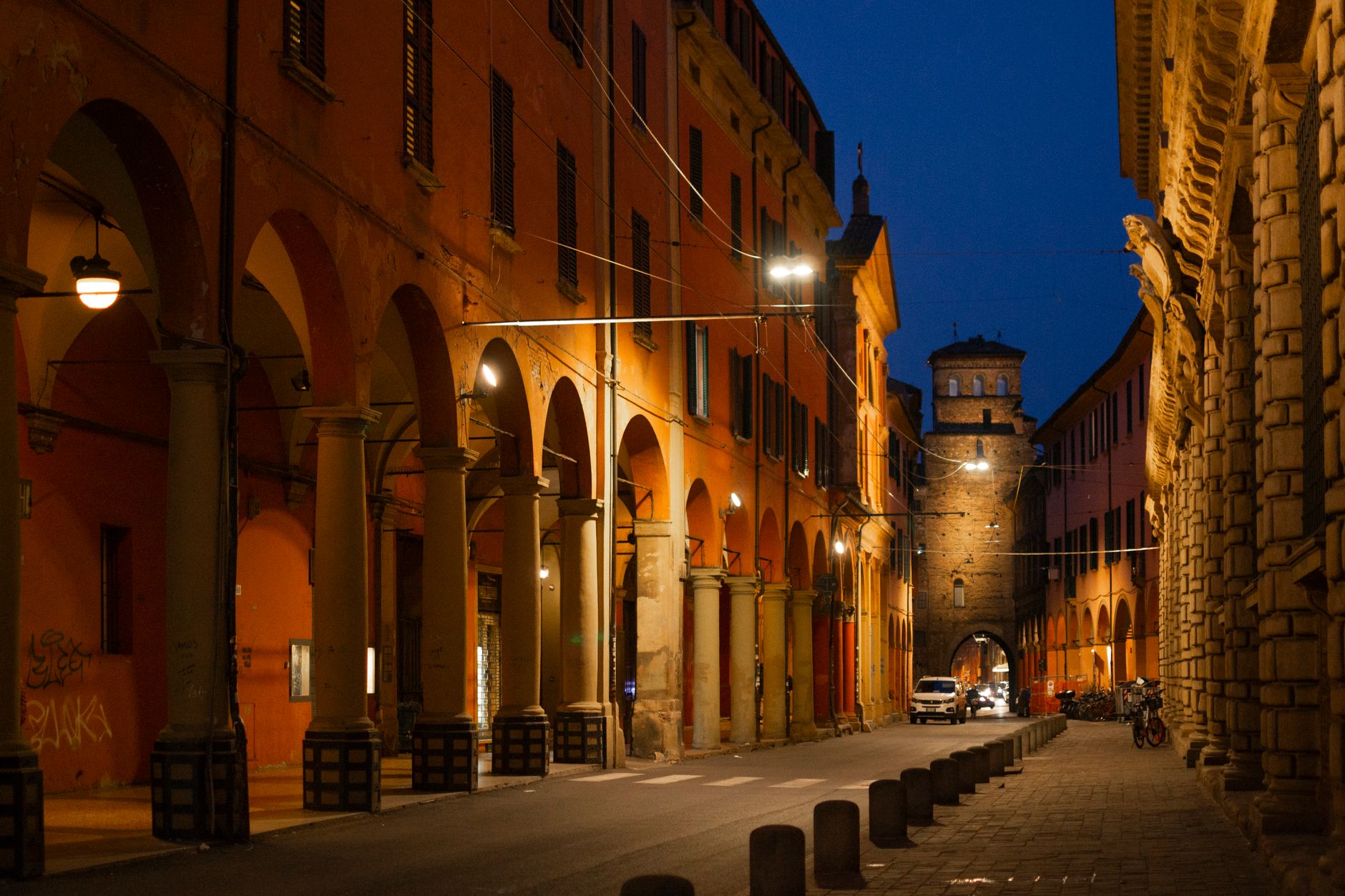
Bologna does not have a monumental historic center in the conventional sense. Its old town unfolds in a nearly rectangular layout inherited from Roman times, organized around two intersecting axes: the cardo and the decumanus. Walking its streets means traversing layers of history without even realizing it. Under the porticoes, the cobblestone floors and vaulted ceilings create an atmosphere that shelters from sun and rain, but also from haste.
The porticoes are not a backdrop for tourists. They are everyday infrastructure. Here, fruit stands are set up, bicycles are parked, buses are waited for, and neighbors chat. The city has integrated them so thoroughly that it is hard to imagine Bologna without them. The portico is, in a sense, the city’s living room.
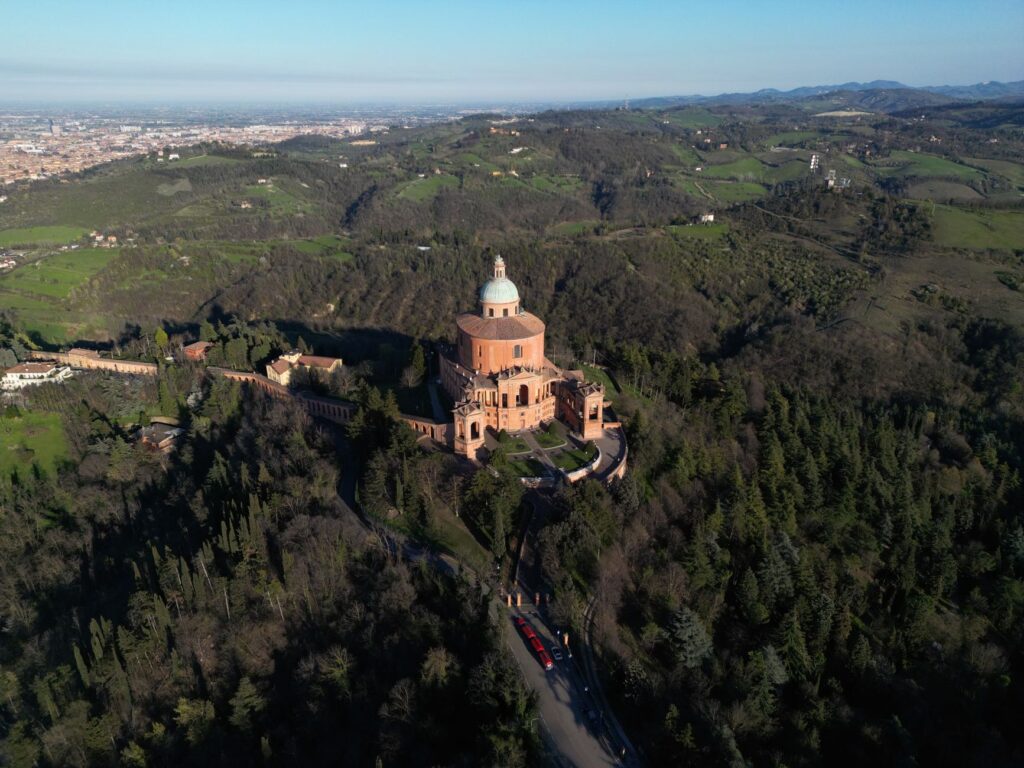
“Porticoes are not visited: they are used. They are the hallway of the home, the shelter from rain, and the place where the city meets itself.”
The market as a gauge of local life
If there is one place where Bologna shows itself as it is, it is the Mercato di Mezzo. Located in the heart of the quadrilateral formed by Via Drapperie, Pescherie, Orefici and Caprarie, this market occupies what was once the Roman and medieval market. Today, a fish stall coexists with a fresh pasta shop, a wine bar with a hardware store. It is not a museumified market: it is a working market.
A few meters away, Piazzetta Pasolini and the Mercato delle Erbe complete a culinary circuit that operates year-round. Here, people buy for the day, grab a coffee standing up, and discuss the price of tomatoes. The relationship between producers and residents is direct, without intermediaries. It is a proximity economy that endures despite tourist pressure.
The oldest university and its mark on the city
Founded in 1088, the University of Bologna is considered the oldest in the Western world in continuous operation. That antiquity is not a minor detail: it has shaped the city’s character. Students from all over Italy and beyond have created an ecosystem of bookshops, cafés, and lodgings that coexists with academic institutions.
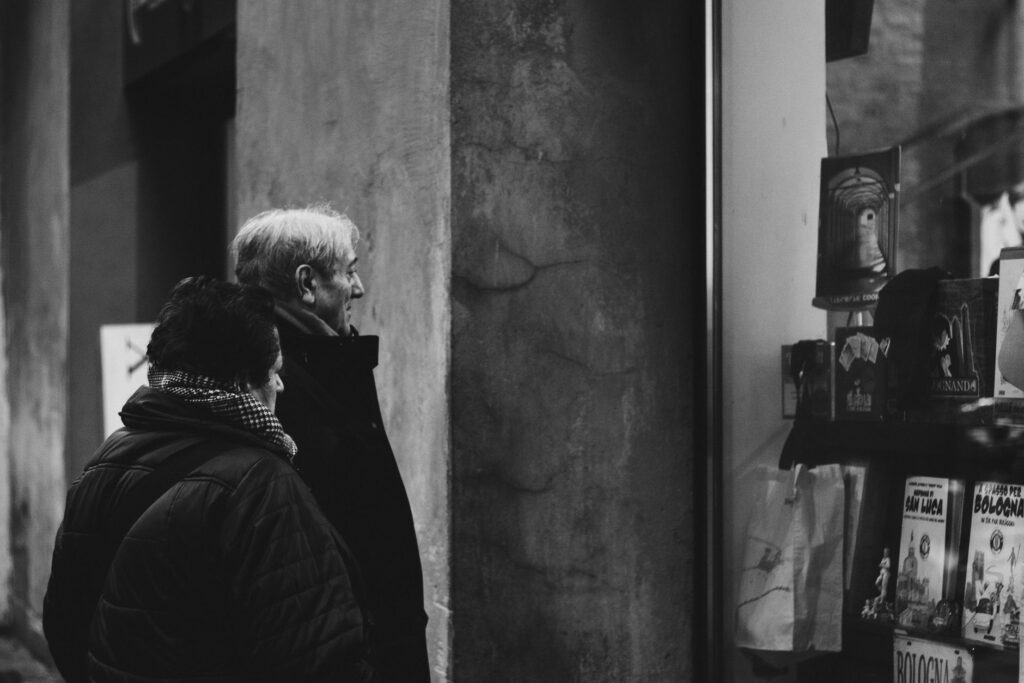
The university district extends around Via Zamboni, where Palazzo Poggi and the Orto Botanico are located. It is not a closed campus but a diffuse presence that blends with civil life. This coexistence has given Bologna a reputation as a progressive and participatory city, though the reality is more nuanced. What is certain is that the university keeps a youthful pulse in a city of ancient tradition.
Eating in Bologna: beyond ragù
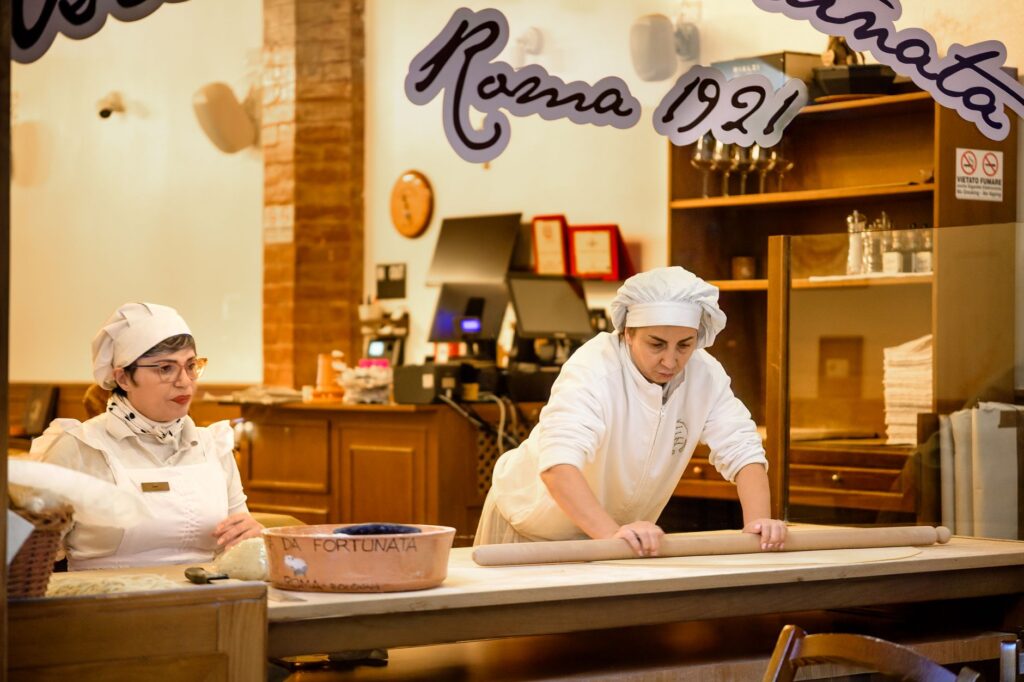
Bolognese cuisine is rich, hearty, and deeply tied to the land. Ragù alla bolognese, the one served abroad with spaghetti, is paired here with fresh tagliatelle. Tortellini are served in capon broth, not with cream. Mortadella has its own festival and its own museum. And the aperitivo, that ritual at six in the evening, is practiced generously in the bars of the center.
But Bolognese gastronomy is not just a list of dishes. It is a form of social organization. Family-run trattorias, neighborhood markets, and harvest festivals maintain a chain of transmission that goes from grandmothers to grandchildren. Here, food is not a spectacle: it is a language.
- Tagliatelle al ragù: the flagship dish, with fresh pasta and slow-cooked sauce.
- Tortellini in brodo: the quintessential Christmas version, with clear broth and hand-filled pasta.
- Mortadella: the emblematic cured meat, with protected geographical indication.
- Cotoletta alla bolognese: breaded cutlet with ham and cheese, baked au gratin.
Heritage in use: churches, towers, and canals
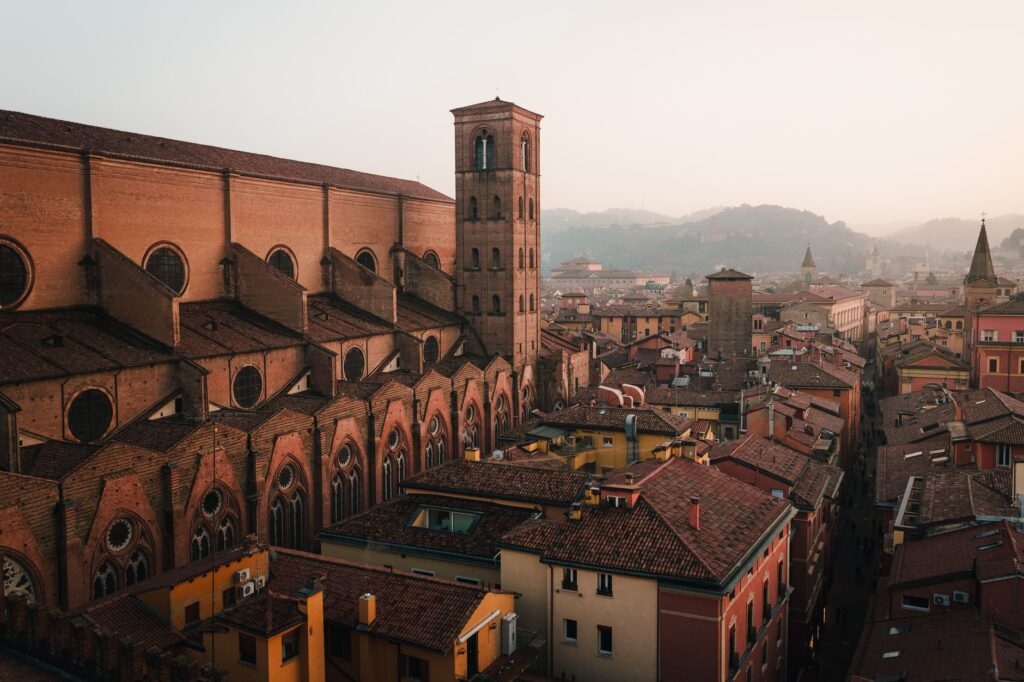
Bologna preserves considerable monumental heritage, but manages it with practical criteria. The Basilica of San Petronio, with its unfinished façade, remains an active place of worship and a civic landmark. The two remaining towers from the city’s medieval past, the Asinelli and the Garisenda, lean over the square and are part of the everyday skyline.
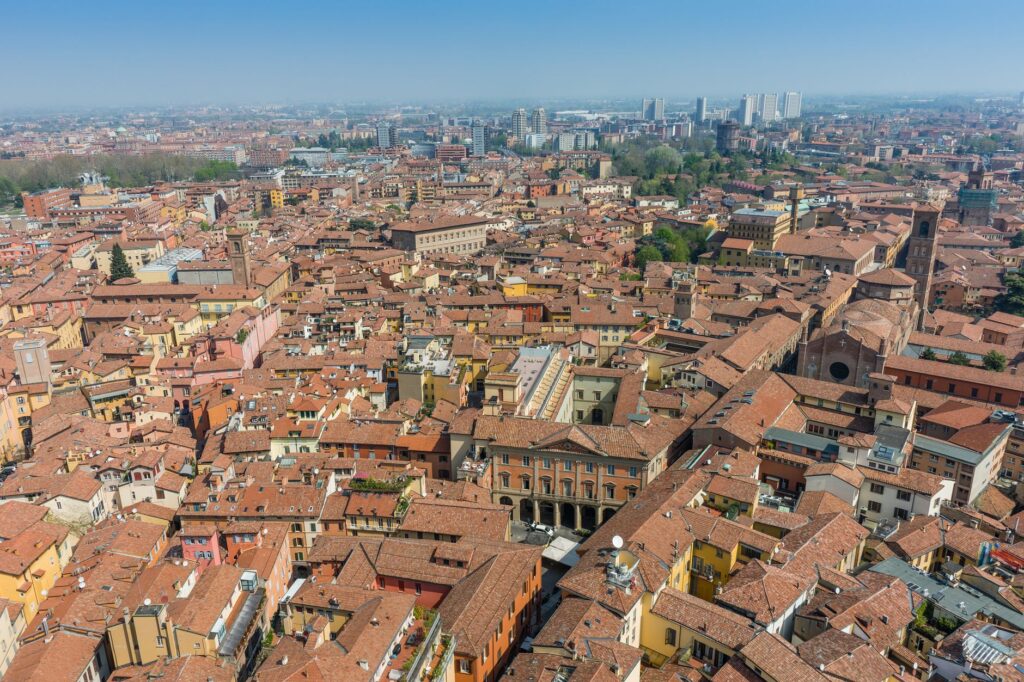
Less known are the canals that run underground and surface at certain points, such as the Finestrella di via Piella. They are not a massive tourist attraction but a vestige of the city’s fluvial importance. Seeing them requires attention, not a ticket.
“Bologna’s heritage is not behind glass: it is in the ground you walk on, in the water running under the street, and in the stone holding up the portico.”
Responsible choices for the visitor
Bologna receives a growing number of visitors but has not yet succumbed to the extreme touristification of other Italian cities. To keep it that way, some choices help. Staying in neighborhoods outside the historic center, such as Santo Stefano or Bolognina, distributes pressure and offers a different scale of the city. Shopping at neighborhood markets rather than only in tourist hubs keeps the local economy alive.
Walking or cycling is the most sensible way to explore Bologna. The city has an expanding bike lane network and a bike-sharing service. Public transport works well, but the center is compact enough not to need it. Above all, remember that the porticoes are a shared space: walk without blocking the way, respect quiet hours, and treat shops as what they are—neighbors’ businesses.
Practical guide
Getting there: Bologna has Guglielmo Marconi Airport (BLQ), with domestic and international connections. Bologna Centrale railway station is one of Italy’s most important rail hubs, linking to Florence, Milan, Venice, and Rome in times ranging from half an hour to two and a half hours.
When to go: Spring and autumn are the most pleasant seasons. Summer can be hot and humid, though the porticoes provide shade. Winter is cold, but the city remains active and trattorias are especially cozy.
Where to stay: The historic center is convenient, but the neighborhoods of Santo Stefano, Bolognina, or Saragozza offer a more local experience and lower prices. The university area is lively and well connected.
What to avoid: Restaurants with multilingual tourist menus and photos of dishes tend to offer inferior quality. Better to look for trattorias with a daily menu and local clientele. Also avoid peak hours at the Mercato di Mezzo if you seek tranquility.
Budget: Bologna is less expensive than Venice or Florence. Lunch at a neighborhood trattoria can cost between 12 and 20 euros. Coffee at the bar, standing, is around one and a half euros. Tickets to major monuments, such as the Asinelli Tower, are moderately priced.
A city that says goodbye with flavor
At the end of the day, when lights come on under the porticoes and the smell of simmering sauce drifts from windows, Bologna shows its true face. It is not a city to photograph and leave. It is a city to sit in, order a glass of lambrusco, and let time pass. In that simple gesture, one understands why Bolognese locals defend their way of life with a mix of pride and naturalness. Bologna is not visited: it is shared.