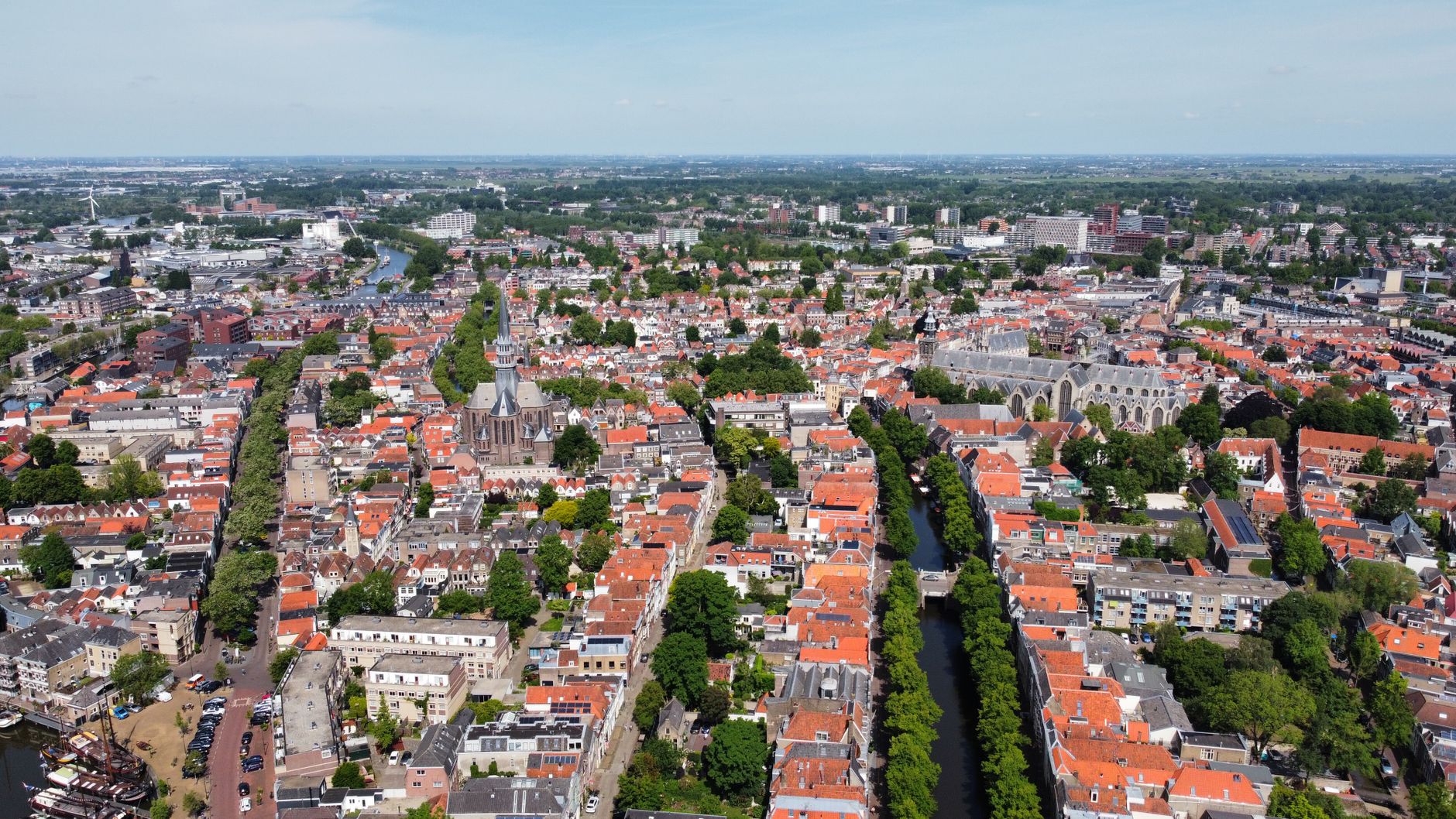

Almere Stad has no old town. There are no city walls, no medieval churches, no streets that date back centuries. The city stands on ground that was underwater until the mid-twentieth century: the former Zuiderzee, transformed into the IJsselmeer after the construction of the closure dam. What is now a city of more than 176,000 people in the province of Flevoland, The Netherlands, was for centuries seabed. That origin —new land, made land— defines its architecture, its landscape and, above all, the way its residents inhabit space.
To visit Almere Stad is to accept an unusual premise: the city is not a museum to be contemplated but a laboratory to be observed. Each neighbourhood responds to a different idea of what urban life should be. And the visitor who arrives without haste discovers that, behind its apparent youth, there is a deep reflection on water, soil and community.
A city planned from scratch
Almere is one of the youngest cities in The Netherlands. Its development began in the 1970s as a response to the need for housing in the Randstad, the urban belt that includes Amsterdam, Rotterdam, The Hague and Utrecht. The land was reclaimed from water through polders: stretches of land surrounded by dikes, drained and prepared for habitation. Almere Stad is the main urban core of the municipality, and its layout responds to a deliberate plan, not to the spontaneous accumulation of centuries.
That planning is visible in the width of its avenues, in the separation of functions and in the constant presence of water. The canals are not decorative: they are infrastructure, boundary and, in many cases, the very reason for the urban form. The city does not hide its artificial origin; it turns it into a mark of identity.
Neighbourhoods as chapters of the same book
Almere Stad is organised into districts that function as distinct chapters. Almere Haven, the first to be developed, retains the feel of a small harbour, with canals and low-rise housing. Almere Buiten and Almere Poort respond to more contemporary logics, with greater density and architectural experimentation. Each area has its own centre, its own scale and its own rhythm.
Visitors who explore the city on foot or by bicycle notice that there is no single historic centre organising everything. Daily life is distributed. Markets, libraries and stations become meeting points. That decentralisation can be disorienting at first, but it also invites movement without haste, without the pressure of having to see everything in one place.
The bicycle as a common language
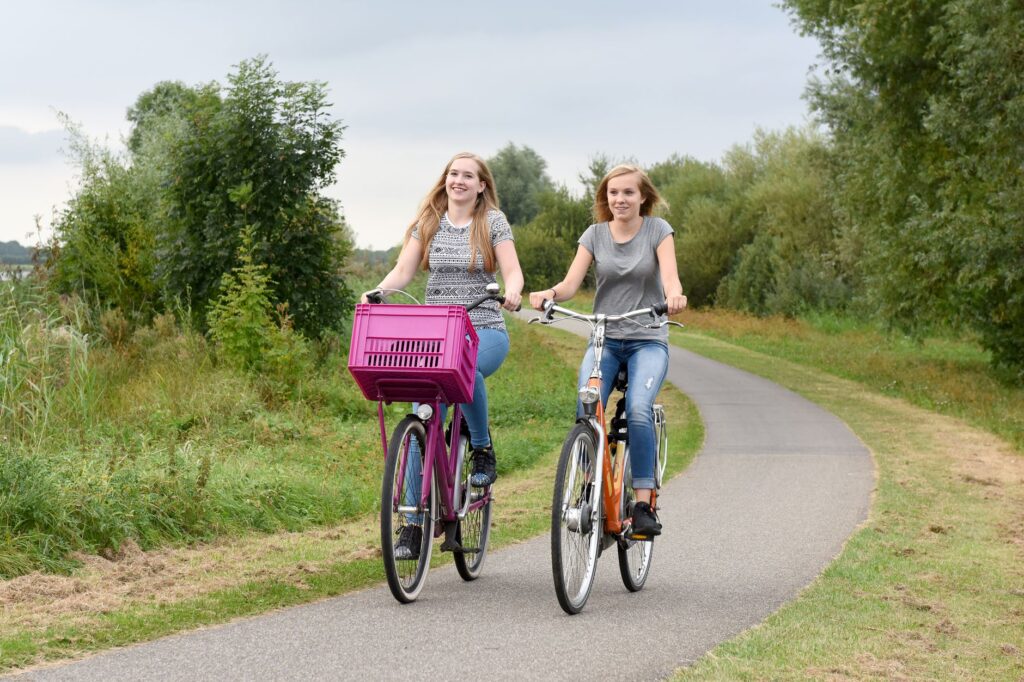
In Almere Stad, the bicycle is not a recreational option: it is the most natural means of transport. The network of cycle paths separated from motor traffic is extensive and well signposted. Bridges and tunnels specifically for bicycles cross canals and motorways, weaving a parallel city that runs at a different speed.
In Almere, the bicycle does not compete with the car: it simply occupies the place it deserves in a city designed so that the body can move without friction.
For travellers, renting a bicycle is the most honest way to understand the real scale of Almere Stad. Journeys that look long on a map become short. And the landscape —water, dikes, open sky— unfolds without interruption.
Contemporary architecture and urban experimentation
Almere has been, since its beginnings, a testing ground for Dutch and international architects. The Almere Poort district contains notable examples of contemporary housing, with facades that play with colour, transparency and the relationship with water. This is not about monumentality but about variety: the city avoids repetition and bets on controlled difference.
That diversity has a curious effect. Walking through Almere Stad, visitors are not overwhelmed by a homogeneous ensemble but invited to observe details: how a house leans over a canal, how a bridge resolves a level change, how a park integrates between housing blocks. Architecture here does not seek to impress but to function.
Water as a permanent neighbour
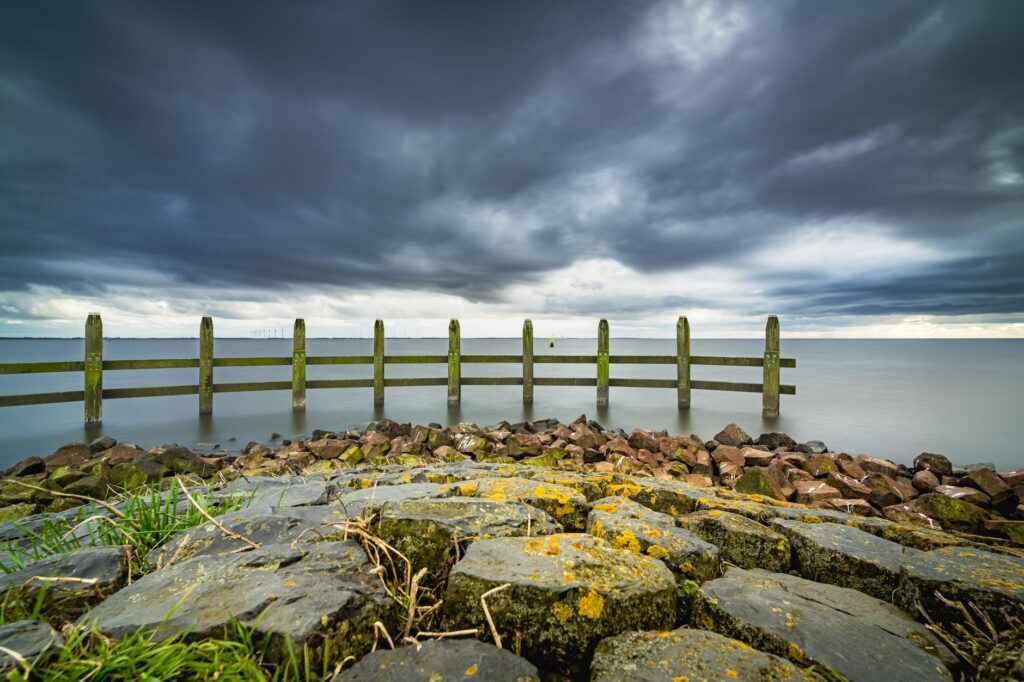
Living in Almere means coexisting with water in a literal sense. Canals cross neighbourhoods, artificial lakes offer recreational spaces and dikes mark the city’s limits. That constant presence is not merely scenic: it is a lesson about the fragility of the ground we inhabit.
The Dutch have developed over centuries a pragmatic relationship with water. In Almere, that relationship is expressed in technical solutions —locks, pumps, drainage channels— and also in a daily culture: children learn to swim early, houses are built with resilience criteria and public space incorporates water as an element of play and rest.
Nature integrated into the urban fabric
Despite its condition as a planned city, Almere Stad is not a concrete landscape. Parks, riverbanks and green areas occupy a significant part of the ground. The Almeerderhout forest, nearby, offers hiking and cycling routes that connect the city with the natural surroundings of Flevoland.
That integration responds to a clear idea: nature is not an addition but another piece of infrastructure. Green spaces serve drainage, thermal regulation and recreation. For visitors, this means they can move from the urban centre to a waterside path in a few minutes, without travelling far.
Daily life and recent heritage
Almere Stad lacks historical heritage in the traditional sense, but it possesses a recent heritage worth attention: its public buildings, its squares and its urban layout are testimony to a way of thinking about the city that has influenced European urbanism. The central station, civic centres and some residential complexes are already objects of study and, in a sense, of protection.
Travellers interested in architecture and urbanism will find in Almere a living case study. This is not about admiring ruins but about observing how a community builds its identity on a territory without built past. Memory here is not in the walls but in the decisions.
Food and neighbourhood life
Almere Stad’s food scene reflects its diversity. Weekly markets, neighbourhood cafés and family restaurants coexist with more contemporary proposals. Dutch cuisine —fish, potatoes, seasonal vegetables— mixes with international influences, the result of a population that grew with contributions from multiple origins.
For visitors, eating in Almere is a simple and accessible experience. Markets offer fresh, local products; cafés invite you to sit without haste. There is no spectacular gastronomy seeking to impress, but an honest cuisine that accompanies daily life.
Practical guide
Almere Stad is located in the province of Flevoland, The Netherlands, about 30 kilometres east of Amsterdam. The rail connection with the Dutch capital is frequent and fast, making it a viable day trip or a quiet base for exploring the region.
- Getting there: Train from Amsterdam Centraal to Almere Centrum. The journey is short and trains run regularly throughout the day.
- Getting around: The bicycle is ideal. Rental points exist at the station and in various neighbourhoods. Cycle paths are separated from traffic and well signposted.
- What to see: The canals of Almere Haven, the contemporary architecture of Almere Poort and the shores of the IJsselmeer. The Almeerderhout forest offers natural routes.
- When to go: Spring and summer allow you to make the most of outdoor spaces and the cycle path network. Autumn offers soft light and fewer visitors.
- Responsible tip: Respect the rules of conduct on cycle paths, do not leave waste in natural areas and shop at local markets and businesses to support the neighbourhood economy.
Almere Stad is not a city to explore with a list of monuments. It is a place to observe how a community inhabits a territory it helped to create. That is, perhaps, its most valuable lesson.