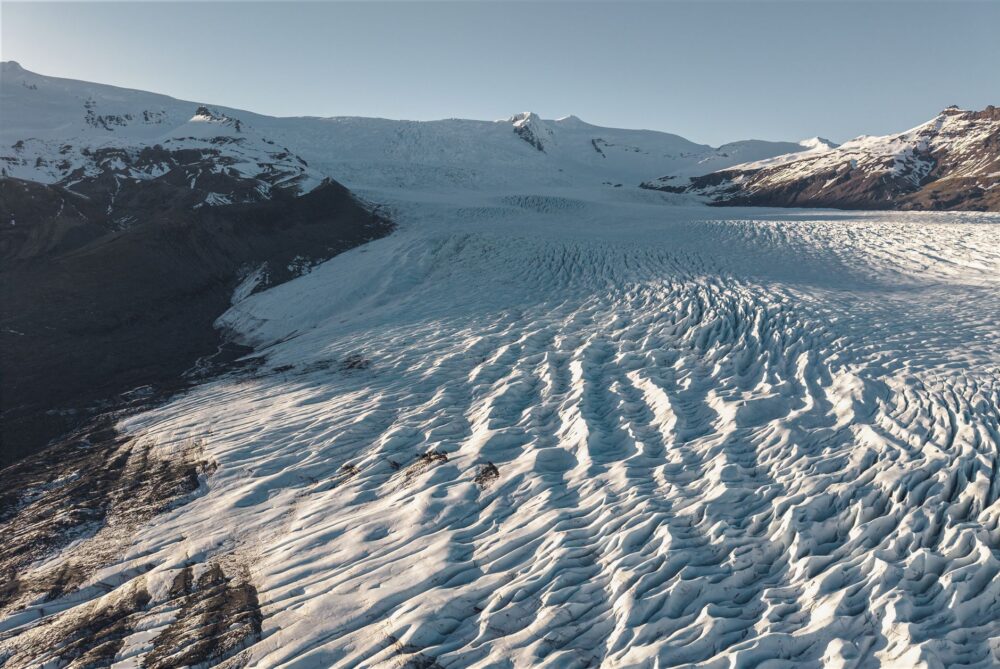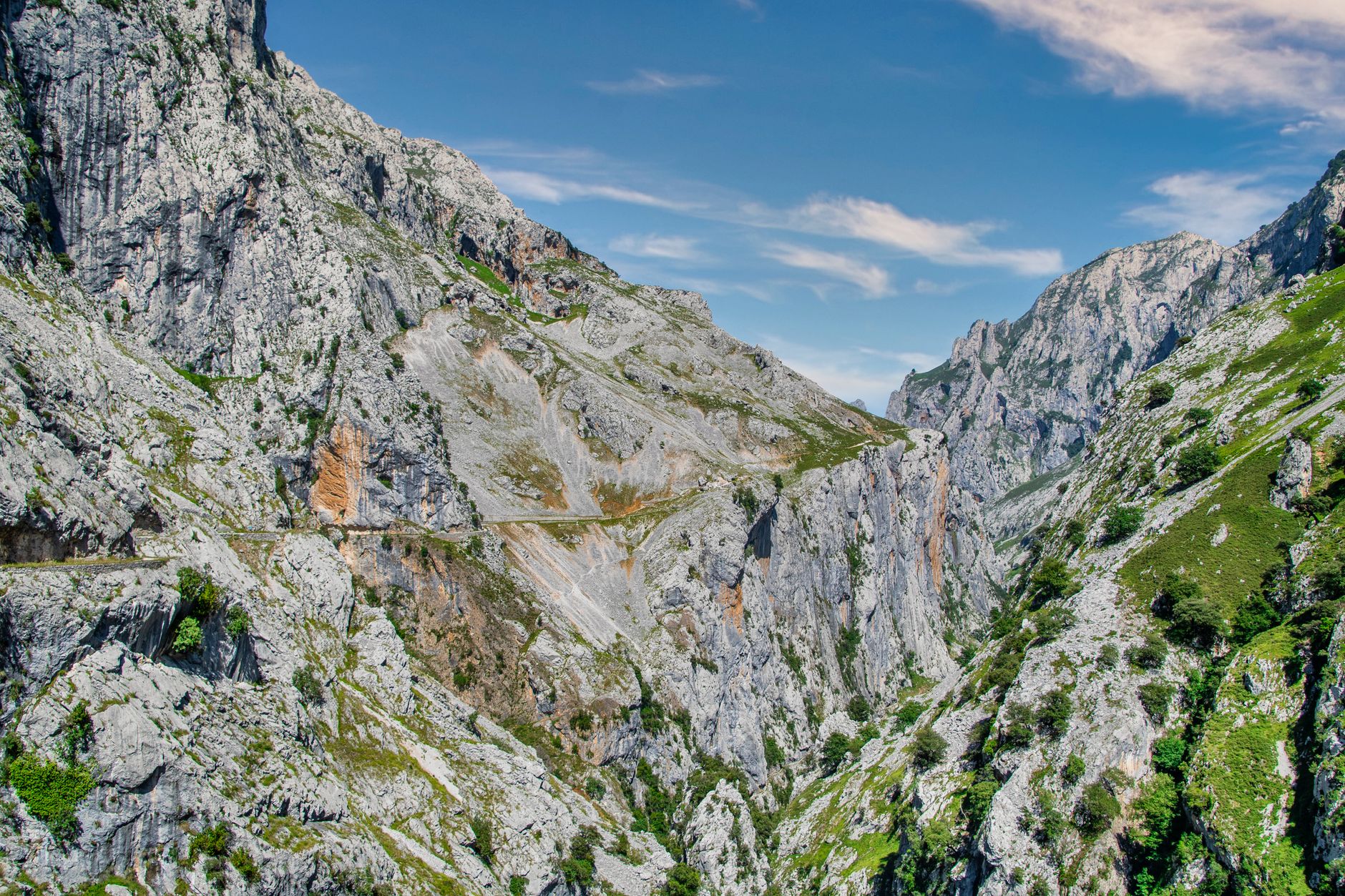

In northern Spain, where the Cantabrian Mountains plunge toward the sea, a territory of bare stone, high pastures, and damp-scented forests rises. The Picos de Europa are not a mountain theme park: they are a living limestone massif, carved by glaciers and by centuries of transhumance. Walking here demands respect, preparation, and an attentive eye for the heritage underfoot.
This guide does not propose technical routes or extreme ascents. It proposes something more useful: understanding the terrain, planning with judgment, and walking so that both the landscape and those who inhabit it come out ahead. Hiking in the Picos is a conversation with stone, water, and time.
A relief written in limestone
The Picos de Europa form part of the Cantabrian Mountains and are divided into three main massifs: the Western or Cornión, the Central or Urrieles, and the Eastern or Ándara. This division is not an administrative whim: it shapes the character of each day. The Central massif concentrates the sharpest summits and the most severe elevation changes; the Western offers deep forests and glacial lakes; the Eastern, gentler, preserves meadows and old livestock shelters.
Limestone defines the experience. Water does not stay on the surface: it filters down, carves chasms, and resurfaces in springs. That is why hikers encounter dry stretches, unstable scree, and, suddenly, an unexpected fountain. Understanding this geology is the first safety tool.
Limestone also explains the fragility of the terrain. Soils are thin and vegetation grows slowly; a footprint off the trail can take years to fade. Walking on loose stone demands constant attention: a firm slab is not the same as a scree slope that shifts underfoot. Learning to tell them apart is part of a walker’s craft.
Landscape that shifts with the mist
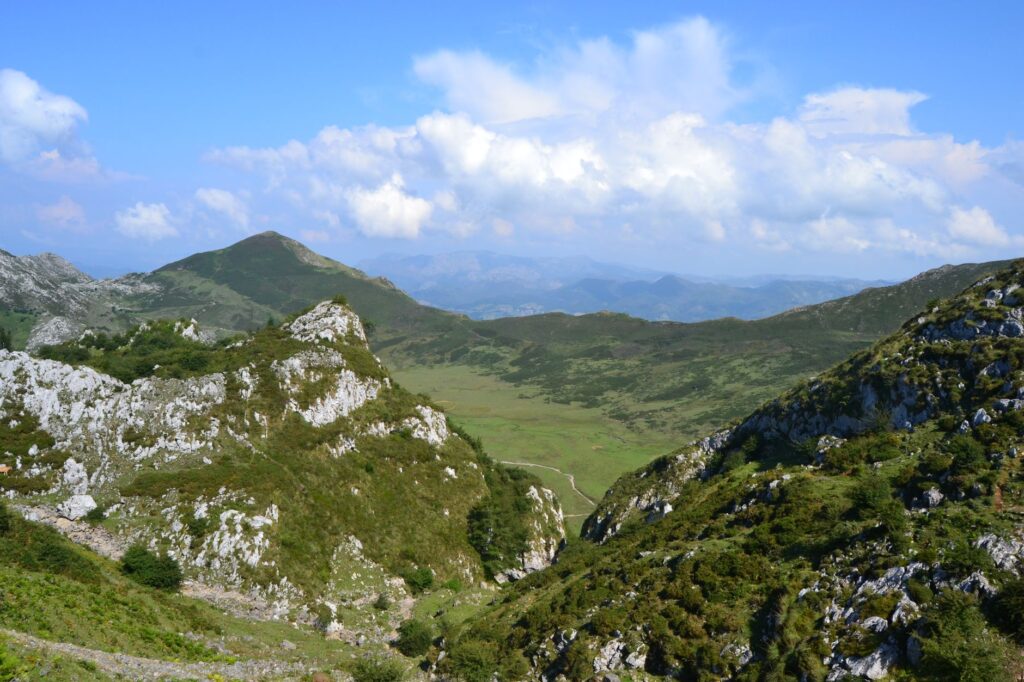
The Atlantic climate imposes its law. Mist can erase a valley in minutes and then reveal it in a light that seems newly invented. That variability is not an obstacle: it is part of the journey. Walking in the Picos teaches you to read the sky, to accept that a viewpoint may be closed, and to value clearings as gifts.
In the Picos, the mountain is not conquered: it is interpreted. Every stretch of limestone, every snow hollow, and every dry-stone wall tells a story of adaptation.
Spring and autumn offer mild temperatures and fewer crowds, though with a higher chance of rain. Summer concentrates visitors on the best-known access points. Winter demands experience and specific equipment. There is no perfect season: there is a season suited to each level and each goal.
Mist does not only change the view: it changes orientation. A trail that is obvious under the sun can become ambiguous when visibility drops to a few metres. It is therefore wise to memorise reference points before the fog arrives and not to rely on sight alone. A map and compass are not a romantic accessory: they are the tool that replaces your eyes when the landscape disappears.
Heritage you walk through
The trails of the Picos are not merely sporting routes. They are historic paths used by shepherds, muleteers, and smugglers. Livestock shelters, stone huts, and dry-stone walls form a rural heritage that often goes unnoticed. Walking without damaging it is part of the ethic of the place.
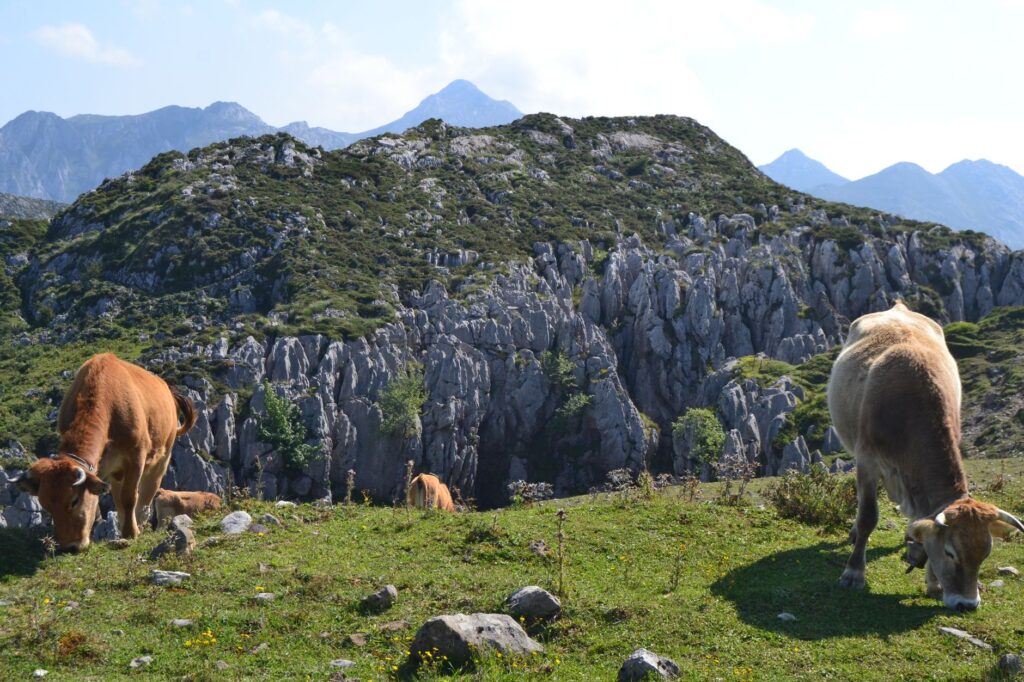
In the valleys, livestock traditions coexist with mountain gastronomy based on cheeses, stews, and seasonal products. The responsible hiker buys from local businesses, respects private property, and does not intrude on the work of those who live off the land.
This heritage is not decorative. Many livestock shelters remain in use, and dry-stone walls serve a purpose: they delimit pastures, protect crops, and order the territory. Crossing a field without closing a gate, or leaving a fence open, can have real consequences for those who work there. Rural courtesy is not a picturesque detail: it is part of safety and mutual respect.
General preparation before setting out
Preparation begins at home. An up-to-date map, a compass or GPS with sufficient battery, and the ability to navigate without coverage are basics. Mobile signal is patchy in many valleys. It is wise to inform someone of your planned itinerary and return time.
- Mountain footwear with grip for wet rock and scree.
- Insulating layers and a windproof jacket, even in summer.
- Enough water and a filter or purification tablets if unsure about a source.
- Sun protection, sunglasses, and a cap for high-altitude sections.
- Basic first-aid kit and an emergency whistle.
Physical fitness matters more than technique on most hiking routes. It is better to choose a short route and enjoy it than to attempt a long traverse and suffer it. The mountain does not reward haste.
Preparation also includes the body. Sleeping well the night before, hydrating before you feel thirsty, and eating regularly during the walk are habits that prevent most incidents in the mountains. Fatigue does not announce itself: it accumulates in silence and reduces your ability to decide. Recognising it in time is a skill as valuable as reading a map.
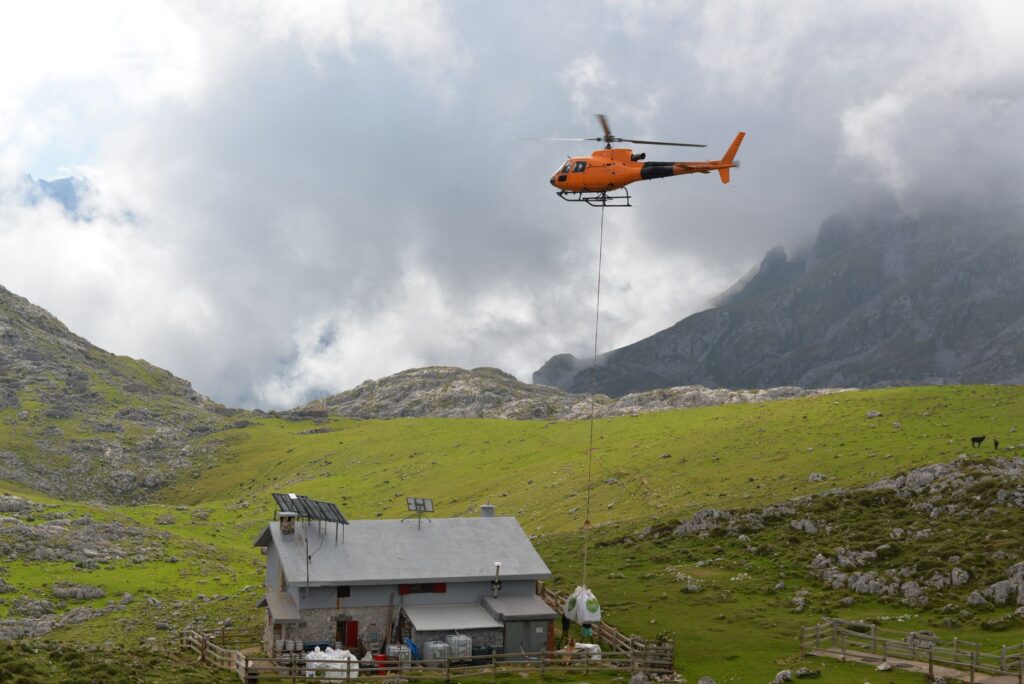
Responsible hiking in a protected area
The Picos de Europa are a national park and a biosphere reserve. That implies clear rules: do not leave marked trails, do not disturb livestock, do not collect plants or minerals, and do not leave waste. Local wildlife, from the chamois to the golden eagle, is sensitive to human presence.
The best souvenir one can leave in the Picos is no trace at all. The mountain already has enough with its own wear.
During grazing season, dogs should be kept on a leash or, preferably, left at home. Livestock shelters are workplaces, not photo sets. Asking before photographing people is a basic rule of coexistence.
Noise is also a form of pollution. High-mountain wildlife depends on silence to detect danger and communicate; loud music or a shouting group disrupts that balance. Walking in silence is not a renunciation: it is a way of listening to the landscape and of not imposing your own presence on others.
What to carry in your backpack
A well-organized daypack weighs less than it seems. The key is to avoid duplicates and trust the forecast, not your wishes. In the Picos, the difference between a pleasant day and an uncomfortable one usually comes down to a waterproof layer and a pair of dry socks.
- Map and compass or GPS device with a preloaded track.
- Energy food and a cold lunch.
- Headlamp and spare batteries.
- Emergency thermal blanket.
- Bag for waste, including organic waste.
It is worth checking your pack before closing it and asking whether each item has a clear use. Unnecessary weight is paid for on every slope, and on terrain with constant elevation changes the difference is noticeable. Carrying less and better is a form of respect for yourself and for the group.
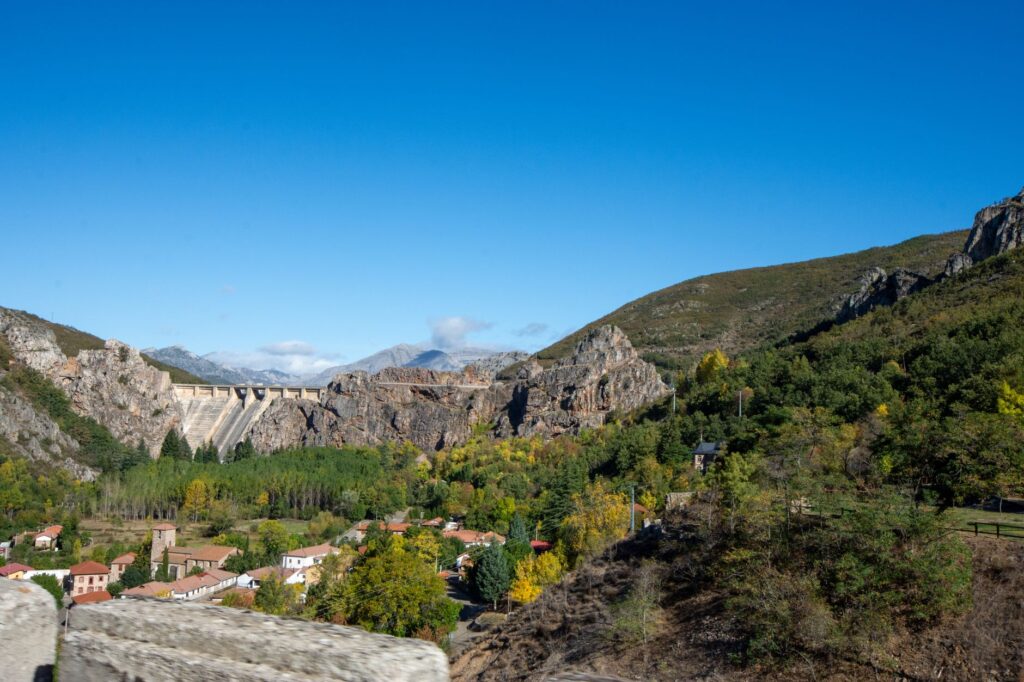
Where to get information and how to get around
Before walking, it is worth visiting the park’s interpretation centers and tourist information offices. They provide updated notices on closed trails, weather conditions, and seasonal recommendations. Public transport reaches several valley villages, but access to high areas usually requires a private vehicle or local taxi services.
Parking in mountain areas is limited, and misuse damages the environment. Using designated parking areas and respecting prohibitions is part of a responsible visit. In high season, starting early not only avoids crowds: it also rewards you with the best light.
Information changes with the seasons and with the state of the paths. A trail that was open in spring may be affected by rockfalls or maintenance work in summer. Checking before you set out, and not relying on old guidebooks, is a simple precaution that avoids surprises. Information offices are not there to sell brochures: they are there to warn.
A gaze at the sky and the stars
Light pollution is low across large areas of the Picos. Sleeping in a mountain hut or a valley village allows, on clear nights, a view of a sky that has become a memory in cities. Stargazing is another form of hiking: it requires patience, warm clothing, and a folding chair.
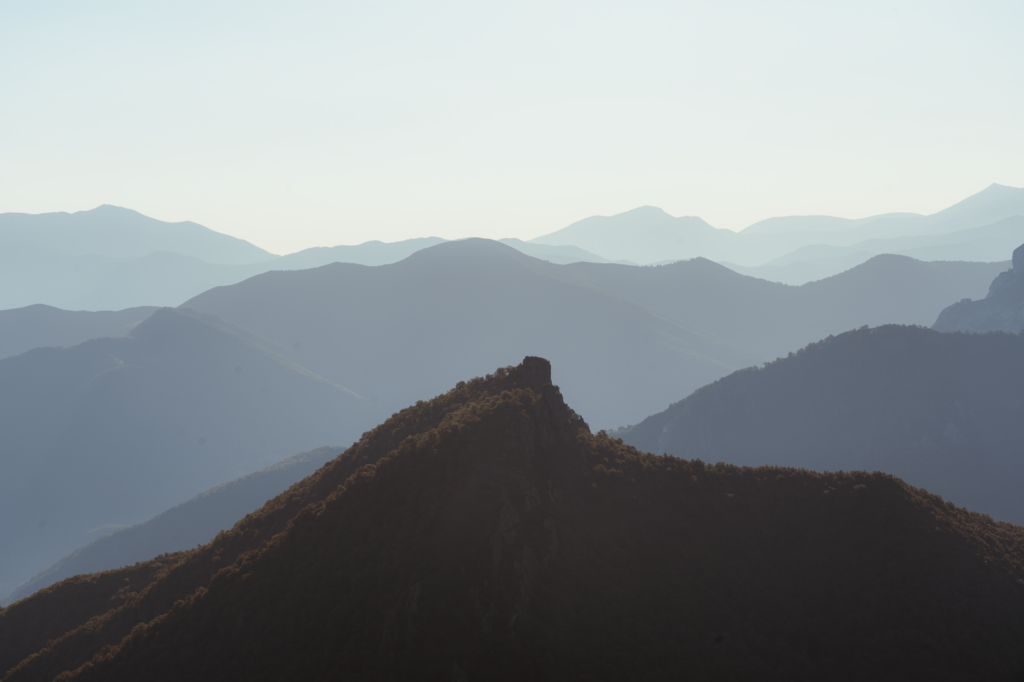
Mountain huts offer shelter and companionship. Booking ahead in high season is essential. The nocturnal silence in a Picos hut is one of those luxuries that cannot be bought: it is earned by walking.
Night also imposes its rules. Temperatures drop even if the day has been warm, and orientation becomes more difficult. Anyone walking at dawn or dusk should carry a headlamp and know the way back. The mountain at night is no more dangerous than by day, but it forgives carelessness less.
Practical guide
When planning a hiking visit to the Picos de Europa, keep the following in mind:
- Best time: May to October for general hiking; July and August are the busiest months.
- Recommended duration: a minimum of three days to explore one valley calmly; a week to combine several sectors.
- Accommodation: rural houses, mountain hotels, and staffed huts. Book ahead in high season.
- Transport: car for main access points; check local taxi and public transport services in the valleys.
- Safety: inform someone of your itinerary, carry a map and compass, and check updated weather forecasts.
- Respect: stay on trails, do not disturb livestock, leave no waste, and buy from local businesses.
- Language: Spanish; English may be spoken in tourist areas.
- Currency: euro. Carry cash for small rural establishments.
The visit to the Picos de Europa does not end when you step off the trail. It ends when you understand that this landscape is not a backdrop but a living system that depends, in part, on how we walk through it.