The Call of the Deep Forest and the Mycological Autumn
When the first snowfalls threaten to brush the peaks of the Iberian System and the damp chill penetrates to the marrow of the Scotch pine forests, the province of Soria undergoes a silent mutation. The landscape ceases to be a mere geographical backdrop, transforming instead into a vast territory of culinary and scientific speculation. This is not an improvised tourist phenomenon, but rather an ancestral communion between humanity, extreme continental weather, and the mycological substrate carpeting the forest floor. In this land of high plateaus, where population density barely reaches nine inhabitants per square kilometer, the true vital pulse beats beneath the leaf litter.
Mycotourism in Soria is not a contemporary commercial fad; it is rooted in subsistence and profound empirical knowledge passed down through generations. Locals have spent centuries reading the signals of sky and earth: the orientation of shadowed hillsides, bats crossing the humid twilight, and the characteristic scent of mycelium awakening after the first September rains. This report takes the reader into the inner workings of a forestry economy that balances human pressure with ecosystem preservation, exploring both the rigor of local markets and the sophistication of professional kitchens where wild fungi become haute cuisine.
The Science of Mycelium: Ecology of Soria’s Pine Forests
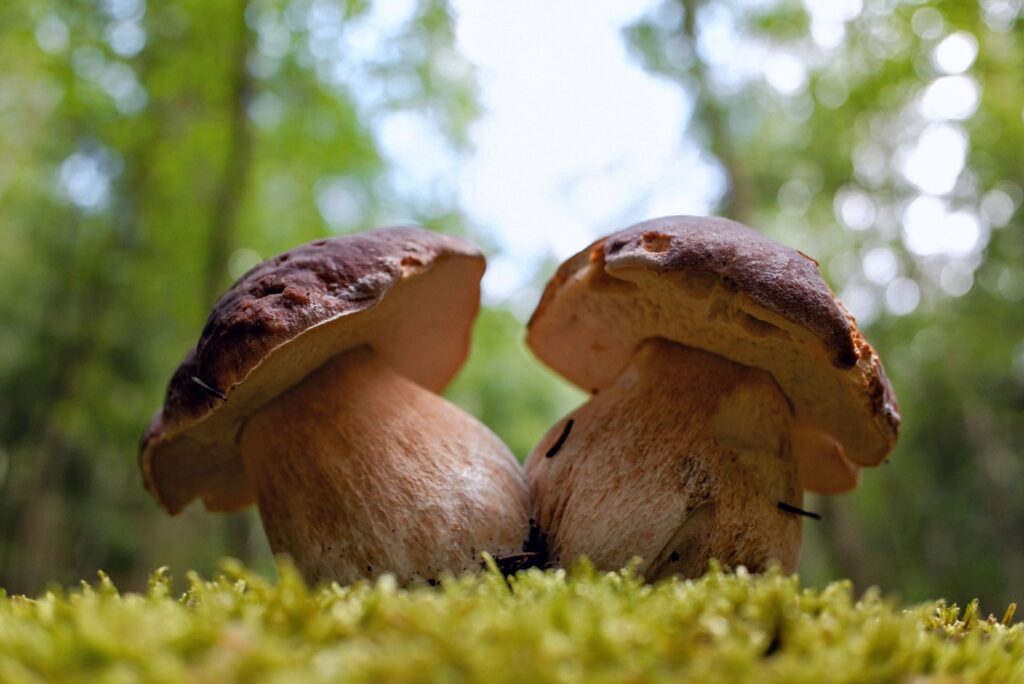
To grasp the gastronomic magnitude of Soria, one must descend into the subsoil. The pine forests of the Pinares region, spanning municipalities such as Navaleno, Covaleda, and Duruelo de la Sierra, harbor a complex symbiotic network. Species like the Boletus edulis, the saffron milk cap (Lactarius deliciosus), and the coveted king oyster mushroom (Pleurotus eryngii) are not simple plants growing from dirt, but rather the fruiting bodies of colossal underground organisms. These fungi establish mycorrhizal relationships with tree roots, trading mineral nutrients and water for sugars synthesized through photosynthesis.
Forestry experts from the regional government of Castile and León and local mycological associations emphasize a core concept: foraging is not an unregulated extractive activity. In Soria, the regulatory system—based on harvesting permits, zoning, and gear controls, such as the mandatory use of wicker baskets that allow spores to disperse while walking—has turned the province into a European benchmark for sustainable forest management. The pressure of poachers or uninformed gatherers is countered with surveillance and environmental education, recalling that every mushroom improperly harvested damages a trophic web vital to the forest’s health.
The Dawn Ritual: Foraging in the Pinares Mountains
The clock strikes half-past six in the morning. Frost coats the windshields of off-road vehicles parked along the firebreaks of Navaleno. The crisp air catches the breath, with temperatures hovering near freezing. Professional foragers and seasoned amateurs walk in silence, armed with curved pruning knives and woven wicker baskets. In this trade, stealth and visual memory are the ultimate tools. A skilled mushroom hunter never reveals the exact location of their most generous patches, guarding the secret with the zeal of a medieval monk.
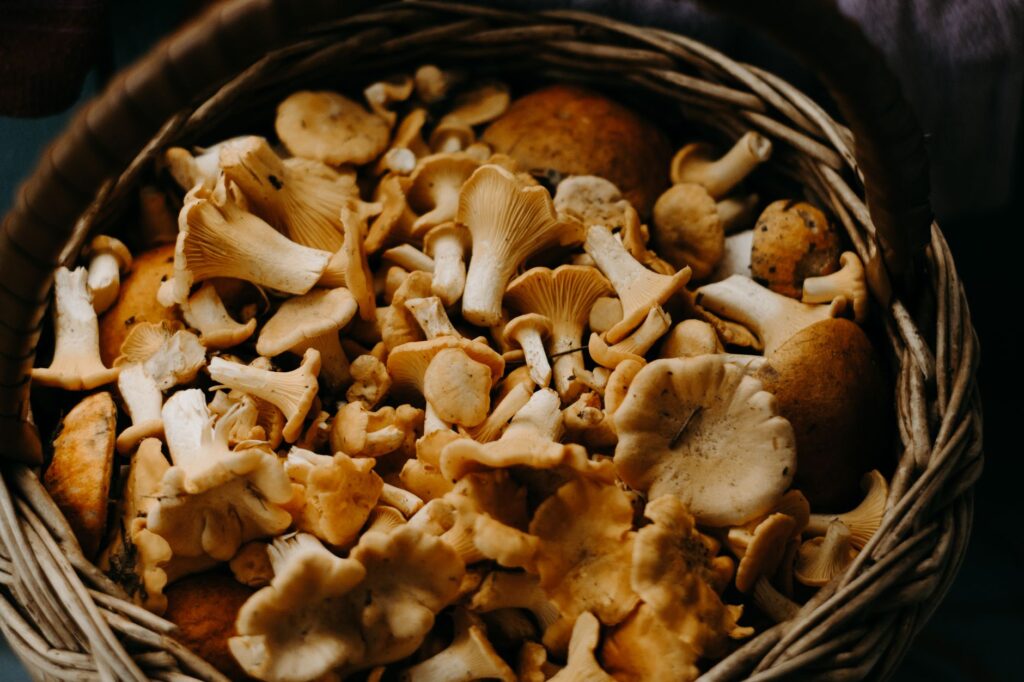
The forest speaks to those who know how to listen to its silences; excessive haste tramples the treasure before it lifts its head through the moss.
Foraging demands absolute respect for the environment. The use of rakes or pitchforks that disturb the humus and destroy the mycelium is strictly prohibited. The knife must cut the stem flush with the ground or gently twist to extract the specimen without fracturing the subterranean structure. Each basket filled at the end of the morning shift is a showcase of biodiversity: from the velvety, firm cap of the Boletus to the orange gills of the saffron milk cap, which weep a reddish latex at the slightest cut. It is an exercise in physical patience where exhaustion is offset by discovering a flawless ring of mushrooms.
Soria Municipal Market: The Thermometer of Produce
From the damp pine forests to the white-tiled stalls of Soria’s Municipal Market is barely a half-hour drive. By mid-morning, this bustling hub in the historic center transforms into an exchange of earthy aromas and autumnal colors. Wholesalers and independent foragers display their bounty on stainless steel tables, rigorously classifying each species by size, category, and freshness. Here, there are no unnecessary middlemen: the produce travels directly from the forest into the hands of consumers or chefs within hours.
The market also serves as a sociological and economic observatory. On Friday and Saturday mornings during peak season, the aisles teem with local chefs, out-of-town restaurateurs, and neighbors searching for the perfect specimen for Sunday’s stew. Health and consumer inspectors conduct random checks to certify the absence of toxic species, guaranteeing absolute traceability. In this market, the price per kilo of Boletus edulis fluctuates according to the unforgiving law of meteorology: a week of dry frost sends prices soaring, while a mild, rainy storm floods the stalls with abundance.

Taxonomy and Classification: Beyond the Boletus
Although Boletus edulis captures tourist headlines, Soria’s mycological pantry boasts staggering taxonomic wealth. Market stalls and traditional recipe books pay homage to dozens of varieties unknown or feared by urban palates. Among them stands the Tricholoma portentosum, locally known as the capuchin, a mushroom with firm white flesh that appears late in the season when winter chills have already driven away mass tourism. Its delicate, slightly sweet, and nutty flavor makes it a favorite among local gourmets.
Another forest jewel is the Craterellus cornucopioides, popularly called horn of plenty or black trumpet. With its dark, trumpet-shaped appearance and fine texture, its intense mushroom aroma resembles a vegetable truffle when dehydrated and reduced in butter or stocks. Likewise, Amanita caesarea—the prized Caesar’s mushroom that fascinated Roman emperors—appears during summer and autumn in the province’s warmer oak groves, offering a crisp, silky profile best enjoyed raw, thinly sliced with extra virgin olive oil and flaky sea salt.
High Mycological Cuisine: Flavor Laboratories in Arid Earth
The transformation of wild fungi in Soria’s haute cuisine has undergone a fascinating evolution over the past two decades. Chefs trained in the country’s top schools have returned to their roots to apply avant-garde techniques without betraying the honesty of raw produce. In restaurants like Baluarte, holders of a Michelin star in the provincial capital, chef Óscar García Marina approaches mycological recipes as a discipline of scientific precision and artistic sensitivity, where each mushroom requires millimeter-precise thermal treatment to release its umami juices.
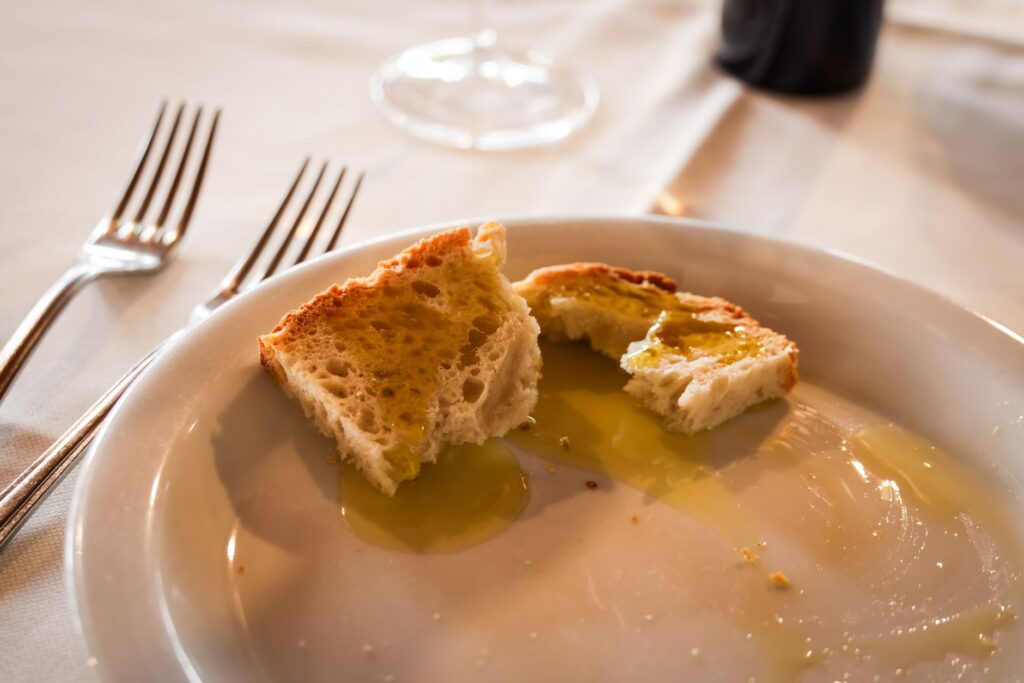
In these culinary temples, masking flavors is avoided. A Boletus carpaccio requires merely a few drops of low-acidity EVOO and freshly ground white pepper. Spoon stews, such as white beans with saffron milk caps or clarified king oyster broth with cured egg yolk, prove that Soria’s mycological cooking is an exercise in synthesis where animal fat is kept to a minimum to give absolute prominence to the volatile aromatic compounds of the forest. Cooking thus becomes a gustatory archive of seasonal memory.
Conservation and the Future: Ancestral Techniques and Innovation
The unforgiving perishability of fresh mushrooms historically forced rural communities to devise ingenious preservation methods. Before the widespread adoption of industrial refrigeration and quick-freezing, women in the Pinares region dried Boletus on hemp threads hung near the hearths of wood-burning kitchens, or preserved them in olive oil and vinegar within airtight glass jars. Today, these artisanal techniques coexist with freeze-drying and controlled dehydration, allowing the flavor of Soria’s pine forests to be exported to international markets year-round.

Preserving a mushroom means trapping the ephemeral breath of the autumn rain to release it months later over a steaming plate.
Local workshops also produce pasteurized creams, salts flavored with black trumpet powder, and game or cured pork sausages enriched with wild mycology. This local agri-food industry forms a fundamental socioeconomic pillar that anchors population in rural municipalities, proving that environmental sustainability and commercial profitability can go hand in hand when rigorous institutional control is in place.
Practical Information for the Traveler and Forager
Planning a mycological trip to Soria requires knowing certain essential rules and logistics to avoid fines and ensure a safe experience. The main season runs from mid-September through late November, depending strictly on summer rainfall and the first nighttime frosts. Obtaining a harvesting permit (micocyl) before stepping foot in the woods is mandatory; these passes can be purchased online or at local town halls and tourist offices for very affordable fees that vary depending on the profile (local, linked, or tourist) and the type of harvesting (recreational or commercial).
For lodging and gastronomic routes, booking months in advance is recommended in the Pinares, Tierras Altas, and Duero Valley regions. Waterproof hiking boots, layered technical warm clothing, trekking poles, a proper utility knife, and a rigid wicker basket are indispensable. Additionally, visitors are advised to visit Soria’s Municipal Market during morning hours (9:00 AM to 1:30 PM, Tuesday through Saturday) and stop by reference mycological centers in Navaleno or El Burgo de Osma for botanical guidance to avoid any risk of poisoning from consuming questionable species.